How to Transform a Front Garden on a Budget

You can transform a front garden on a budget by prioritising three things in order: tidying and repairing what’s already there, adding one or two structural improvements like edging or a fresh path surface, then finishing with planting and paint. Skipping straight to plants before fixing the bones of the space is the single biggest reason budget makeovers end up looking patchy rather than pulled together.
Most homeowners either spend their whole budget on one big-ticket item, like new paving, and have nothing left for finishing touches, or they buy plants and pots piecemeal without a plan, ending up with a front garden that looks more cluttered than improved. This guide walks through exactly where your money and time actually matter, based on what genuinely changes how a front garden looks and feels, not just what photographs well.
Where Should You Start When Transforming a Front Garden on a Budget?
Start by clearing, weeding, and repairing existing surfaces before spending anything on new materials or plants, since a genuinely tidy but unchanged front garden already looks considerably better than a half-finished makeover with new additions sitting among old mess.
This first stage costs nothing beyond your own time, typically a weekend for an average-sized front garden, and it reveals what you’re actually working with. A cracked path, a lifted paving slab, or an overgrown hedge often turn out to be the actual problem, not the lack of new features. A common mistake homeowners make is buying new pots and plants before addressing a genuinely tired-looking path or fence, which means the new additions end up competing with the old problems rather than fixing them.
How Do You Improve a Front Garden Path or Driveway Cheaply?
Cleaning, repointing, or resurfacing an existing path is almost always cheaper than replacing it entirely, and a jet wash alone can transform a algae-stained or moss-covered path for the cost of a few hours’ work.
A domestic jet wash typically costs £60 to £120 to buy outright, or £15 to £30 per day to hire if it’s a one-off job, and it removes years of grime buildup that makes a perfectly sound path look neglected. Repointing loose or crumbling mortar between paving slabs costs £5 to £15 per bag of pointing compound and takes a weekend for a typical front path, considerably cheaper than the £40 to £80 per square metre a full repaving job would run. Gravel offers the cheapest full-replacement option if a path is beyond repair, typically £20 to £35 per square metre installed including a weed membrane underneath, though it needs occasional topping up as gravel migrates and compacts over a few years.
What Cheap Front Garden Ideas Actually Make the Biggest Visual Difference?
Painting or replacing a tired front door, cleaning brickwork, and adding house numbers or a house sign make a disproportionately large visual difference relative to their cost, since these are the details visitors’ eyes go to first regardless of what’s planted around them.
A tin of good quality exterior door paint costs £15 to £25 and takes a single afternoon, yet a freshly painted door is often the single most noticeable change in a budget front garden makeover. Cleaning brickwork with a stiff brush and a diluted brick cleaner, rather than a full render or cladding job, typically costs under £20 in materials and removes years of grime and algae staining without the expense of resurfacing. A common mistake is spending heavily on planting while leaving a peeling door or grimy brick facade untouched, since the eye goes straight to the tired element regardless of how nice the new plants look beside it.
How Do You Improve Front Garden Edging Without a Big Budget?
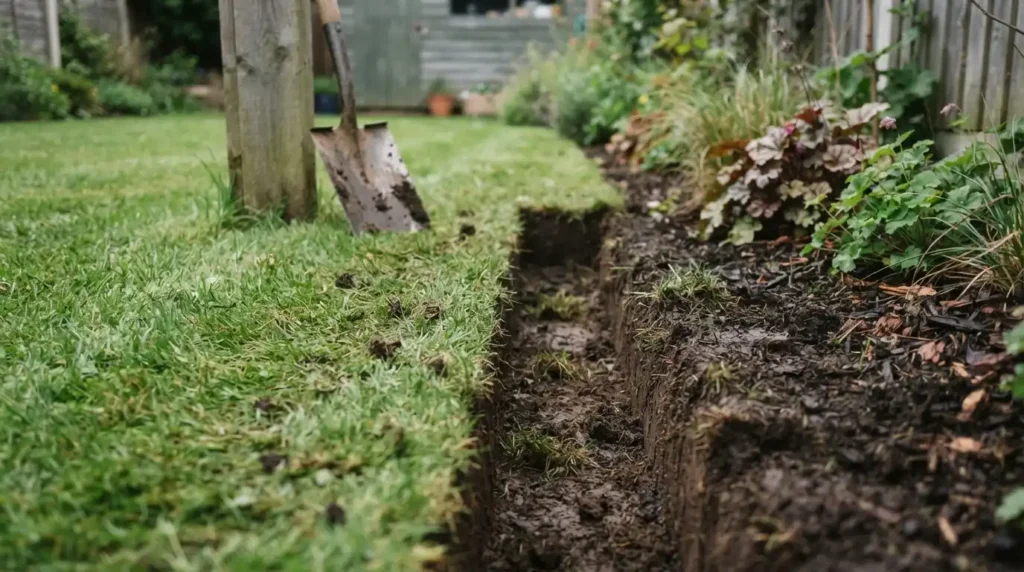
Defining clear edges between lawn, path, and border with simple edging strips or a spade-cut line gives a front garden an immediate sense of order, and it’s one of the cheapest structural improvements available.
A basic spade-cut edge costs nothing beyond your own time, roughly an hour for an average front garden border, and needs re-cutting two or three times a year to stay crisp. Metal or plastic edging strips cost £3 to £8 per metre and hold a line more permanently than a cut edge, particularly useful where a lawn meets gravel or a border that would otherwise creep and blur together within a season. Most homeowners find that clean edging alone, even without any new planting, makes an existing garden look noticeably more deliberate rather than neglected.
Should You Repaint or Replace a Front Garden Fence?
Repainting or treating an existing fence is almost always cheaper than replacing it, and most fences that look tired are structurally fine underneath years of weathered, faded stain rather than genuinely failing.
A fence treatment or exterior wood paint typically costs £20 to £40 per tin, covering roughly 15 to 20 square metres depending on the product, and a full repaint of an average front garden fence takes a weekend including drying time between coats. Replacement only makes sense where panels are visibly rotting, warped, or a post has failed structurally, since a full fence replacement runs considerably higher, often £60 to £120 per metre installed depending on fence style and height. A good rule of thumb is checking fence posts at ground level first, since rot there means a panel replacement alone won’t solve the underlying problem.
What Are the Cheapest Ways to Add Planting to a Front Garden?
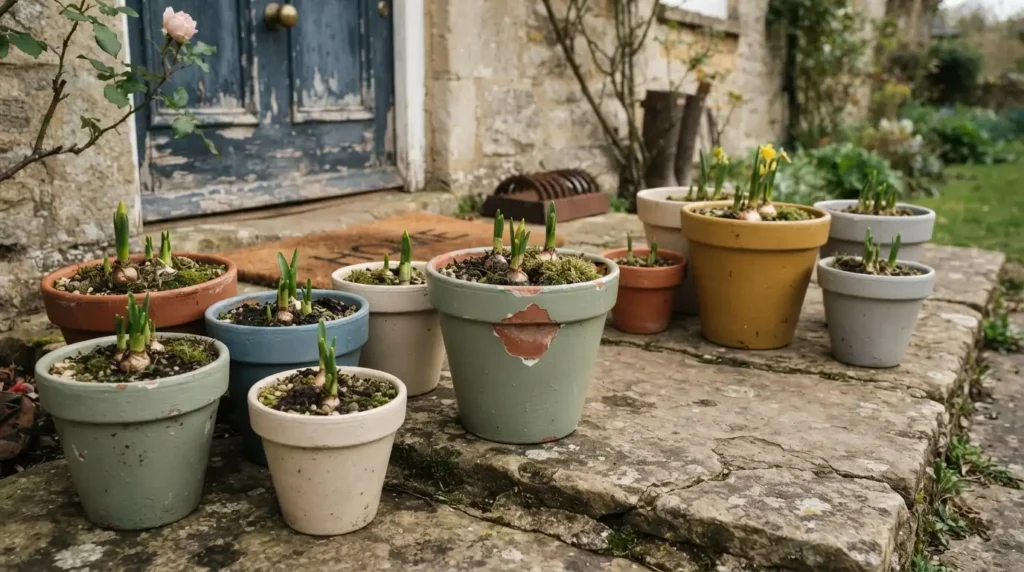
Bulbs, cuttings, and dividing existing perennials all add planting to a front garden for a fraction of the cost of buying mature plants, and container planting lets you add colour without disturbing an existing border layout at all.
Spring bulbs cost £10 to £20 for a bag of 50 to 100 and deliver a strong seasonal display for a genuinely low outlay, provided they’re planted in autumn for the following spring. Taking cuttings or dividing an existing perennial, either your own or one a neighbour is happy to share, costs nothing beyond time and patience, though it takes a full growing season or more before a divided plant reaches a decent size. Second-hand or reclaimed pots, often available cheaply through local marketplace listings, work just as well as new ones once cleaned and given a fresh coat of paint if needed, and this route typically saves £10 to £30 per pot compared to buying new.
How Much Does a Front Garden Makeover Cost on a Budget?
A genuinely low-budget front garden refresh, covering cleaning, painting, edging, and some planting, typically costs £150 to £400, while a mid-range makeover adding gravel or a partial path repair runs £500 to £1,200, and a fuller transformation including new paving or fencing can reach £2,000 or more.
| Budget Tier | What It Typically Covers | Approximate Cost |
| Low budget | Cleaning, door paint, edging, bulbs and pots | £150–£400 |
| Mid budget | Above, plus gravel path or partial repointing | £500–£1,200 |
| Higher budget | Above, plus full paving or fence replacement | £2,000+ |
These figures vary considerably by country, garden size, and whether you’re doing the work yourself, so treat them as a starting point rather than a fixed quote. A common budgeting mistake at every tier is spending the bulk of the money on one large item, like new paving, and running out of budget for the finishing details, like edging and a fresh door colour, that actually make the new paving look intentional rather than isolated.
What Order Should You Tackle a Budget Front Garden Makeover In?
Tackle a budget front garden makeover in this order: clear and repair first, then structural improvements like paths and fencing, then edging, then planting and finishing details like the front door and house numbers last.
Doing planting before the structural work is finished is one of the most common sequencing mistakes, since new plants often get damaged or disturbed during path repairs or fence painting carried out afterwards. Finishing with the front door and small details means the most visible, cheapest wins land last, giving the whole project a sense of completion right at the point visitors will actually notice it.
Conclusion
Transforming a front garden on a budget comes down to sequencing more than spending, since tackling repairs and structure before planting and finishing details makes every pound go further. Clean and fix what’s already there first, add one meaningful structural improvement if your budget allows it, and finish with the cheap, high-impact details like a painted door and clean edging that most visitors actually notice first. Get that order right, and even a modest budget can genuinely transform how a front garden looks and feels
FAQs
How can I improve my front garden with no money?
Clearing weeds, jet washing an existing path, cutting a clean edge between lawn and border, and dividing existing perennials all cost nothing beyond your own time.
What is the cheapest way to transform a front garden?
Painting the front door, cleaning brickwork, and adding clear edging typically deliver the biggest visual improvement for the lowest cost of any single change.
Is it cheaper to repaint or replace a front garden fence?
Repainting is almost always cheaper and works well unless panels are structurally rotting or warped, in which case replacement becomes necessary regardless of cost.
How do I make my front garden look expensive on a budget?
Focus on clean edges, a freshly painted door, and a few well-chosen container plants rather than filling the space with many small, mismatched items.
What order should I do a front garden makeover in?
Start with clearing and repairs, then structural work like paths and fencing, then edging, and finish with planting and small details like the front door.
How much does a budget front garden makeover cost?
A basic refresh covering cleaning, paint, edging, and some planting typically costs £150 to £400, with mid-range projects adding gravel or path repairs running £500 to £1,200.