15 Feature Wall Ideas for Your Living Room in 2026

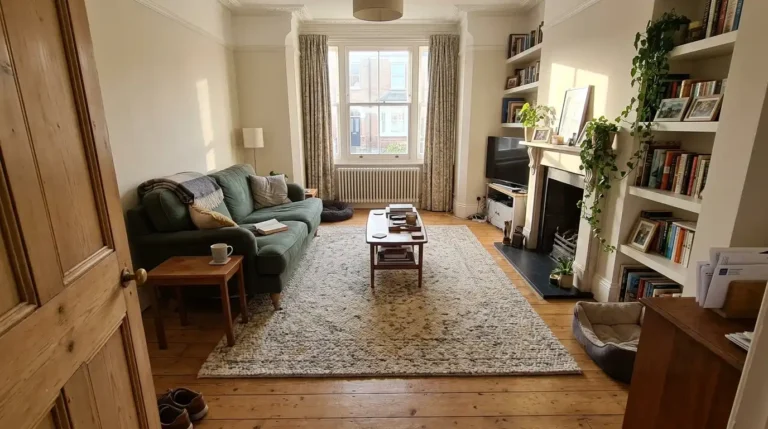
A feature wall is one wall in a room finished differently from the others, using colour, texture, panelling, or material to draw the eye and anchor the space. The best feature wall ideas for a living room work with the room’s natural focal point, whether that’s a fireplace, a window, or the wall behind your sofa, rather than fighting against it.
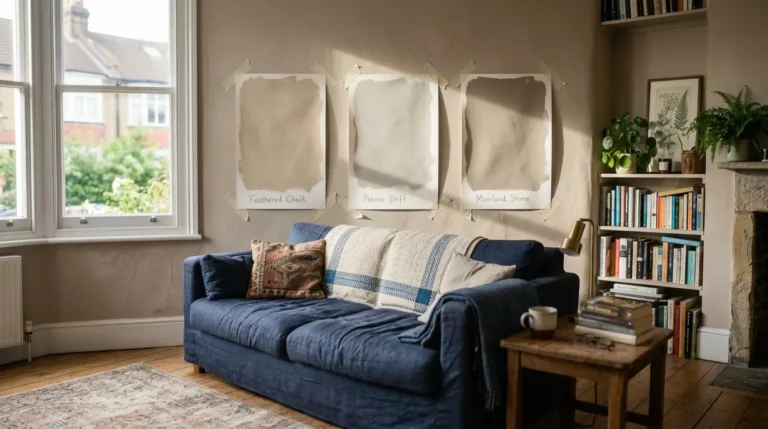
If you’ve ever painted a wall a bold colour and then hated it two weeks later, you’re not alone. Most people get feature walls wrong because they pick a look from a photo without thinking about their room’s light, layout, or how long they actually want to live with it. This list covers fifteen feature wall ideas that hold up beyond the first coat of paint, with real cost ranges and the mistakes worth avoiding.
1. Slatted Wood Panelling with LED Backlighting
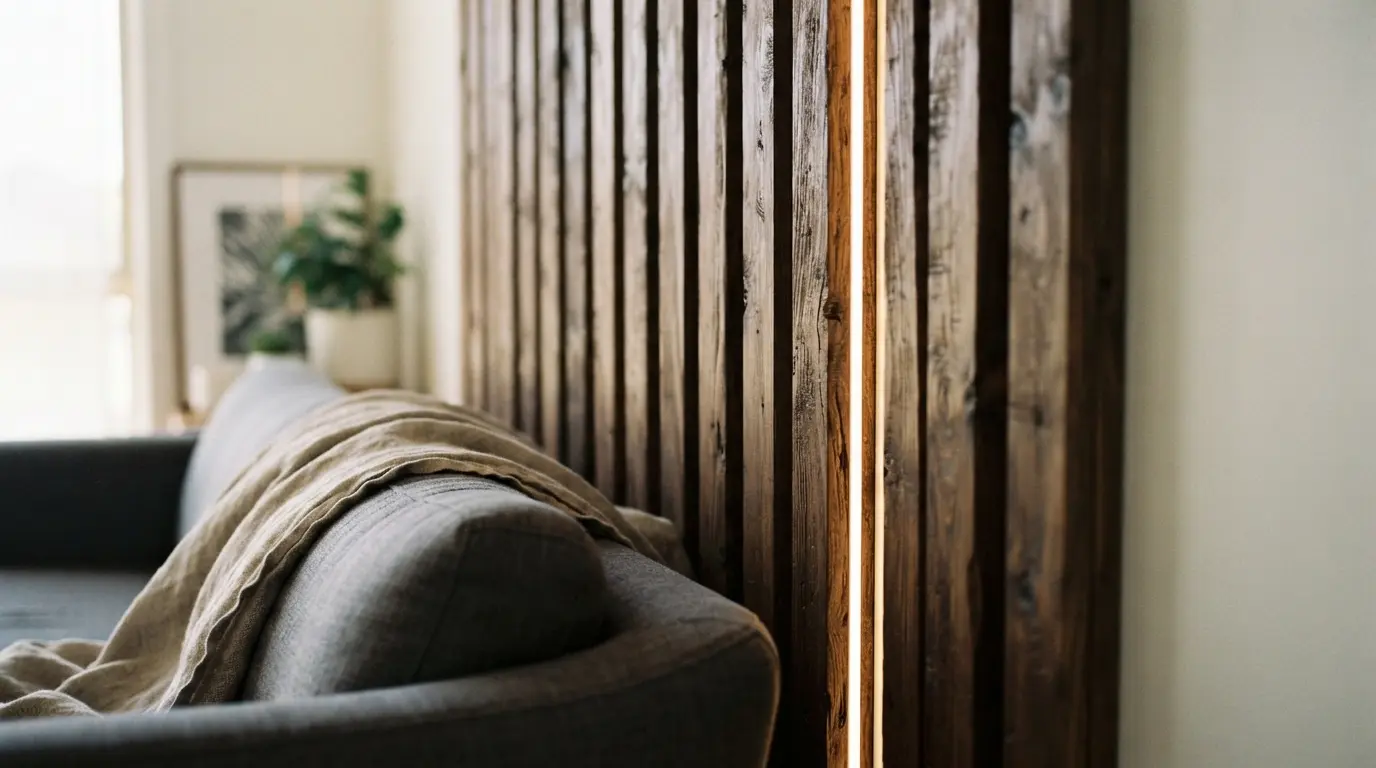
Slatted wood panelling is one of the most requested living room feature wall ideas right now, and for good reason. Vertical timber battens fixed to a plywood backing board create depth and shadow lines that flat paint simply can’t match, and running a warm LED strip behind the slats turns it into a genuine evening focal point.
Expect to pay roughly £40 to £90 per square metre for a DIY slat wall kit, or £150 to £300 per square metre if you’re having it made and fitted professionally, largely depending on the timber species and whether you go for pre-primed MDF slats or solid oak. A weekend is realistic for a competent DIYer to batten, prime, and paint a standard wall; add another half day if you’re wiring in LEDs properly rather than running a plug-in strip. The trade-off nobody mentions in the glossy photos is dust. Slats collect it along every horizontal edge, and a matte black or dark walnut finish shows it far less than pale oak.
2. Limewash or Microcement Textured Finish
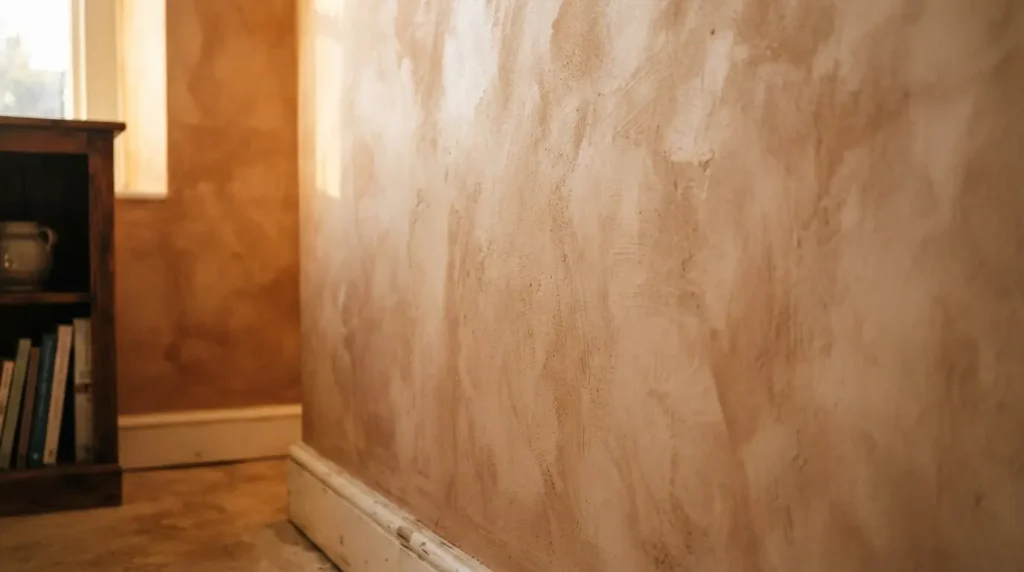
Limewash and microcement have moved from bathroom trend to living room feature wall staple because they give a wall genuine depth without adding bulk, unlike panelling. Limewash creates a soft, cloudy, slightly variegated finish as it cures, while microcement gives a smoother, more industrial concrete-like surface.
A limewash finish typically costs £25 to £45 per square metre in materials if you’re applying it yourself, though it needs a specific mineral-based paint and a bit of practice to avoid patchy lap marks. Microcement is a different level of commitment, usually £60 to £120 per square metre supplied and fitted, since it needs a trained applicator and a multi-coat process over two to three days including drying time between layers. A common mistake is choosing microcement expecting a completely uniform colour. Both finishes are prized precisely because they show subtle variation, and asking for a perfectly flat, single-tone result defeats the purpose of choosing the material in the first place.
3. Bold Colour-Drenched Wall
A colour-drenched feature wall means painting the wall, skirting boards, and even the door frame on that wall in the same shade, rather than stopping at the wall edge. This creates a more cohesive block of colour than a single flat wall colour against white trim.
Deep, saturated shades are leading 2026 living room colour choices, with olive green, midnight blue, and burgundy replacing the beige and grey that dominated the past few years. Colour drenching works especially well on a wall with an alcove or chimney breast, since wrapping the colour into the recess reads as intentional rather than a random paint choice. It’s a low-risk way to test a feature wall idea, since a full repaint costs little more than standard emulsion and a weekend of your time.
4. Board and Batten Panelling
Board and batten uses vertical MDF strips fixed over a painted or plain wall to create a grid or vertical line pattern, usually painted a single colour to keep the look calm rather than busy. It suits period and new-build living rooms equally well.
This is one of the more budget-friendly wall panelling ideas, with materials running £20 to £50 per square metre for MDF battens, adhesive, and paint. Fitting takes a weekend for most DIYers, though getting spacing consistent across an uneven wall is the part that trips people up. A good rule of thumb is measuring and marking every batten position before cutting anything, since small spacing errors compound quickly across a full wall.
5. Statement Wallpaper Wall
Wallpaper is having a genuine resurgence as a living room feature wall idea in 2026, moving away from small, safe patterns toward large-scale botanicals, block print repeats, and tactile finishes like grasscloth and tweed-effect papers. The appeal is texture as much as pattern.
Grasscloth and tweed-style wallpapers add warmth without relying on colour, which suits living rooms that already have plenty going on in the furniture and soft furnishings. Expect £30 to £80 per roll for mid-range designer wallpaper, with a standard living room wall needing three to five rolls depending on pattern repeat and wall size. Hanging it yourself is possible with a paste-the-wall product, but heavily patterned or expensive paper is usually worth paying a decorator £150 to £300 to hang properly, since matching a large repeat pattern across a wall is unforgiving of small errors.
6. Exposed or Faux Brick Wall
An exposed brick feature wall works if your home already has original brickwork under plaster, which a builder can confirm before you commit to stripping a wall back. If there’s no original brick, faux brick cladding panels achieve a similar look without structural work.
Genuine exposed brick needs sealing once exposed to stop dust shedding and to protect the mortar, adding £10 to £20 per square metre to the job on top of the stripping and cleaning labour. Faux brick panels cost roughly £25 to £60 per square metre and install much like large tiles. The honest trade-off is that real exposed brick can make a room feel colder and echo more, since you’re removing an insulating layer of plaster.
7. Fireplace Wall with Floating Shelves
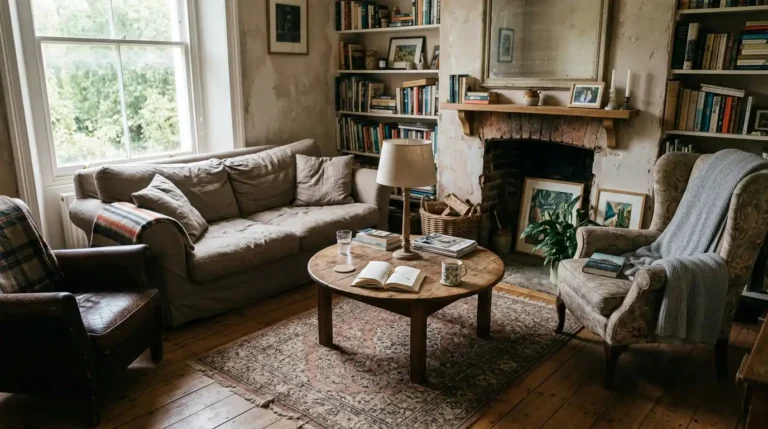
If your living room has a fireplace, the chimney breast is usually the strongest natural focal point in the room, and building the feature wall around it rather than on a different wall almost always looks more considered. Floating shelves either side of the fireplace add storage and display space to the same feature.
This idea pairs naturally with several others on this list, since the chimney breast itself can be panelled, colour-drenched, or finished in microcement while the alcoves either side stay simpler with painted shelving. Most joiners charge £150 to £400 per side for a pair of fitted floating shelves in solid wood or painted MDF, varying by width and whether wiring for lighting is included.
8. Large-Scale Art or Gallery Wall
A single oversized piece of art or a curated gallery wall arrangement turns one wall into a feature without any structural work at all, which makes it the easiest option on this list for renters or anyone not ready to commit to paint or panelling.
A gallery wall needs planning before a single nail goes in. Laying frames out on the floor first, then working from the centre outward, avoids the uneven, drifting layout that happens when people just start hanging and adjusting as they go. Budget varies enormously here, from framed prints under £20 each to original art running into hundreds, but the wall itself costs nothing beyond framing and hanging hardware.
9. Mirror Feature Wall
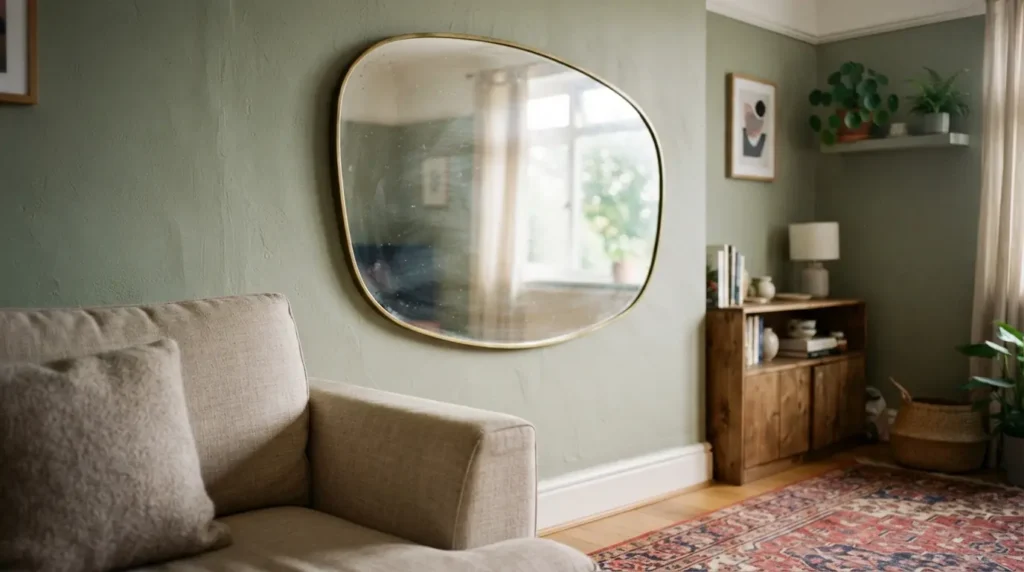
A mirror feature wall, whether one large statement mirror or a cluster of smaller decorative mirrors, bounces light around a room and makes a smaller or darker living room feel noticeably larger. It works particularly well opposite a window.
A single large statement mirror typically costs £150 to £500 depending on frame style and size, while full mirrored panelling across a wall is a bigger job, usually £200 to £400 per square metre supplied and fitted, since mirror panels need a completely flat backing wall to avoid visible distortion. The downside worth knowing is that mirror walls show every smear and dust mark far more obviously than a painted wall, so they need more regular cleaning to actually look good day to day.
10. Stone or Slate Cladding
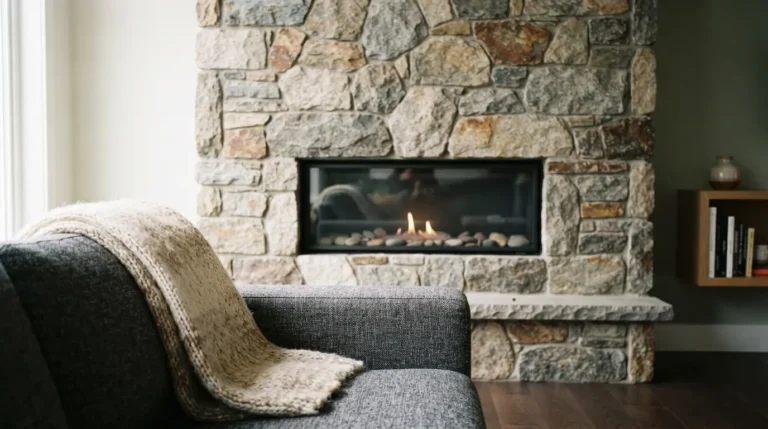
Stone or slate cladding brings genuine texture and a cooler, more tactile material into a living room, often used behind a media unit or fireplace rather than across a full wall. Thin veneer stone panels achieve the look without the weight and structural consideration of full stone.
Veneer stone cladding runs £50 to £120 per square metre installed, with natural slate at the higher end and manufactured stone veneer more affordable. It’s a heavier material to work with than panelling or wallpaper, and a wall needs to be structurally sound and properly prepped, since stone cladding won’t forgive a poorly adhered installation the way lighter finishes will.
11. Wood Panelling with Wainscoting
Wainscoting, or half-height wall panelling, adds a traditional, architectural feel to a living room and works especially well in period properties or anywhere you want detail without covering the whole wall in one material. Tongue and groove boards are the classic version of this finish.
This sits at a similar price point to board and batten, generally £25 to £60 per square metre in materials for a DIY tongue and groove kit, with professional fitting adding £100 to £250 depending on wall length and detailing like a proper capping rail along the top edge.
12. Floor-to-Ceiling Curtains as a Soft Feature Wall
Hanging full-height curtains across an entire wall, rather than just around a window, is an underused feature wall idea that adds softness and acoustic benefit to a living room, particularly one with hard flooring and little else to absorb sound.
This works best in rooms with high ceilings where the drama of full-height fabric actually registers. Cost varies hugely by fabric choice, but a made-to-measure curtain wall typically runs £300 to £800 for a standard living room wall width, including a suitably long curtain track.
13. Geometric Painted Mural
A hand-painted geometric mural, whether stripes, arches, or an abstract shape painted directly onto the wall, gives a completely custom feature wall for the cost of paint and time rather than materials or installation labour.
This is one of the cheapest ideas on this list in pure material cost, often £30 to £60 in paint and painter’s tape for a standard wall, though it demands patience and a steady hand for clean lines. A common mistake is skipping a pencil layout and full measurement plan before taping, which is how uneven arches and wobbly stripes happen.
14. Upholstered or Padded Fabric Wall Panels
Upholstered fabric wall panels add a soft, hotel-lobby style finish to a living room feature wall, usually built from individual padded panels in a grid or herringbone layout, often finished in bouclé, velvet, or linen.
These panels do double duty as light acoustic treatment, useful in living rooms with hard floors and high ceilings that tend to echo. Expect £80 to £180 per square metre for made-to-measure upholstered panels, which is a noticeably higher price bracket than most other options here, reflecting the labour-intensive upholstery work involved.
15. Dark Accent Wall Behind Open Shelving or a Media Unit
Painting just the wall behind an open shelving unit or media wall in a dark, contrasting colour makes the furniture and display items pop forward, while the rest of the room stays lighter. It’s a subtler take on the accent wall living room idea for anyone not ready for a full bold colour commitment.
This works particularly well combined with warm lighting inside or around the shelving, since a dark backdrop makes even simple LED strip lighting look considerably more expensive than it actually is.
Feature Wall Cost Comparison
[Cost Table: Feature Wall Ideas by Approximate Cost]
| Feature Wall Idea | Approximate Cost per m² (materials only) | Typical Timeline |
| Geometric painted mural | £30–£60 | 1–2 days |
| Board and batten panelling | £20–£50 | 1–2 days |
| Limewash finish | £25–£45 | 1 day plus curing |
| Statement wallpaper | £30–£80 per roll | 1 day |
| Slatted wood panelling | £40–£90 (DIY) / £150–£300 (fitted) | 1–2 days |
| Faux brick cladding | £25–£60 | 1–2 days |
| Microcement | £60–£120 (fitted) | 2–3 days |
| Stone or slate cladding | £50–£120 (fitted) | 2–3 days |
| Upholstered fabric panels | £80–£180 (fitted) | 2–4 days |
These figures are approximate and vary significantly by country, local labour rates, and material quality, so treat them as a starting point for budgeting conversations rather than a fixed quote.
Common Feature Wall Mistakes to Avoid
The biggest mistake homeowners make with feature wall ideas is choosing the wrong wall entirely, picking the largest or most visible wall instead of the one that already draws the eye naturally, like a chimney breast or the wall directly facing the room’s entrance. A good rule of thumb is standing in the doorway and noting where your eye lands first. That’s almost always the wall to treat.
The second common mistake is under-committing on colour or texture out of nervousness, ending up with a shade or finish so close to the rest of the room that the wall barely reads as a feature at all. If you’re going to do it, the contrast needs to be clear enough to notice from across the room, not just up close.
Conclusion
The best feature wall ideas for a living room are the ones chosen for your actual wall, light, and lifestyle, not just copied from a photo. Start with the wall your eye already goes to, pick a finish that suits how much time and budget you actually have, and don’t be afraid to commit to real contrast once you’ve chosen it. A feature wall done properly should still look intentional in five years, not like a trend you’re already tired of
FAQs
What is a feature wall in a living room?
A feature wall is one wall finished differently from the rest of the room, using colour, texture, panelling, or material, to create a visual focal point.
Which wall should be the feature wall in a living room?
The wall behind the sofa, the chimney breast, or the wall your eye naturally lands on when entering the room usually works best as the feature wall.
Is a dark feature wall a good idea in a small living room?
Yes, a dark feature wall can work in a small room if it’s on the wall furthest from the main light source, since it adds depth rather than making the room feel boxed in.
What is the cheapest feature wall idea?
A geometric painted mural or a simple colour-drenched wall are the cheapest options, since both rely mainly on paint rather than materials or professional fitting.
Do feature walls make a room look smaller?
Not usually, and a mirror feature wall or a lighter textured finish like limewash can actually make a room feel larger by bouncing more light around.
How do I choose a feature wall colour?
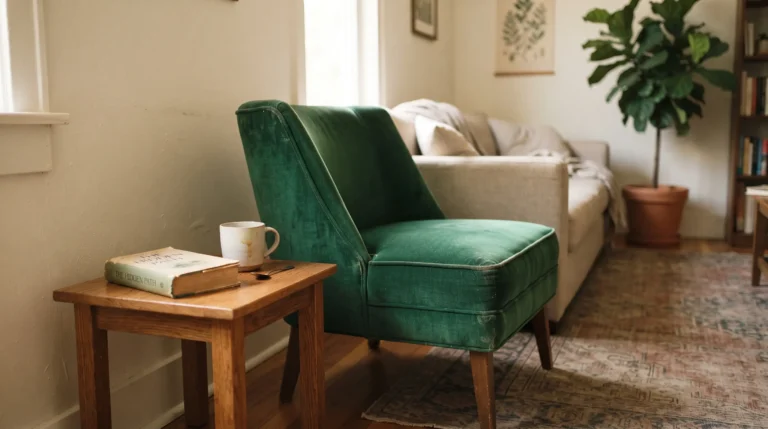
Choose a colour that contrasts clearly with the rest of the room’s palette while still pulling from an existing accent, such as a cushion or rug colour already in the space.