How to Style a Coffee Table Like an Interior Designer

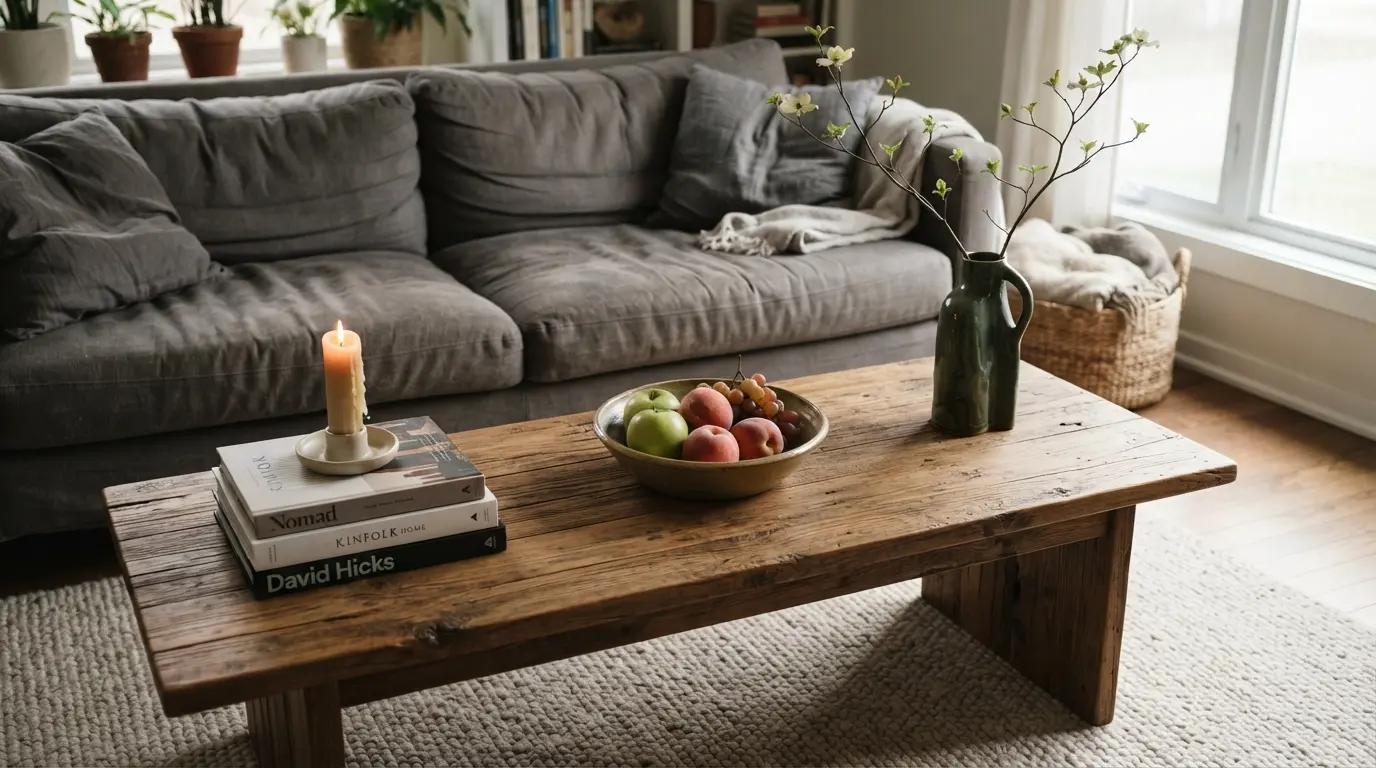
Styling a coffee table like an interior designer comes down to working in layers, not just placing pretty objects on top of each other: a base to ground everything, one anchor piece that sets the scale, then texture, height, and a personal touch layered in on top. Skip the layering and you end up with what most living rooms actually have, three or four nice things scattered with no relationship to each other.
Read Your Table’s Shape Before You Style It
A round or square table styles best as one grouped vignette near the centre, since there’s no long edge to fill. A rectangular table needs dividing, mentally split it into thirds and treat each third as its own small composition, books and a candle in one, a tray in another, a plant or bowl in the last, so the eye has somewhere to land along the whole length rather than one clump in the middle with empty space either side.
Start With a Base Layer
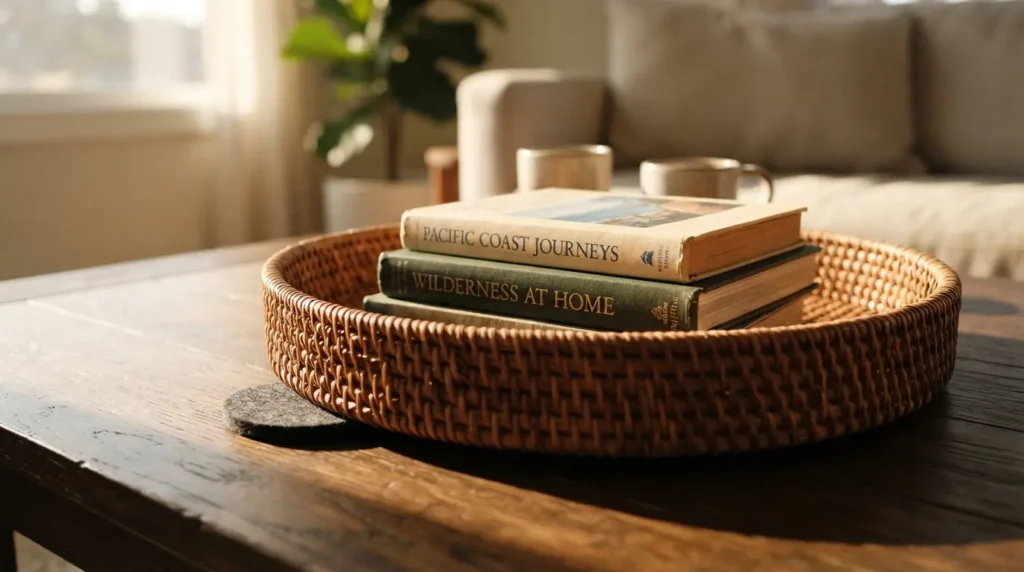
Before adding a single object, ground the surface with a tray or a stack of coffee table books. This does two things: it defines a “zone” that keeps smaller items from looking scattered, and it protects the tabletop itself, a genuine concern most guides skip. A cheap metal or unlined wooden tray can actually scratch a lacquered or veneered surface over time, so if your table has a delicate finish, look for a tray with a felt or cork base rather than judging it on looks alone.
Anchor With One Larger Piece First
Choose your biggest or tallest item before anything else and place it first: a substantial vase, a sculptural bowl, or an object that genuinely means something to you. Everything else gets arranged around this anchor, not the other way round. Starting with the small decorative pieces and hoping a “big moment” emerges from them rarely works; designers start big and layer down in scale, not the reverse.
Layer in Height, Then Texture
Once the anchor is placed, stagger heights around it, a stack of two or three coffee table books, a low candle, something taller like a vase or a slim sculpture, so the eye moves rather than landing flat. Then layer texture on top of that height variation: mix smooth ceramic or glass with something rougher, like a woven tray, raw stone, or a leather-bound book, so the surface has contrast even within a single colour palette. This is the detail that separates a styled table from one that just has “stuff” on it.
Add One Living Element
A vase of fresh or good-quality faux flowers, a low bowl of seasonal fruit, or a simple sculptural branch brings a coffee table to life in a way that ornaments alone can’t. This is also the cheapest way to refresh the look through the year: swap flowers or fruit with the seasons, citrus and greenery in summer, dried stems or berries in winter, rather than buying new decorative objects every few months. If fresh flowers aren’t realistic for your routine, good faux stems are a reasonable substitute; just avoid the visibly synthetic ones, since a table otherwise styled with real materials makes cheap fake foliage stand out for the wrong reasons.
Keep One Piece That’s Yours
The difference between a table that looks styled and one that looks like a showroom is usually one object with a story, something from a market, a trip, or an inherited piece, rather than everything bought as a matching set in one trip. It doesn’t need to be expensive or even particularly beautiful on its own; it needs to be something you’d actually explain if someone asked about it.
Hide the Practical Stuff, Protect the Surface
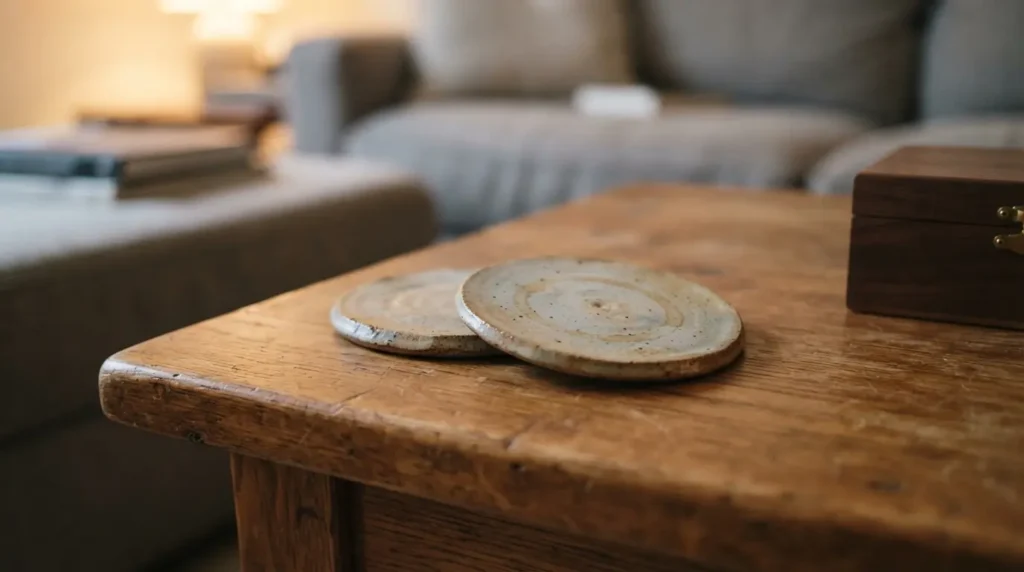
A coffee table gets used, remotes, chargers, coasters, so build somewhere for that reality to live rather than pretending it doesn’t exist. A small lidded box handles remotes and clutter without breaking the styled look, and coasters left out in a small stack or fanned near the base layer read as intentional rather than an afterthought, while also protecting the surface from the ring marks that genuinely do bother people for years once they’re there. This is a small detail, but it’s the one that keeps a styled table looking real rather than staged for a single photo.
Common Coffee Table Styling Mistakes
The most frequent mistake is buying every piece in one go from the same source, which tends to look like a matching set rather than a considered collection built over time. The second is over-styling a small table, cramming five or six objects onto a table under about 90cm long leaves no breathing room and makes the whole surface feel cluttered rather than curated. The third is forgetting function entirely: a table styled so precisely that setting down a coffee cup feels like it would ruin the look isn’t actually working for the room, however good it looks in a photo.
How Often Should You Restyle It?
There’s no fixed rule, but a light seasonal refresh, new flowers, a swapped candle scent, rotating in a different book, keeps a coffee table feeling current without much cost or effort. A fuller restyle, replacing the anchor piece or the tray, is worth doing when the room itself changes, new cushions, a different rug, a repaint, rather than on any set schedule. Styling that never changes at all is usually the first sign a room has started to feel stale, even if nothing on the table is actually wrong.
Final Thoughts
Styling a coffee table like an interior designer isn’t about buying more objects, it’s about layering the ones you choose with intention: a base, an anchor, height, texture, and one thing that’s genuinely yours. Build it in that order and the table will still look considered in six months, not just for the first week after a shopping trip.
FAQs
What are the essential items for coffee table decor?
A base layer (tray or books), one anchor piece, a height-varying object like a candle or small vase, and one living element such as flowers or a bowl of fruit cover the essentials most stylists come back to.
How many coffee table books should you use?
Two to three is usually enough for a stack; more than that on a smaller table starts to crowd the rest of the styling. Choose covers or spines that suit your colour palette rather than picking titles at random.
Should a coffee table match the rest of the room?
It should connect to the room’s colours rather than match exactly, use one or two accent colours from your cushions, rug, or artwork so the styling feels tied to the space instead of styled in isolation.
Is it OK to use faux flowers on a coffee table?
Yes, provided the quality looks convincing; visibly synthetic stems stand out against otherwise real materials like wood, stone, or ceramic. Good faux florals are a practical compromise if fresh flowers aren’t realistic for your routine.
How do I style a small coffee table without it looking cluttered?
Limit yourself to three items total, one anchor, one height piece, one small living element, rather than trying to fit in everything on this list. Restraint reads as more considered on a smaller surface, not less styled.