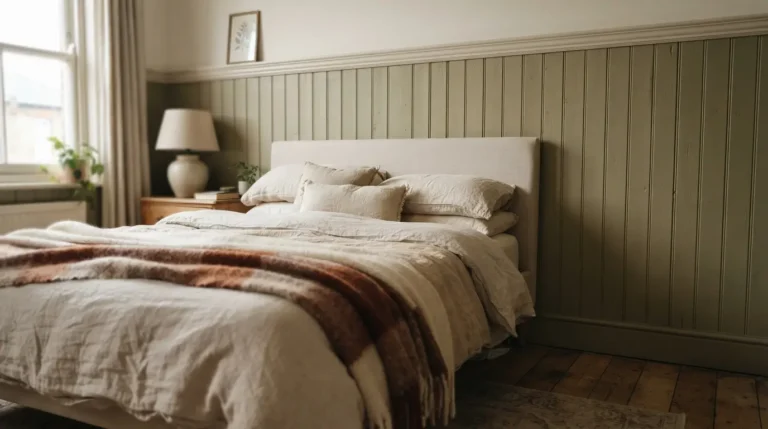

15 Bedroom Wall Panelling Ideas for a Designer Sleep Space

Bedroom wall panelling ideas work best when you think beyond the wall directly behind the bed, since a genuinely designer sleep space usually extends the panelling around the room’s actual proportions, storage, and existing architecture. The 15 ideas below cover whole-room applications, material choices, and practical details, real cost differences, property-age matching, most inspiration guides skip in favour of another single headboard-wall photo.
1. Dado-Height Panelling Around the Whole Room
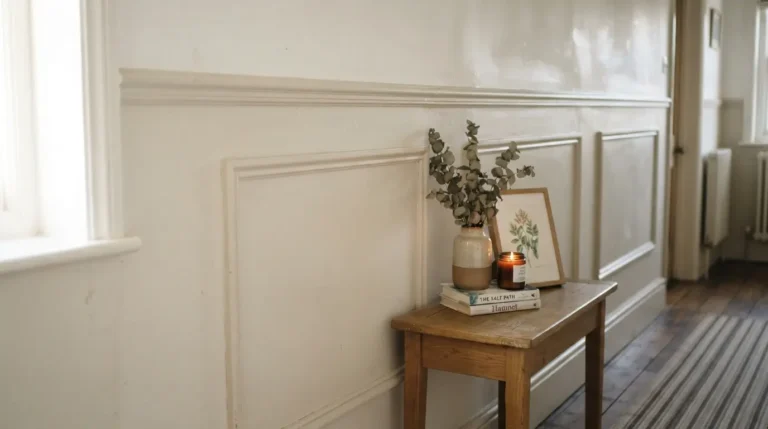
Rather than panelling just the wall behind the bed, running dado-height panelling, typically around 90-110cm, continuously around the entire room creates a genuinely cohesive, considered scheme rather than one feature wall standing apart from the rest. This suits a period property particularly well, and it gives you a natural surface to top with a chair rail, above which you can introduce wallpaper or a contrasting paint colour.
2. Full-Height Shaker Panelling for a Formal, Period-Appropriate Look

Shaker panelling, with its series of rectangular frames running from floor to ceiling, brings genuine formality and architectural presence to a bedroom, and it suits a period property with the proportions and ceiling height to support it. Painted in a single confident colour, it reads as more contemporary despite its traditional roots, giving you a style that bridges both a heritage and a current design direction depending on the shade you choose.
3. Board and Batten for a Clean, Modern Alternative
Wide vertical boards paired with narrower battens give a cleaner, more graphic look than Shaker panelling’s recessed frames, and it suits a modern new-build or a mid-century-inspired scheme particularly well. This style tends to be more straightforward to install than full Shaker panelling too, since it’s built from simpler, flatter components rather than requiring the recessed frame construction.
4. Picture Frame Panelling for a Softer, Less Formal Look

Simple rectangular frames applied directly to the wall give you a softer, less imposing alternative to full wainscoting, without needing the raised, three-dimensional depth of Shaker or board and batten styles. This suits a bedroom where you want the texture and structure of panelling without it dominating the room, and it’s a genuinely forgiving style for a first panelling project if you’re doing the work yourself.
5. Panelling With Concealed LED Backlighting for Evening Ambience

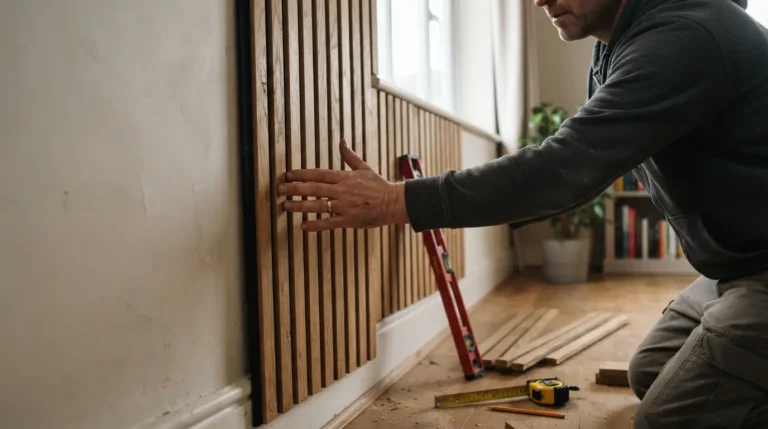
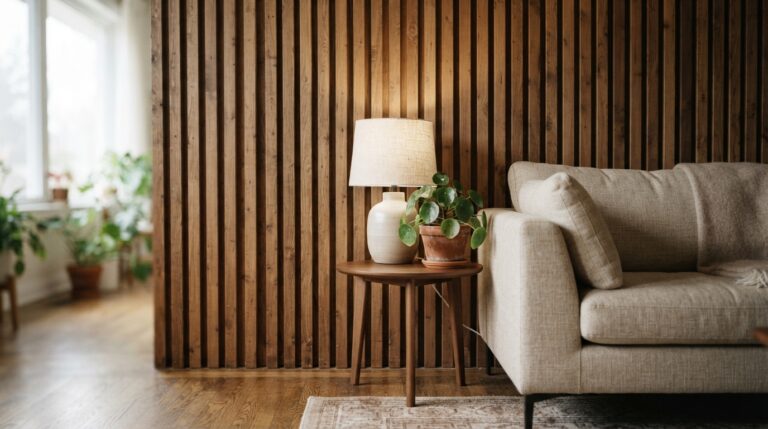
Running a slim LED strip behind slat panelling, hidden from direct view but visible in its glow, adds genuine depth and a sense of luxury once the room’s other lights are dimmed for the evening. This works particularly well with vertical slat panelling specifically, since the gaps between slats let the light spill through in a way a solid panel surface can’t replicate.
6. A Recessed Shelf Built Into the Panelling
Incorporating a shallow recessed shelf directly into the panelling behind the bed gives you a genuinely useful surface, somewhere for a book, a phone, a glass of water, without needing a separate bedside table taking up floor space. This is worth planning at the design stage of your panelling project specifically, since retrofitting a shelf into finished panelling is a considerably bigger job than building it in from the start.
7. Two-Tone Panelling for Depth Without a Second Colour Family

Painting the recessed panel sections in one shade and the surrounding frame in a closely related but distinct tone adds genuine depth and visual interest without introducing an entirely separate colour into the room. This reads as more considered than a single flat colour across the whole panelled wall, and it’s worth coordinating the two tones with your existing bedding and soft furnishings rather than choosing them in isolation.
8. Panelling Paired With a Picture Rail and Wallpaper Above
Finishing your panelling at picture rail height and introducing wallpaper or a contrasting paint colour in the space above creates a genuinely layered, considered scheme rather than a single flat treatment running to the ceiling. This combination suits a period property especially well, and it gives you the flexibility to update the wallpaper or upper wall colour later without touching the panelling itself.
9. Panel the Wardrobe or Storage Wall, Not Just the Bed Wall

A designer bedroom rarely stops its panelling at a single feature wall behind the bed, extending it, or applying it separately, to the wall housing your wardrobe or built-in storage genuinely ties the whole room together. This is particularly effective when the storage wall and the bed wall share the same panelling style, since it reads as one cohesive architectural decision rather than treating one wall as decorative and the rest as purely functional.
10. Floor-to-Ceiling Panelling With Built-In Storage for a Small Bedroom

In a genuinely space-constrained bedroom, panelling that incorporates shelves, drawers, or cupboards directly into its structure solves two problems at once, the architectural interest of panelling and a real, functional storage system, without needing separate freestanding furniture competing for floor space. This is one of the more involved projects on this list, closer to bespoke joinery than a simple DIY panelling weekend, so budget accordingly if this is the direction you’re considering.
11. Panel All Four Walls for a Fully Cocooning Room
Taking panelling around every wall in the bedroom, rather than confining it to one or two feature walls, creates a genuinely enveloping, cocooning effect that suits a bedroom built entirely around rest and retreat. This is a significant commitment in both material and cost, so it’s worth being genuinely confident in your chosen style and colour before committing the whole room, since reversing a four-wall panelling decision is a considerably bigger undertaking than repainting a single feature wall.
12. Choose a Heritage Colour for a Characterful, Period-Suited Scheme

A muted, heritage-toned colour on your panelling, deep greens, soft plasters, warm stone tones, brings genuine character that a standard contemporary neutral doesn’t quite achieve, and it suits panelling styles like Shaker or dado particularly well. Coordinate the shade with your bedding and soft furnishings rather than choosing it purely in isolation, so the whole room reads as one considered palette rather than a panelled wall standing apart from everything else in it.
13. Match Your Panelling Style to Your Property’s Age
This is worth deciding before you fall for a specific style purely on looks. A period property, Georgian, Victorian, Edwardian, generally suits traditional panelling styles, Shaker, dado height, tongue and groove, that echo the proportions and architectural language the house was originally built with. A modern new-build suits more contemporary styles instead, slat panelling, board and batten, picture frame, which sit more comfortably against clean, simple architecture than an ornate traditional style would. Neither rule is absolute, but starting from your property’s actual architecture rather than a photo from an unrelated house genuinely improves how considered the finished panelling looks.
14. Understand the Real Cost Differences Between Panelling Materials

This is the detail every purely aesthetic panelling guide skips, and it genuinely affects both your budget and the finished look.
| Material | Typical Cost | What You’re Paying For |
|---|---|---|
| MDF | Around £15-30 per square metre | Stable, easy to cut, takes paint beautifully, the most budget-friendly option |
| Real wood veneer | Around £50-90 per square metre | The look of solid timber at a lower cost than the real thing |
| Solid timber | Around £80-200 per square metre | Genuine natural material with real grain, the most expensive option |
Treat these as rough, approximate figures rather than a fixed quote, since exact pricing varies by supplier, region, and the specific profile you choose. Professional installation typically adds a further amount on top of material cost, so factor that in if you’re not tackling the project yourself, MDF remains the most popular choice specifically because it’s stable, straightforward to work with, and takes paint far more evenly than real timber does, making it the sensible default for most painted panelling projects regardless of budget.
15. Keep Panelling Slim and Light-Coloured in a Small Bedroom

Panelling doesn’t have to make a small bedroom feel smaller, but it does need choosing deliberately rather than assuming any style works regardless of room size. Slimmer profiles, slat panelling, picture frame panelling, board and batten, avoid the visual bulk a deeper Shaker or dado panel can bring, and a lighter colour keeps the room feeling structured and intentional rather than closed in. Save the darkest, most saturated colours and the deepest panel profiles for a room with the proportions to genuinely support them, rather than defaulting to a look you’ve seen work beautifully in a considerably larger space.
Final Thoughts
The best bedroom wall panelling ideas think beyond a single headboard wall, extending consideration to the room’s actual proportions, your property’s architecture, and genuine cost differences between materials before committing to a style. Choose a panelling approach that suits your room’s scale and your home’s age, understand what you’re actually paying for between MDF, veneer, and solid timber, and the finished bedroom will read as a genuinely designed sleep space, not just one nicely panelled wall in an otherwise unconsidered room.
FAQs
Is bedroom panelling expensive?
It varies considerably by material and how much of the room you’re covering. Simple MDF panelling on a single feature wall is genuinely affordable, while solid timber panelling across an entire room sits at the higher end, though still often more cost-effective than a full room refurbishment.
Can you put panelling on any bedroom wall?
Most interior walls can take panelling, provided they’re structurally sound, dry, and reasonably flat, plasterboard, brick, and block walls are all generally suitable. Check for any damp or structural issues before installing panelling over a problem you’d rather address directly first.
What is the best height for bedroom panelling?
Around 90-120cm is the most common height when panelling is applied specifically behind the bed, roughly matching headboard proportions. Dado-height panelling running around the whole room typically sits slightly lower, around 90-110cm, while full-height panelling runs floor to ceiling.
Does panelling make a small bedroom feel smaller?
Not necessarily, provided you choose a slimmer profile and a lighter colour rather than a deep, dark panel style. Used thoughtfully, panelling can make a small room feel more structured and intentional rather than more cramped.
How do you clean bedroom panelling?
Regular dusting with a soft cloth, or an occasional wipe with a slightly damp cloth for more stubborn marks, is usually all that’s needed. Avoid harsh chemicals or abrasive cleaners, which can damage the paint finish over time.