12 Acoustic Wall Panel Ideas for a Stylish Sound-Absorbing Interior

Acoustic wall panel ideas work best when style and genuine sound absorption are chosen together, not treated as separate decisions, since a lot of decorative panels on the market do far more for the look of a room than for how it actually sounds. The 12 ideas below cover materials, placements, and applications that earn their keep on both fronts, along with the honest technical detail most inspiration roundups leave out.
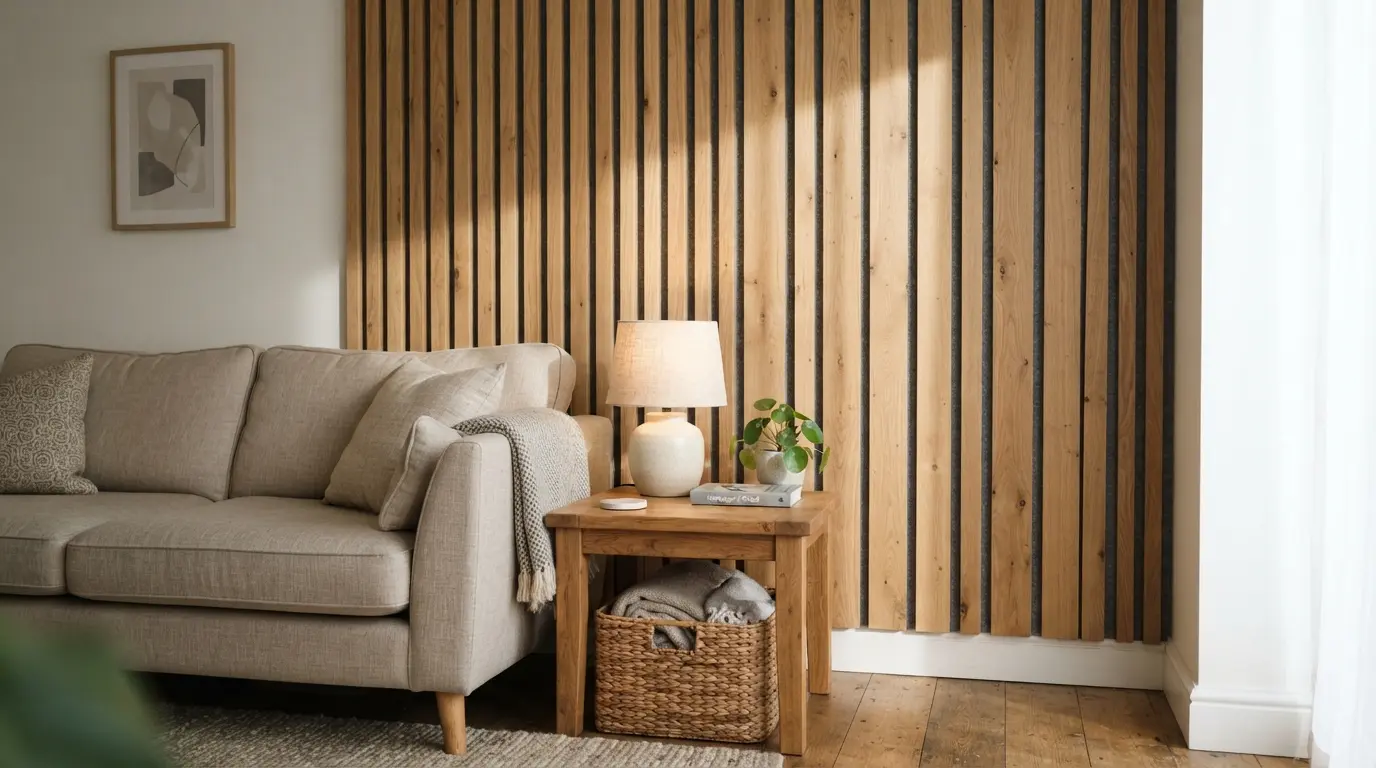
1. Vertical Oak Slat Panels Behind a Sofa or TV
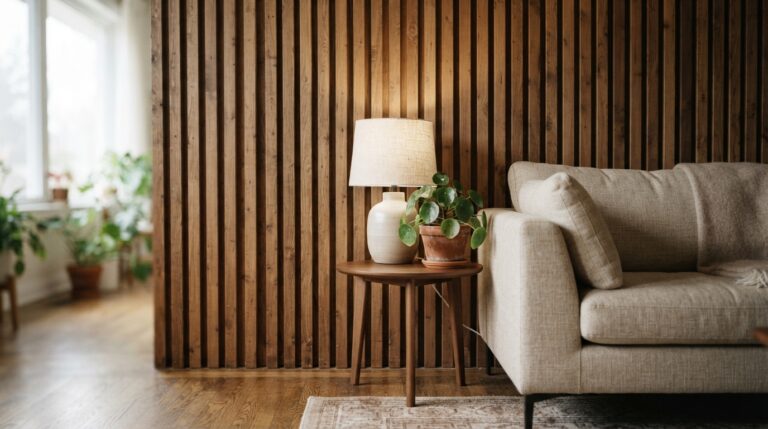
Wood slat panels with a felt backing remain the most popular acoustic choice for a reason: the slats bring genuine warmth and texture while the felt layer behind them does the actual sound-absorbing work. A lighter oak tone suits a bright, Scandi-leaning living room, while a walnut or darker slat reads richer against pale flooring. This is also the easiest of the twelve ideas to plan around, since it works equally well as a full feature wall or a section behind just the sofa or TV. Check that the specific product you’re buying actually includes the felt backing rather than being slats alone on a solid board, since visually the two can look almost identical in a product photo, but only one of them is genuinely doing anything for the room’s acoustics.
2. Muted Felt Panels for a Calm Bedroom Wall
Solid felt panels in grey, beige, or a muted forest green suit a bedroom better than slatted wood in most cases, since the softer, fabric-like surface reads as cosier against bedding and soft furnishings. Felt panels are also genuinely lightweight and among the easier acoustic products to cut and fit yourself, which matters in a room where you might want to experiment with a shape or pattern rather than a single flat panel. Because felt reads as soft rather than architectural, it suits a bedroom better than the more structured wood-slat look, and it’s a genuinely forgiving material if your wall isn’t perfectly flat, since a slight imperfection underneath is far less noticeable through felt than it would be under a rigid slat panel.
3. Hexagon Felt Tiles for a Playful Geometric Feature

Cutting felt panels into hexagons, or buying them pre-shaped, turns a functional acoustic treatment into a genuine design feature, arranged in a honeycomb cluster on one wall or scattered more loosely across a larger surface. This suits a home office or a creative space better than a formal living room, since the geometric, slightly playful pattern reads as more casual than a single large panel. Keep the colour palette to two or three tones at most, a hexagon wall in every colour available tends to look busy rather than considered. Because the tiles are individually cut and placed, this is also one of the more time-consuming installations on this list relative to its size, planning the layout on paper or on the floor before fixing a single tile saves a lot of second-guessing partway through the wall.
4. Black Oak Slats for a Home Office Backdrop
A dark slat panel behind a desk does double duty: it genuinely improves call clarity by cutting down on the flutter and echo a bare wall creates, and it gives video calls a considered, professional backdrop instead of a blank wall or a bookshelf everyone uses. Black or dark walnut slats in particular photograph well on camera without the glare a paler, glossier surface can sometimes catch under artificial lighting.
5. Fabric-Wrapped Panels for a Home Cinema or Media Room
Fabric-wrapped acoustic boards, a dense absorbent core wrapped in an acoustically transparent fabric, are less decorative than wood or felt panels but genuinely outperform them for pure sound absorption, which is exactly what a dedicated media room or home cinema needs. They cost more than the more design-led options on this list, so they’re worth reserving for the room where acoustic performance is actually the priority rather than a nice-to-have alongside the styling. Fabric-wrapped panels also come in a genuinely wide range of colours and textures, so the cost premium doesn’t mean sacrificing design entirely, it just means the visual interest comes from the fabric choice rather than a wood grain or a sculpted surface.
6. Flexible Round Slat Panels for a Curved Wall or Staircase

Most acoustic panels are flat and rigid, which rules them out for a curved wall, a bowed stairwell, or a rounded architectural feature. Flexible slat panels solve that specific problem, bending to follow a curve while still delivering genuine absorption through the felt or foam layer behind them. This is a niche application, but it’s exactly the kind of detail that separates a considered renovation from one that simply avoided the curved wall altogether. Expect to pay more per square metre for a flexible product than a standard rigid slat panel, since the backing needs to be engineered to bend without cracking the wood veneer, and it’s worth confirming the minimum bend radius the specific product can handle before ordering, since not every flexible panel suits an especially tight curve.
7. Printed or Custom-Art Acoustic Panels as Real Wall Art
A fabric-covered acoustic panel with a custom image, a photograph, a print, or artwork, printed directly onto the surface functions as genuine wall art while quietly doing the acoustic work behind it. This is a genuinely underused idea in most home interiors, since people tend to think of acoustic panels and wall art as two separate purchases rather than one combined piece, and it’s particularly worth considering for a room that needs both a focal point and better acoustics, a large living room or an open-plan dining area.
8. Cork Panels for an Eco-Friendly, Warm Texture
Cork acoustic panels, made from the bark of cork oak trees, bring genuine sustainability credentials alongside sound absorption and a small amount of thermal insulation. The warm, slightly speckled texture suits a natural, earthy interior better than a sleek, minimal one, and cork’s inherent give makes it one of the more forgiving materials to cut and handle yourself compared with denser foam or fibreboard options. It’s also genuinely one of the more affordable materials on this list, since cork is a renewable, relatively low-cost raw material compared with solid wood veneers, which makes it worth considering for a larger wall area where a premium wood slat treatment would push the budget considerably higher.
9. A Decorative Face with a Hidden Acoustic Backer
Not every good-looking acoustic panel does its acoustic work through the visible surface alone. Many genuinely effective systems pair a decorative, sometimes perforated, front panel with a separate absorbent backer, mineral wool, foam, or a dense felt layer, fitted behind it. This two-part approach is worth knowing about specifically because it lets you choose a bolder or more architectural front design without sacrificing performance, provided you check that a backer is actually included or specified rather than assuming the decorative face alone is doing the acoustic work.
10. Ceiling-Mounted Panels for a High-Ceilinged or Echoey Room
Taking acoustic treatment onto the ceiling, either as full coverage or as suspended baffles, matters most in rooms where wall panels alone can’t reach the real source of the echo: a room with genuinely high ceilings, hard flooring, and minimal soft furnishings. This is a heavier commitment than a wall panel, both in terms of fixing (gravity works against a ceiling panel in a way it doesn’t on a wall) and in terms of the overall look, so it’s worth reserving for a room where the echo problem is genuinely noticeable rather than applying it as a default. Suspended baffles, individual panels hung with a gap between each rather than a single flat surface, tend to suit a modern, open-plan room better than a fully panelled ceiling, since they treat the acoustics without visually lowering the room the way a solid ceiling covering can.
11. A Zoning Screen for an Open-Plan Space
A tall, freestanding or partially fixed acoustic screen used to divide an open-plan living and dining area does two jobs at once: it visually signals where one zone ends and another begins, and it genuinely absorbs some of the sound bouncing between the two areas, which matters more than people expect in an open-plan home with hard flooring throughout. This suits a slatted or perforated design better than a solid one, since it keeps some visual connection between the two zones rather than fully blocking the sightline. Plan the fixing carefully if the screen is genuinely freestanding rather than wall-mounted, a tall panel with no support at floor and ceiling level is a real stability risk in a busy family home, so treat it as a proper fitted feature rather than a piece of furniture that can simply be moved later.
12. Place Panels at Ear Level for Genuine Sound Control, Not Just Looks
This is less a single idea and more the detail that decides whether any of the previous eleven actually work acoustically. Sound absorption is most effective when panels sit roughly at ear height for a seated or standing person in the room, rather than clustered near the ceiling purely for visual balance. It’s also worth knowing the honest limitations before committing: cheaper, low-quality panels can off-gas volatile compounds if poorly made, heavier panel types need genuinely sturdy fixing rather than a light adhesive strip, and covering a large room adequately costs more than a single feature wall’s worth of panels, so budget for enough coverage to make a real difference rather than one panel for the look of it.
Final Thoughts
The best acoustic wall panel ideas treat sound absorption and style as one decision rather than two, choosing a material and placement that genuinely improves how a room sounds, not just how it photographs. Start with the room where noise or echo is a real, noticeable problem, place the panels at a height that actually does the work, and let the material and finish follow from there rather than leading the decision.
FAQs
What is the best acoustic panel material for a home?
Wood slat panels with a felt backing are the most popular all-round choice for homes, balancing genuine sound absorption with a decorative finish that suits most interior styles. Felt and fabric-wrapped panels are worth considering where a softer, less structured look fits the room better.
How thick should acoustic panels be?
Most residential panels run somewhere between 12mm and 50mm. Around 20-25mm is generally enough for everyday echo reduction in a typical room, while thicker panels, closer to 40-50mm, absorb lower frequencies more effectively and suit larger or particularly echoey spaces.
Do acoustic panels actually work, or are they mostly decorative?
It depends on the product and the backing. A genuine acoustic panel has a real absorbent layer, felt, foam, or mineral wool, behind the decorative face, and works best placed at ear level with enough coverage across the room. A purely decorative slat or textured panel with no absorbent backing adds visual interest but does very little for actual sound.
Where should acoustic panels be placed in a room?
Start with the walls behind the main source of noise or conversation, a TV, a desk, or a bed, and aim for roughly ear height rather than clustering panels near the ceiling. Spacing panels evenly across a wall generally performs better than concentrating them all in one small area.
Can acoustic panels be used in a rental property?
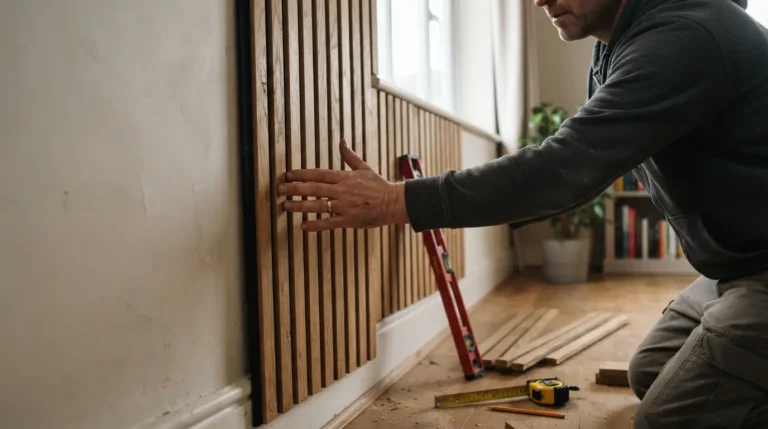
Yes, adhesive strips or removable mounting clips let you fit lighter felt or foam panels without drilling, which suits most rental agreements. Heavier wood slat panels are better suited to screw fixing, so they’re a better fit for a home you own or a longer-term tenancy where drilling is permitted.
What is the difference between acoustic panels and soundproofing?
Acoustic panels absorb sound reflecting within a room, reducing echo and improving clarity, while soundproofing blocks sound from passing through a wall or ceiling to another room. They solve different problems, and a room can need one, both, or neither depending on whether the issue is internal echo or noise from elsewhere in the building.