12 Luxury Dining Room Ideas for a Formal and Elegant Space

These 12 luxury dining room ideas for a formal and elegant space come down to a few decisions done well: rich wall treatments, correctly sized lighting, a table that suits the room’s shape, and chairs built to survive real dinners. Get those right and even a modest room reads as high end.
The catch is that a luxury dining room fails in familiar ways. Dark walls swallow a small room, marble stains at the first glass of red wine, a chandelier looks lost above a long table, and the room echoes so badly nobody can hear across it. Every idea below comes with the cost, the upkeep and the honest trade-off, so you can choose what suits your room rather than what simply photographs well. Prices are approximate, given in pounds, and vary by country and supplier.
1. Go Dark and Dramatic with Colour-Drenched Walls
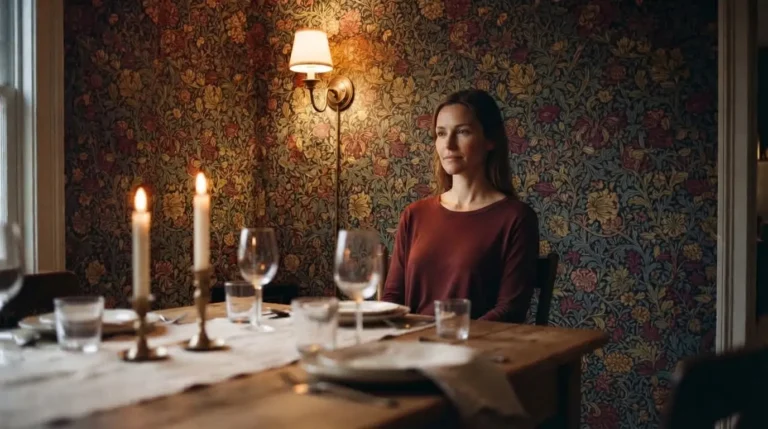
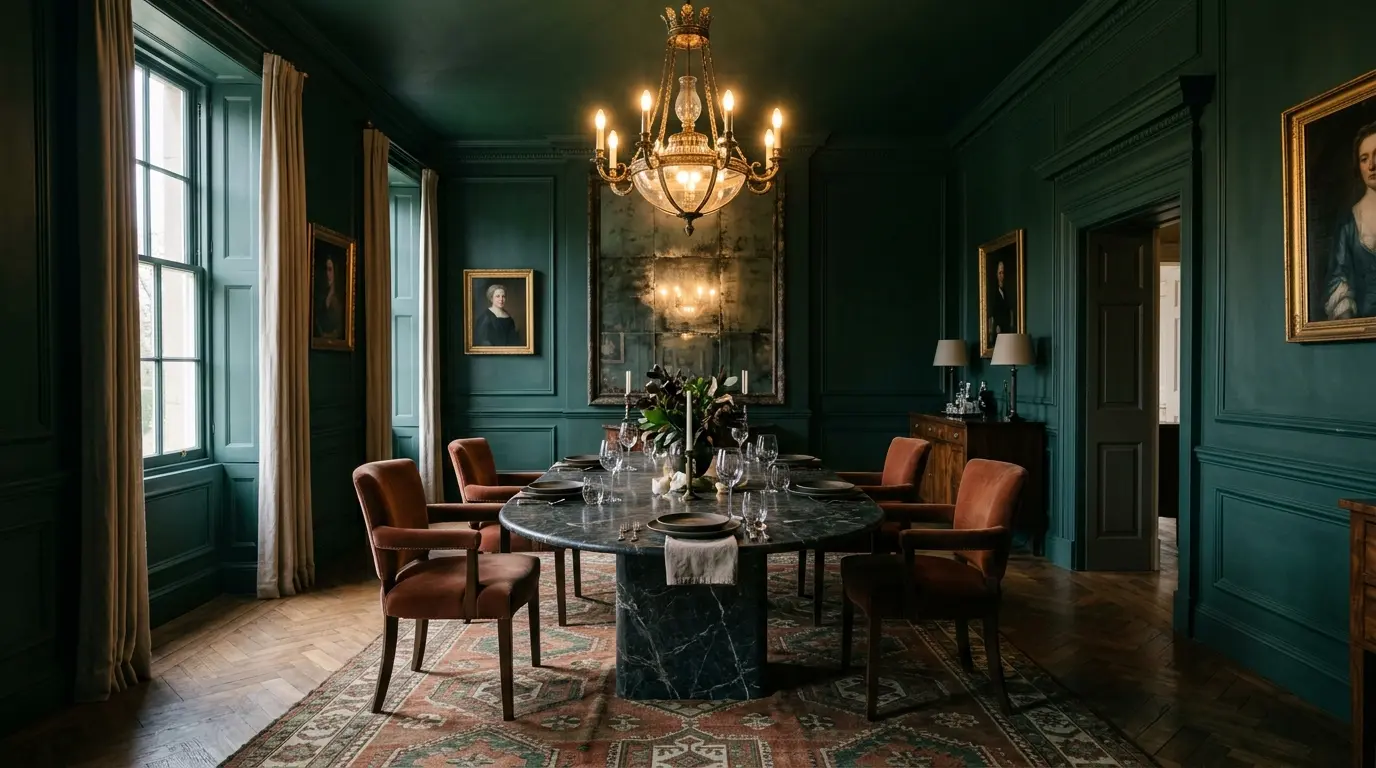
Deep green, aubergine, ink blue or chocolate brown on the walls, ceiling and woodwork turns a dining room into a jewel box. Because you only use the room for a few hours at a time, it is where strong colour pays off most.
Designer Timothy Corrigan has argued that dining rooms, like halls and powder rooms, suit high drama because nobody lingers in them all day. Budget roughly £400 to £1,200 for a professional decorator and quality paint in an average room, and allow three to five days including drying. The trade-off is that dark colour shows dust and scuffs, so choose a wipeable finish. It also shrinks a north-facing room unless you add warm 2700K lighting and a large mirror. Test a big sample board across a full day.
2. Add Wall Panelling for Depth
Picture-frame moulding, fluted panels or full-height wainscoting give flat walls architectural weight without touching the structure. Painted in a single tone, the shadow lines do the decorating. It suits period homes and new builds alike, and it is one of the most reliable formal dining room ideas.
MDF is the practical choice, and a fitted feature wall typically costs £600 to £2,500 depending on size and finish. A competent fitter needs two to four days including painting. Solid wood costs noticeably more and moves with humidity. Measure around sockets and radiators before ordering, and use satin or eggshell paint, because matt finish collects dust in the grooves and is harder to wipe.
3. Hang One Statement Chandelier, Sized Properly
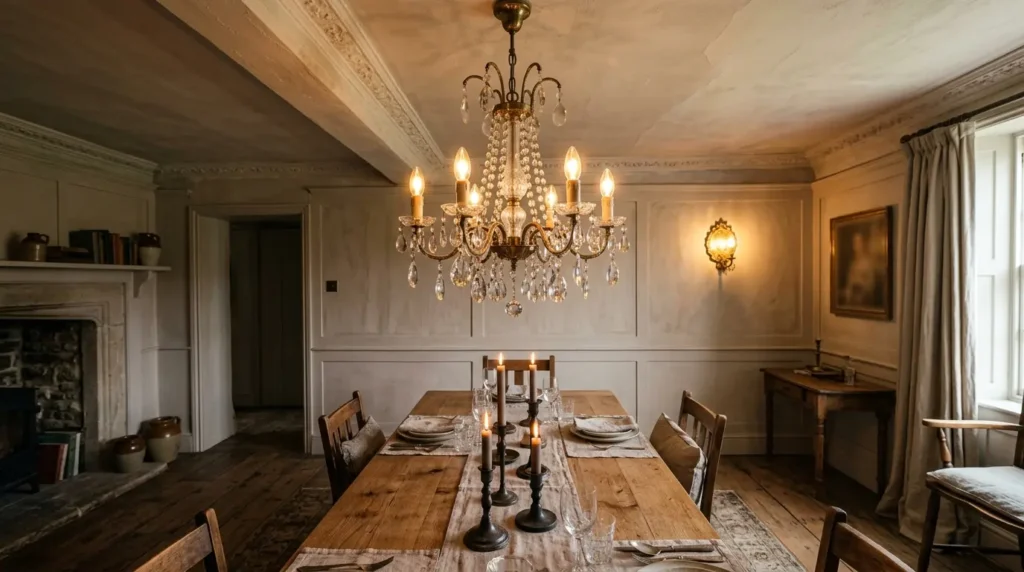
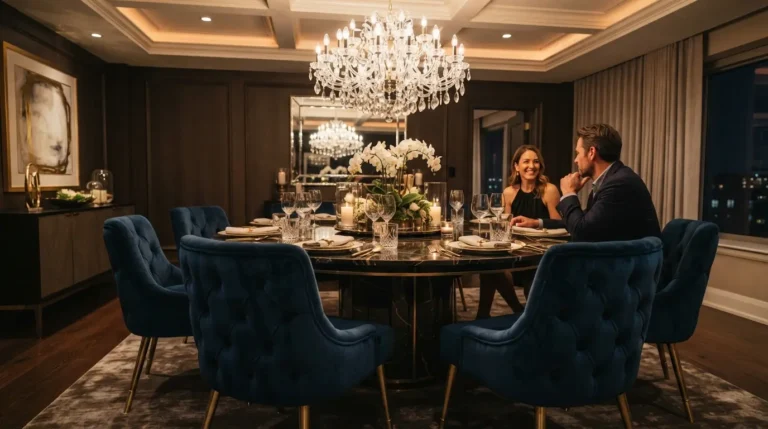
A good chandelier measures roughly half to two thirds of the table’s width and hangs 75 to 90cm (30 to 36 inches) above the tabletop. That proportion keeps sightlines clear and makes the fixture look intentional rather than oversized or lost.
Budget about £400 to £5,000 or more depending on glass, brass and maker, plus around half a day of an electrician’s time. Fit it to a dimmer and use warm 2700K bulbs so skin and food look flattering. Add wall lights for a second layer of light. The downside is upkeep, since crystal and glass need regular dusting, and ceilings above 3m usually need a longer drop.
4. Choose a Stone-Topped Table, but Know the Upkeep
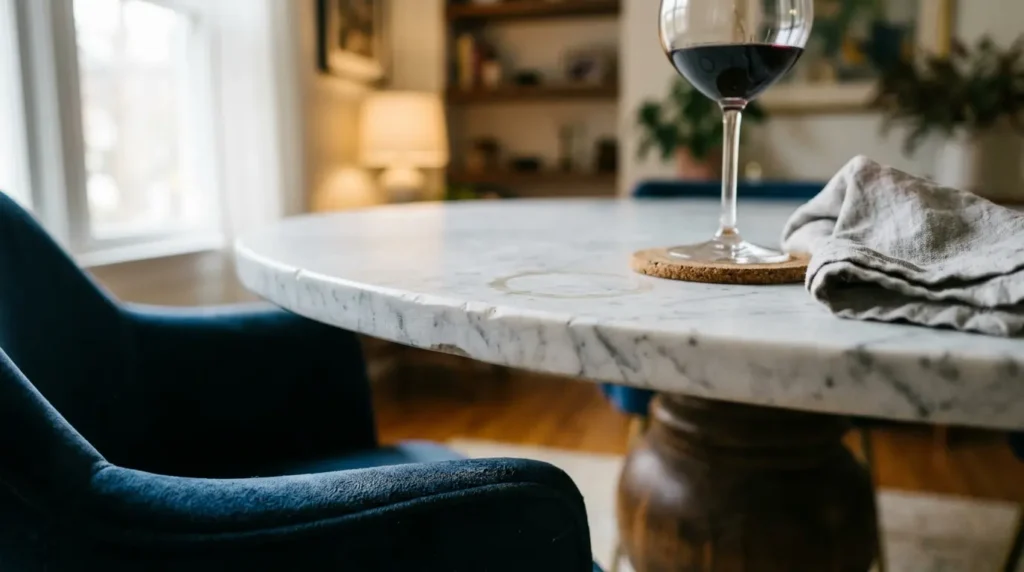
Marble, travertine and quartzite tops bring natural veining and real weight to an elegant dining room. A honed finish hides marks better than polished stone, and a pedestal base keeps legs out of your guests’ way.
Expect roughly £2,000 to £10,000 or more for a good stone table. Marble is porous and etches from wine, citrus and vinegar, so seal it and wipe spills fast. If you want the look without the anxiety, sintered stone or porcelain tops resist stains far better, though they lack the depth of the real thing. Stone is heavy, so check stair and doorway access before you order.
5. Match the Table Shape to the Room
Square or small rooms suit round tables, and long narrow rooms suit rectangles or ovals. A round table removes corners, eases movement and makes conversation easier. Shape should follow the room’s proportions, not a trend.
A good rule of thumb is 90cm (36 inches) between the table edge and any wall or furniture, so chairs pull out and guests can pass. A 120cm round table seats four and a 150cm table seats six. Allow about 60cm (24 inches) of edge per diner. Extending tables add flexibility, but test the mechanism in the showroom, because cheap runners jam.
6. Upholster Chairs for Real Life
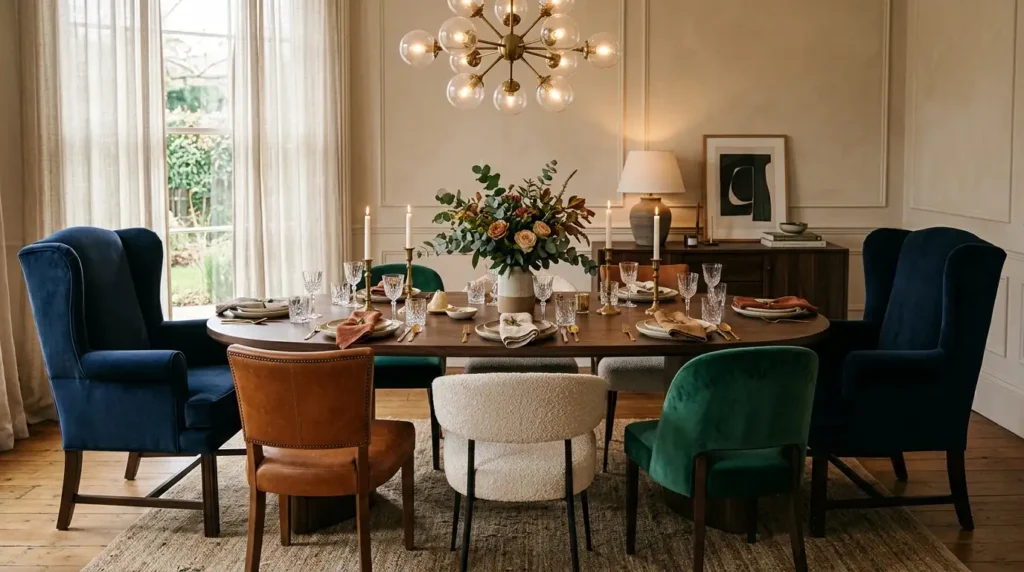
Comfortable chairs separate sophisticated dining from a showroom. Velvet, leather, bouclé and linen blends all work, provided the fabric suits how you actually use the room. Armchairs at the table ends add presence and keep guests seated for longer.
For regular use, look for fabric rated at 25,000 Martindale rubs or more, and ask for a stain-resistant finish. Pale bouclé looks lovely but snags and marks, so many homeowners choose mid-tone velvet or leather for family dinners. Reupholstering six chairs typically costs about £600 to £2,400 depending on fabric and labour, and takes two to four weeks.
7. Use Mirrors and Glass to Move Light Around
A large mirror on the wall beside or opposite a window doubles daylight and gives candlelight a second glow in the evening. Antiqued or bronze-tinted glass feels richer than a flat modern mirror.
Budget £200 to £2,000 for a large framed mirror, and more for bespoke antiqued glass. Hang it to reflect the chandelier or a view, not a cluttered hallway. A mirror directly opposite a bright downlight creates glare at the table, and antiqued glass shows fingerprints. A mirror above the sideboard is a safe middle ground.
8. Build In a Sideboard, Display Cabinet or Bar
Bespoke cabinetry makes a room feel finished. A full-wall sideboard, glazed display cabinet or concealed bar hides clutter, stores glassware and fills awkward alcoves that ready-made furniture cannot.
Custom joinery usually costs about £3,000 to £12,000 or more for one dining room wall, and six to twelve weeks from measurement to fitting is common. Add internal LED strips on a dimmer to light glassware. The trade-off is commitment, since built-ins are expensive to change and very personal schemes can narrow appeal at resale. Ask about soft-close hinges and adjustable shelves before approving drawings.
9. Lay a Generously Sized Wool Rug
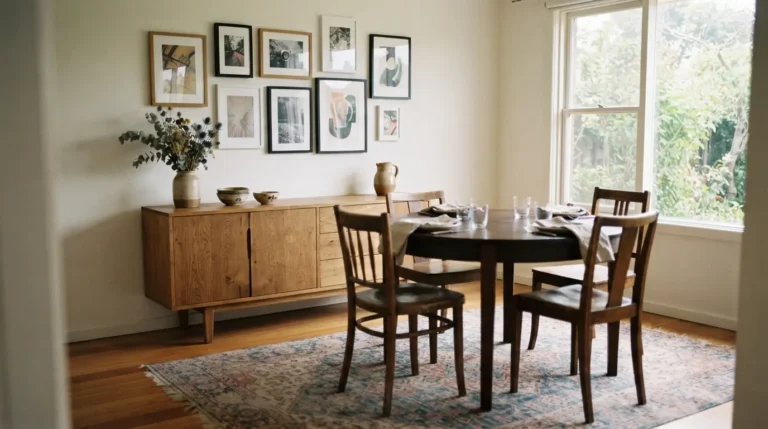
A rug anchors the table and softens a hard floor. It should extend at least 60 to 90cm (24 to 36 inches) beyond the table on every side so chair legs stay on the rug when guests pull back. In an open-plan space, it also marks out the dining zone.
A quality wool rug in a flat or low weave costs roughly £400 to £3,000 depending on size and construction. Avoid thick pile under chairs, which tips them and traps crumbs. Hard surfaces bounce conversation around and tire guests during long dinners, so pair the rug with lined or interlined curtains if the room rings. Use an underlay to stop slipping.
10. Keep a Warm, Tonal Palette with Texture
If dark walls feel too heavy, build a palette from creamy white, mushroom, oat and warm grey, then add depth through texture. Limewash, plaster-effect paint, oak, linen and bouclé create calm, sophisticated dining spaces where nothing shouts.
The 60-30-10 rule helps: about 60 per cent main neutral, 30 per cent supporting tone and 10 per cent accent, such as brass or deep green. Limewash and plaster finishes cost roughly £600 to £2,000 for a dining room, and they are slightly uneven by design. The catch is that tonal rooms can look flat, so include one dark element, such as a black-framed mirror or a dark wood table.
11. Connect the Room to the Garden with Glazed Doors
Slim steel-framed or steel-look glazed doors flood a dining room with daylight and link it to a terrace or garden. They suit summer entertaining and make smaller interiors feel larger without adding floor area.
Door sets commonly start around £1,500 and can run well past £6,000 depending on size and thermal performance. Lead times of eight to sixteen weeks are common, with a few days for fitting. Check insulation ratings and ask about condensation, since cold glass makes winter dinners less cosy. Full-length curtains on a track soften the glass and help hold heat in the evening.
12. Style the Table Like a Host
Low, considered styling finishes the room. Think a bare table or linen runner, a few candlesticks, a low bowl of flowers and good flatware. Keep the centrepiece under about 30cm (12 inches) so guests can see each other across the table.
Linen napkins, crystal glassware and candlelight cost little compared with furniture. Stick to two metal finishes, such as brass with antique silver, to avoid a busy, mixed look. Real candles need sturdy holders and a safe distance from curtains, and unscented tapers stop the smell competing with the food.
How Much Do These Luxury Dining Room Ideas Cost and How Long Do They Take?
Most of these ideas range from a few hundred pounds for paint and styling to £10,000 or more for bespoke joinery and stone. Fitting times run from a single day to three months. Use the table to decide where to spend and where to save.
| Idea | Approx. cost (GBP) | Typical time | Upkeep reality |
| Dark painted walls | £400 to £1,200 | 3 to 5 days | Shows scuffs, needs a wipeable finish |
| Wall panelling | £600 to £2,500 | 2 to 4 days | Dust in grooves, use satin paint |
| Statement chandelier | £400 to £5,000+ | Half a day to fit | Regular dusting |
| Stone-topped table | £2,000 to £10,000+ | Weeks for delivery | Seal, wipe spills quickly |
| Round or oval table | £500 to £5,000 | Weeks for delivery | Depends on the top |
| Reupholstered chairs | £600 to £2,400 | 2 to 4 weeks | Vacuum, spot clean |
| Large mirror | £200 to £2,000 | Hours | Fingerprints and spots |
| Built-in cabinetry | £3,000 to £12,000+ | 6 to 12 weeks | Low, dust glass |
| Wool rug | £400 to £3,000 | Delivery only | Vacuum, rotate yearly |
| Limewash or plaster finish | £600 to £2,000 | 2 to 4 days | Marks can show |
| Glazed doors | £1,500 to £6,000+ | 8 to 16 weeks | Clean glass, check seals |
| Table styling | £100 to £600 | About a day | Polish, launder linen |
What Mistakes Make a Luxury Dining Room Fall Flat?
The usual culprits are ordering before measuring, judging colour from a tiny swatch, buying a matched suite and forgetting the electrics. Each costs little to avoid at the planning stage and a lot to fix afterwards.
- Ordering before checking access: Measure stairs, hallways and door widths. Stone tops and large cabinets can need two or three people to carry.
- Trusting a small swatch: Paint looks different in morning and evening light, so test large samples on two walls.
- Buying a matching suite: A table, chairs and sideboard from one set feel catalogue-like. Mix related tones and woods instead.
- Forgetting the electrics: Plan dimmers, wall light positions and floor sockets before plastering, because changing them later is messy and expensive.
Conclusion
Pick two or three of these 12 luxury dining room ideas for a formal and elegant space rather than trying them all. Spend first on lighting, the table and the chairs, then add wall treatments and styling as your budget allows. Measure twice, test colour in your own light and order stone or joinery early, because lead times run long. A well-planned high end dining room feels calm, comfortable and ready for a long dinner.
FAQs
What colours make a dining room look expensive?
Deep, muted shades such as green, ink blue, aubergine and chocolate look costly when the finish is good, as do layered warm neutrals like mushroom and oat. Flat, cold white and icy grey tend to look cheaper.
What is the 60-30-10 rule for a dining room?
It splits colour into roughly 60 per cent main tone, 30 per cent secondary and 10 per cent accent. That might be plaster walls, oak furniture and brass details.
Is beige still a good choice?
A single flat beige can feel dated. Warm, layered neutrals with visible texture still look refined, and clay, terracotta or muted green give a more current feel.
How much space do you need around a dining table?
Allow about 90cm (36 inches) from the table edge to walls or furniture, and about 60cm (24 inches) of table edge per diner.
How big should a chandelier be over a dining table?
Aim for half to two thirds of the table’s width, hung 75 to 90cm above the surface. In ceilings above 3m, use a longer drop.
How do you stop a dining room echoing?
Add a large wool rug, lined curtains and soft upholstery. Bare plaster, stone and glass together cause most of the echo.
How much does a luxury dining room cost?
It varies widely by country. A refresh with paint, lighting, a rug and styling often sits between £1,500 and £6,000, while stone, joinery and glazing can push a full scheme beyond £20,000.
Can you get a luxury look on a budget?
Yes. Spend first on lighting, the rug and curtains, then paint the walls a deep colour. Buy second-hand chairs and have them reupholstered, and let dimmers and candlelight do the rest.