12 Exposed Brick Wall Ideas for an Industrial and Characterful Interior

Exposed brick wall ideas work because raw brick brings genuine warmth and texture that no other material quite replicates, and it’s remained one of the most enduring interior trends precisely because it pairs so naturally with almost any style, from full industrial loft to soft, rustic farmhouse. The 12 ideas below cover the applications and pairings worth considering, along with honest sourcing and styling advice most inspiration pieces skip.
1. Source Reclaimed Brick From Salvage or Your Own Demolition
If your walls don’t have brickwork worth exposing, reclaimed brick from an architectural salvage yard is a genuine alternative, giving you the same weathered character without depending on what happens to be behind your own plaster. If you’re planning other demolition work elsewhere in your home, ask your builder to remove those bricks carefully and set them aside rather than discarding them, a genuinely practical way to source matching material without buying in from elsewhere.
2. Match Reclaimed Brick to Your External Walls for Continuity
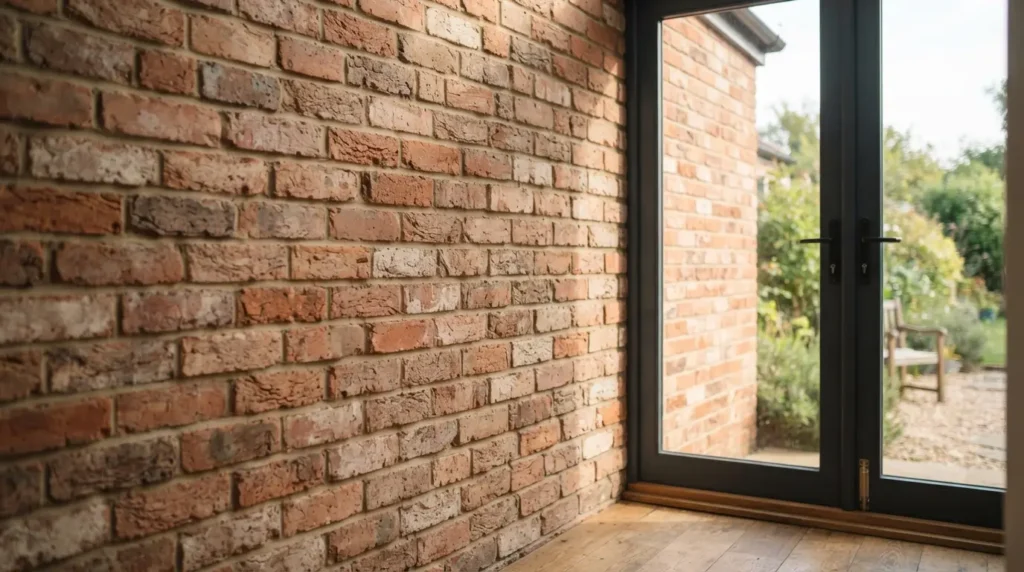
When sourcing reclaimed brick, aim for something that closely matches your home’s existing external brickwork rather than choosing purely on appearance in isolation. This creates a genuine sense of continuity, and it’s particularly effective if you’re connecting an interior space to the garden through glass doors, using the same or similar brick both sides of that threshold makes the transition between inside and outside feel considered rather than abrupt.
3. Pair Brick With Concrete and Timber for an Earthy Industrial Edge
Combining exposed brick with other raw, unfinished materials, polished concrete flooring, exposed timber, creates a genuinely gritty, earthy character that suits a converted warehouse or industrial-style space particularly well. The combination works because none of these materials try to hide their true nature, brick, concrete, and timber all read as structural and honest rather than decorative, which gives the whole scheme a coherent, considered feel rather than a single feature standing apart from everything else.
4. Brick and Crittall-Style Windows for a Loft Look
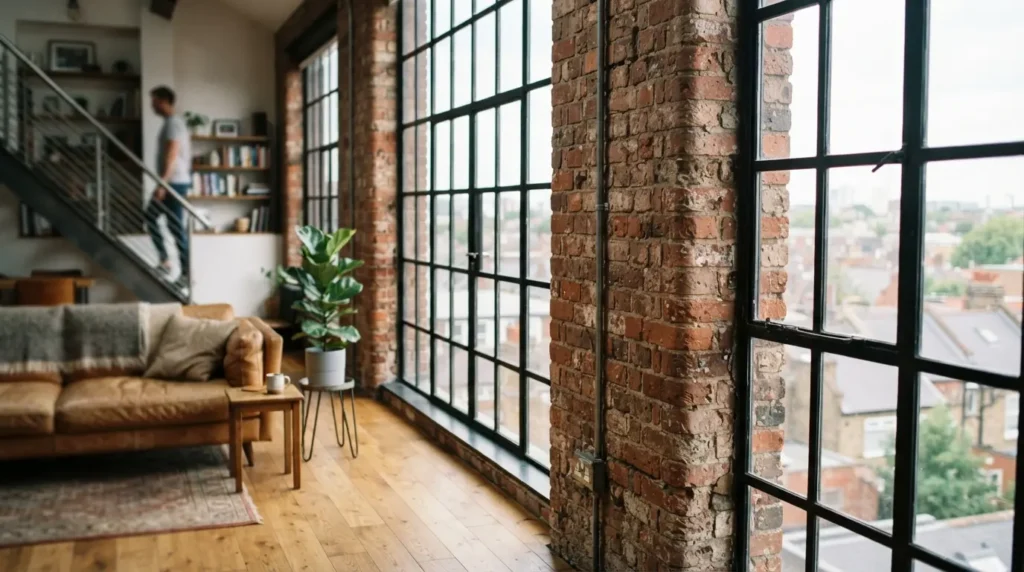
Slim, black-framed Crittall-style windows paired with exposed brick create a genuinely convincing New York loft aesthetic, the contrast between the brick’s warm, textured surface and the window’s crisp, graphic black lines is what makes this combination work so consistently well. This suits a genuinely large opening or room divider specifically, where the windows can do real architectural work alongside the brick rather than getting lost as a smaller, secondary detail.
5. Ground a Warm Brick Wall With a Dark Ceiling
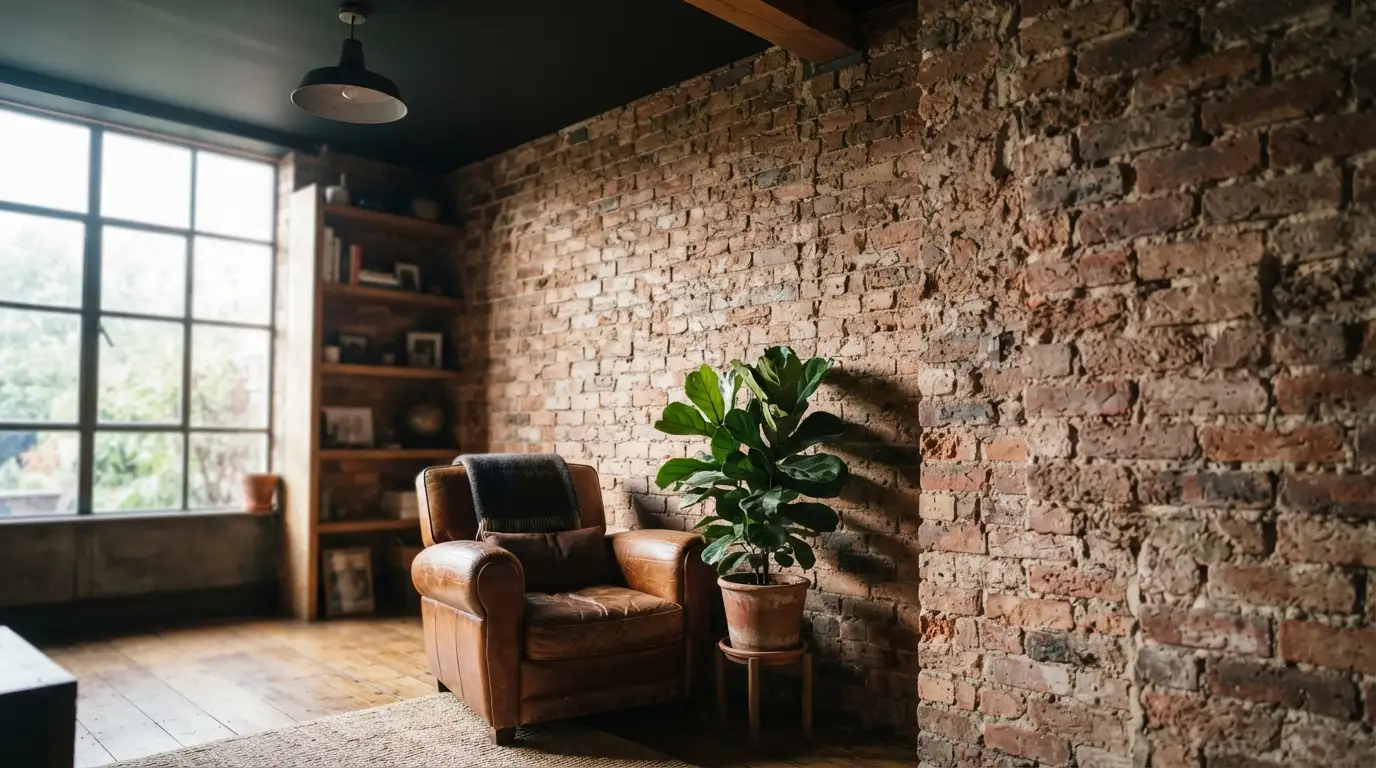
A confidently dark, almost black ceiling does real work against a warm exposed brick wall, offsetting the brick’s natural warmth and grounding the whole room in a way a plain white ceiling doesn’t achieve. This pairing suits a bohemian or eclectic scheme particularly well, and it’s worth committing to genuinely dark paint on the ceiling rather than a half-measure, since the contrast is what makes the combination read as deliberate rather than accidental.
6. Whitewash Brick for a Softer, Rustic-Modern Contrast
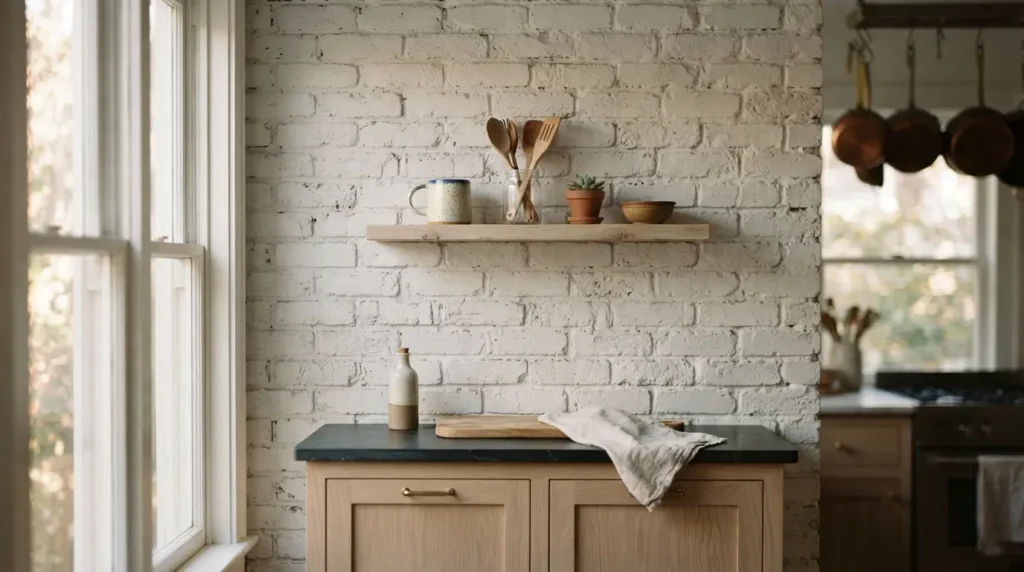
Rather than leaving brick in its natural red or orange tone, a whitewash finish softens the texture into something considerably more contemporary while still keeping the material’s genuine rustic character. This works particularly well against smooth white plaster walls and pale wood flooring, creating a scheme that feels both characterful and clean at once, a good middle ground if full raw brick feels too heavy for your room but you still want the texture.
7. Let Brick Frame a Statement Piece of Art
A textured brick wall makes a genuinely effective, unconventional backdrop for a bold piece of art or a striking photograph, the brick’s texture and warmth add real depth behind the piece rather than the flat, neutral backdrop a plain painted wall would offer. This works especially well in a kitchen or dining space, where a single confident piece against exposed brick reads as considered and personal rather than an afterthought.
8. Brick Slip Tiles Where Real Exposed Brick Isn’t an Option
If your wall’s actual brickwork isn’t in a condition worth exposing, or you’re working with a wall that was never brick to begin with, brick slip tiles give you the same genuine textured look applied over the existing surface. This is a practical, lower-risk alternative to stripping back to bare masonry, and it’s worth considering specifically if a test patch during any exposure attempt reveals brick that’s too damaged or uneven to leave on show.
9. Expose Structural Elements Alongside the Brick for Honesty
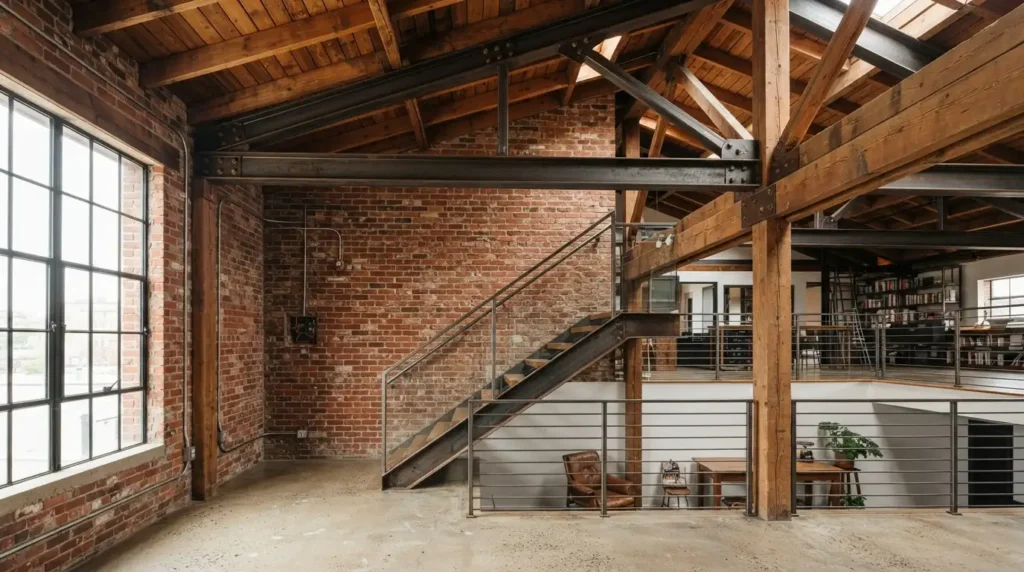
Leaving other structural elements visible, wooden ceiling joists, original beams, alongside your exposed brick creates a genuine sense of how the building actually goes together, rather than presenting brick as an isolated decorative feature. This suits a genuine loft conversion or extension particularly well, where the underlying structure has real architectural interest worth showing rather than hiding behind a finished ceiling.
10. Add a Skylight or Roof Light to Counter Brick’s Visual Weight
Exposed brick brings genuine warmth but also visual density, and pairing it with a roof light or skylight is a considered way to counter that weight with genuine additional daylight. This combination suits a kitchen or dining space particularly well, where the brick provides warmth and character while the extra overhead light keeps the room from feeling closed in, a practical pairing that solves brick’s one honest drawback with a genuine architectural solution rather than just adding more artificial lighting.
11. Bring In Green Planting to Soften Brick’s Hard Edge
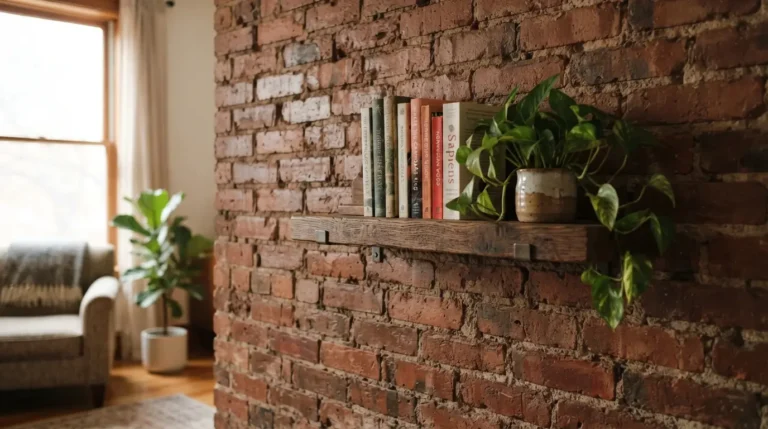
Leafy green planting is a genuinely natural partner for exposed brick, the contrast between the brick’s hard, textured surface and the plant’s soft, organic form works in almost any room. This is a low-cost, easily reversible way to soften an otherwise quite masculine or industrial material, and it’s worth positioning plants where they’ll actually get enough light to thrive rather than purely for the visual effect against the wall.
12. Know When Brick Genuinely Isn’t Worth Exposing
This is worth being honest about before you commit to any of the ideas above. Not every wall hides brick worth showing, and testing a small section first, checking for damage, uneven pointing, or a colour and texture you’re simply not drawn to, saves you from a larger project that doesn’t deliver the look you were hoping for. If your test patch reveals brick that isn’t genuinely suitable, brick slip tiles or a considered alternative material give you the same aesthetic direction without depending on what’s actually behind your specific wall.
Final Thoughts
The best exposed brick wall ideas balance the material’s genuine warmth and character with a considered approach to sourcing, pairing, and light, whether that’s reclaimed brick matched to your existing walls, a dark ceiling to ground the warmth, or a skylight to counter the visual weight. Choose the application that suits your specific room and its actual brickwork, and the finished wall will feel like a genuine architectural feature, not just a trend applied for its own sake.
FAQs
Can I use reclaimed brick instead of exposing my own wall?
Yes, reclaimed brick from an architectural salvage yard is a genuine option if your own walls don’t have brickwork worth exposing, or if you’re building a new feature wall from scratch. Try to match it to your home’s existing external brick for a more cohesive, considered look.
Does exposed brick work in a modern kitchen?
Yes, it pairs particularly well with clean, contemporary elements like polished concrete, sleek cabinetry, or Crittall-style glazing, creating a considered contrast between raw, textured brick and smooth, modern surfaces elsewhere in the room.
What colours pair well with exposed brick?
Neutrals and monochrome tones let the brick’s natural texture and warmth take centre stage, while a confidently dark ceiling grounds the space effectively. Green planting is also a genuinely natural, complementary partner against brick’s warm, earthy tones.
Is brick slip a good alternative to real exposed brick?
Yes, genuinely, particularly where the wall behind your plaster isn’t brick at all, or where a test patch reveals brickwork too damaged or uneven to expose properly. Brick slip tiles give you the same textured look applied over an existing surface.
Does exposed brick make a room feel darker?
It can add visual weight and density, particularly a full wall of dark or red-toned brick, though pairing it with additional natural light, a roof light or larger windows, or a lighter whitewash finish, both help counter this if brightness matters more to you than a fully raw, heavy look.