How to Choose the Right Mirror for a Bathroom

Choosing the right mirror for a bathroom comes down to more than size and shape, since a bathroom’s constant humidity means a mirror that looks perfect on day one can develop black spots and tarnishing within a couple of years if it wasn’t built for the room in the first place. Getting the size, backing, and lighting right from the start avoids that disappointment and gives you a mirror that still looks genuinely good years after it’s fitted.
Size Your Mirror to Your Vanity, Not Just the Wall
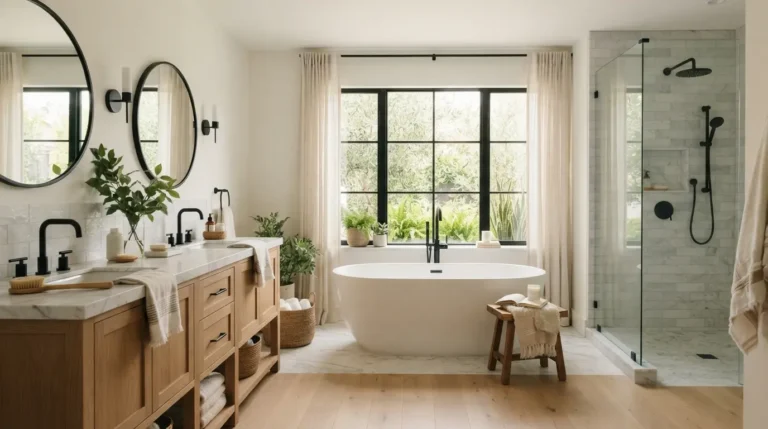
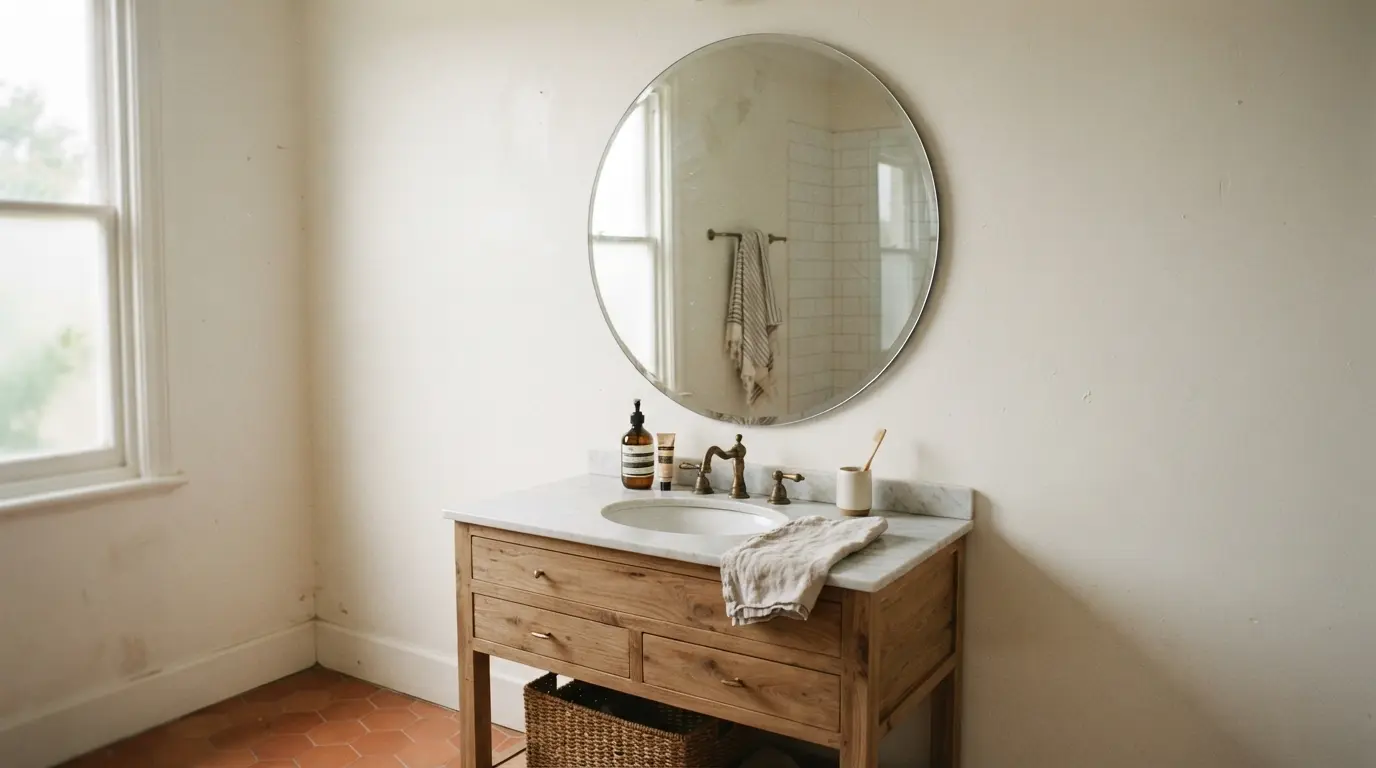
The most reliable sizing rule is to match your mirror’s width to your vanity, or keep it slightly narrower, rather than choosing based on the available wall space alone. A mirror noticeably smaller than the vanity below it leaves the space looking unbalanced and empty, while one considerably wider can overwhelm a compact bathroom. Standard bathroom mirrors typically run somewhere between roughly 45cm and 1 metre in width, and 60-90cm in height, giving you a genuine range to work with, but always measure your actual wall and vanity before ordering rather than assuming a common size will automatically fit your specific space.
Check for Genuine Moisture-Resistant Backing
This is the detail that decides whether your mirror still looks good in five years, and it’s worth understanding before you buy. A standard mirror’s silvered backing can develop black spots, peeling, or general degradation from sustained bathroom humidity over time, since ordinary backing simply isn’t built to handle that level of ongoing moisture exposure. Look specifically for a mirror described as having moisture-resistant, copper-free, or silver-coated backing, this genuinely extends the mirror’s usable life in a way that isn’t obvious from looking at it in a showroom, since a poor-quality mirror looks identical to a good one until the humidity starts taking its toll.
Choose Between Back-Lit and Front-Lit LED for How You Actually Use the Mirror
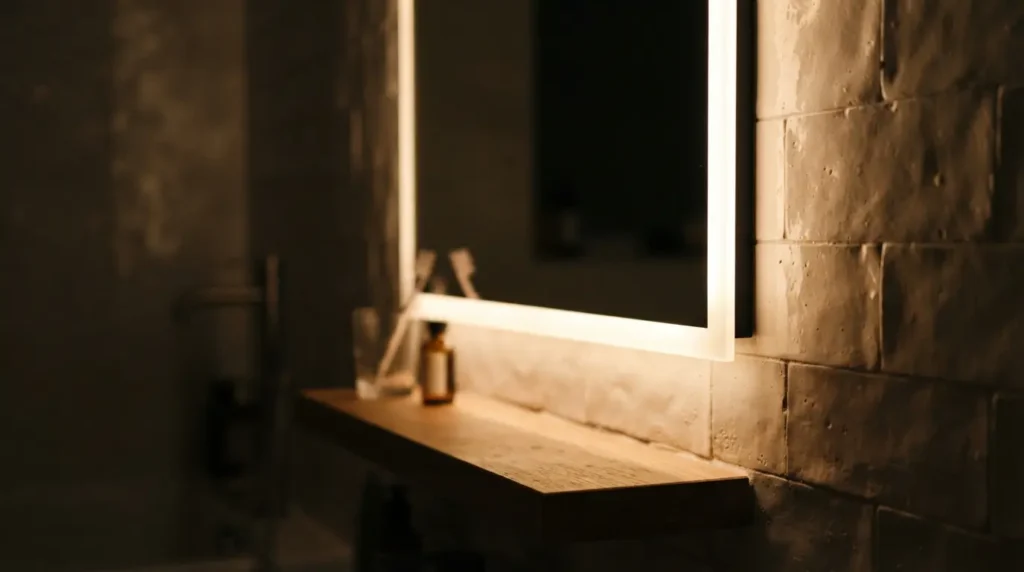
If you’re considering an illuminated mirror, this decision is worth making based on your actual routine rather than which looks nicer in a product photo. Back-lit mirrors give a soft, indirect glow around the mirror’s edge, genuinely well suited to a relaxed evening atmosphere but less useful for the close, detailed visibility you need for shaving or applying makeup. Front-lit mirrors direct brighter, more even light onto your face specifically, making them the more practical choice for a genuine morning routine where clear visibility actually matters. Some households benefit from having both available separately, but if you’re choosing just one, match it to whichever use, ambience or task lighting, matters more to you day to day.
Pick a Shape That Suits the Room’s Mood
Round and oval mirrors bring a genuinely calmer, softer feel to a bathroom, their lack of hard corners suits a room built around relaxation rather than sharp, architectural lines. Rectangular and square mirrors give a cleaner, more classic look that suits almost any bathroom style without making much of a statement on their own. Capsule and other asymmetric shapes sit somewhere between the two, modern but not as severe as a strict rectangle, and they’re worth considering if you want something that reads as current without feeling like a passing trend.
Check Thickness and Edge Finish for Genuine Durability
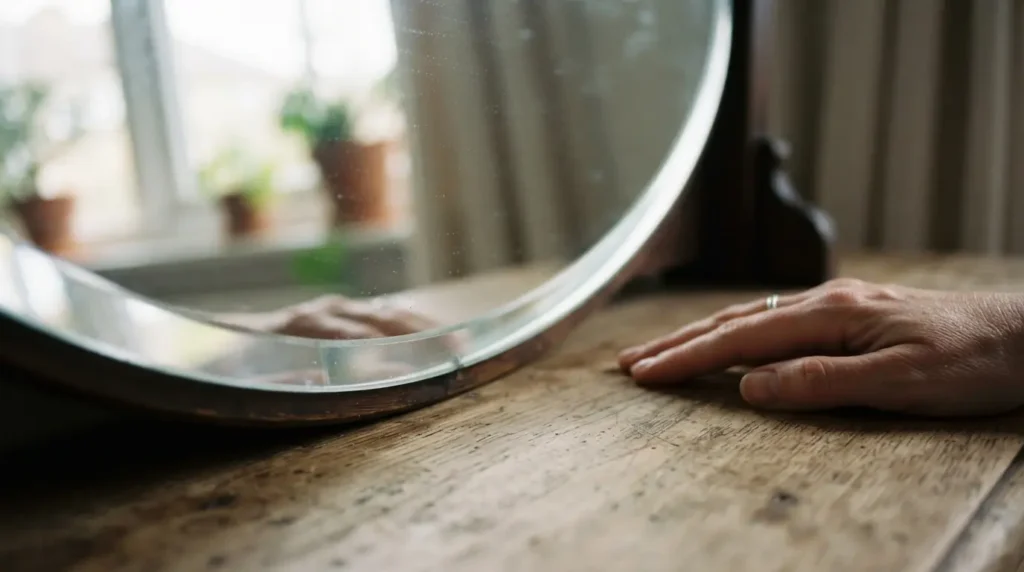
A thicker mirror, typically 5mm or more, holds up better to daily use and is genuinely less prone to distortion or flexing than a thinner one, worth prioritising if the mirror will see years of regular use rather than occasional guest bathroom duty. Edge finish matters for both safety and longevity too: a polished edge gives a smooth, refined look, while a bevelled edge adds extra depth and shine, and either finish, done properly, helps prevent small chips developing along the mirror’s edge over time.
Position the Mirror at the Right Height
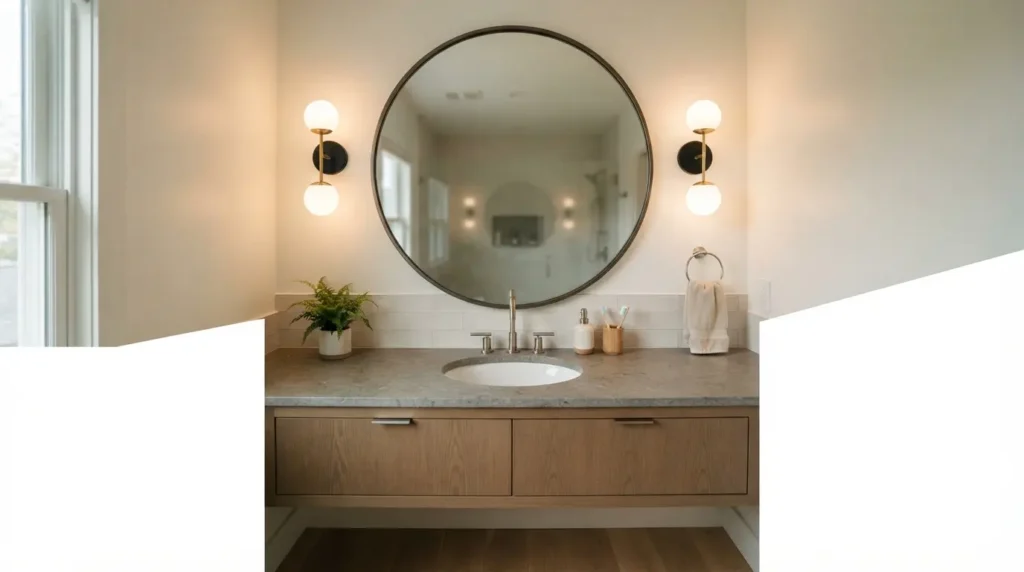
A commonly used starting point is centring the mirror so its middle sits at roughly eye level, around 150-155cm from the floor, though this is worth adjusting slightly based on your household’s actual height and your vanity’s specific dimensions rather than treating it as a fixed universal rule. Centre the mirror directly above the basin for the most natural, considered look, and if you’re pairing it with wall lights rather than an integrated LED, position them evenly on both sides for balanced light across your face rather than lighting from one direction only.
Match Your Fixing Method to Your Wall Type
This is worth confirming before you commit to any mirror, particularly a heavier framed or LED model. On plasterboard or drywall, use proper wall anchors or toggle bolts rated for the mirror’s actual weight, standard fixings can pull straight out of a hollow wall under load. On tiled or masonry walls, masonry screws or fixings specifically designed for solid surfaces give a genuinely secure hold. For a heavier illuminated mirror specifically, it’s worth getting professional installation rather than hanging it yourself, since these often need both a secure mechanical fixing and a properly wired, damp-rated electrical connection.
Set a Realistic Budget by Mirror Type
| Mirror Type | Typical Cost | What You’re Paying For |
| Frameless | Lower end | Clean, simple look, most affordable option |
| Framed | Mid-range | Added texture and a more detailed, finished look |
| LED/illuminated | Mid to higher | Built-in lighting, often with demister and touch controls |
Treat these as approximate bands rather than fixed prices, since exact cost varies by size, brand, and specific features like demister pads or sensor controls. Frameless mirrors sit at the more affordable end and suit a minimal or compact bathroom well, while framed and illuminated mirrors cost more but bring genuine additional function and detail, worth the investment if you’re planning to keep the mirror in place for years rather than treating it as a short-term fix.
Final Thoughts
Choosing the right mirror for a bathroom really comes down to matching the size to your vanity, checking for genuine moisture-resistant backing, and picking a lighting type that suits how you actually use the room, not just which mirror looks best in a single photo. Get those details right, along with a proper fixing for your specific wall type, and the mirror will still look as good in five years as it does on the day it’s installed.
FAQs
What’s the best height to hang a bathroom mirror?
A common starting point is centring the mirror at roughly eye level, around 150-155cm from the floor, though this should be adjusted based on your household’s height and your specific vanity. Centre it above the basin for the most natural, balanced look.
Do bathroom mirrors need special moisture protection?
Yes, genuinely. Standard mirror backing can develop black spots or degrade over time from sustained bathroom humidity, so look for a mirror specifically described as having moisture-resistant, copper-free, or silver-coated backing to avoid this over the years.
Should I choose a backlit or front-lit LED mirror?
It depends on your priority. Back-lit mirrors give a softer, more ambient glow suited to evening use, while front-lit mirrors give brighter, more even light directly onto your face, better for the close visibility a morning routine actually needs.
What size mirror should I get for my vanity?
Match the mirror’s width to your vanity, or keep it slightly narrower, rather than choosing based on wall space alone. A mirror noticeably smaller than the vanity looks unbalanced, while one considerably wider can overwhelm a compact bathroom.
Can I retrofit LED lighting into an existing mirror?
It’s possible but genuinely tricky to make look as neat as a mirror with lighting built in from the start. If you do attempt it, make sure any wiring and lighting components are specifically rated for damp areas like a bathroom.