10 Velvet Dining Chair Ideas to Add Luxury to Your Dining Room

Velvet dining chair ideas work best when you match the shade and the fabric grade to how the room actually gets used, not just how the chair photographs in a showroom. A jewel-tone velvet armchair looks stunning in a formal setting, but the wrong velvet in a busy family kitchen-diner shows wear within a year.
Most guides show you pretty rooms and stop there, leaving out the part that actually matters: which velvet survives red wine and kids’ spaghetti nights, and which one is genuinely just for special occasions. Here are 10 ways to bring velvet into a dining room properly, plus what to check before you buy.
1. Jewel-Tone Velvet for a Bold Focal Point
Deep jewel-tone velvet, think emerald, sapphire, or ruby, turns dining chairs into the room’s focal point rather than a background piece, especially against neutral walls and a plain wood or stone table. This works best when the rest of the room stays quiet, letting the chairs do the talking.
Choose one strong jewel tone rather than mixing two or three, since a single confident colour reads as intentional while several competing jewel shades can start to look chaotic around one table. Keep the table itself simple, in a light wood, marble, or glass, so the chairs have room to stand out.
2. Soft Blush or Dusty Rose for an Everyday-Elegant Look
A soft blush or dusty rose velvet brings warmth and a gentle sense of luxury without the drama of a darker jewel tone, making it a genuinely liveable choice for a dining room used every day rather than only for entertaining. It pairs particularly well with warm wood tones and brass or aged bronze hardware.
Lighter velvets show marks more visibly than dark ones, so this is a shade where a performance or stain-resistant treatment matters more than usual. If the room gets heavy daily use, ask specifically about the fabric’s cleaning code before committing to a pale colourway.
3. Sage or Olive Velvet for an Earthy, Grounded Look
Green velvet in a muted sage or olive tone fits neatly into the warmer, nature-inspired palettes that have been dominating interiors, sitting alongside terracotta and warm neutrals rather than fighting them. It reads as considered and current without the more theatrical feel of a jewel-bright emerald.
This shade works especially well against natural materials like rattan, cane, or unfinished timber, since the muted green doesn’t compete with wood grain the way a brighter colour can. It’s also a forgiving colour for hiding light dust and everyday marks between cleans, which is a genuine practical bonus in a busy dining room.
4. Channel-Tufted Velvet Backs for Classic Glamour
Channel-tufted velvet, with vertical stitched channels running down the backrest, gives a chair a more formal, tailored look than a plain upholstered back, and the ribbed texture catches light in a way flat velvet doesn’t. It’s one of the most recognisable “luxury dining chair” silhouettes for a reason.
The stitching channels are also where dust and crumbs collect fastest, so factor a slightly more involved vacuum or brush routine into your regular cleaning if you go this route. It’s a small trade-off for a look that reads as noticeably more expensive than a plain upholstered back of the same fabric.
5. Crushed Velvet for Extra Shine and Texture
Crushed velvet has an uneven, shimmering surface created by pressing the pile in different directions, giving it more visual movement and shine than a smooth, flat velvet. It suits a more glamorous or maximalist dining room where you want the chairs to catch light from a pendant or chandelier overhead.
Crushed velvet in a natural fibre can flatten and lose some of that texture with heavy daily use, so it tends to suit a dining room used more for entertaining than three meals a day. A performance crushed velvet holds the texture better over time if this is genuinely your everyday dining set.
6. Performance Velvet for Busy Family Dining Rooms
Performance velvet, usually a polyester or poly-blend construction, is built specifically to resist stains, fading, and heavy daily wear far better than a natural cotton or mohair velvet, without losing much of the soft, plush look. This is the practical pick if young kids, pets, or frequent spills are a daily reality at your table.
Check the abrasion rating before buying: performance velvets often clear 30,000 double rubs on the Wyzenbeek test, well above the roughly 15,000 double rubs considered adequate for heavy residential use. Also check the cleaning code on the tag under the seat. A W or W/S code means water-based cleaners are safe, while an S code means solvent-only cleaning, which matters a lot the first time someone spills red wine.
7. Velvet Wingback Chairs at the Head of the Table
A velvet wingback chair at the head of the table adds height, presence, and a slightly more formal note without upholstering the entire set in the same heavier silhouette. The curved wing panels also genuinely add a sense of enclosure and comfort for whoever’s sitting there.
This idea works best as a pair, one at each end of a rectangular or oval table, rather than as the style for every seat, both for cost reasons and because a full set of wingbacks can start to feel closed-in around a smaller table. Keep the side chairs simpler in profile so the wingbacks read as a deliberate accent rather than mismatched leftovers.
8. Two Velvet Captain’s Chairs with Simpler Side Chairs
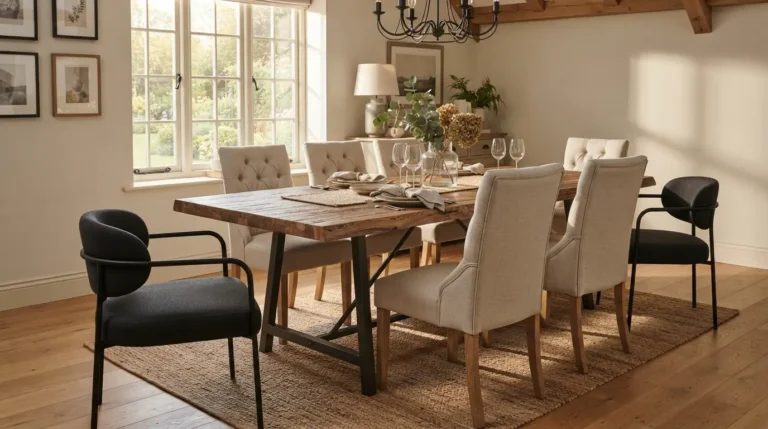
Upholstering just the two head chairs in velvet, often called captain’s chairs, while keeping the side chairs in leather, wood, or a plainer fabric, gets you the luxury look at a fraction of the cost and the maintenance risk of a full velvet set. It’s a genuinely practical compromise, not just a budget shortcut.
This works particularly well if you already have a solid wood or leather-seated dining set you like but want to freshen up, since two new velvet chairs at the ends update the whole table’s feel without a full replacement. Keep a consistent seat height and a shared colour or wood tone across both chair types so the mix reads as curated rather than accidental.
9. Velvet Against Marble, Glass, or Stone for Contrast
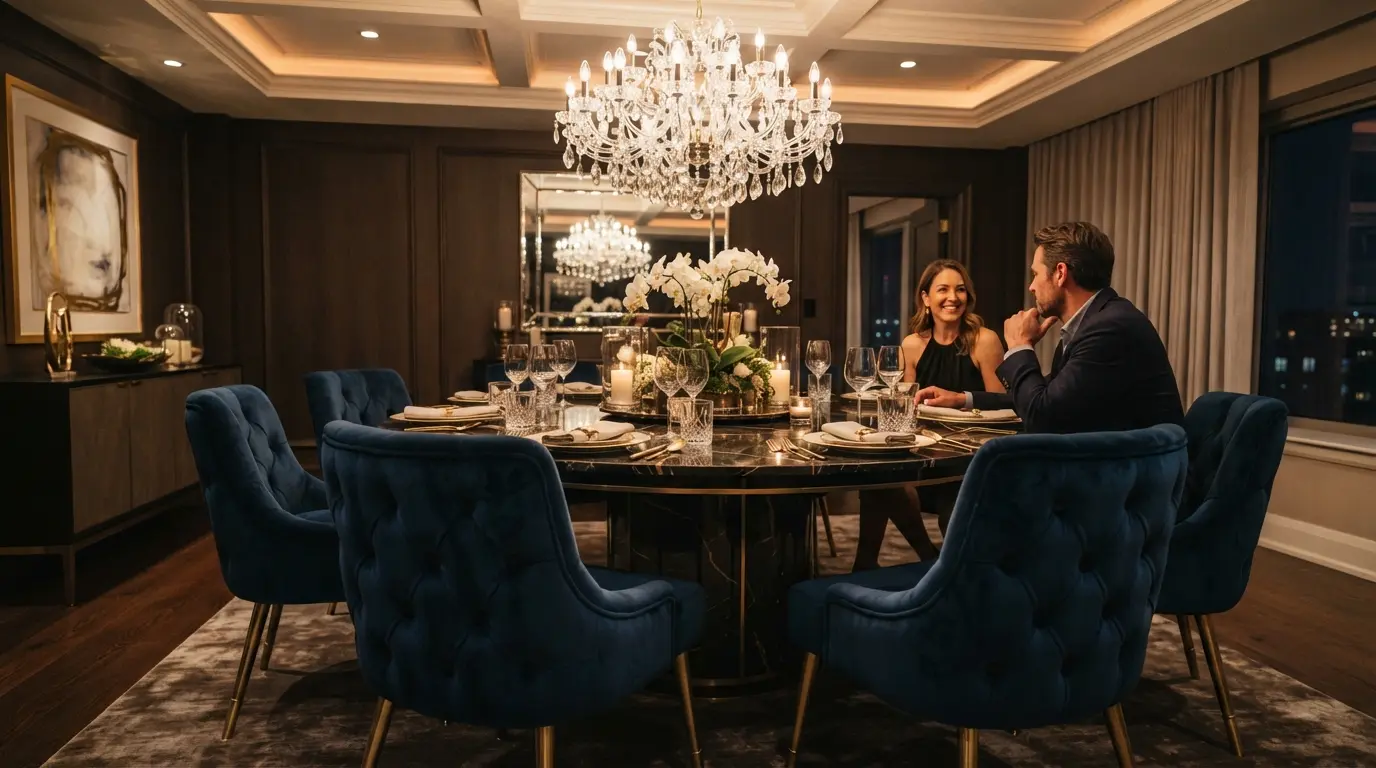
Pairing velvet’s soft, matte texture against a hard, cool surface like marble, glass, or polished stone creates a genuine material contrast that reads as considered rather than one uniform texture head to toe. The warmth of the fabric softens what can otherwise be a cold, showroom-like tabletop.
This combination photographs beautifully but does need a little more day-to-day care, since a glass or polished stone top shows every fingerprint and water ring right next to a fabric that shows every crumb. If you go this route, budget the extra few minutes it takes to wipe the table down after every meal, since the contrast only looks good when both surfaces stay clean.
10. Deep Navy or Charcoal Velvet for a Moody Dining Room
Navy or charcoal velvet brings drama and warmth without the higher-risk maintenance of a very pale shade, since darker colours simply hide daily marks and light staining far better than a blush or cream velvet ever will. It’s an easier everyday choice than it might look in photos.
This works especially well in a dining room with limited natural light, where a moody, saturated colour palette feels intentional rather than dim. Pair dark velvet chairs with a lighter tabletop, in pale wood, marble, or a light-coloured table runner, so the room doesn’t tip into feeling too heavy or closed-in.
What Do Velvet Dining Chairs Cost?
Cost depends heavily on whether you’re buying a basic polyester velvet side chair or a performance velvet chair with a reinforced hardwood or metal frame, and prices vary a good deal by country and retailer.
| Chair Type | Typical Price Range (per chair, approx.) | What You’re Paying For |
| Budget polyester velvet side chair | £70–£150 | Basic frame, standard velvet, limited durability |
| Mid-range performance velvet chair | £150–£300 | Stain-resistant treatment, higher abrasion rating |
| Designer or tufted velvet armchair/wingback | £300–£700+ | Reinforced frame, premium fill, detailed stitching |
A reinforced hardwood or powder-coated metal frame underneath the fabric matters just as much as the velvet itself. A cheap frame under a beautiful fabric will wobble and loosen within a year or two of daily use, regardless of how good the upholstery looks.
Maintenance and Care Reality
Velvet dining chairs need more regular care than a wipeable leather or vinyl seat, but the routine is manageable if you check the cleaning code before you buy rather than after the first spill. Vacuum with a soft brush attachment weekly to lift dust out of the pile, and blot spills immediately rather than rubbing, which can flatten or mat the fibres.
Natural cotton or mohair velvet fades faster in direct sunlight and crushes more permanently than a performance polyester blend, so keep natural velvet chairs away from a spot that gets constant afternoon sun if you want the colour to hold. A good rule of thumb: if the dining room sees daily family meals, choose performance velvet with a W or W/S cleaning code. If it’s mainly for entertaining and special occasions, a natural velvet in a jewel tone or crushed finish is worth the slightly higher maintenance for the look. If you’re building out the rest of the room, our guide on types of dining chairs covers how velvet options compare with wood, rattan, and other materials in more detail.
Conclusion
The best velvet dining chair ideas match the shade and fabric grade to how the table actually gets used, not just how the chair looks in a single photo. A performance velvet in a forgiving colour earns its place at a daily family table, while a natural velvet in a bold jewel tone is worth the extra care for a dining room built for entertaining. Check the cleaning code and frame quality before you fall for the colour, and velvet will genuinely add the luxury it promises.
FAQs
Is velvet a good choice for dining chairs?
Yes, provided you choose the right grade for how the room is used. Performance velvet with a high abrasion rating and a W or W/S cleaning code holds up well even in busy family dining rooms.
Does velvet stain easily?
Natural velvet is more prone to visible staining and water marks than performance polyester velvet, which is treated to resist spills. Always blot a spill immediately rather than rubbing it into the pile.
How do you clean velvet dining chairs?
Check the cleaning code on the tag first. W or W/S means water-based cleaners are safe, S means solvent-only, and X means vacuum or brush only, with no liquid cleaning at all.
What colour velvet dining chairs are trending right now?
Warm, earthy tones like sage, olive, and terracotta are popular alongside classic jewel tones like emerald and sapphire, with soft neutrals and blush remaining a safer, everyday-friendly option.
Can you mix velvet chairs with leather or wood chairs at the same table?
Yes, and it’s a common, practical approach. Using velvet on just the head chairs while keeping side chairs in leather or wood gets the luxury look with lower cost and easier daily maintenance.
Is crushed velvet better than plain velvet for dining chairs?
Neither is objectively better. Crushed velvet adds more shine and texture but shows wear and flattening faster with daily use, while plain velvet holds its look longer under regular sitting and cleaning.