8 Kitchen Worktop Ideas for Every Style and Budget

The worktop is the surface you use every day. It has to take hot pans, wet chopping boards, and constant wiping. The right choice depends on the budget, the look of the cabinets, and how much maintenance you will actually do. choose the right kitchen worktop if you want the full buying guide first.
The eight ideas below cover the materials that work in a typical UK kitchen, from laminate to stone. Each one notes the cost range, the upkeep, and the limit. kitchen colour schemes help you match the worktop to the cabinets.
1. Laminate for a low-cost kitchen
Laminate is the lowest-cost option and can look close to stone or wood in a photo. It scratches and burns more easily than solid surfaces. A hot pan will mark it. Use it if the budget is tight and you will use trivets. kitchen renovation ideas often start with laminate to keep the total cost down.
Choose a thicker edge profile if the front is visible. A thin edge looks cheap. A 38 mm or 40 mm edge feels more solid. Avoid a high-gloss finish if the kitchen faces the garden. It shows every mark.
2. Compact laminate for a wet area
Compact laminate is solid through the core and handles water better than standard laminate. It suits a utility area or a busy family kitchen. It is harder to shape into a curved edge. kitchen sink ideas if the sink cut-out is the main concern.
It can take an undermount sink if the edge is sealed properly. Check the supplier offers a sealed cut-out. An open edge will swell.
3. Solid wood for a warm kitchen
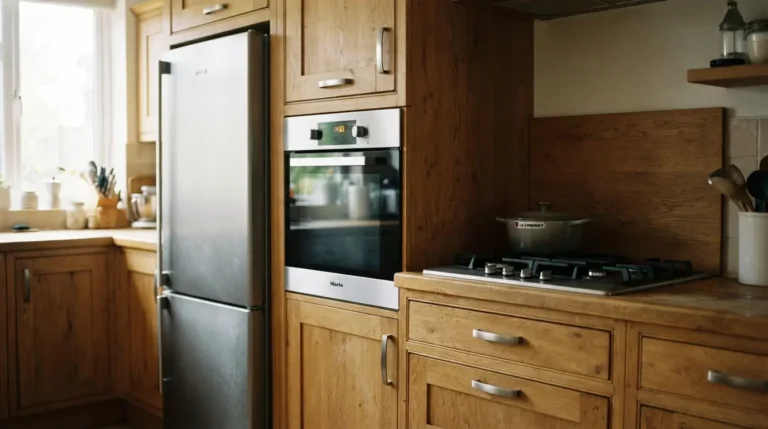
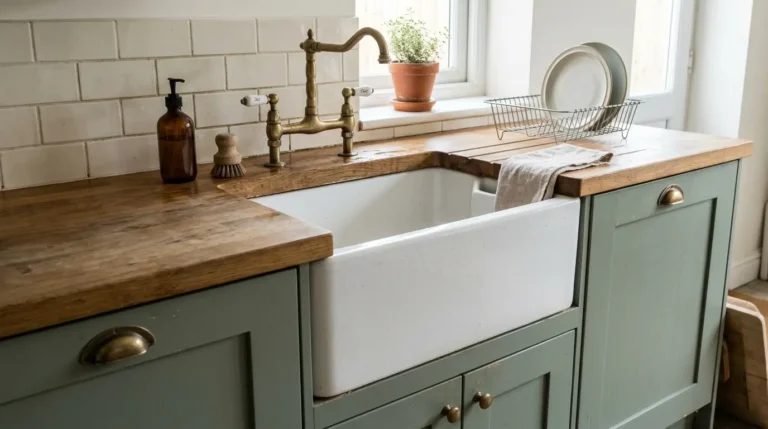
Oak or walnut looks warm and can be sanded if it marks. It needs oiling every few months near the sink. Water left on it will stain. Use it if you will maintain it. country kitchen ideas often use wood for the main run.
Keep wood away from the direct heat of a range cooker. A stainless or stone insert next to the hob is safer. Ask the supplier for the oiling schedule.
4. Quartz for low maintenance
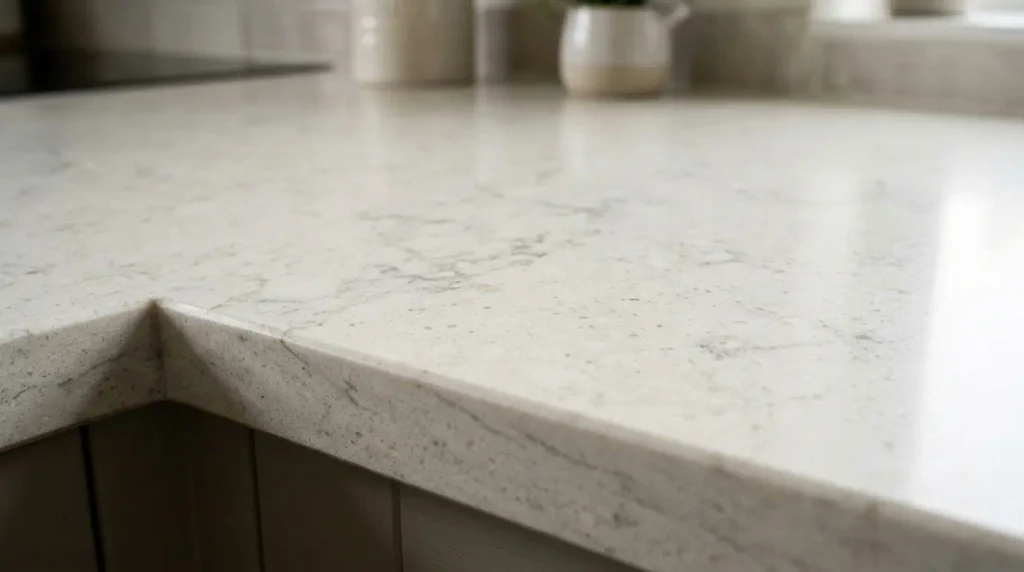
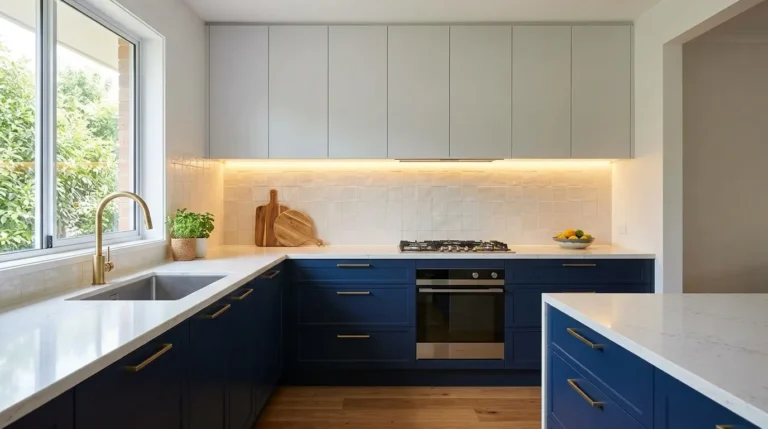
Quartz does not need sealing and resists stains. It is mid to high cost. It can scorch under a hot pan. Use a trivet. It suits a kitchen where you want the look of stone without the upkeep. quartz worktop ideas show specific colour choices.
A 20 mm slab is enough for most runs. A waterfall edge needs extra support. Order samples in your own light.
5. Granite for a natural stone look
Granite is natural and each slab is different. It needs sealing every year or two. It resists heat better than quartz. It suits a kitchen where you want a one-off pattern. kitchen worktop materials if you are comparing stone options.
Visit the slab yard. Photos do not show the movement. A busy pattern can fight with a busy tile.
6. Ceramic for heat resistance
Ceramic and porcelain worktops resist heat and scratches well. They are harder to cut and more brittle than quartz. A drop can chip the edge. They suit a kitchen with a range cooker. range cooker ideas if the hob is the main heat source.
Confirm the fabricator is used to ceramic. A wrong cut cannot be repaired easily.
7. Stainless steel for a utility or pro look
Stainless steel is hygienic and heat proof. It shows every fingerprint and scratch. It suits a utility room or a kitchen that wants a professional look. It is noisy under a pan. modern kitchen ideas sometimes use a short run of stainless next to the hob.
A brushed finish hides marks better than polished. Check the gauge. Thin steel dents.
8. Mixed materials for different zones
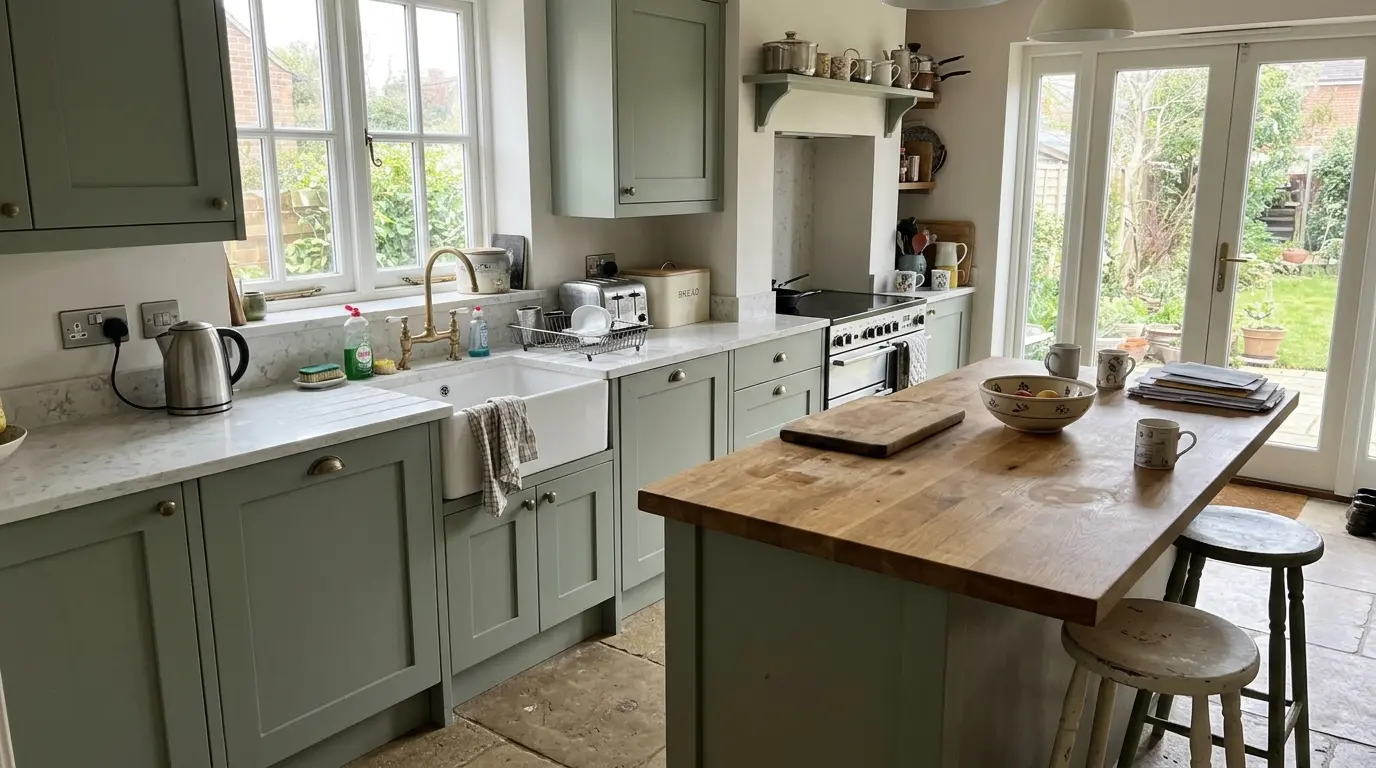
Use a hard-wearing material by the sink and the hob, and a warmer material on the island or the breakfast bar. A quartz run with a wood island is a common mix. The join must be clean. kitchen island ideas if the island is separate.
Keep the colours in the same family. A dark stone next to a light wood works. Two strong patterns do not.
Check the delivery access. A long stone slab may not fit up a tight stair or through a narrow door. Measure the route. Some suppliers will cut the slab into shorter lengths for delivery and join on site. A join costs extra and shows if it is not planned.
Think about the cleaning. A high-gloss surface shows every drip under a downlight. A satin or honed finish hides marks and is easier to live with in a busy kitchen. Ask to see the finish in person. A photo does not show how it wipes.
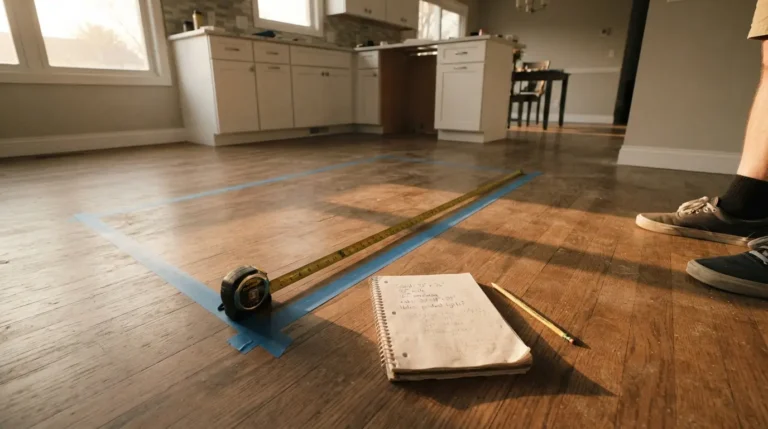
Allow for the overhang on a breakfast bar. 250 to 300 mm is comfortable for seating. More than that needs brackets under a stone or quartz top. Mark the overhang on the floor and check the stools still fit under it without catching the bracket.
Confirm the warranty and the repair options. A chip on laminate is hard to hide. A chip on stone can sometimes be filled. Ask what happens if the worktop is damaged in the first year. A written warranty is more useful than a verbal promise.
Which worktop to pick
For most UK kitchens, quartz or a good laminate is the practical start. Use wood if you will oil it. Use ceramic if heat is the main concern. Order samples and check them next to the cabinet doors in your own light. plan the perfect kitchen layout if the worktop choice is part of a new layout.
Budget for the cuts and the joins. A low slab price can rise once the sink, the hob, and the waterfall are added. Ask for a full price before you compare.
FAQs
What is the cheapest kitchen worktop?
Laminate is the lowest cost. Compact laminate costs more and handles water better. Both scratch more easily than stone.
Which worktop needs the least maintenance?
Quartz and ceramic need the least. Laminate is low maintenance but marks more easily. Wood needs regular oiling.
Can I mix worktop materials?
Yes. A hard material by the sink and a warmer material on the island is common. Keep the colours related.
How thick should a kitchen worktop be?
20 mm is standard for quartz and stone. Laminate is often 38 mm or 40 mm to feel solid. Check the edge profile.