Kitchen Worktop Materials Compared: Which Is Best for You

The worktop is the surface you touch most in the kitchen, so the material decides daily maintenance, heat tolerance and how the room ages. Laminate, solid wood, quartz, granite and solid surface each suit different budgets and habits. This comparison uses current UK fitted prices and the practical differences that matter once the kitchen is in use. kitchen appliances should be chosen alongside the worktop so cut-outs and clearances line up.
Laminate Worktops
Laminate is the lowest-cost option, typically £180 to £300 per square metre supplied and fitted, or £300 to £700 for an average kitchen. Post-formed edges hide the chipboard core. Heat resistance is limited; a hot pan left directly on the surface marks it permanently. Scratches cannot be repaired. Modern high-pressure laminates look convincing as stone or wood effects. Joints need careful sealing, especially at the sink. Lifespan is often 7 to 12 years in a busy kitchen.
Best for tight budgets or rental properties. Check the edge profile and the quality of the cut-outs. A cheap laminate with poor sealing fails first around the sink.
Solid Wood Worktops
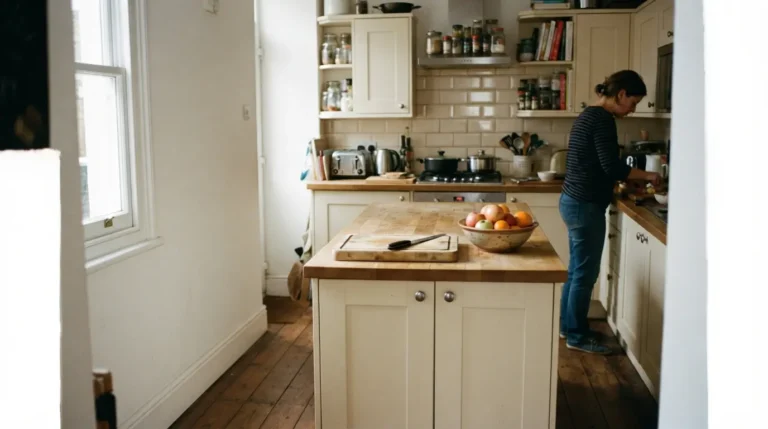
Solid oak, walnut or beech costs roughly £220 to £380 per square metre fitted. The surface can be sanded and re-oiled, so minor damage is repairable. It needs oiling every three to six months and is vulnerable to water around the sink if not sealed properly. Heat tolerance is moderate; use a trivet. Standard thickness is 40 mm. Expansion gaps of around 3 mm at walls are essential. The warm look suits country and cottage kitchens.
Ideal if you like the character that develops with use and are willing to maintain it. Avoid unsealed wood behind a busy sink.
Quartz Worktops

Engineered quartz (around 90 percent quartz with resin) costs £380 to £550 per square metre fitted and is the most popular premium choice. It is non-porous, never needs sealing and resists stains well. Heat tolerance is good to around 200 °C but resin can yellow with direct flame or very hot pans, so always use a trivet. Colour is consistent slab to slab. Thickness is usually 20 mm or 30 mm. Lifespan is 25 to 30 years with normal care.
Best balance of durability and low maintenance for most UK kitchens. Premium patterns such as Calacatta cost more. Templating after units are installed is standard.
Granite Worktops
Natural granite costs £340 to £520 per square metre fitted. Every slab is unique. Heat resistance is excellent, up to 300 °C briefly. Most granites need periodic sealing. The surface can chip at edges if hit hard. Weight is high, so the units must be strong enough. Lifespan is typically 25 years or more. The natural variation appeals to people who want a one-off look.
Choose granite if you cook with high heat often and like the character of stone. Always view the actual slab rather than a sample.
Solid Surface and Sintered Stone
Solid surface (Corian and similar) costs £400 to £580 per square metre and allows seamless joins and integrated sinks. Scratches can be buffed out. Heat resistance is limited. Sintered stone or porcelain (Dekton and similar) costs £520 to £680 per square metre, offers excellent heat and scratch resistance, and needs almost no maintenance. Both are heavier options that require specialist fabrication.
Solid surface suits integrated designs. Sintered stone is the toughest if budget allows. Confirm the fabricator’s experience with the chosen brand.
Which Material Suits Your Kitchen
Choose laminate for the lowest upfront cost. Choose solid wood for warmth and repairability if you will oil it. Choose quartz for low-maintenance durability. Choose granite for heat resistance and unique character. A typical UK kitchen has 5 to 9 linear metres of worktop; multiply the per-square-metre price by the area and add cut-outs, upstands and edge profiles. Always ask for an itemised quote.
The material also affects resale perception. Quartz is widely accepted as a mid-to-premium finish. Match the worktop to the kitchen colour scheme you have already decided.
Conclusion
Kitchen worktop materials compared shows no single best option. Laminate wins on price, quartz on everyday ease, granite on heat, and wood on character. Match the material to how you cook, how much maintenance you will actually do, and the budget for the rest of the kitchen. Get the measurements right after the units are fixed and the surface will serve for years.
Is quartz better than granite?
Quartz needs no sealing and is more stain-resistant and consistent. Granite handles heat better and has unique natural variation. Both last decades. Use a trivet on quartz.
How much does a typical UK kitchen worktop cost?
Fitted costs in 2026 range from around £300 to £700 for laminate up to £1,500 to £3,000 for quartz or granite on an average kitchen, before extras.
Do I need to seal a quartz worktop?
No. Quartz is non-porous and does not require sealing. Clean with mild detergent. Avoid prolonged direct heat.