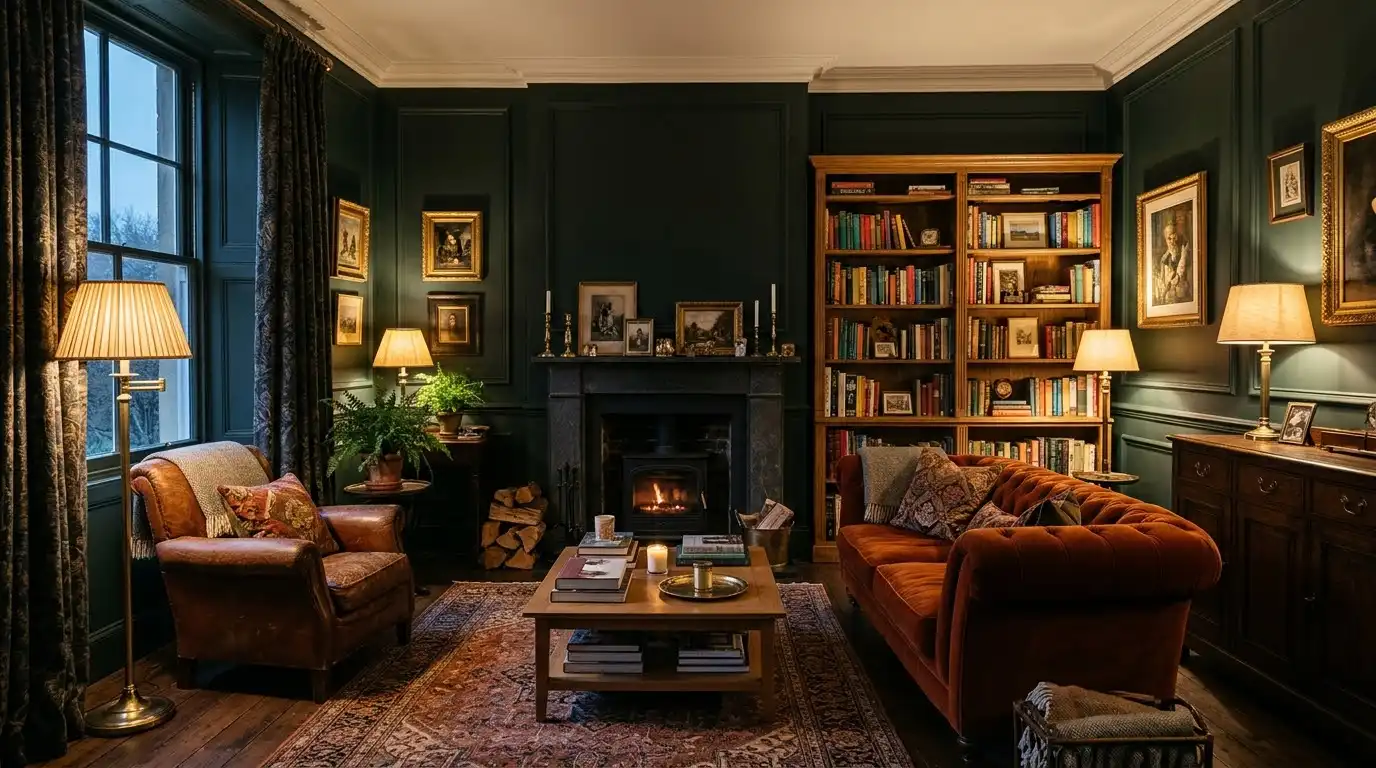
7 Dark Green Paint Ideas for a Rich and Dramatic Look

Dark green walls create depth and drama without the coldness of pure black or navy. The best shades for UK homes are rich bottle greens, forest tones and near-black greens that still show their colour in daylight. They work especially well in living rooms, dining rooms, bedrooms and small bathrooms when paired with warm lighting, brass and lighter woodwork. Coverage is important: dark colours often need a tinted primer and two or three coats over white. Here are seven practical ways to use dark green that designers actually specify, with clearances and material checks included.
1. Studio Green Feature Wall in a Living Room
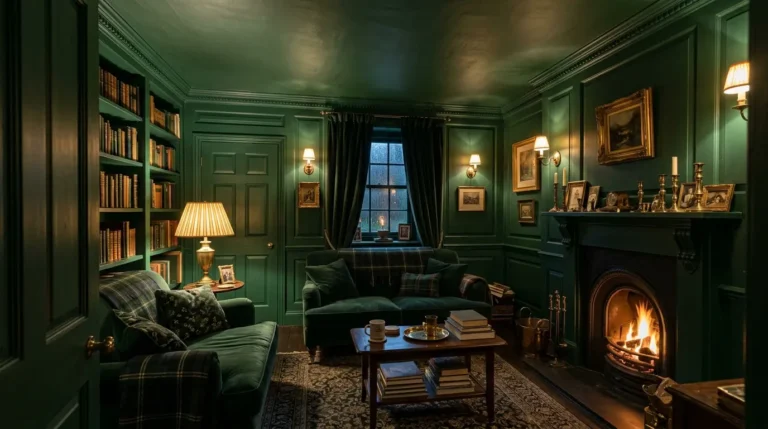
Farrow & Ball Studio Green is a deep, almost black green that reads as a rich forest in good light. Use it on the chimney breast or one long wall behind the sofa. Keep the other walls a warm off-white and the woodwork a slightly lighter tone so the green has definition. Add brass lamps and an oak coffee table. In a typical UK living room of 4–5 metres, this single wall is enough for drama without closing the space. Leave at least 30–40 cm between the sofa and the wall if the sofa is against it, or more if you want a floating look. Test a large sample because it can look nearly black at night. See dark paint ideas for living rooms for more feature wall approaches.
Common mistake: painting the wall then discovering the green clashes with cool grey flooring. Check the undertone against your largest fixed surface before ordering the full tin. Warm oak or a neutral rug usually balances it.
2. Wrap a Small Bathroom in Bottle Green
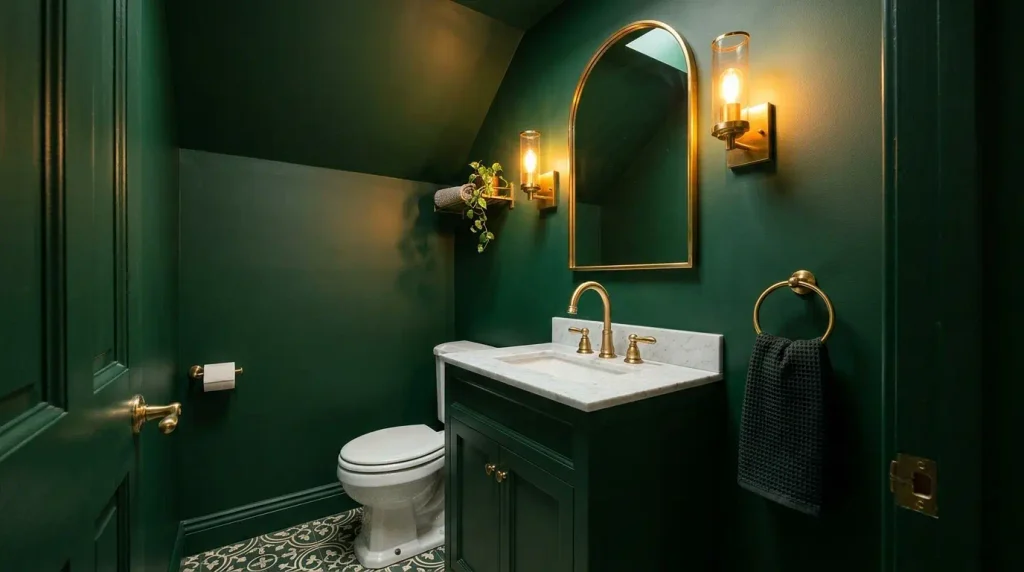
In a cloakroom or compact bathroom, paint walls, ceiling and woodwork the same deep green. The continuous colour removes visual breaks and makes the room feel intentional rather than cramped. Use a moisture-resistant bathroom paint in eggshell or satin. Brass or aged brass taps and a warm white basin stop it feeling cold. Ensure good ventilation and task lighting above the mirror; a 4000K or warmer LED is better than cool white. This cocoon technique works because the eye does not jump between different colours. Check bathroom paint colour ideas for suitable finishes.
Measure the space first. A standard cloakroom is often under 2 m wide. Painting everything the same colour works best when the room is small enough that the wrap feels deliberate. In larger bathrooms keep the green to one wall or the lower half.
3. Deep Olive on Kitchen Cabinets
Paint existing or new cabinets in a deep olive or forest green and keep the walls a warm white. The green hides marks better than white and pairs with marble, quartz or wooden worktops. Brass or black handles both work; brass is warmer. Measure door swings and clearance around islands before you order paint so the colour does not clash with nearby rooms. Allow at least 90 cm in front of the run for comfortable working. Two or three coats are usually needed for good coverage on previously white doors. Many of the best Dulux colours include similar deep greens for kitchens.
Check the finish: eggshell or satin on doors is practical for kitchens. Avoid high gloss unless you want a more formal look and are prepared for more visible brush marks.
4. Forest Green Panelling in a Dining Room
Use dark green on half-height panelling or full walls in a dining room. The colour looks rich in evening light and makes the space feel formal without being heavy. Pair with warm white above the dado if you use panelling, or go full height for more drama. Add brass picture lights or a warm pendant. Clearance around the table should still be at least 90 cm so chairs can be pulled out easily. The green works as a backdrop for art and tableware. In a 3.5 m by 4 m dining room this usually means the feature wall or the longest wall.
Common mistake: choosing a green that looks black under evening bulbs. Test under the actual lighting you will use, not just daylight.
5. Dark Green Behind the Bed
Paint only the wall behind the bed in a deep green and leave the other walls lighter. This creates a focal point and makes the bed feel grounded. In smaller bedrooms the same colour can wrap onto the ceiling for a cocoon effect. Use warm lighting (2700–3000K) so the green does not go cold at night. Linen bedding in cream or oat and an oak or rattan headboard keep the room balanced. Leave enough space at the sides of the bed (ideally 60–70 cm) so the green wall does not feel oppressive. See bedroom paint ideas for placement tips.
6. Entrance Hall in Near-Black Green
A dark green hallway makes the first impression stronger and hides scuffs better than pale colours. Use a wipeable eggshell finish. Keep the front door and skirting a contrasting warm white or the same green for a seamless look. Add a mirror and warm wall lights so the space does not feel dark during the day. In narrow hallways (often 1–1.2 m wide) the continuous colour can make the walls recede slightly. Test the shade against the light coming through the door. Ensure the floor finish (carpet, wood or tile) has a warm undertone.
7. Garden Room or Conservatory Accent
In a garden room, a dark green on the internal walls or window frames creates a link to the outside without matching the foliage exactly. Choose a slightly greyer version than the plants outside so it does not compete. Use a paint suitable for the temperature swings in conservatories. Pair with natural materials and plenty of light from the glazing. This works well with the same principles as exterior green ideas but kept indoors. Check that the paint is formulated for the substrate and the room’s humidity swings.
Practical Checks Before Ordering
Always order sample pots and paint large areas. Dark greens can shift dramatically between north and south light and between day and evening bulbs. Check coverage rates; a 5-litre tin of premium emulsion typically covers 60–70 square metres per coat, but dark colours often need more. Measure the walls accurately and add 10 per cent for waste. Confirm the finish is suitable for the room (moisture-resistant in bathrooms, wipeable in halls and kitchens). Pair the green with warm metals and natural materials so it feels rich rather than heavy.
Conclusion
Dark green paint delivers richness when you pick the right undertone, limit or wrap the colour thoughtfully, and balance it with warm light and materials. Studio Green, bottle green and deep olive all work in UK homes if you test large samples, check clearances and choose the correct finish. Whether on a single feature wall, full bathroom wrap or kitchen cabinets, the result is dramatic without feeling heavy or dated.
FAQs
What is the best dark green paint?
Farrow & Ball Studio Green is a frequent designer choice. Dulux and Little Greene offer strong bottle and forest alternatives. Always test in your own light and against your flooring.
Does dark green make a room smaller?
It can if used poorly. Wrapping the same colour onto the ceiling and woodwork, or using it on one wall only with good lighting and warm materials, often creates depth instead.
What finish for dark green walls?
Eggshell or satin emulsion for walls. Moisture-resistant versions for bathrooms. Full gloss only on woodwork if you want high contrast.
How many coats for dark green?
Usually two, sometimes three over white. A tinted primer helps coverage and reduces the number of top coats needed. Always check the manufacturer’s coverage rate.