15 Kitchen Lighting Ideas to Brighten and Style Your Space

Good kitchen lighting does three jobs: it lets you see what you are chopping, fills the room evenly, and creates atmosphere once the work is done. These 15 ideas cover the practical layers that work in UK kitchens, from under-cabinet strips to statement pendants over an island.
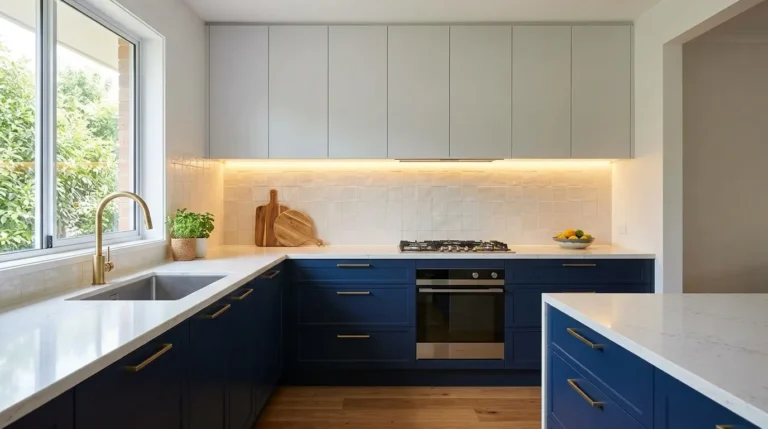
1. Under-Cabinet LED Strips for Task Light
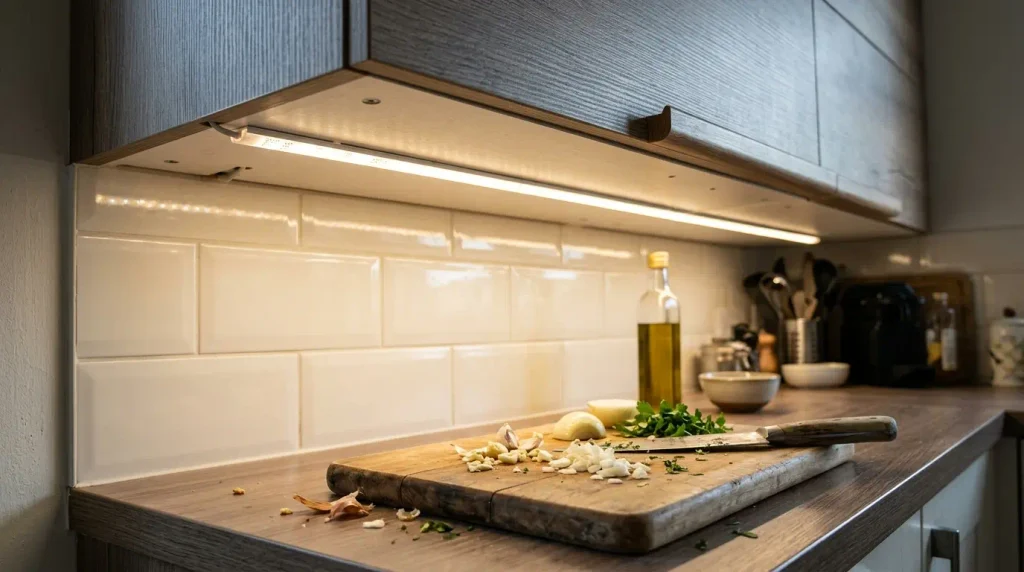
LED strips mounted under wall units throw light straight onto the worktop and remove the shadows cast by overhead fittings. Position the strip toward the front of the cabinet so the light falls on the surface rather than the splashback.
Choose 3000K to 4000K with a high colour rendering index so food looks natural. Our guide to layering kitchen lighting explains how this fits with the rest of the scheme.
2. Recessed Downlights on a Separate Circuit
A grid of recessed downlights gives even ambient light across the whole kitchen. Put them on their own switch or dimmer so you can lower them when the under-cabinet lights are doing the main work.
Space them roughly the ceiling height times 1.2 apart, and keep them at least 50 cm out from the face of the wall units.
3. Statement Pendant Over the Island
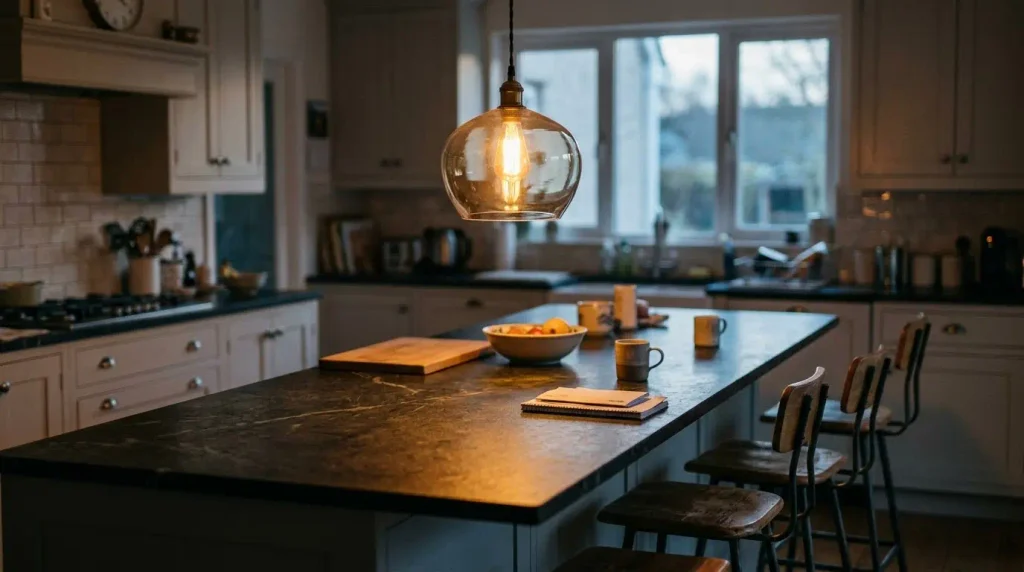
One large pendant or a short row of smaller ones defines the island and brings the light down to working height. Hang the bottom of the shade 75 to 90 cm above the worktop so you can still see across the room.
Glass or open-bottom shades direct light downward while the frame adds the style. Check our pendant light ideas for kitchens for shape and finish options.
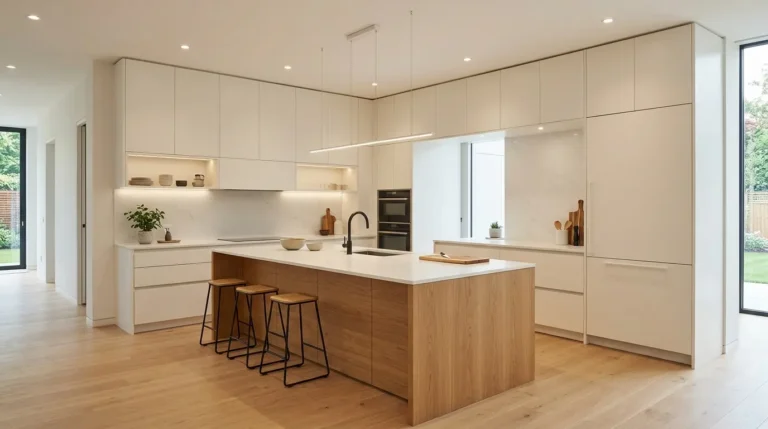
4. Linear Pendant for a Long Island
A long linear pendant or bar light works better than three small ones over a wide island. It gives continuous light along the surface and keeps the visual line clean.
Match the length of the fitting to roughly two-thirds of the island so it does not overwhelm the space.
5. Plinth Lighting for Soft Evening Glow
A low LED strip behind the plinth throws a gentle light onto the floor. It is useful as a night light and adds depth without extra ceiling fittings.
Use a warmer 2700K temperature here so it feels soft rather than clinical. Keep it on its own switch.
6. Inside Cabinet and Drawer Lighting
Motion-activated strips inside a larder or deep drawers make it easier to find items without turning on the main lights. Door sensors switch them on and off automatically.
These are most useful in tall units or pull-out pantries where the shelves sit in shadow.
7. Directional Spots Over the Hob and Sink
Adjustable spots or a dedicated light above the hob and sink give focused light for the tasks that need it most. Keep the colour temperature close to the under-cabinet lights so the whole prep zone feels consistent.
IP-rated fittings are safer near the sink and hob where steam and splashes are common.
8. Wall Lights to Free Up Surfaces
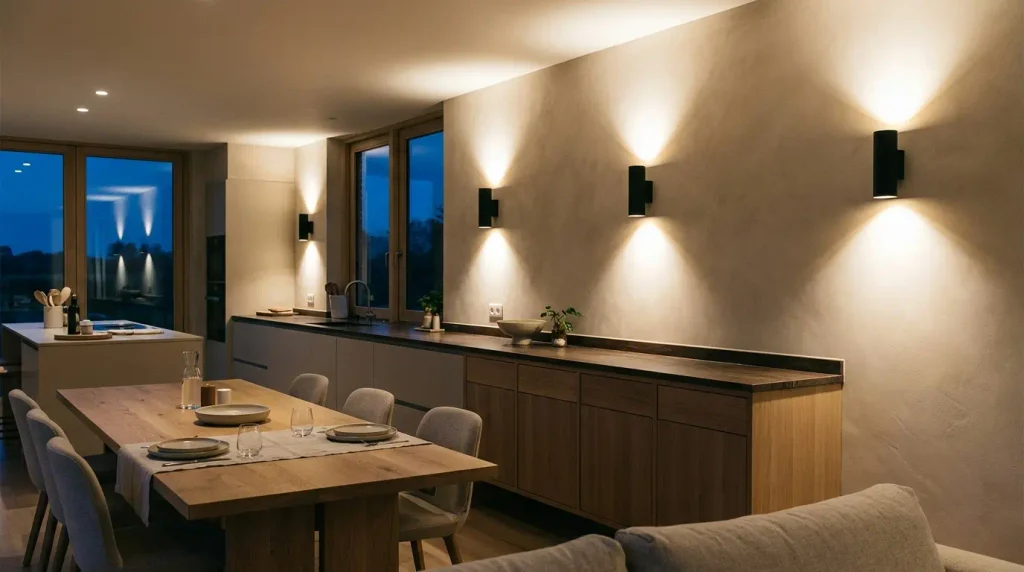
Wall-mounted lights beside a dining area or along a run of units add light without using table or worktop space. Choose fittings that throw light both up and down for a softer effect.
They work well in kitchens that open into a living space where you want the lighting to feel more residential.
9. Dimmable Circuits for Different Times of Day
Put the ambient, task and accent layers on separate dimmers. You can run the under-cabinet lights at full for cooking and drop everything else low once the meal is ready.
Most LED fittings are dimmable, but check the driver and the switch are compatible before you fit them.
10. Warm White Throughout the Main Layers
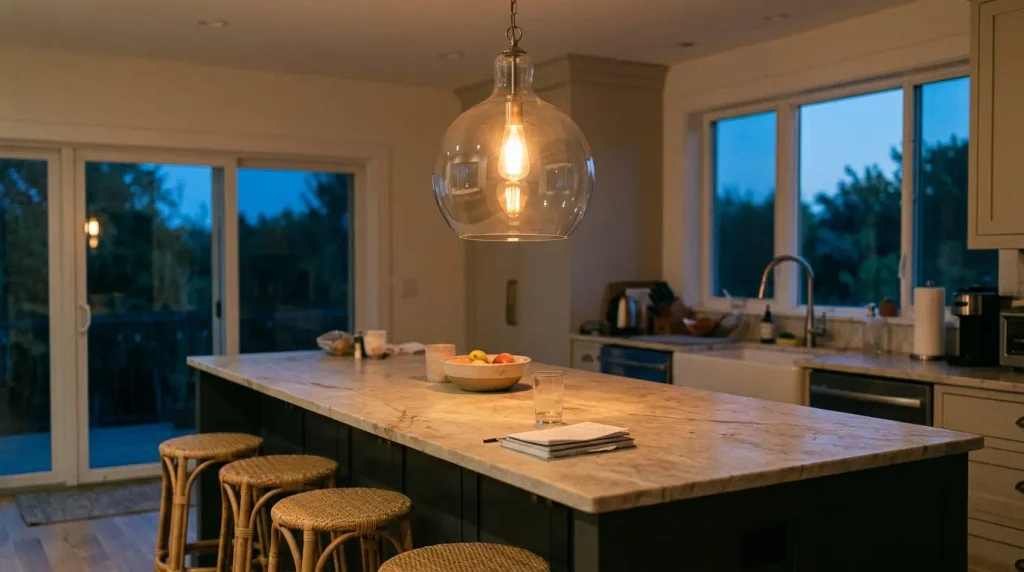
Stick to 2700K to 3000K for pendants and plinth lights, and no cooler than 4000K for task lighting. Cooler temperatures make food look less appealing and the room feel less welcoming in the evening.
Mixing temperatures in the same line of sight is the most common reason a kitchen feels unfinished.
11. Open Shelf Lighting
A short LED strip under open shelves highlights crockery and adds a soft glow without a full cabinet light. Keep the shelves sparsely styled so the light has something to catch.
This works as an accent layer rather than task lighting, so pair it with proper under-cabinet strips on the worktops.
12. Cluster of Smaller Pendants
Three or five smaller pendants in a loose group over a shorter island give a more relaxed look than one large fitting. Space them evenly and keep the drop the same so the line stays clean.
Glass or metal shades in a warm finish suit both modern and more traditional kitchens.
13. Ceiling Flush or Semi-Flush for Low Ceilings
In kitchens with lower ceilings a flush or semi-flush fitting avoids the headroom problem of pendants. Choose one with a diffuser so the light is soft rather than a single harsh source.
Combine it with under-cabinet strips so you still have proper task light on the worktops.
14. Integrated Lighting in a New Kitchen
Many new kitchens come with pre-planned LED channels in the cabinets and plinths. Specifying these at the design stage keeps the wiring tidy and the light even.
Ask for dimmable drivers and separate switches for the different zones so you can still control the layers independently.
15. Night-Time Path Lighting
A low-level light under the island or along the plinth lets you move through the kitchen at night without turning on the main fittings. Motion sensors make this automatic.
Keep the output low so it does not disturb anyone else in an open-plan space.
Conclusion
Kitchen lighting works best when it is layered. Start with under-cabinet task light and even ambient downlights, then add pendants or plinth lighting for atmosphere. Separate circuits and warm colour temperatures make the biggest practical difference in everyday use.
How high should kitchen pendants hang?
Aim for the bottom of the shade to sit 75 to 90 cm above the worktop or island surface so the light reaches the surface without blocking the view.
What colour temperature is best for a kitchen?
2700K to 3000K for pendants and evening lighting, and up to 4000K for task lighting over worktops. Avoid mixing very different temperatures in the same view.
Do I need under-cabinet lights?
Yes if you want clear light on the worktop. Overhead lights alone cast shadows from the wall units, which makes chopping and food prep harder.