7 Farmhouse Bathroom Ideas for a Warm and Charming Look

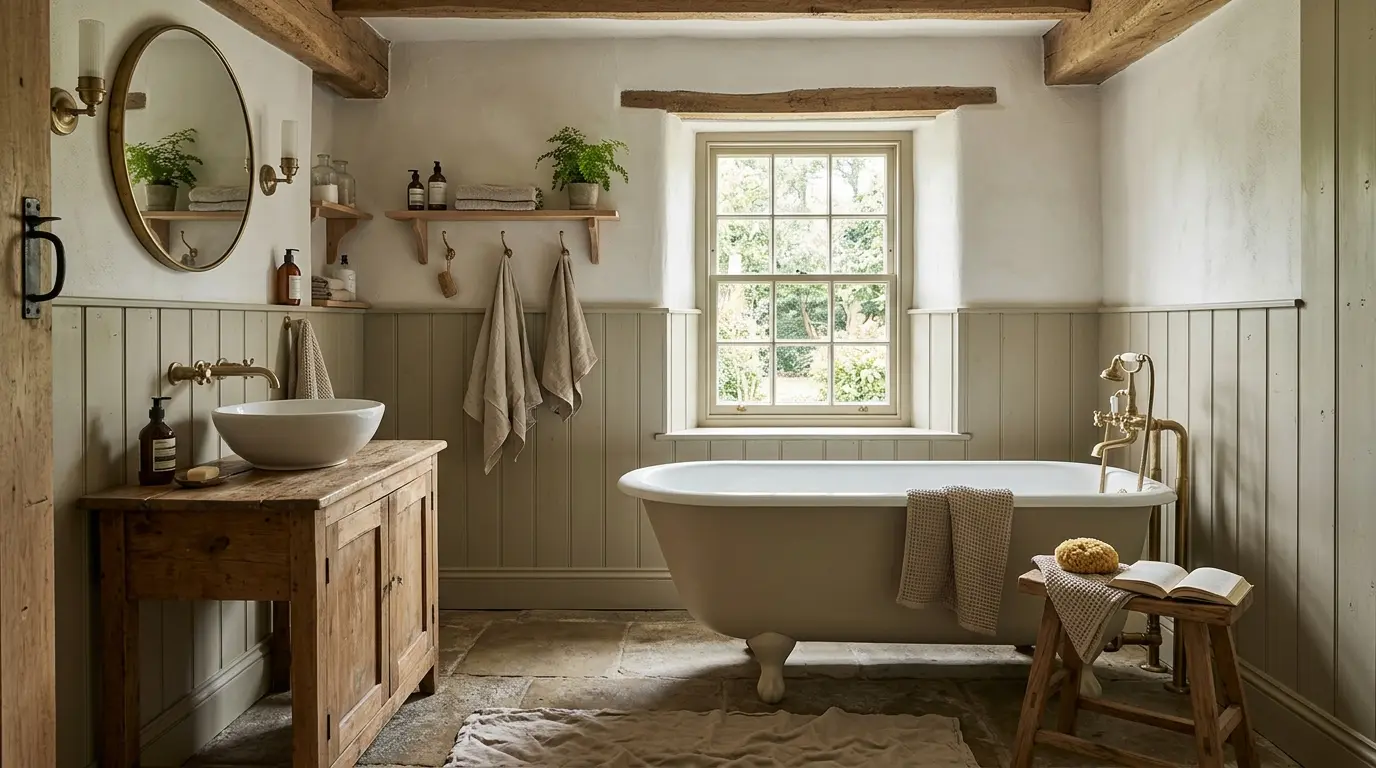
The best farmhouse bathroom ideas combine natural wood, soft painted panelling, a roll-top bath, brushed brass and a restrained colour palette to create a space that feels lived in rather than staged. Most of the warmth comes from texture and finish, not from props or slogans.
The catch is that a lot of rustic inspiration looks lovely online and struggles in a damp room. Swollen timber, tarnished fittings and slippery tiles are common. These seven ideas keep the charm and add the practical detail that photos leave out.
1. Make a Roll-Top Bath the Centrepiece
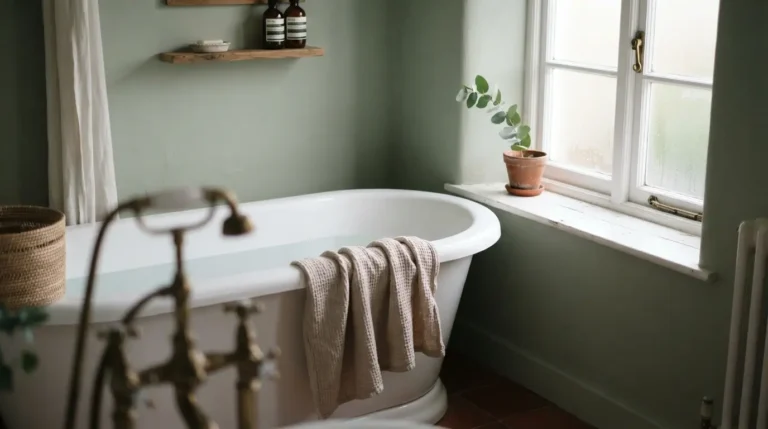
A roll-top or freestanding bath gives a farmhouse style bathroom an instant focal point. Choose traditional lines, simple or ball-and-claw feet, and a white or softly painted exterior. In a small room, a 1500mm single-ended bath keeps the heritage look without crowding the floor.
Cast iron holds heat well and has a hard-wearing enamel finish, but it is very heavy, often well over 100kg before you add water. On an upper floor, ask a builder or structural engineer to check the joists first. Acrylic roll-tops look similar for much less money and weight, though cheaper ones lose heat faster.
Plan the taps early. A freestanding filler needs pipework through the floor or a wall-mounted spout, and your plumber must know before the flooring goes down. Budget roughly £400 to £1,200 for an acrylic bath and £1,500 to £4,000 or more for cast iron, plus taps. Prices vary by country. Cast iron and made-to-order baths can have lead times of several weeks, while the plumbing itself usually takes a day or so.
This idea looks best in photos but needs honest measuring. Leave a gap of roughly 100mm to 150mm behind the bath so you can clean it. If you shower in it daily, add a screen or curtain, because an open freestanding bath splashes the floor.
2. Choose a Furniture-Style Vanity or Open Washstand
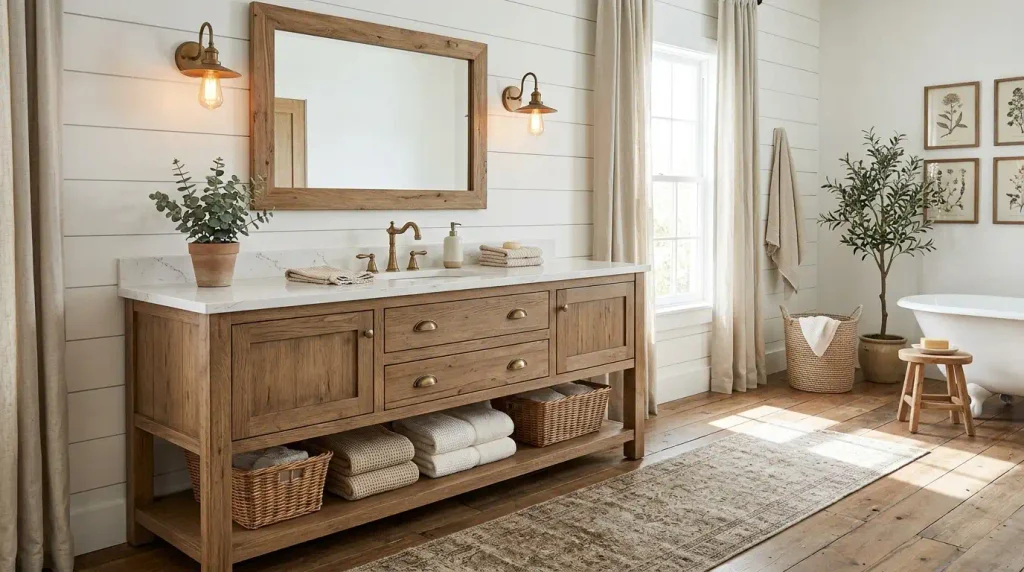
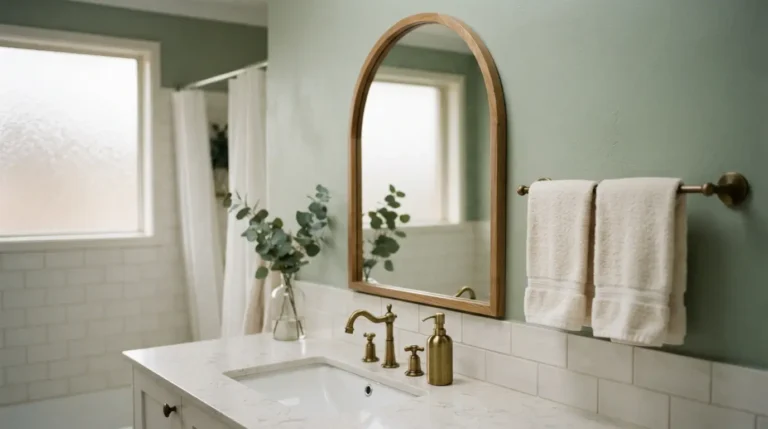
A furniture-style vanity gives a farmhouse bathroom its country character. Look for Shaker doors, a painted or natural wood finish and a stone or quartz top. Wall-hung units keep the floor visible in small rooms, while a freestanding washstand with open shelving suits larger ones.
Moisture is the main risk. Solid timber needs a sealed finish, including inside the cupboard and on the underside of the top. Painted MDF units swell if the edges are not sealed, so check that the carcass is made for bathroom use. A honed or sealed quartz top is easier to live with than marble, which can etch and stain from toiletries.
Open shelves under a basin look charming, but they remove hidden storage. Most homeowners find they need a tall cupboard or wall cabinet elsewhere for the things nobody wants on display.
Expect around £250 to £600 for an entry-level painted unit, £700 to £1,500 for a good mid-range one and £1,800 to £4,000 or more for bespoke joinery. Off-the-shelf units often arrive within a few weeks, while bespoke work can take six weeks or longer.
3. Add Tongue-and-Groove Panelling
Tongue-and-groove or shiplap panelling is one of the quickest ways to give a bathroom a country look. Fit it to half height or full height, paint it in a soft shade, and keep it away from direct shower spray unless it is PVC or fully sealed.
Standard MDF swells if water gets behind it. In a bathroom, choose moisture-resistant MDF, solid timber or PVC panels. Seal every cut edge before painting, and use a durable satin or eggshell paint made for damp rooms. Half-height panelling at around 1m to 1.2m is the classic proportion and costs less than covering whole walls.
A small bathroom can often be panelled for around £150 to £500 in materials if you do the work yourself. A joiner will charge more for labour, and bespoke panelling costs more again. A confident DIYer can fit and prime a small room over a weekend, then allow extra days for two or three coats of paint to cure.
Panelling pairs well with an ensuite. If the bathroom opens off a bedroom, repeat the panel or vanity colour on the door frame so the two rooms feel connected.
4. Lay Metro Tiles and a Patterned Floor
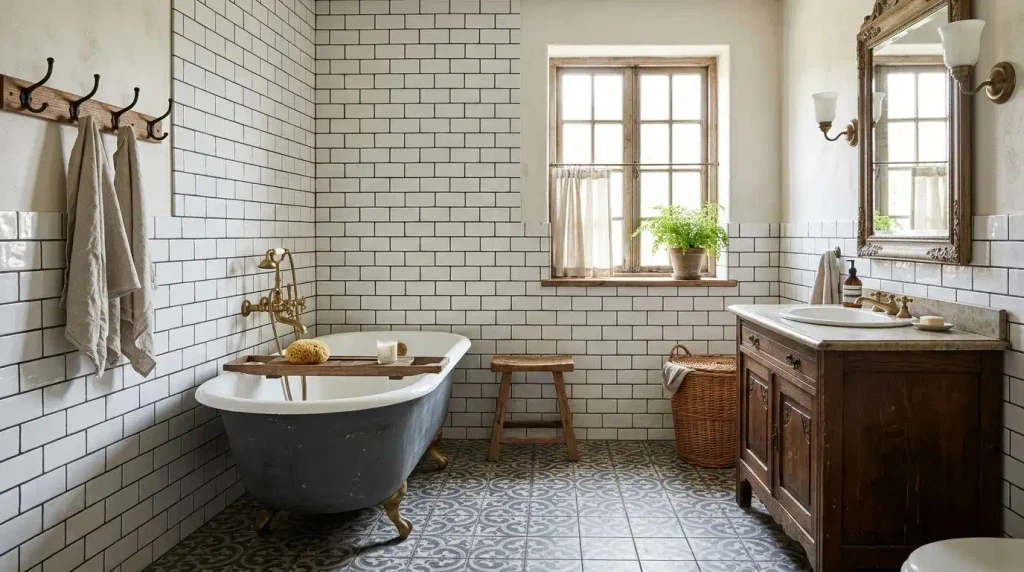
Pair classic metro tiles with a patterned or encaustic-style floor for a farmhouse style bathroom that feels collected rather than copied. Use porcelain in wet areas, choose your grout colour on purpose, and let one surface be busy while the other stays calm.
Grout changes the whole look. A mid-grey grout outlines the brick pattern and hides dirt, while pale grout looks softer and shows soap scum sooner. In showers, epoxy grout resists staining well but is harder to apply than standard grout, so most DIYers hire a tiler for it.
Real cement encaustic tiles are beautiful but need sealing and regular care. Porcelain tiles that copy the pattern are far easier to live with. Check the slip rating on any bathroom floor. R10 is a common minimum for floors that get wet, and your tile supplier can confirm the right rating for your use.
Decent porcelain often costs somewhere between £20 and £70 per square metre, and handmade or cement tiles cost considerably more. A small bathroom typically takes a tiler three to five days including grout curing, and herringbone or intricate patterns take longer. Electric underfloor heating mats suit small rooms and make a tiled floor far more comfortable in winter.
5. Warm the Room with Brass, Black or Aged Metal Fittings
Brushed brass, matte black and aged nickel all suit a farmhouse bathroom, but pick one main metal and one accent. Add warm light with wall lights or a glass pendant, and use bulbs around 2700K for a soft glow rather than a clinical white one.
Brass feels softer and more traditional. Black feels crisper and leans towards the modern farmhouse look. Both work with wood and white ceramics. Lacquered or PVD-coated brass keeps its colour and wipes clean, while solid unlacquered brass darkens over time and needs polishing if you want it bright. Decide whether you want that patina before you buy.
Lanterns, chandeliers and glass pendants suit the style, but electrical rules limit where fittings can go in a bathroom. In the UK, the distance from the bath or shower decides what protection rating a light needs, so use a qualified electrician and check the rules in your own country. Wall lights on either side of the mirror give flattering light and avoid harsh shadows under the eyes.
Taps range from about £60 to £500 or more. Wall lights are typically £40 to £200 each.
6. Bring in Natural Wood, Baskets and Open Shelving
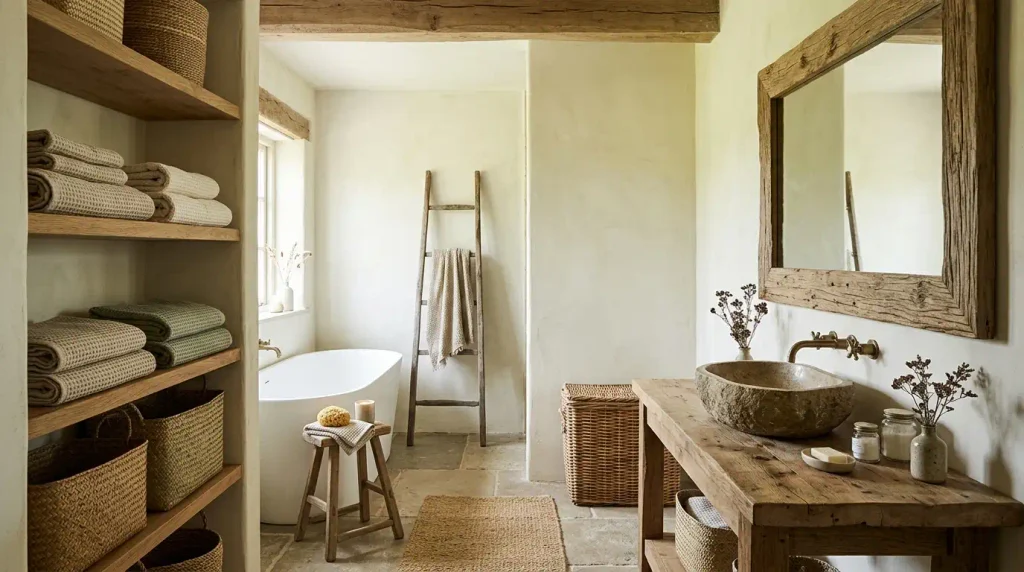
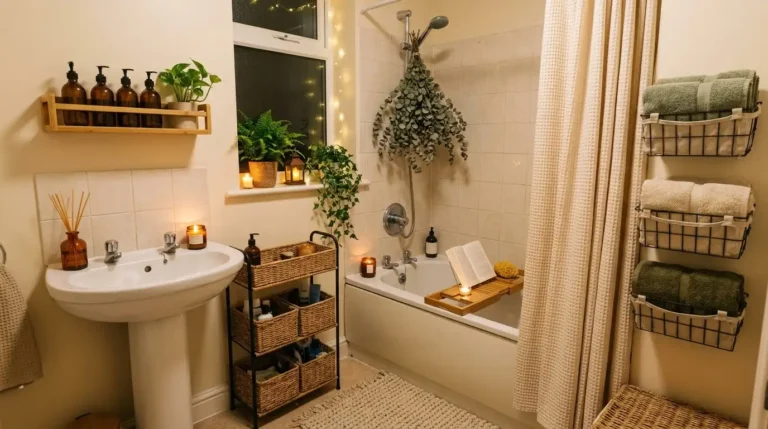
Natural wood, woven baskets and open shelves add the lived-in warmth that defines a rustic bathroom. Use wood for mirrors, stools, shelves and ladder towel rails, and keep it away from permanently wet surfaces. A few well-chosen pieces beat a room full of rustic accessories.
Teak and oak cope with damp better than pine. Oil or seal them, and wipe them down after heavy use. If you want wood underfoot, flooring specialists generally steer homeowners towards engineered boards rather than solid planks in wet rooms. Wood-effect porcelain is the lowest-risk option if you love the look but not the upkeep.
Be careful with jute rugs. They look right but hold water and can go musty by the bath or shower. Use them in the dry zone only, or choose a washable cotton rug.
In a small bathroom, swap a bulky cabinet for floating shelves and a round or arched mirror. Keep each shelf to three or four items: rolled towels, a basket, a candle. A floating shelf runs about £20 to £120, and a framed mirror about £60 to £300, depending on the wood and size.
7. Paint It in Soft, Earthy Colours
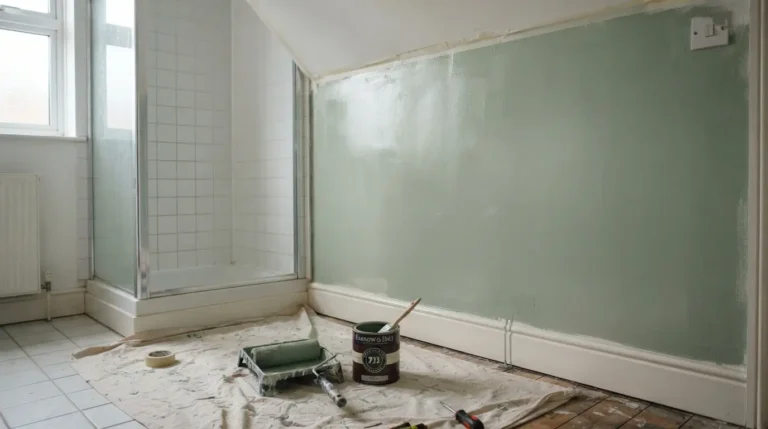
Soft, earthy colours make a country bathroom feel calm and warm. Warm white, sage, duck-egg blue and pale greige are the safest choices, while deep green or moody grey suit a more dramatic scheme. Pick colours that suit your room’s natural light, not just a photo you saved.
A north-facing bathroom can make cool blues and greys look flat and chilly, so choose warmer undertones there. A bright south-facing room can carry stronger greens and blues. Paint a large sample on two walls and check it in the morning and evening before you commit.
A cottage bathroom leans towards pastels and painted wood. A modern farmhouse version uses white walls, black fittings and oak. Both rely on the same rule: keep the walls quiet and let texture do the talking.
Use a paint made for bathrooms or kitchens, with mould resistance. A 2.5-litre tin of quality paint typically costs £25 to £70, and a small room can be done over a weekend with drying time between coats.
How Much Does a Farmhouse Bathroom Cost and How Long Does It Take?
A farmhouse bathroom can cost anywhere from a few hundred pounds for a cosmetic refresh to well over £10,000 for a full refit with premium materials. The ranges below cover materials only and exclude plumbing, electrical and tiling labour. They are approximate and vary by country.
| Element | Budget | Mid-range | High-end |
| Bath | £400 to £700 | £800 to £1,500 | £2,000 to £4,500 |
| Vanity or washstand with basin | £250 to £600 | £700 to £1,500 | £1,800 to £4,000+ |
| Panelling (small room) | £100 to £250 | £300 to £600 | £800+ |
| Tiles (materials) | £150 to £400 | £400 to £900 | £1,000 to £2,500+ |
| Taps and brassware | £60 to £150 | £150 to £450 | £500 to £1,500 |
| Mirror and lighting | £80 to £250 | £250 to £600 | £700 to £1,800 |
A cosmetic refresh of paint, panelling, taps and a mirror usually takes three to five days. A full refit of a family bathroom commonly runs two to three weeks once plumbing, electrics, tiling and fitting are sequenced. Allow extra time for made-to-order baths and vanities.
How Do You Keep a Farmhouse Bathroom Looking Fresh, Not Themed?
Choose one rustic hero and let everything else support it. That might be the roll-top bath, the vanity or the panelling. Then add two natural textures and one metal, and stop. Wall signs, a mason jar on every surface and too many baskets are what push a farmhouse style bathroom into costume.
Ventilation is the least glamorous part of the plan, and it protects everything above. Fit an extractor fan sized for the room, or keep a window that opens, and run it for around 20 minutes after bathing. Without it, timber, paint and grout all suffer.
Conclusion
The best farmhouse bathroom ideas are simple: one strong feature, honest materials and warm, soft colour. Choose finishes that cope with damp, plan the plumbing and lighting before you buy, and keep the accessories restrained. Start with the element that matters most to you, whether that is the bath, the vanity or the panelling, and build the rest around it. A bathroom like this should feel calmer and more welcoming every time you walk in.
FAQs
What is the difference between farmhouse, cottage and rustic bathrooms?
A farmhouse bathroom is practical and simple, with painted panelling, wood and white ceramics. A cottage bathroom is softer and prettier, with pastels, florals and painted furniture. A rustic bathroom is rougher, with raw timber, stone and hammered metal.
Can I have a farmhouse style bathroom in a small space?
Yes. Use pale walls, a wall-hung vanity, a round mirror and a single statement, such as patterned floor tiles. A glass screen keeps the room open, and a compact 1500mm bath or walk-in shower avoids crowding.
How do I get the look on a budget?
Start with paint and half-height panelling, then swap the taps, mirror and light fittings. A second-hand wooden cabinet adapted to hold a basin can save money, but have a plumber check the waste and supply before you cut anything.
Is farmhouse bathroom style going out of fashion?
The heavily themed version has dated. The softer version built on natural materials, good proportions and quiet colour has lasted far longer because it relies on craft rather than slogans.
Can I use an apron-front or farmhouse sink in a bathroom?
Yes, on a sturdy washstand. Check that the tap, waste and support are compatible, and make sure the unit can carry the weight of a deep ceramic basin.
What is the best wood-look floor for a farmhouse bathroom?
Wood-effect porcelain is the most durable and waterproof. Luxury vinyl planks are warmer and cheaper but need a flat, dry subfloor and good edge sealing.