12 Rattan Garden Furniture Ideas for a Stylish Outdoor Space

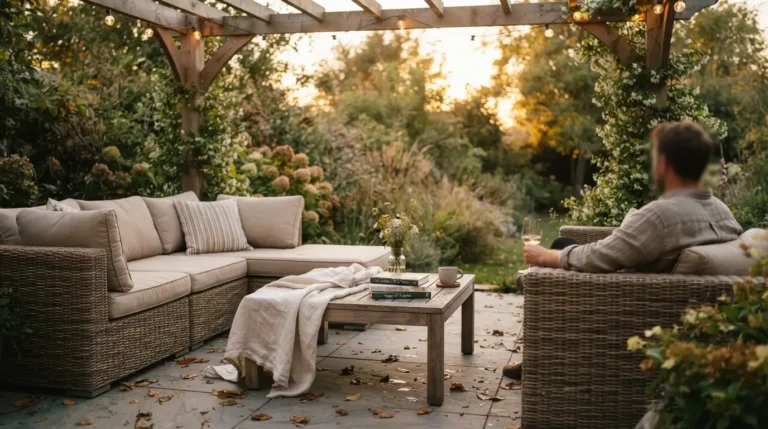
Rattan garden furniture works because it does two jobs at once: it looks relaxed and expensive, and it survives being rained on. The 12 ideas below cover seating, dining, lounging and styling, so you can build a garden that actually gets used, not just photographed once in June.
If you’ve spent any time shopping for a rattan sofa garden set, you’ll already have hit the confusing bit: half of what’s marketed as “rattan” isn’t rattan at all, prices swing from £400 to £4,000 for what looks like the same corner set, and nobody tells you upfront which finish will survive a British winter versus which one needs to come indoors by October. I’ve specified rattan furniture outdoor for small courtyards and full-scale entertaining gardens for years, and the ideas here are built around what actually holds up, not just what looks good in a showroom shot.
1. Anchor the Garden with a Rattan Corner Sofa Set
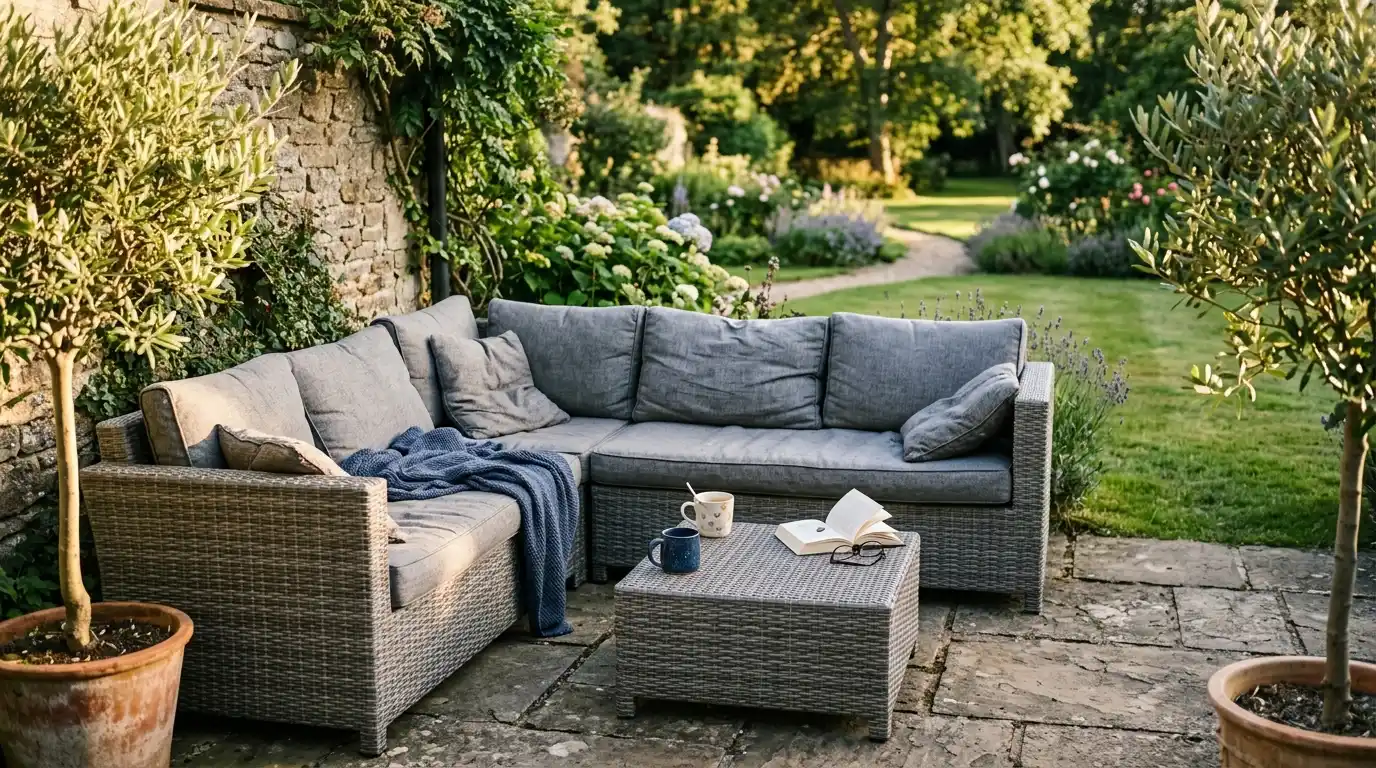
A rattan corner sofa set is the single most effective way to turn an unused patch of patio into a room you actually sit in. The L-shape hugs a corner without blocking a path, and it reads as “outdoor living room” the moment you add cushions.
Go for a set with a genuinely deep seat (55cm or more) rather than a shallow show-home profile, because shallow seats look elegant in photos and are miserable after twenty minutes. Corner sets in this category typically run from around £900 for a compact synthetic option up to £3,000+ for a large, powder-coated aluminium-framed set with thick reflex-foam cushions. Measure your space before you buy; a set that looks modest online can swallow a small patio whole.
2. Choose a Compact Rattan Bistro Set for Balconies

Not every outdoor space has room for a sprawling rattan set, and that’s fine. A two-seat rattan bistro set with a small round table is the standard fix for balconies, narrow terraces and tight courtyard gardens, and a good one still looks considered rather than like an afterthought.
Look for stackable or foldable frames if storage is tight over winter. Expect to pay roughly £150 to £400 for a decent bistro set, with genuine outdoor-grade weave and a rust-resistant frame rather than a painted steel one that will bubble after a season.
3. Bring People Together with a Rattan Dining Set
A rattan dining set with proper chairs (not benches alone) is worth the investment if you actually host meals outside. Oval and rectangular tables in the 6 to 8 seat range suit most family gardens, and a tempered glass top keeps the whole thing looking lighter than solid rattan panelling would.
One thing worth knowing before you buy: chair comfort varies wildly between ranges. Sit in a floor sample if you can, or check reviews specifically for seat depth and back support, because a rattan dining chair that looks identical to another can feel completely different after an hour at the table.
4. Layer Different Rattan Tones for Depth
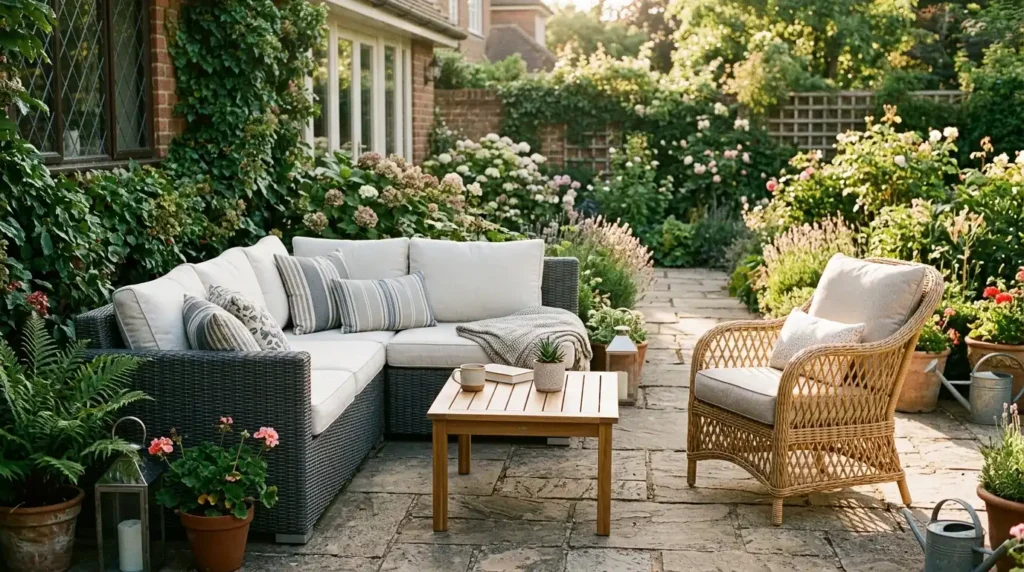
A garden furnished entirely in one shade of grey rattan can end up looking flat. Mixing tones, a natural rattan chair alongside a charcoal-grey rattan sofa, or a chocolate-brown table with cream-cushioned chairs, adds the kind of visual depth that a single matching set can’t. This is a trick worth stealing from indoor design: no interior designer furnishes a living room from one showroom rail, and gardens shouldn’t be treated any differently.
The rule of thumb is to keep frame finishes within the same undertone (warm greys with warm greys, cool greys with cool greys) even if you’re mixing pieces from different ranges, so the palette still reads as intentional rather than mismatched.
5. Make a Statement with a Single Sculptural Rattan Chair
Not every rattan piece needs to be part of a set. A single sculptural rattan chair, a cocoon shape, a wide-armed egg chair, or a curved lounge chair, works as a standalone feature in a reading nook, beside a doorway, or tucked into planting. It’s also the easiest way to trial rattan furniture outdoor without committing to a full suite, and it gives you a focal point that doesn’t rely on symmetry.
Pair it with a small side table and one oversized cushion rather than a pile of scatter cushions. Restraint reads as designed; excess reads as leftover indoor cushions dragged outside.
6. Create a Relaxation Zone with a Rattan Sun Lounger Set
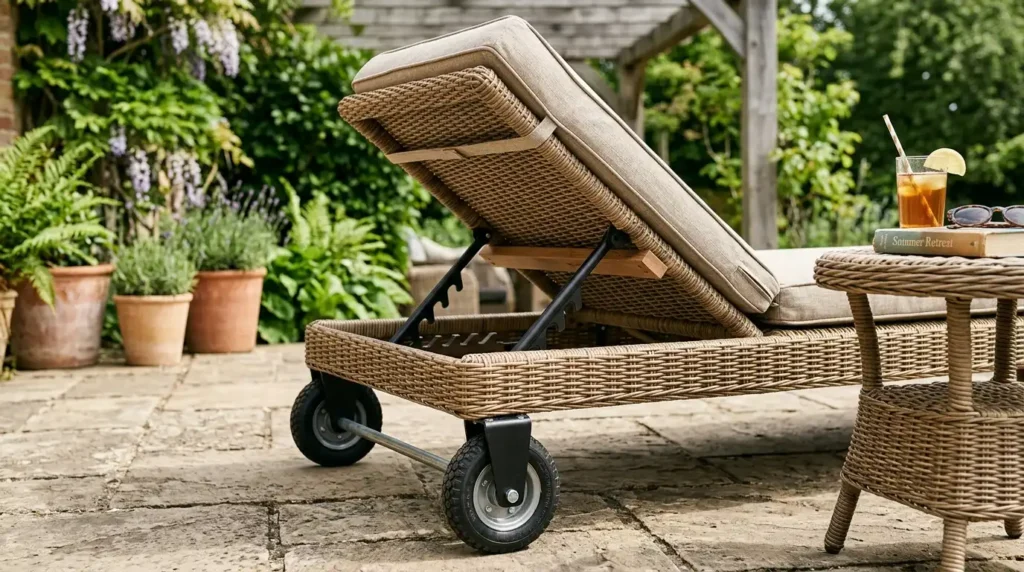
If lounging matters more to you than dining, prioritise a rattan sun lounger set with an integrated or matching side table over a dining set. Look for loungers with multi-position adjustable backrests and wheels on at least one end, since moving a fully upholstered lounger around a lawn without wheels gets old fast.
Budget around £250 to £900 for a two-lounger set with side table, depending on cushion thickness and frame quality. This is one area where spending a bit more on foam density pays off directly in comfort, since thin cushions compress within a season and start letting you feel the frame.
7. Zone a Larger Garden with Modular Rattan Seating
Modular rattan furniture, individual sofa sections that reconfigure, is the most practical option for gardens that need to flex between a big family gathering and quiet weeknight use. Split a six-seat modular set into two smaller groupings either side of a firepit, or push it all together for a party, without buying two separate rattan sets.
This is also the smartest option if your needs will change over time. A young family that expects to entertain more as children grow up gets far more long-term value from modular pieces than from a fixed-shape sofa.
8. Anchor the Space with a Rattan Coffee Table and Rug
A rattan coffee table does more visual work than its size suggests. Positioned centrally in a seating area with an outdoor rug underneath, it stops a rattan patio set from looking like furniture “parked” on a patio and starts making it read as a proper room. Round tables suit corner sofa layouts; rectangular ones work better between two facing sofas.
If you like the woven look but want a slightly different texture, a handwoven rope-top table with a wood base gives a similar warmth with a more sculptural edge, worth considering if your seating is already rattan-heavy and you want one piece that doesn’t match exactly.
9. Add Warmth with a Rattan Firepit Dining Set
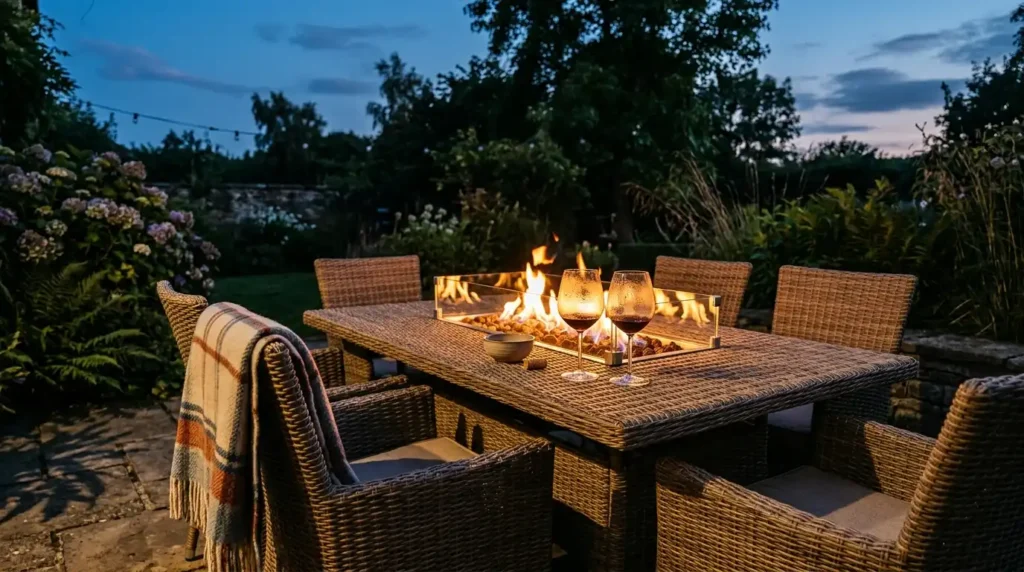
Rattan dining sets built around a rising or fixed firepit table solve a real seasonal problem: they let you use the garden into autumn evenings instead of packing everything away in September. The table itself often doubles as a normal glass-topped dining surface with the fire pit closed, so you’re not sacrificing everyday function for one seasonal feature.
Check whether the firepit runs on gas, bioethanol, or logs before buying, since that affects both running cost and whether you need a gas safety certificate for installation in some regions. And keep the set at least a metre from fences, pergola timber or overhanging planting.
10. Style with Layered Textiles and Lighting
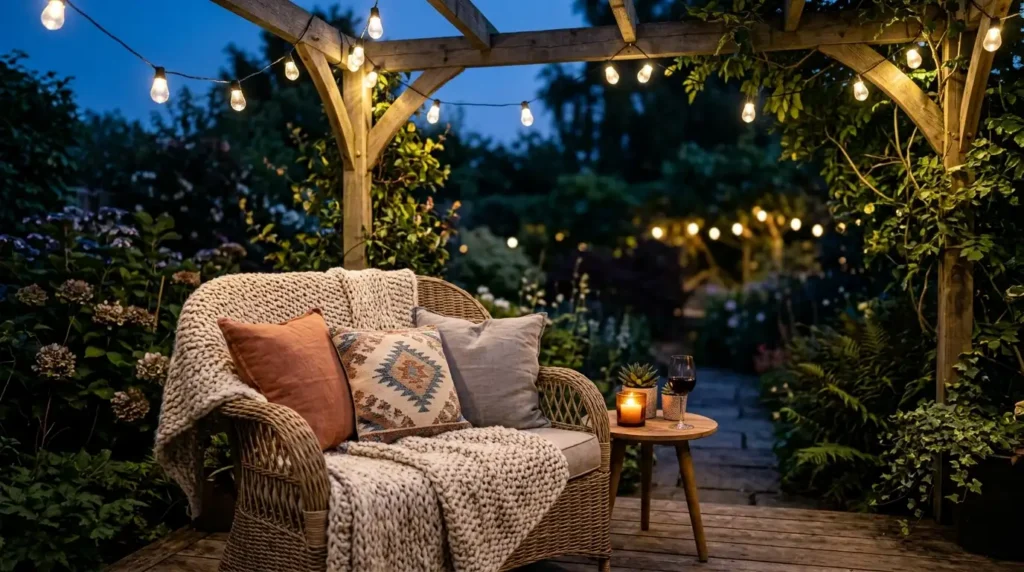
Rattan garden furniture on its own looks unfinished without soft layering. Outdoor rugs, weatherproof cushions in a couple of complementary tones, lanterns, and string or solar lighting all do more to make a space feel “finished” than another piece of furniture would. This is the cheapest upgrade on this whole list and the one most competitor guides mention only in passing, but it’s genuinely where a lot of the “designer garden” look comes from.
Stick to two or three colours across textiles rather than five, and repeat them in cushions, a throw, and one accent object like a lantern, so the eye reads it as a scheme rather than a jumble.
11. Try a Hanging or Egg Chair for Extra Lounging
A rattan hanging or egg chair adds a lounging option that doesn’t compete for floor space the way a second sofa would, since it can be wall-mounted, hung from a pergola beam, or set on its own stand in a corner. It’s a strong pick for gardens that already have a dining set and need one more relaxed seat rather than a full second lounge area.
Weight limits and stand stability matter more than they get credit for. Check the manufacturer’s maximum load and anchor freestanding stands properly, particularly if the chair will get used by more than one person at a time.
12. Choose Your Rattan Type Before You Choose a Style
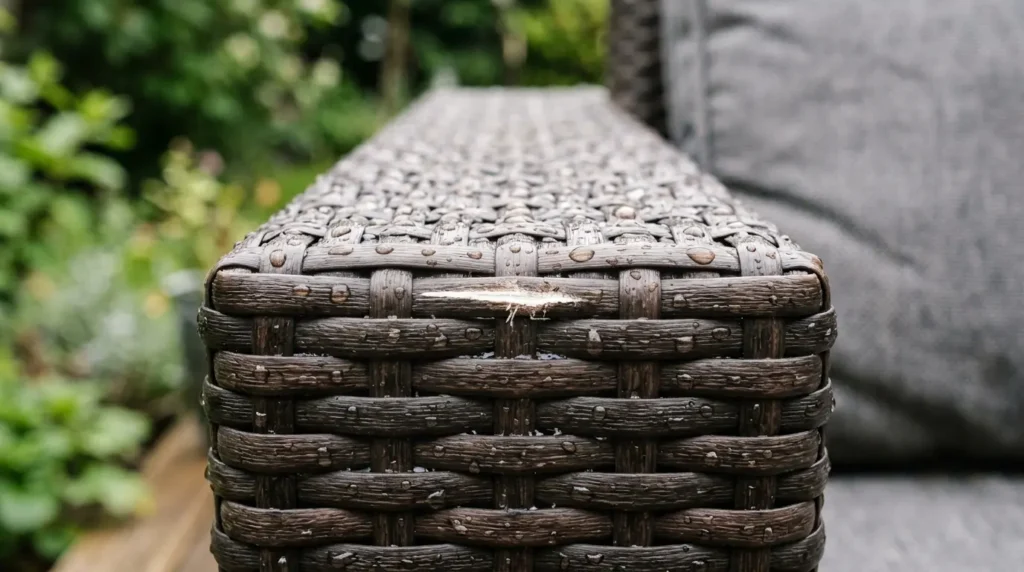
This is less a decorating idea and more the decision that determines how good every other idea on this list will look in three years’ time. Rattan garden furniture is grouped under one name, but “rattan” almost always means a synthetic weave designed to resemble natural rattan cane, not the plant fibre itself. Getting this choice right upfront saves a lot of disappointment later.
| Rattan type | What it is | Weather resistance | Typical lifespan | Relative cost |
| Natural rattan | Woven plant cane, often lacquered | Poor outdoors; best under cover or indoors | 1 to 3 seasons exposed; much longer sheltered | Low to mid |
| PU (polyurethane) rattan | Synthetic weave, softer, often cheaper | Fair; can crack or fade with UV over time | Around 1 to 3 years outdoors | Low |
| PE (polyethylene) rattan | Synthetic weave, UV-stabilised, most common in quality sets | Good to excellent | Typically 5 to 10+ years with basic care | Mid to high |
If a set doesn’t specify PE (sometimes called polyrattan or resin wicker) anywhere in the description, assume it’s the cheaper PU version, and factor that into how much you’re willing to pay. A good rule of thumb: if a rattan patio set is priced noticeably below similar-looking competitors, the weave grade is usually where the saving has come from.
How to Choose the Right Rattan Furniture for Your Garden
Before buying, be honest about three things: how many people you regularly need to seat, how much space you have to store cushions and covers over winter, and how much upkeep you’re actually willing to do. A stunning eight-seat firepit dining set is wasted if you live alone and rarely host, and a natural rattan chair looks glorious in a photo but will need bringing indoors every time rain is forecast.
A mistake I see often is buying to fill a space rather than to suit how the garden gets used. Measure the area, mark it out with tape or string first, and only then start narrowing down styles. It’s a lot easier to return a decision on paper than a delivered corner sofa.
Final Thought
Rattan garden furniture earns its popularity honestly: it looks considered without trying too hard, and the right grade of it genuinely shrugs off a British summer. The ideas above aren’t about buying more, they’re about buying the right piece for how your garden actually gets used, whether that’s a compact rattan bistro set on a balcony or a full modular rattan sofa garden setup built around a firepit. Get the material grade right first, then let the styling do the rest.
FAQs
What is rattan garden furniture actually made of?
Most rattan garden furniture sold today is made from synthetic PE (polyethylene) or PU (polyurethane) weave over a powder-coated aluminium or steel frame, not natural rattan cane. Genuine natural rattan does exist but is far less common in outdoor ranges because it doesn’t cope well with rain, sun, or damp UK weather.
What’s the difference between rattan and wicker?
Rattan is a material; wicker is a weaving technique. Rattan furniture is usually made using a wicker weave, but wicker can also be made from other materials like willow or bamboo, so not all wicker is rattan. When a retailer says “rattan effect,” it usually means a synthetic material woven in a wicker style to imitate rattan’s look.
Can rattan garden furniture be left outside all year round?
High-quality PE rattan on a rust-proof aluminium frame can generally stay outdoors year-round, though a breathable cover extends its life. Natural rattan and cheaper PU rattan should not be left outside permanently, since both are more prone to fading, cracking, or moisture damage over successive seasons.
How do I clean rattan garden furniture?
Wipe the frame down with a soft brush and warm, mildly soapy water, working into the weave to lift dirt out of the grooves. Avoid pressure washers and harsh chemicals, which can strip the weave’s UV coating over time. Cushions with removable, machine-washable covers are worth prioritising when you buy, since they make ongoing maintenance far easier.
How long does rattan garden furniture actually last?
A well-made PE rattan set with an aluminium frame typically lasts 8 to 10 years or more with basic seasonal care, while budget PU rattan sets often need replacing within 2 to 3 years. Real-world lifespan varies a lot with exposure, so a sheltered patio set will always outlast the same furniture on an open, wind-exposed terrace.
Is rattan garden furniture actually comfortable, or is it just for looking at?
Genuinely, yes, when it’s specified properly. The woven frame gives firm structural support, and paired with deep reflex-foam cushions, a good rattan sofa or lounger is comparable to indoor seating. The complaints about discomfort almost always trace back to thin, low-density cushion foam rather than the rattan itself.