How to Choose the Perfect Paint Colour for a Bedroom

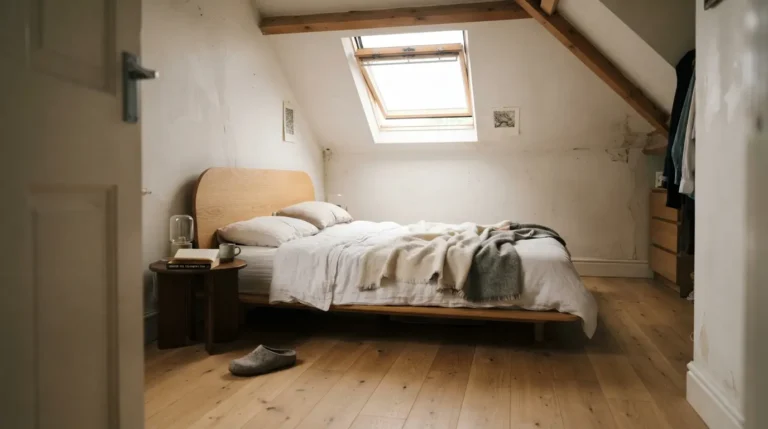
Choosing the perfect paint colour for a bedroom starts with being honest about what the room actually does for you beyond sleeping, since a modern bedroom often doubles as a place to get ready, work, watch television, or simply unwind, and that genuine range of use should shape your colour choice more than a single “best colour for sleep” answer ever could. Testing the colour properly in your room’s actual morning and evening light, the two times a bedroom gets used most, matters more here than in almost any other room in the house.
Decide What Your Bedroom Actually Needs to Do
Before opening a single paint chart, think honestly about how you actually use this room day to day. If it’s genuinely a pure sleep sanctuary, rarely used for anything beyond winding down and resting, a calmer, more restful palette makes sense as the priority. But if your bedroom regularly doubles as a getting-ready space, a spot to catch up on emails, or somewhere you watch television or eat breakfast, a colour that only serves relaxation might leave the room feeling flat during its other, more active uses. Being clear about this upfront prevents choosing a colour that suits only one of the room’s actual jobs.
Test Your Colour in the Room’s Specific Morning and Evening Light
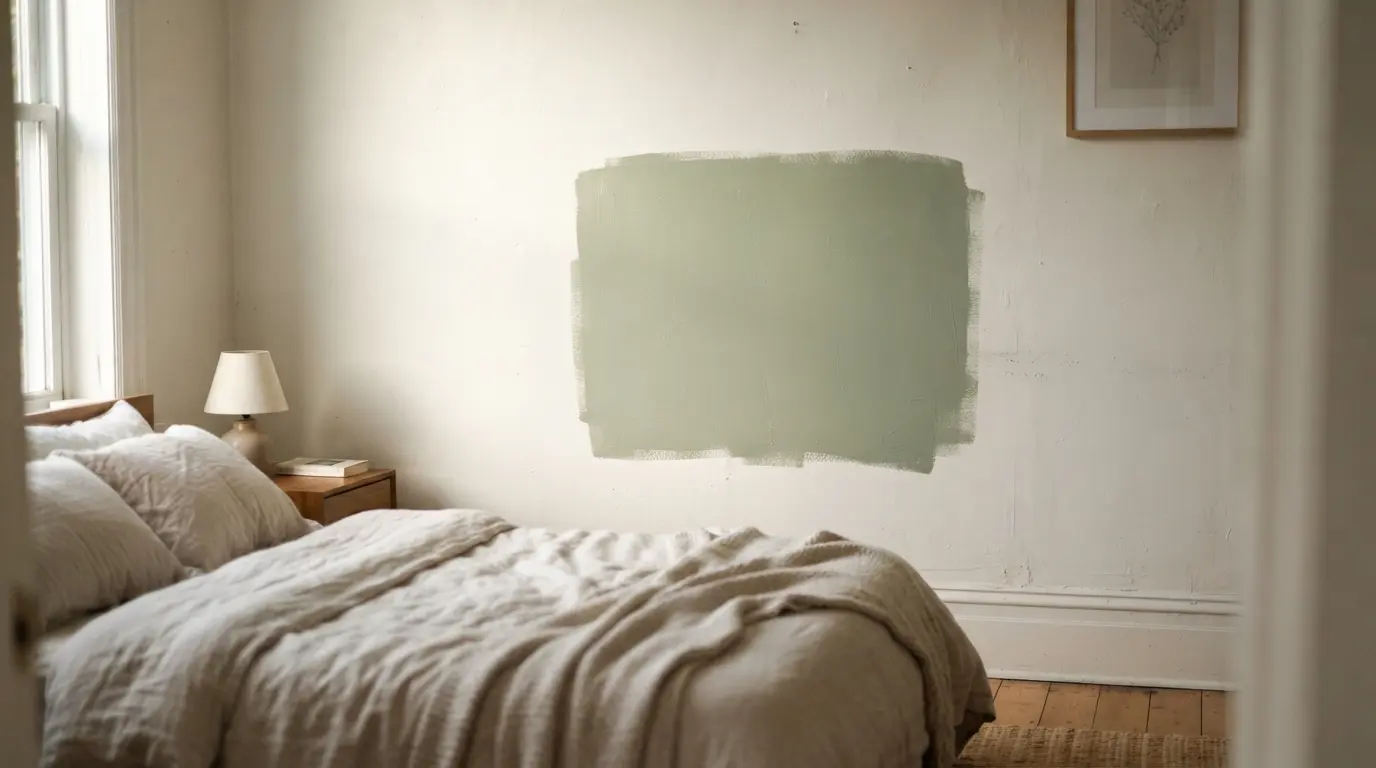
A bedroom gets used at both ends of the day in a way most other rooms don’t, you’re in it under bright, sometimes low-angled morning light, and again under warm, artificial lighting in the evening. Paint a genuine sample directly on the wall and check it honestly at both these times, rather than assuming a colour that looks good at midday will hold up equally well first thing in the morning and again after dark. A colour that reads as fresh and gentle in soft morning light can shift noticeably once your bedside lamp is the only thing illuminating it, and it’s this evening version you’ll actually be looking at most, since that’s when you’re winding down and spending the most conscious time in the room.
Pull Your Colour From Existing Bedding and Furniture
Rather than choosing a wall colour in isolation, look at what’s already staying in the room, your bed frame, existing furniture, curtains you’re not planning to replace, and pull your colour direction from there. This gives you a genuine starting point that guarantees the finished room feels coordinated rather than a wall colour chosen separately from everything else and hoping it works once the furniture goes back in. If you’re planning to update your bedding or curtains at the same time, decide the wall colour and the textile choices together rather than one after the other.
Check the Undertone Against Your Specific Linens
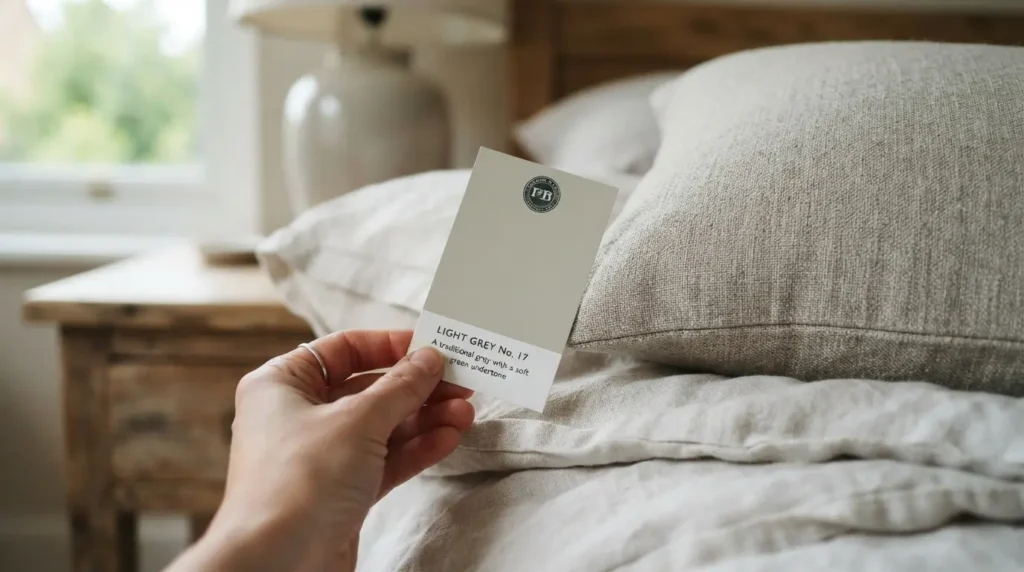
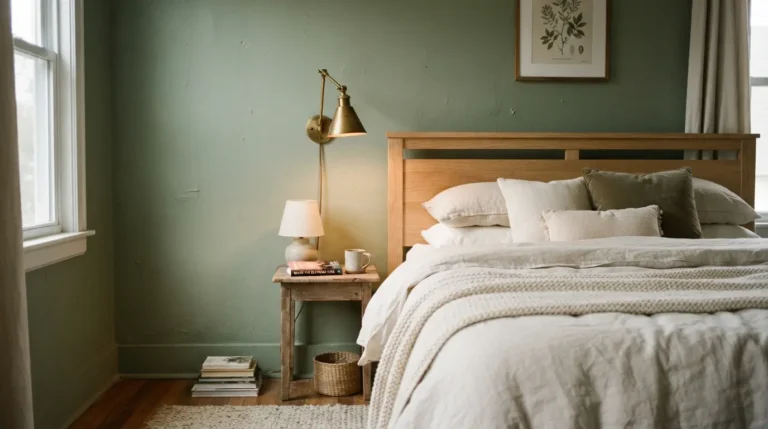
This is a detail worth checking properly rather than assuming any white, grey, or neutral will automatically coordinate. Hold a genuine paint sample up against your actual bed linens and existing textiles, since undertones that clash, a cool blue-grey wall against warm cream bedding, for instance, can make an otherwise perfectly nice colour choice feel subtly off once everything is in the room together. This matters considerably more with neutrals than bold colours, since a neutral’s undertone is exactly the detail most easily missed on a small paint chip but most obvious once it’s covering a full wall.
Choose Low-VOC Paint for a Room You Sleep In
This is worth prioritising specifically for a bedroom, more than almost any other room in the house. A genuinely low-VOC, breathable paint reduces the ongoing off-gassing of volatile compounds into a room where you’re spending roughly a third of your life, and many quality paint ranges now offer this as standard rather than a premium add-on. It’s a small, practical consideration that costs little extra but is worth actively checking for rather than assuming, given how much time you’ll genuinely spend breathing the air in this specific room compared with, say, a hallway or a utility room.
Decide on the Ceiling and Woodwork Treatment
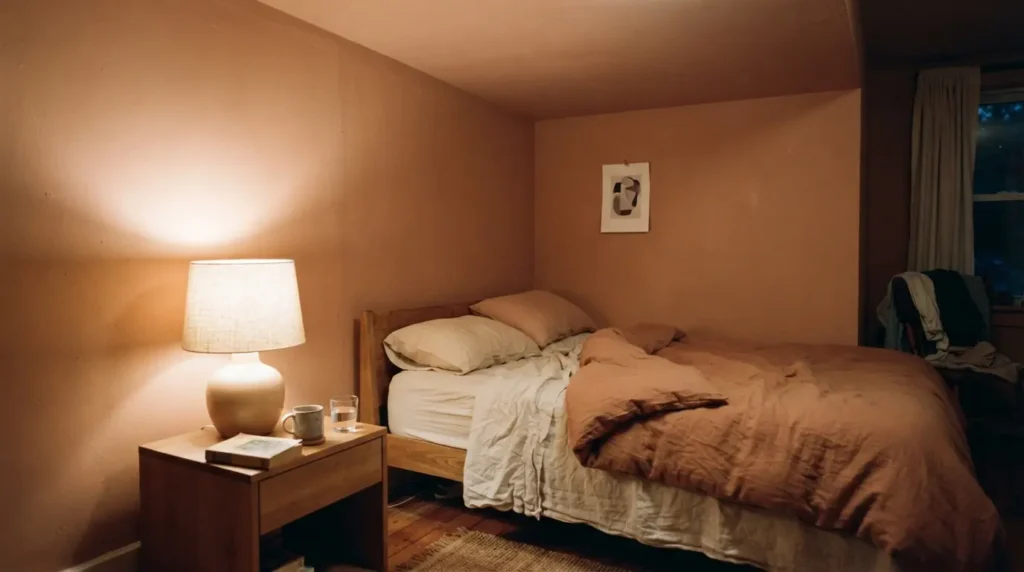
Once you’ve settled on your main wall colour, decide deliberately whether the ceiling and woodwork will match, contrast, or simply stay a standard white. Taking the same colour up onto the ceiling, sometimes called colour drenching, creates a genuinely enveloping, cocooning feel that suits a bedroom built around rest particularly well, since it removes the visual break a paler ceiling would otherwise create. A crisp white ceiling instead keeps a sense of height and brightness, which matters more in a smaller or lower-ceilinged bedroom. Neither is automatically correct, it depends on whether enclosure or openness matters more for how you want the finished room to feel.
Sample Properly Before Committing to the Whole Room
This is worth treating as a genuine final check rather than a step to rush through. Paint a large enough sample, at least a full sheet of paper or directly onto a section of primed wall, and live with it for several days, checking it at the different times you actually use the room. A colour that still looks right after living with it through a full week, morning light, evening lamp light, weekend daylight, is a considerably safer bet than one judged from a single glance under a single lighting condition, and this small amount of patience prevents the far bigger cost and effort of repainting an entire bedroom because the colour didn’t hold up the way you expected once it was fully committed to.
Final Thoughts
Choosing the perfect paint colour for a bedroom really comes down to being honest about how the room actually gets used, then testing your chosen colour properly in its real morning and evening light before committing to the whole space. Coordinate with what’s already staying in the room, check the undertone against your actual linens, and give the sample genuine time to prove itself, and the colour you choose will feel right every single day, not just in the moment you first picked it off a chart.
FAQs
Should bedroom paint colour match the bedding or the furniture?
Ideally both work together, pulling your colour direction from whichever pieces are staying in the room, furniture, existing curtains, or bedding you’re keeping, gives you a genuine coordinated starting point rather than choosing the wall colour in isolation.
What paint finish is best for a bedroom?
A matt or low-sheen finish is generally the most popular choice for bedroom walls, since it has a soft, non-reflective quality that suits a restful room, while woodwork and trim often benefit from a slightly more durable finish for easier cleaning.
Does a bedroom need calming colours if it’s also used as a home office?
Not necessarily a purely calming palette, if the room genuinely serves multiple functions, it’s worth choosing a colour that supports both uses reasonably well rather than optimising entirely for rest at the expense of a space you also need to feel alert and focused in.
How long should I test a paint sample before committing?
Several days at minimum, checking it under your room’s actual morning and evening light rather than judging from a single viewing. A bedroom specifically gets used at both ends of the day, so it’s worth confirming the colour holds up in both conditions before painting the whole room.
Is low-VOC paint worth it for a bedroom?
Yes, genuinely worth prioritising specifically here, since a bedroom is where you spend a significant portion of your time breathing the room’s air. Many quality paint ranges now offer low-VOC, breathable options as standard, so it’s worth checking for this rather than assuming it’s a costly upgrade.