8 Living Room Lighting Ideas to Set the Perfect Mood

The best way to set the mood is to use several small, warm, dimmable light sources instead of one bright ceiling light. These 8 living room lighting ideas to set the perfect mood show you how to layer light, pick the right bulbs and place every fitting well.
Most living rooms struggle for the same reason. One pendant hangs in the middle of the ceiling, switches on at full power and flattens everything underneath it. The room ends up feeling like an office or a waiting room. If you scroll through room lighting inspiration online, you will notice the best living room lighting rarely comes from a single fitting. Many of the fixes below need only a plug socket, a better bulb or a dimmer, not a rewire.
1. Layer Your Lighting in Three Levels
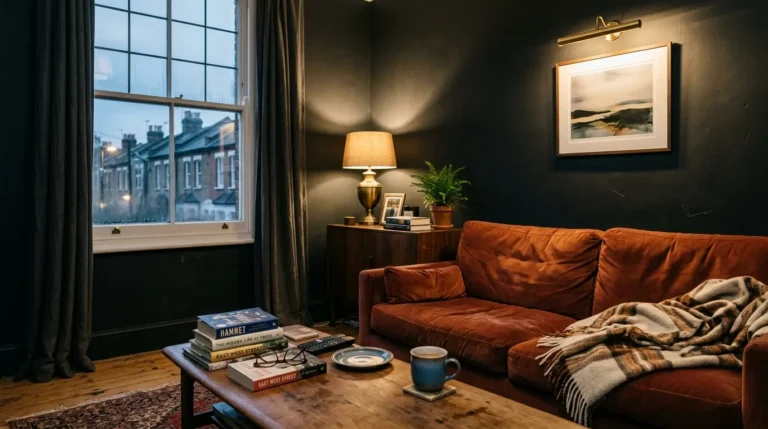
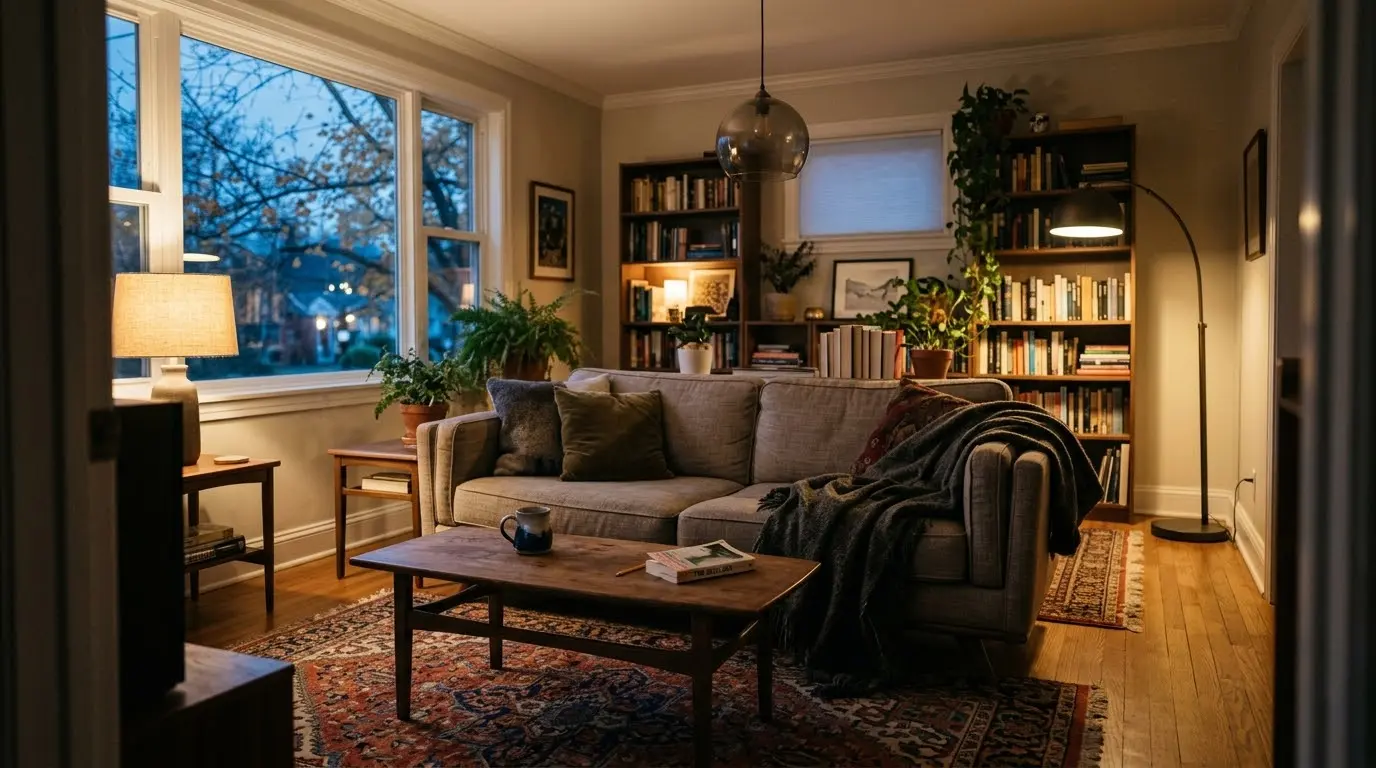
Layer three kinds of light: ambient for general glow, task for reading and screens, and accent for art and shelves. Place them at different heights so light reaches the room from several directions instead of from one spot above your head.
A good rule of thumb is one ambient source, a task light for each seat and one or two accent lights. Mix heights: a low lamp on a side table, a floor lamp at shoulder height and a wall light or pendant above. Keep the ambient layer the softest, because the other layers exist to add interest.
The trade-off is clutter. Five lamps mean five cables, so check your sockets before you buy. Layering works in any style, from a compact flat to an open-plan room, because each light has a small job rather than one fitting trying to do everything.
2. Fit Dimmers on Your Main Lights
Fit a dimmer to every main light and you can shift the room from bright and busy to soft and calm in seconds. Pair each dimmer with LED bulbs marked dimmable, because a mismatch causes flicker, buzzing or a shortened bulb life. Plug-in dimmers and smart bulbs work if you cannot rewire.
A dimmer is the cheapest way to fix a harsh fitting. That glaring pendant turns flattering once it sits at a low setting. Choose a dimmer rated for LED loads and check its minimum load, because very low-wattage LEDs can flicker on older models.
Smart bulbs have one catch: when someone flips the wall switch off, app control goes with it. Leave the switch on, or fit a cover over it. Dimming also trims energy use a little, since the lights draw less power at lower levels.
3. Choose Warm Bulbs and Check the Colour Temperature
Pick warm white bulbs between roughly 2200K and 3000K for evenings. Cool white above 4000K makes a living room feel clinical. Check the kelvin number on the box, not just the word warm, and buy by lumens rather than watts.
Sources do not agree on a single number. Some suggest 2700K to 3000K as a safe warm white, while others go below 2500K for a deeper amber glow. A sensible range is 2200K to 3000K, with 2700K as the easy choice for most rooms. Keep every bulb in the room within a narrow band, or the glow looks patchy.
As a baseline, a 60W-equivalent LED gives roughly 800 lumens, so use that for lamps and go lower in small accent fittings. A cooler 4000K can suit a daytime desk corner, but switch to warm before dinner. Good LED bulbs last for years, so it pays to buy decent ones rather than the cheapest pack.
4. Add Wall Lights to Frame Features and Free Up Surfaces

Wall lights add soft, flattering light at head height without using any floor or table space. Position them on either side of a mirror, fireplace or sofa, with the centre of the fitting roughly 150 to 170 cm from the floor. Plug-in versions avoid rewiring and suit renters.
Designers lean on wall lights because a lone pendant rarely creates atmosphere. They also suit tight rooms, where a floor lamp would crowd the sofa. A symmetrical pair feels calm and formal, while an off-centre arrangement looks more relaxed and modern. Sconces that throw light up and down add soft shadows, which flatter walls and faces alike.
The honest trade-off is wiring. A plug-in sconce leaves a cable running down the wall unless you hide it in a paintable cover. Hardwired fittings look cleaner but mean chasing the wall, making good and repainting, so decide before you decorate. If the room is finished and you love it, plug-in or rechargeable models are the sensible compromise.
5. Build Pools of Light With Table and Floor Lamps
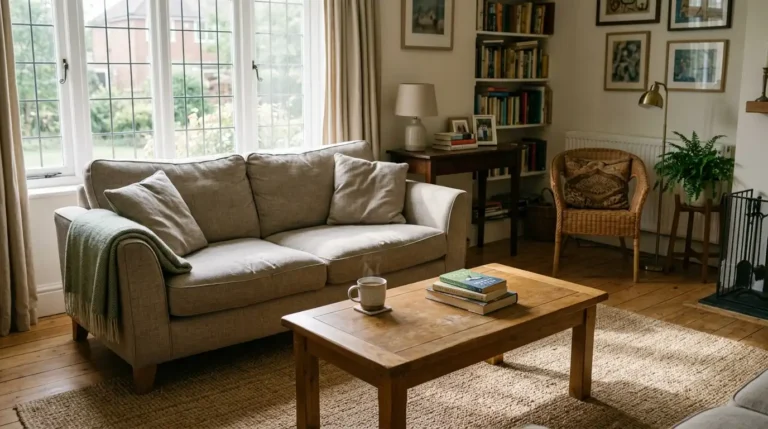
Table and floor lamps are the easiest way to build warm pools of light exactly where you sit. Place them near furniture rather than around the walls, give every seat its own light, and mix heights. A swivel-arm floor lamp suits reading; a table lamp suits side tables and shelves.
For lounge lighting that feels relaxed, pull lamps in towards the seating. Lamps placed only around the edges of a room leave a dark hole in the middle. A pair either side of a sofa feels balanced, while mixed styles feel more collected.
The shade matters as much as the base. Fabric and woven shades diffuse light softly, a smoked or amber glass shade adds a golden haze, and a dark shade pushes light up and down rather than outwards. Rechargeable lamps remove trip hazards, which helps with children and pets, but they need regular charging. Wipe fabric and woven shades occasionally, because dust dulls the glow over time.
6. Hang a Statement Pendant or Chandelier at the Right Size
A statement pendant gives the room a focal point, but it should never be your only light. Size it by adding the room’s length and width in feet and reading the total as inches: a 10 by 12 foot room suits a fitting about 22 inches, or 56 cm, wide.
Treat that sum as a starting point, not a law. Tall ceilings can carry something larger, while low ceilings call for a flush or semi-flush fitting so nobody ducks. Many designers suggest hanging a pendant lower than you first think, which adds intimacy. Keep that for fittings over a coffee table or dining table, never a walkway, and choose a design with an adjustable drop.
Glass, brass and amber finishes warm the light, and a pearl or opal bulb softens the glare. A pendant looks great in photos but gives little atmosphere alone, so pair it with lamps and wall lights.
7. Hide Warm LED Strips Behind Shelves and Coving
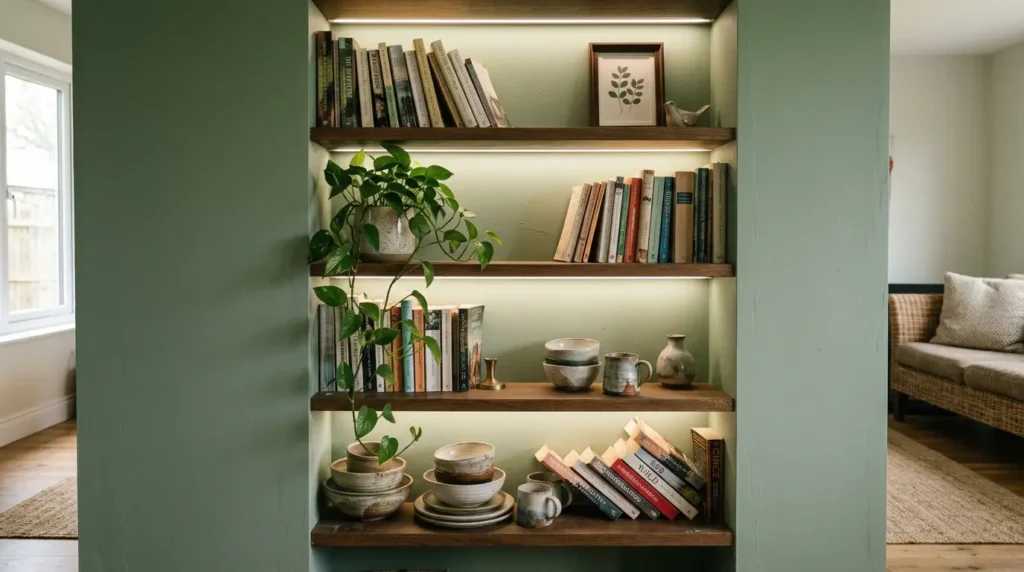
Warm white LED strips tucked under shelves or behind coving add a soft glow without a visible fitting. Choose 2700K to 3000K strips, diffuse them in an aluminium channel, and hide the driver where you can still reach it. The glow should feel like a quiet lounge, not a workplace.
Cove lighting washes the ceiling with indirect light, which removes glare and can make the room feel taller. The common mistake is sticking bare strip straight to a surface, which shows every LED as a bright dot. A frosted aluminium channel gives a smooth, even line.
Adhesive backing grips poorly on dusty, textured or freshly painted surfaces, so clean first and let new paint cure. Strips also need a driver, a small power box, so put it somewhere you can reach for a replacement years later. Under-shelf strips are an easy weekend job, but a cove run is cleaner with a professional handling the power.
8. Light Your Art, Alcoves and Fireplace
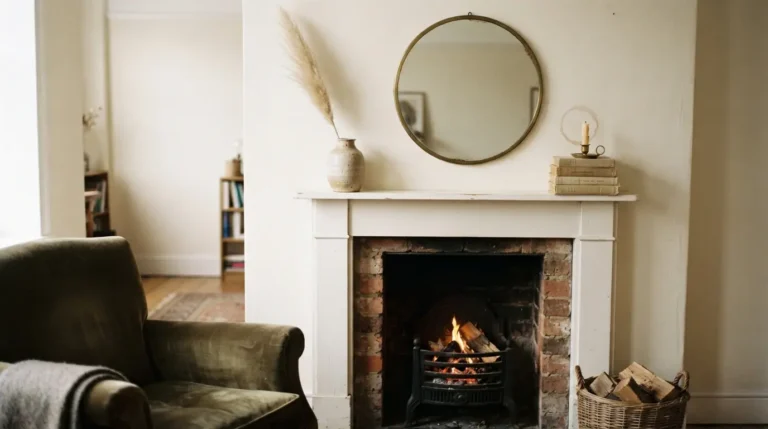
Accent lighting turns a bare wall into a feature. Use a picture light, a directional downlight or a wall washer to light art, and keep accent lights brighter than the ambient layer but softer than your reading lamps. Flickering LED candles can add a fire-like glow where you have no hearth.
A traditional picture light suits classic frames, while a small adjustable downlight is neater for modern art or low ceilings. These light ideas also work on texture. Washing light across brick, a stone fireplace or a rough plaster wall adds depth that flat ceiling light cannot.
For a prized piece, try three-point lighting: general light in the room plus two accents on either side. Go easy. Two or three accents are plenty, and each should look intentional rather than scattered. If you add LED candles, check the flicker is gentle, because fast pulsing looks cheap.
What Does Each Lighting Idea Cost and How Long Does It Take?
Most ideas cost under £250 if you use plug-in fittings, and several hundred pounds once an electrician and redecorating are involved. Prices below are approximate in GBP and vary by country, supplier and the state of your existing wiring.
| Idea | Typical cost (approx.) | Time to do | Electrician needed? |
| 1. Layered lighting | £100 to £250 for two lamps and a dimmer | An afternoon | Only for a wall dimmer |
| 2. Dimmers | £15 to £60 per dimmer, plus labour | 30 to 60 minutes per switch | Yes for wall dimmers, no for plug-in |
| 3. Warm bulbs | £2 to £8 per bulb, £8 to £25 for smart | Minutes | No |
| 4. Wall lights | £25 to £120 plug-in, £40 to £250 hardwired fitting plus labour | An hour for plug-in, 1 to 2 days hardwired | Hardwired only |
| 5. Table and floor lamps | £20 to £150 each | Minutes | No |
| 6. Pendant or chandelier | £20 to £600 and above | Under an hour to 2 days | Usually |
| 7. LED strips | £20 to £80 for a kit, £5 to £15 per metre for channel | An afternoon to a day | For mains-connected cove runs |
| 8. Accent lighting | £30 to £150 for a picture light, downlights from a few pounds each plus installation | Hours to a day | Usually |
In What Order Should You Upgrade Your Living Room Lighting?
Start with the cheap changes: swap in warm bulbs, move lamps closer to seating, then add dimmers. Only after living with that for a week or two should you spend on wall lights, a new pendant or hardwired strips, because by then you will know where the room still feels dark.
Test any expensive fitting at night, with the shade and bulb in place, because shop lighting hides glare. If you plan to hardwire anything, group the electrical jobs together so walls and ceilings open once, not twice.
A realistic timeline helps. Warm bulbs, lamps and plug-in dimmers take a weekend. Wall lights, a new pendant and cove strips add a week or two once you include delivery, an electrician’s availability and redecorating.
Conclusion
The 8 living room lighting ideas to set the perfect mood all point in the same direction: more sources, lower levels and warmer light. Start with bulbs, lamps and dimmers, then add wall lights, a well-sized pendant or hidden strips once you know where the room still falls short. Spend where you sit and read, and keep accents modest. A room lit this way works for a quiet night in and a full house alike.
FAQs
How many lights should a living room have?
Most living rooms need between four and eight light sources, depending on size and use. Include at least one ambient light, a task light for each seating area, and one to three accent lights. Small rooms can sit at the lower end, while open-plan spaces often need more.
Should all the lampshades in a living room match?
No. Shades look cohesive when they share a colour, material or shape without being identical. Try different colours in one fabric, or woven and linen shades together for a relaxed look. In a large room, mixing shades also avoids a flat sea of matching white drums when you walk in.
Can a living room work without a ceiling light?
Yes. Use a tall floor lamp that bounces light off the ceiling for the ambient layer, then add table lamps and wall lights for depth. Lamps-only rooms feel warm and are easy to adjust. Make sure you have enough sockets, and consider floor sockets near the sofa to avoid trailing cables.
How do I light a small living room?
Use wall lights and a tall, slim floor lamp so nothing crowds the furniture. A flush ceiling light keeps headroom, and recessed lights placed near the walls draw the eye outward. Leave clear space around any floor lamp, as a lamp jammed against a sofa looks cramped and gets knocked.
Are spotlights a good idea in a living room?
They can work, but only in moderation. Space recessed spotlights evenly, around 60 cm from the walls, and put them on a dimmer so the beams soften in the evening. A grid of identical downlights across the ceiling tends to glare. Where ceiling voids need protection, ask your electrician about fire-rated fittings.
Should living room lights be on separate switches?
Yes, when the room is large. Put ambient, wall, lamp and accent lights on separate controls so you can change one layer without touching the others. A big room with three or more circuits is worth planning with a lighting control system, which replaces a bank of dimmer switches.
How do I light a living room with a TV?
Avoid watching a bright screen in a dark room, which strains the eyes. Dim the ceiling light, switch on lamps behind or beside the seating, and add a warm LED strip behind the TV for a soft backdrop. Keep lamp shades away from the screen so reflections do not bounce back.
How can I make a dark living room feel brighter?
Light walls and fabrics, a mirror opposite the window and glossy or glass surfaces all bounce daylight deeper into the room. Keep bulky furniture off the window wall and choose sheer curtains. After dark, build the evening scene with warm lamps at several heights rather than one stronger ceiling light.