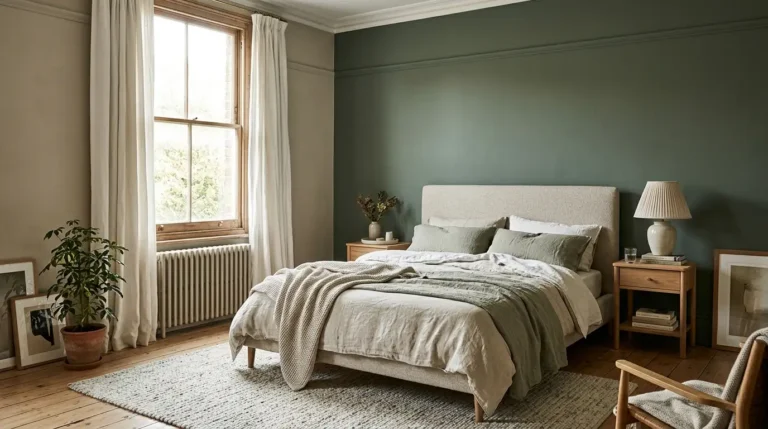
7 Cosy Bedroom Ideas to Create Your Perfect Retreat

Cosy bedroom ideas focus on warmth, softness and a sense of enclosure that makes the room feel like a retreat after a long day. In UK homes this often means choosing materials that hold heat, colours that feel settled under cool northern light, and layouts that keep the space calm rather than open and bright. The seven ideas below cover practical ways to achieve that feel while checking sizes, clearances and materials that last.
1. Layer Soft Textiles for Immediate Warmth
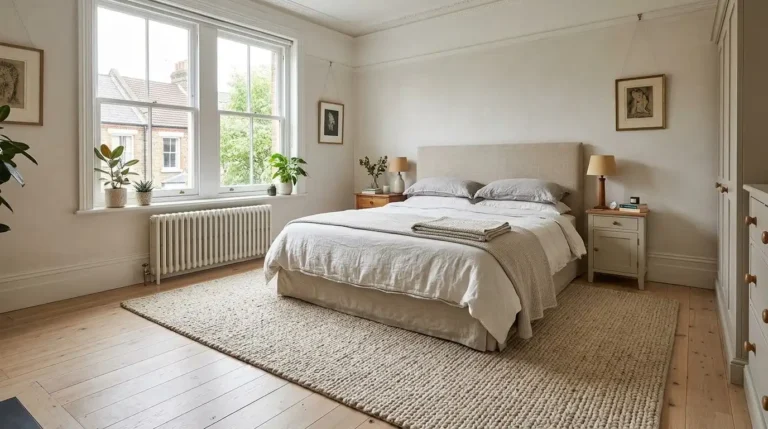
Add a wool or cotton throw at the end of the bed, heavier curtains that reach the floor, and a rug that extends under the lower half of the mattress. Linen bedding softens with washing and feels cooler in summer while still looking relaxed. Avoid synthetic fabrics that feel cold to the touch. A 160 by 230 cm rug works under a double bed and still leaves walking space at the sides. Bedroom ideas often start with textiles because they change the feel of the room without structural work.
Check the pile height of the rug; low pile is easier to clean and less likely to catch on bed frames. Washable covers on cushions and throws make the look practical for everyday use.
2. Choose Warm Neutrals and Muted Colours
Paint walls in a warm greige, soft taupe or muted sage rather than cool grey or bright white. These colours hold their warmth under UK evening light and pair well with oak flooring and brass fittings. Test samples on the wall for several days. A feature wall behind the bed in a slightly deeper shade adds depth without making the room feel smaller. How to choose the perfect paint colour for a bedroom explains how light direction changes the same shade.
Keep the ceiling a warm white so the room does not feel closed in. Eggshell or durable matt finishes hide minor marks better than gloss.
3. Add an Upholstered Headboard for Softness

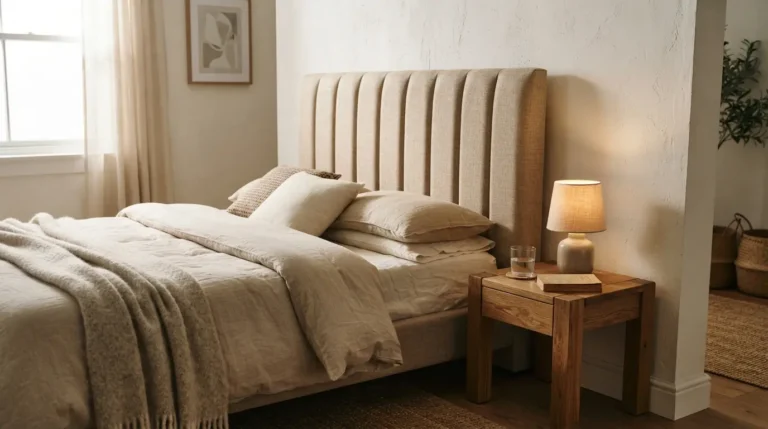
A fabric or velvet headboard softens the wall behind the bed and reduces noise. Choose a height that sits just above the pillows when you are propped up, usually 100 to 120 cm from the floor. Leave 60 cm clearance either side so the headboard does not feel cramped. Button-tufted or winged designs add texture without needing extra cushions. How to choose the right headboard for your bed covers heights and materials that work in UK bedrooms.
Check the fixing method; wall-mounted headboards need solid fixing points, while bed-attached ones move with the frame. Velvet marks more easily than linen or cotton, so check cleaning advice before ordering.
4. Use Warm Layered Lighting
Replace a single bright ceiling light with warm white bulbs at 2700K to 3000K. Add bedside lamps with fabric shades and a low lamp on a chest of drawers. Dimmers let you drop the light for evening. Avoid cool white LEDs; they make the room feel clinical. Wall lights either side of the bed free up the nightstand surface. How to layer lighting in a bedroom for the perfect mood is not yet published but the principle is the same as other rooms on the site.
Position reading lights so the shade is level with your shoulder when sitting up. This keeps glare out of your eyes. LED strips behind the headboard add a soft glow without extra fittings.
5. Bring in Natural Materials
Oak or ash furniture, rattan baskets and a wooden bed frame add warmth that painted furniture can lack. A solid oak bedside table of 45 cm width sits well beside most double beds. Avoid high-gloss finishes that reflect light harshly. Natural materials also hide minor wear better than high-sheen surfaces. Check the grain and finish on samples before ordering large pieces.
In smaller rooms, lighter oak keeps the space from feeling heavy. Pair with linen or wool textiles rather than shiny synthetics.
6. Create a Reading Corner
A small armchair or a window seat with a floor lamp turns unused space into a quiet corner. Choose a chair with a seat height of about 45 cm so it is easy to get in and out of. Leave 70 cm clearance in front of it. A 300 lumen lamp or a dimmable floor lamp provides enough light for reading without lighting the whole room. This works well in rooms of 3 m by 4 m or larger.
If space is tight, a bench at the end of the bed with a cushion and a wall light above it can serve the same purpose. Check the overall depth so it does not block the wardrobe doors.
7. Soften the Floor and Walls
A thick rug under the bed and wall panelling or a fabric-covered panel behind the bed add acoustic softness and visual warmth. Half-height panelling in a warm wood or painted finish stops at about 1 m and pairs well with a headboard. Leave clearances for the bed frame so the panelling does not interfere with the mattress. 12 behind the bed panelling ideas for a headboard shows configurations that work with standard UK bed sizes.
Carpet or a large rug reduces echo and feels warmer underfoot than bare boards. In rental properties, large rugs and removable textile panels achieve a similar effect without permanent changes.
Conclusion
Cosy bedrooms come from layered textiles, warm colours, soft lighting and materials that feel good to the touch, all checked against the actual clearances and light in your room. Start with the bed and storage that fit, then add the layers that make the space feel settled. The result is a retreat that works in real UK light and daily use rather than only in a styled photo.
FAQs
What makes a bedroom feel cosy?
Warm colours, soft textiles, layered lighting at 2700K to 3000K, and materials such as wood, wool and linen. Clearances still matter so the room does not feel cluttered.
Do dark colours make a bedroom cosier?
A deeper shade on one wall can add depth, but all-dark walls in a small north-facing room can feel enclosed. Test samples and keep the ceiling lighter.
How much does it cost to make a bedroom cosier?
Textiles and a new rug can cost from £100 to £300. Paint and a headboard add more. Start with samples and existing furniture before larger purchases.