How to Layer Lighting in a Bedroom for the Perfect Mood

Layering lighting in a bedroom means using ambient, task and accent sources on separate controls so the room can shift from bright enough for dressing to soft enough for sleep. UK bedrooms often have one ceiling light, which leaves the space flat and harsh at night. The right layers use warm white bulbs around 2700K to 3000K, dimmers, and positions that avoid glare when you are lying down.
Understand the Three Layers
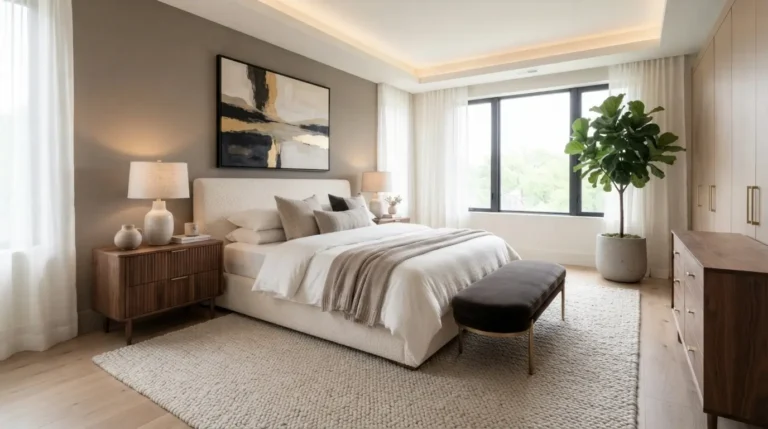
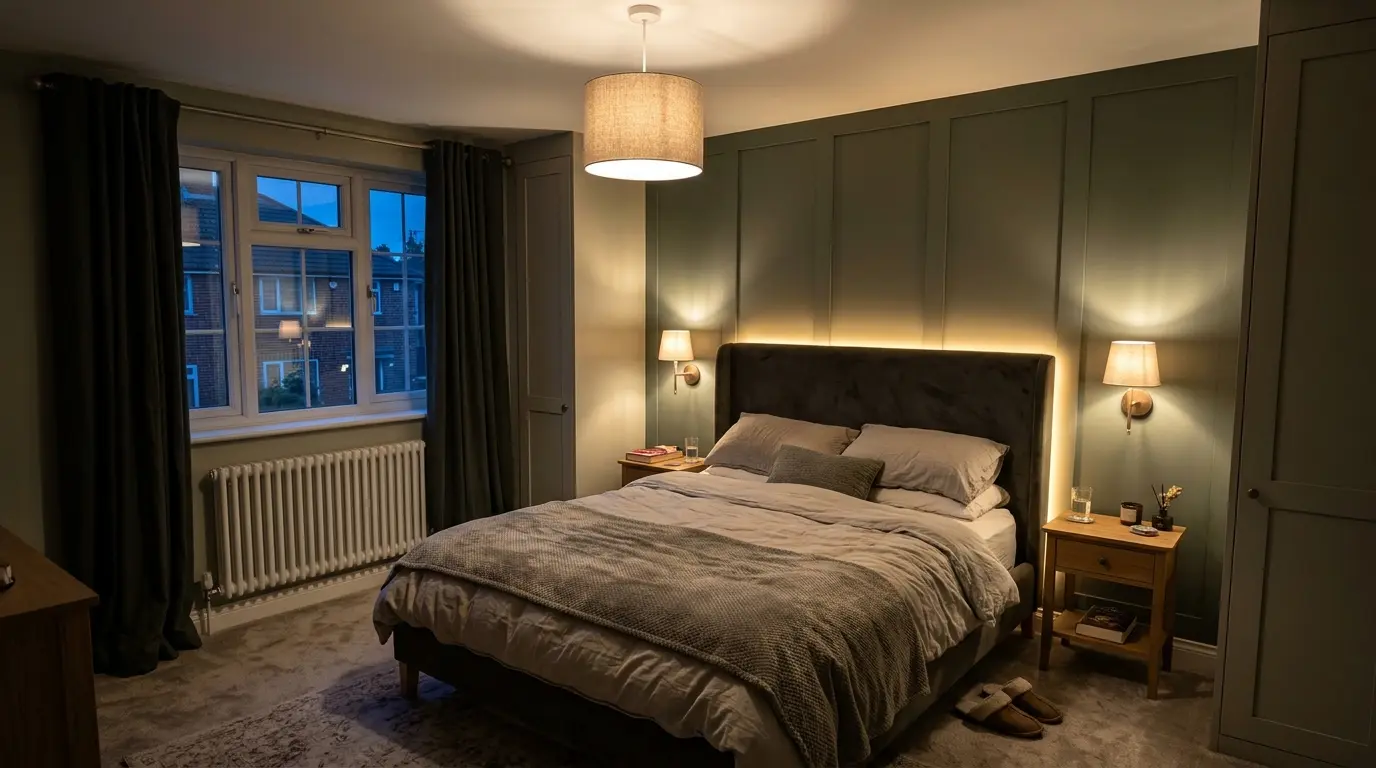
Ambient light is the general glow that lets you move around and find clothes. Task light is the focused light for reading or getting dressed. Accent light adds depth and softness, such as a strip behind the headboard or a low lamp on a chest. Use all three on separate switches or dimmers. Bedroom ideas benefit from the same layered approach used in living rooms.
Aim for three to five sources in total. A single bright light on one switch gives only one mood. Warm white throughout keeps the layers consistent and signals the body that it is time to rest.
Set the Ambient Layer
Use a dimmable ceiling pendant, flush mount or a pair of wall lights for the ambient layer. Position it so it does not shine directly onto the pillows. In smaller rooms a single shaded fitting is enough. Keep the light warm and able to dim to a low level. Avoid cool white LEDs or bare bulbs.
Two-way switching from the door and the bed means you do not have to cross a dark room. In rooms with downlights, keep them off the bed line and on a dimmer. Fabric or frosted shades diffuse the light better than open fittings.
Add Task Lighting at the Bedside
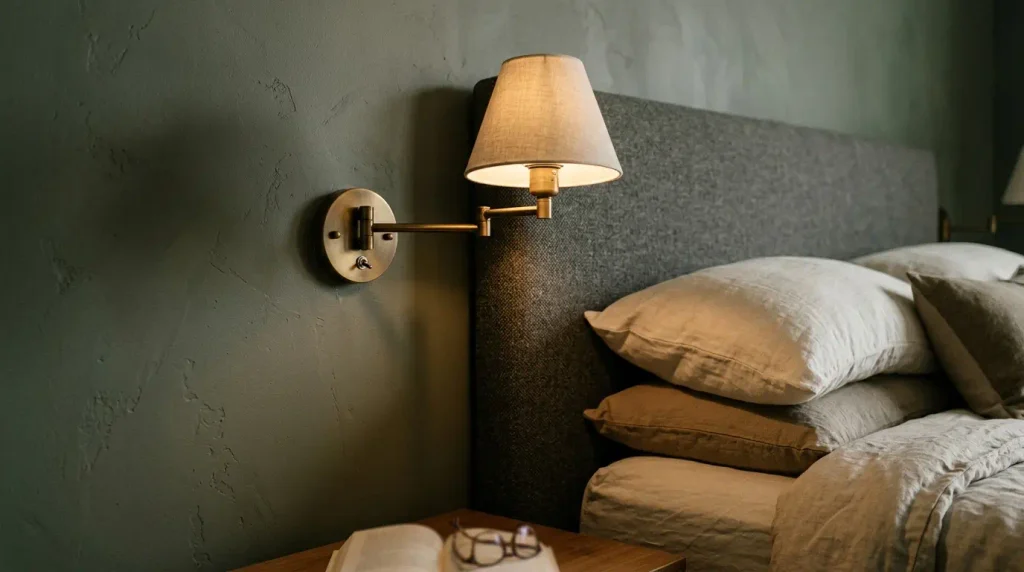
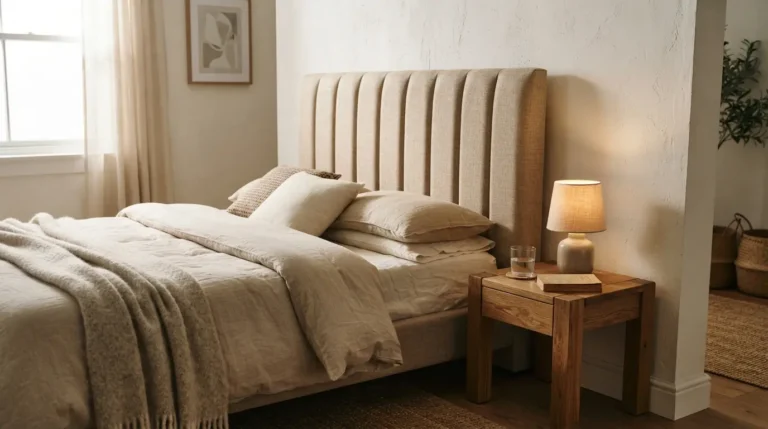
Bedside lamps or wall-mounted reading lights provide task light for reading. Mount wall lights so the shade sits roughly 60 to 75 cm above the mattress, level with your shoulder when sitting up. Use independent switches so one person can read while the other sleeps. Table lamps work if the nightstand is deep enough. How to choose a bedside table for any bedroom helps match the table height to the lamp.
Choose shades that direct light downwards onto the page rather than into your eyes. Adjustable heads on wall lights are useful. Avoid exposed bulbs at eye level.
Include Accent and Soft Glow
A low lamp on a chest of drawers, LED strip behind the headboard, or a floor lamp in a corner adds accent light. Conceal the strip so you see the glow rather than the fitting. This layer stays on at a low level after the main lights are off. It makes the room feel finished and reduces the need for the bright ceiling light.
Picture lights or wall lights on a feature wall can serve as accent. Keep the colour temperature the same as the other layers. In small rooms, one accent source is enough.
Choose Bulbs and Controls
Use 2700K to 3000K warm white bulbs across all layers. Dimmers on every circuit let you adjust the mood. Smart bulbs can add scenes but are not essential. Check the fitting is dimmable if you use LED. Avoid mixing warm and cool bulbs in the same room; the clash is noticeable at night.
For wardrobes, a simple LED strip on a door switch adds practical task light without affecting the main scheme. In en-suites, keep bathroom lighting separate and on its own circuit.
Common Lighting Mistakes
Relying on one ceiling light makes the room feel flat and harsh. Placing downlights directly above the pillows creates glare when lying down. Using cool white bulbs in a bedroom signals alertness rather than rest. Forgetting dimmers means you cannot drop the light for evening. Ignoring the height of bedside lights leads to glare or insufficient light on the page.
Another mistake is installing fittings before checking the bed position. Mark the bed footprint first so the lights sit in the right places relative to the pillows and nightstands.
Conclusion
Layering lighting in a bedroom gives you control over the mood from bright for practical tasks to soft for sleep. Use warm white bulbs, separate controls for ambient, task and accent, and positions that avoid glare. The room will feel calmer and more usable at every time of day once the layers are in place.
FAQs
What colour temperature is best for bedroom lighting?
Warm white around 2700K to 3000K. Cooler temperatures feel too bright and alert for evening use.
How high should bedside lights be?
The shade should sit roughly level with your shoulder when you are sitting up in bed, usually 60 to 75 cm above the mattress.
Do I need a ceiling light in a bedroom?
Not strictly. Wall lights or a combination of lamps can provide ambient light. If you keep a ceiling fitting, make it dimmable and warm.
How many light sources does a bedroom need?
Three to five: ambient, two task lights at the bed, and one accent. More is useful in larger rooms.