10 Upholstered Bed Ideas for a Luxurious Bedroom

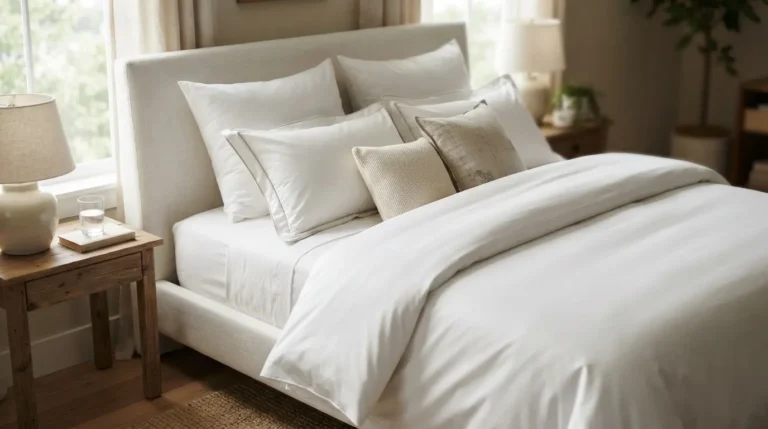
Upholstered bed ideas work because a fabric-covered headboard does more to make a bedroom feel genuinely finished than almost any other single piece of furniture, softening the room and anchoring it in a way a plain wood or metal frame rarely manages. The 10 ideas below cover the shapes, fabrics, and details worth considering, along with the honest durability and maintenance reality most inspiration roundups leave out.
1. Channel-Tufted Headboard for a Sculptural, Structured Look
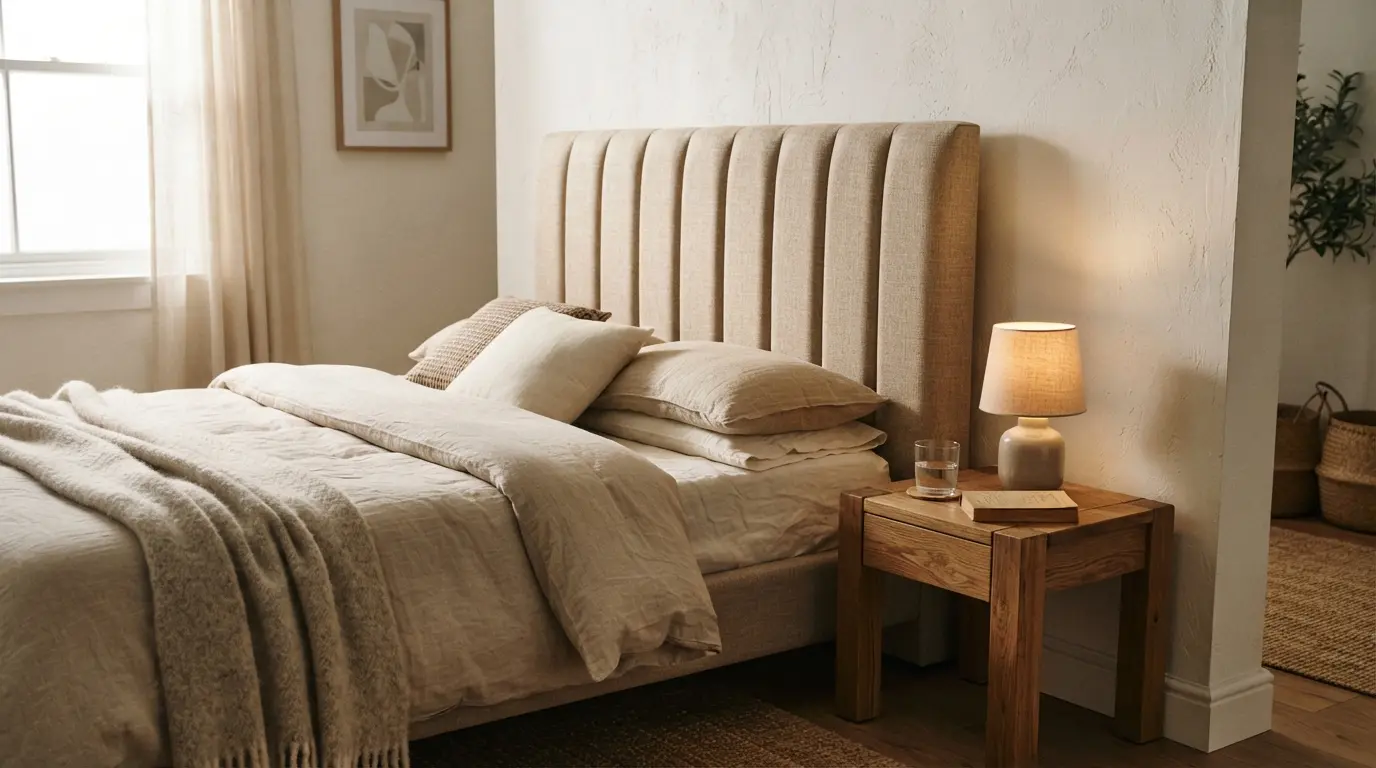
Vertical channel tufting, where the fabric is stitched into clean, evenly spaced ridges rather than individual buttoned points, gives a headboard a genuinely sculptural, architectural quality. It suits a more contemporary bedroom particularly well, since the lines read as considered and graphic rather than traditional, and it works in almost any fabric, though a solid colour lets the channel detail itself do the visual work rather than competing with a print. The vertical lines also add a subtle height illusion to the wall behind the bed, similar to the effect vertical panelling has on a room, worth remembering if the bedroom’s ceiling feels lower than you’d like.
2. Button-Tufted Headboard for Classic, Deep-Buttoned Texture
Diamond or square button tufting, with fabric pulled into deep buttoned points across the headboard, brings a genuinely traditional, opulent character that suits a more classic or glamorous bedroom scheme. It’s worth checking the depth and spacing of the tufting in person or from real product photos rather than a small thumbnail, since a shallow, widely-spaced version reads very differently to a deep, tightly buttoned one, and the difference matters more to the overall look than the fabric colour does. Deep buttoning also creates genuine dimension and shadow across the headboard, which catches evening lamp light in a way a flat panel simply can’t, a detail worth considering if your bedroom relies mostly on warm, low lighting after dark.
3. Wingback-Style Upholstered Bed for a Cocooning, Enclosed Feel
A headboard with tall, angled side wings, borrowed from the classic wingback chair silhouette, creates a genuinely enclosed, cocooning feel around the head of the bed. This suits a room where you want the bed to feel like its own defined space, and it works particularly well in a larger bedroom where a tall, substantial headboard has enough surrounding room to read as a considered feature rather than overwhelming the space. The wings also do a small but genuine practical job, softening draughts around the head of the bed in an older or less well-insulated room, much like a wingback armchair does for someone sitting in it, so the style choice carries a little functional benefit alongside the look.
4. Curved or Scalloped Headboard for a Softer Silhouette
A rounded, curved headboard, or one with a gentle scalloped edge, softens a bedroom’s overall look in a way sharp, square lines can’t, and it suits a room already leaning toward softer, more organic shapes elsewhere, curved bedside tables, a rounded mirror. The curved shape also tends to photograph and read as more contemporary right now than a traditional square or rectangular headboard, worth knowing if you want the bed to feel current rather than classic. A scalloped edge specifically takes more fabric and more precise upholstery work than a simple curve, so it’s worth expecting a slightly higher price for the detail than for an equivalent plain rounded headboard.
5. Floor-to-Ceiling Upholstered Headboard for Real Drama
Extending the upholstered headboard well beyond standard height, sometimes running from the bed frame all the way to the ceiling, turns the whole wall behind the bed into one considered, upholstered feature rather than a headboard with plain wall visible above it. This is one of the more expensive and involved ideas on this list, since it needs considerably more fabric and a properly engineered frame or wall-mounted structure to support the extra height, but the effect is genuinely dramatic in a way a standard-height headboard can’t match. It’s worth checking your ceiling height and any nearby light fittings before committing to this scale, a floor-to-ceiling headboard positioned too close to a pendant light or a low ceiling can end up looking cramped rather than genuinely grand, so measure the wall properly rather than judging purely from an inspiration photo taken in a different room.
6. Velvet Upholstery for Rich Colour and Texture

Velvet brings a depth of colour and a soft, tactile quality that few other fabrics can match, and it suits both a jewel-toned statement headboard and a more muted, dusty shade equally well. The honest trade-off: velvet shows pressure marks and a slightly crushed texture over time, particularly where pillows and heads rest against it nightly, so it’s worth choosing it with that gradual change in mind rather than expecting it to look showroom-fresh indefinitely. A gentle, regular brush keeps it looking its best for longer. Darker, more saturated velvet shades tend to hide this gradual crushing better than pale ones, worth considering if you love the fabric but want the marks to be less visible in daily use rather than choosing purely on colour trend.
7. Bouclé or Linen for a Relaxed, Textural Look
Bouclé’s looped, nubbly texture and linen’s relaxed, slightly slubby weave both bring genuine tactile interest without the richness velvet carries, suiting a calmer, more pared-back bedroom scheme. Linen specifically creases and marks more easily than a tighter weave, which some people like as part of its relaxed character and others find looks unkempt over time, worth considering honestly before committing a large headboard to it. Bouclé is durable but can be harder to spot-clean than a smoother fabric, since the looped texture holds onto marks a flat weave would release more easily. A linen blend with a small amount of synthetic fibre worked in resists creasing and marking noticeably better than pure linen while keeping most of the natural, relaxed look, worth asking about if you like the aesthetic but want a bit more everyday resilience.
8. Leather or Faux Leather for a Wipe-Clean, Durable Choice
Leather and good-quality faux leather bring a different character entirely, sleeker and more tailored than any woven fabric, and they’re genuinely the most practical choice if durability and easy cleaning matter more than softness. Real leather develops a patina with age rather than simply wearing out, while faux leather offers a similar look at a lower cost but tends to show cracking at contact points sooner, worth knowing if the bed will see years of daily use rather than an occasional guest room. Leather also stays genuinely cool to the touch compared with a fabric headboard, worth considering in a warmer climate or a bedroom that runs hot, though some people find this less inviting to lean back against on a cold morning than a softer, more insulating fabric.
9. An L-Shaped or Corner Headboard for a Compact Room
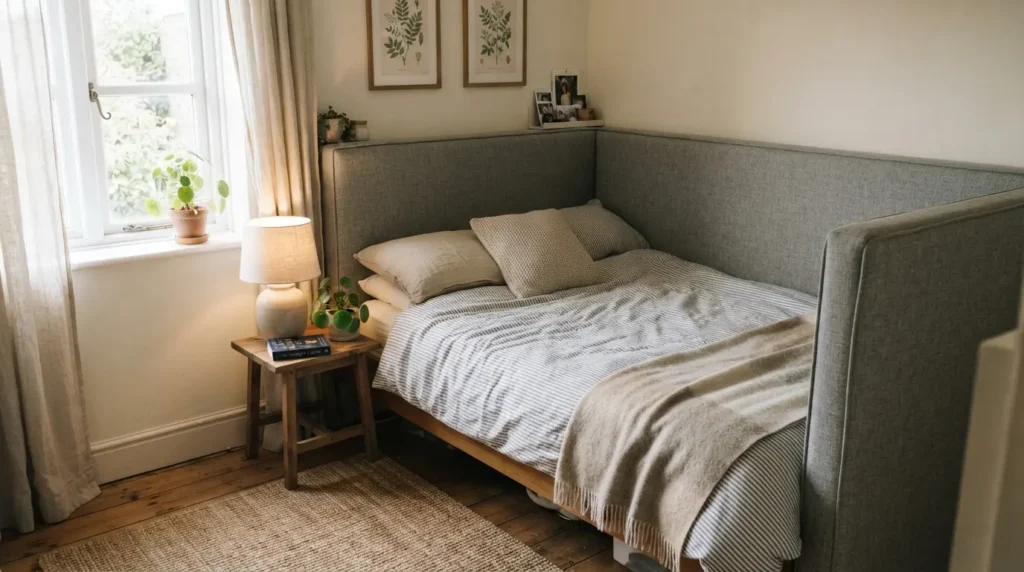
Wrapping the upholstery around two adjoining walls rather than a single flat headboard is a genuinely underused idea for a smaller or awkwardly shaped bedroom, since it makes use of a corner position that a standard bed frame would otherwise leave as dead space. It also adds a practical benefit beyond the look: the wraparound upholstery gives genuine back support if you sit up in bed to read or work, something a single flat headboard behind you doesn’t offer in the same way. This is usually a bespoke or made-to-measure piece rather than an off-the-shelf option, since it needs to match your specific corner’s dimensions exactly, so budget for a longer lead time and a higher cost than a standard rectangular headboard of the same fabric.
10. Check the Frame and Fabric Durability Before You Fall for the Look
This is the detail every purely visual upholstered bed guide skips, and it decides how well any of the previous nine ideas actually hold up. A genuinely well-built upholstered bed has a solid hardwood frame underneath the fabric, not just a thin board wrapped in foam, so ask specifically about the frame material rather than judging the bed purely on the upholstery and photos. Fabric durability matters just as much as frame quality: if the bed is in a household with children who climb onto it, or you simply want to keep it looking sharp with minimal fuss, lean toward performance fabric or leather over delicate velvet or loose-weave linen. Also check what’s underneath the visible upholstery on the base itself, some upholstered beds use a slatted base like a standard bedstead, while others use a solid platform or sprung divan base, and this affects mattress choice in exactly the same way it does on a non-upholstered frame, so don’t assume the upholstery alone tells you everything about how the bed will actually perform. Costs vary considerably by fabric, frame quality, and headboard size, a compact, simply upholstered headboard sits at the lower end, while a floor-to-ceiling or wingback design in a premium fabric costs meaningfully more, so treat any single figure as a rough guide rather than a fixed expectation for your specific choice.
Final Thoughts
The best upholstered bed ideas balance genuine style with an honest understanding of how the fabric and frame will actually hold up to years of daily use. Choose the shape and texture that suits your bedroom, check the frame quality and fabric durability before committing, and the bed you choose will still feel like the luxurious centrepiece of the room in five years, not just on the day it arrives. Whichever of these ten ideas you land on, the same underlying principle holds: the headboard shape sets the mood, but it’s the frame and fabric decisions underneath that decide whether the bed still looks and feels genuinely luxurious years from now.
FAQs
What’s the difference between button tufting and channel tufting?
Button tufting pulls fabric into deep, buttoned points, often in a diamond pattern, giving a traditional, opulent texture. Channel tufting stitches fabric into clean, evenly spaced vertical ridges instead, giving a more structured, contemporary look.
Is velvet a good fabric for an upholstered bed?
Yes, for the colour and texture it brings, but it will show pressure marks and a slightly crushed look over time where heads and pillows rest against it nightly. It’s a better fit for a statement piece you’re happy to see age naturally than one that must look pristine indefinitely.
How do you clean an upholstered headboard?
Regular light vacuuming with an upholstery attachment removes dust before it settles in, and spot-cleaning spills quickly, following the fabric’s specific care instructions, prevents most marks from setting. Fabric-specific cleaning products or professional upholstery cleaning are worth it for anything beyond a light surface mark.
Are upholstered beds worth the extra cost?
For many households, yes, the comfort of a padded headboard to lean against and the genuine softness it brings to a bedroom’s overall feel are hard to replicate with a plain wood or metal frame. The value depends on choosing a genuinely well-built frame underneath the fabric, not just the upholstery itself.
Can I add an upholstered headboard to an existing bed frame?
Often yes, a standalone upholstered headboard can be fitted to many existing bed frames or wall-mounted independently behind the bed, giving you the upholstered look without replacing the entire frame, provided you check the headboard’s fixing method suits your specific frame or wall.