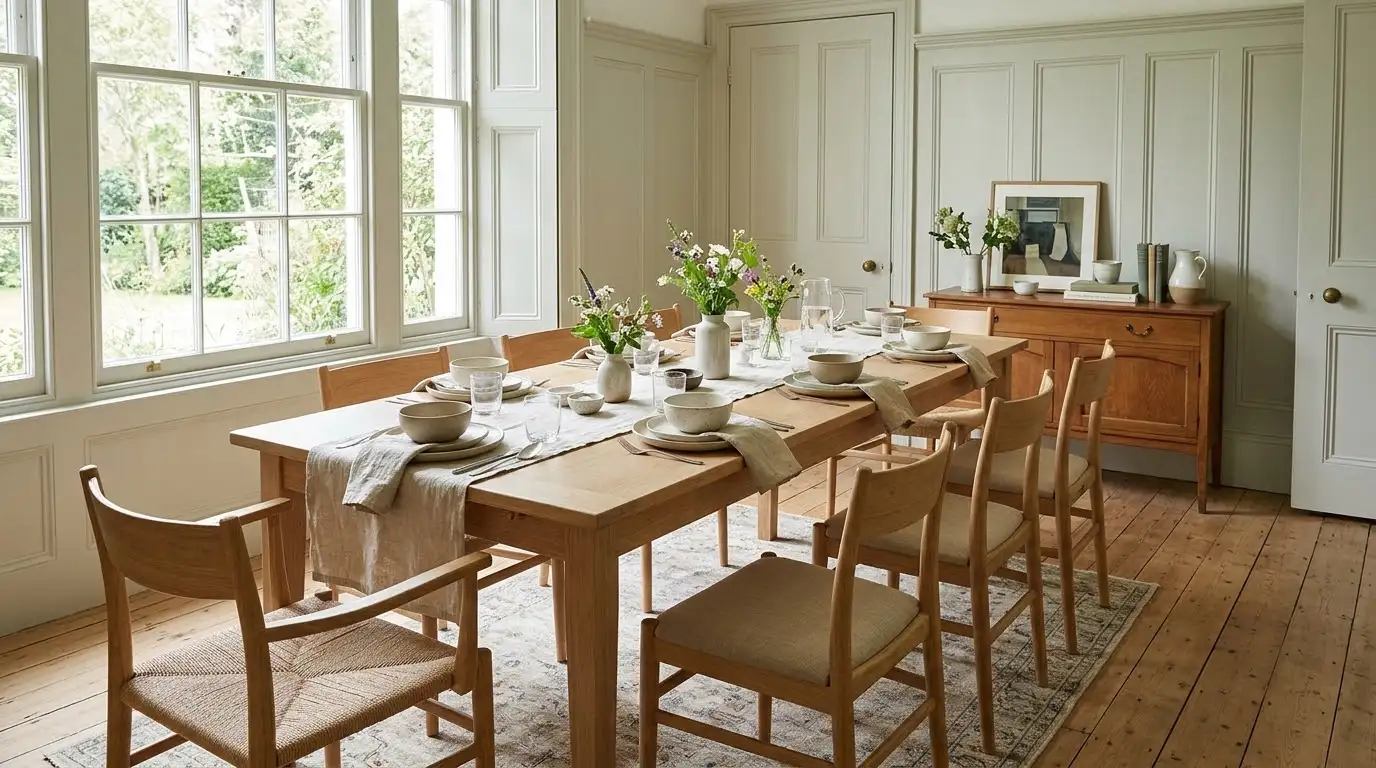
How to Choose the Right Dining Table for Your Home

Choosing the right dining table starts with how your household actually uses the space, not with a showroom photograph. Most UK homes need a table that seats four to six people day to day, leaves enough room to move, and survives real meals rather than staged ones. Get the size, shape, material and clearance right first and the rest of the dining room falls into place around it.
Start With the Room, Not the Table
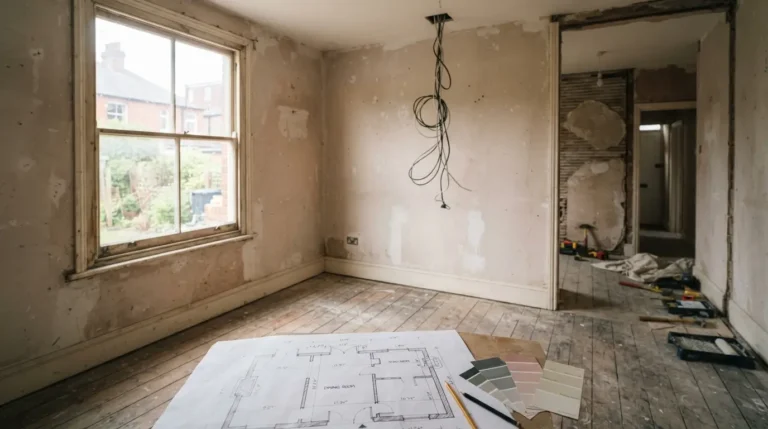
Measure the clear floor area where the table will sit before you look at any catalogue. Subtract at least 90cm on every side used for seating so chairs can be pulled out and people can stand up. Where someone needs to walk behind a seated person, aim for 105cm to 120cm instead. A what size dining table guide helps, but the room measurement decides what is possible.
Note radiators, door swings, windowsills and any sideboard or console you already own. A table that looks perfect on paper often fails once those fixed elements are included. If the room is open plan with the kitchen, factor in the traffic path between the two zones so the table does not become an obstacle.
Decide How Many People You Really Seat
Allow 60cm of table edge per adult as a minimum and 65cm to 70cm for comfort. A rectangular table around 120cm by 80cm seats four. One around 160cm to 180cm by 90cm seats six. Tables over 200cm by 90cm or 100cm usually seat eight. Round tables of 100cm to 120cm diameter suit four, while 120cm to 140cm work for six. These are practical UK ranges rather than absolute rules.
Count your everyday numbers first. A table that seats six every night but only expands for Christmas works better than one that is permanently oversized. Check the ideal dining room size and layout if your room is tight or unusually shaped.
Choose Shape for Conversation and Circulation
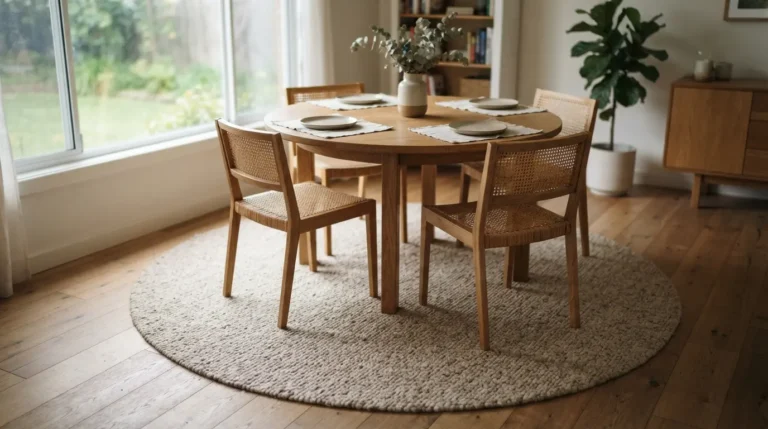
Rectangular tables maximise seating along the length and suit most formal or family rooms. Round and oval tables encourage conversation because everyone can see everyone else, and they remove sharp corners that catch in tight spaces. Pedestal bases help on round tables because there are no legs to bump against. Oval shapes give some of the length of a rectangle with the softer edges of a round.
In a small or square room a round table often feels larger than a rectangle of the same footprint. Test the idea by marking the outline on the floor with tape before you order.
Check Height, Apron and Knee Clearance
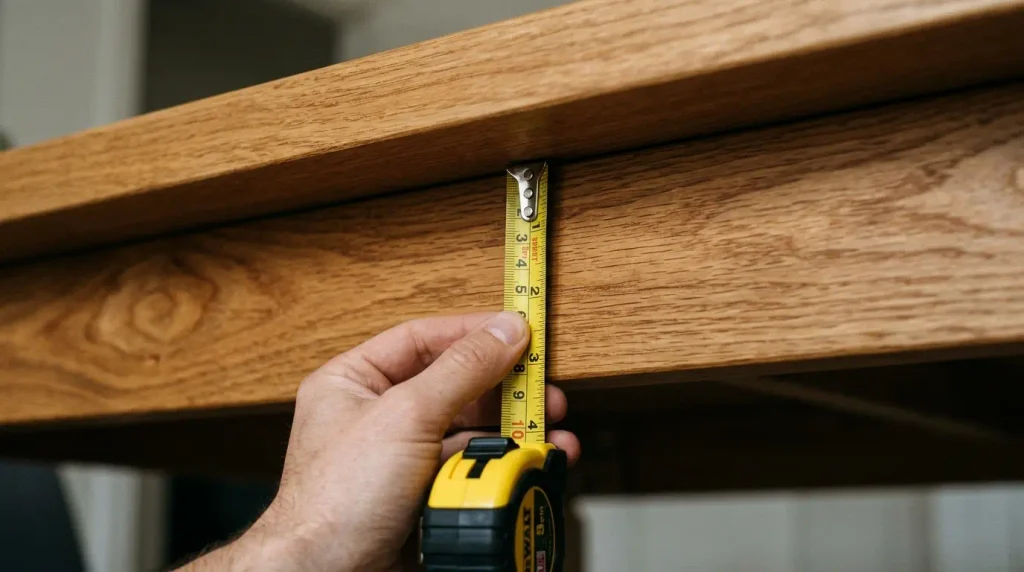
Most UK dining tables sit between 74cm and 76cm high. This pairs with chair seat heights of 45cm to 48cm and leaves roughly 25cm to 30cm between seat and underside. A deep apron or thick top reduces that clearance, so taller people or chairs with arms can feel cramped. Measure from floor to the underside of the table, not just to the top surface.
If you already own chairs, take the seat height and arm height into the showroom or compare the numbers carefully online. A beautiful table that fights your existing chairs is an expensive mistake.
Materials That Hold Up to Daily Use
Solid oak is hard, warm and ages well with oil or wax. It shows marks and develops character rather than looking damaged. Veneered or engineered tops cost less and can look similar but need careful sealing against standing water. Glass and ceramic tops resist heat and stains yet show every fingerprint and can feel cold. Laminate is practical and easy to clean but can chip at edges over time.
Think about hot pans, wine spills and children before you fall for a finish. A table that needs constant coasters and placemats may not suit how you actually live. Pair the table with the right dining room furniture so storage and seating match the material.
Extendable Tables and When They Make Sense
An extendable table keeps everyday footprint smaller and opens for guests. Butterfly leaves fold out from the centre. Drop-in leaves store separately or inside the table. Check the mechanism is smooth and the join does not create a ridge that catches plates. Measure the extended length against your clearances, not just the closed size. The extra length only works if chairs can still pull out.
If you host often, the extension is worth it. If you rarely do, a fixed table of the right everyday size is simpler and usually stronger.
Common Mistakes Before You Order
Buying the largest table the room can technically hold leaves no walking space and makes the room feel cramped. Ignoring door swings or radiators means the table blocks movement. Choosing a finish that needs more care than you will give leads to early damage. Forgetting to check the rug size under the table means the rug is either too small or the chairs catch on the edge every time someone sits down. Review the right rug size for a dining table before the table arrives.
Also confirm delivery access. A large solid oak table may not fit through a narrow stairwell or tight hallway turn. Measure door widths and any turns from the street to the room.
What to Check on Delivery and After
Inspect the top for dents, scratches or uneven finish before the delivery team leaves. Check that legs are square and the table does not rock. Sit in a chair at each position and confirm knees clear the apron. Place a hot plate and a glass of water briefly to see how the surface reacts, then wipe them. Oil or seal solid wood according to the maker’s instructions within the first weeks.
Conclusion
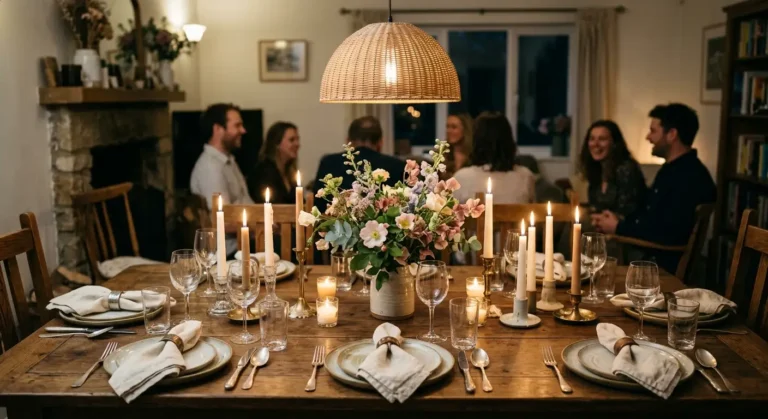
The right dining table fits the people who use it every day, leaves room to move, and matches the care you will actually give it. Measure the clear space first, decide the real seating numbers, then choose shape, height and material. An extendable option helps if guest numbers vary. Get those practical points right and the table becomes the centre of the room rather than a daily frustration.
FAQs
How much clearance do I need around a dining table?
Allow at least 90cm from the table edge to the nearest wall or furniture on seating sides. Use 105cm to 120cm where people walk behind seated diners.
What is the standard height of a UK dining table?
Most sit between 74cm and 76cm high. This works with chair seats of 45cm to 48cm.
Is solid oak better than veneer for a dining table?
Solid oak lasts longer and can be refinished. Veneer looks similar at a lower cost but needs protection from water and is harder to repair if damaged.
Should I buy an extendable table?
Yes if you regularly need more seats than your everyday space allows. Check the mechanism, the join and the clearances when fully open.