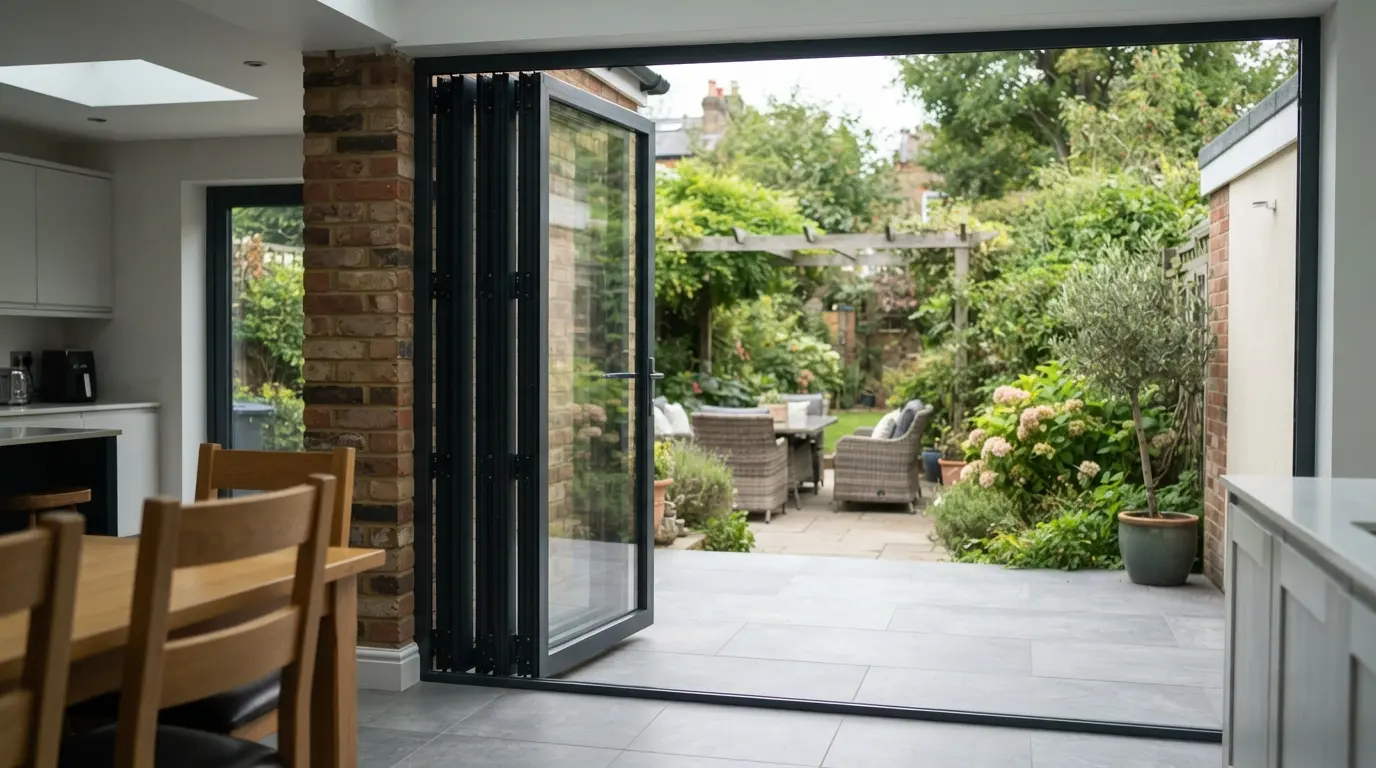
15 Bi-Fold Door Ideas to Open Up Your Home to the Garden

Bi-fold door ideas work because folding the entire wall away genuinely changes how a room connects to the garden, not just how much light comes in. The 15 ideas below cover the applications, styling details, and accessories worth considering, along with the honest maintenance and cost reality most inspiration guides leave out in favour of another fully-opened photo.
1. A Full-Width Kitchen Extension Opening
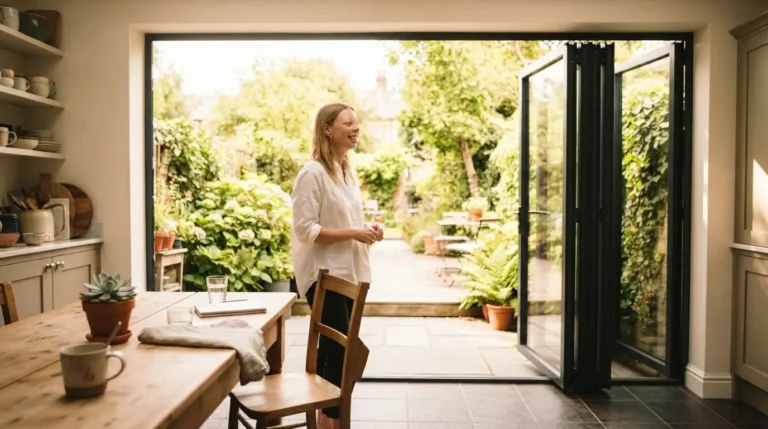
The classic application remains the strongest for a reason: running bi-folds across the full width of a kitchen extension turns the back wall into a genuine threshold rather than a boundary, ideal for entertaining or simply cooking with the garden fully in view. This suits a household that already uses the kitchen as the main gathering space, since the doors extend that space outward rather than creating a separate outdoor zone. It’s worth planning the kitchen layout itself around this opening from the start, an island or breakfast bar positioned to face the doors gets far more benefit from the view than one tucked against a side wall.
2. Frame a Specific Garden View as You Walk Through
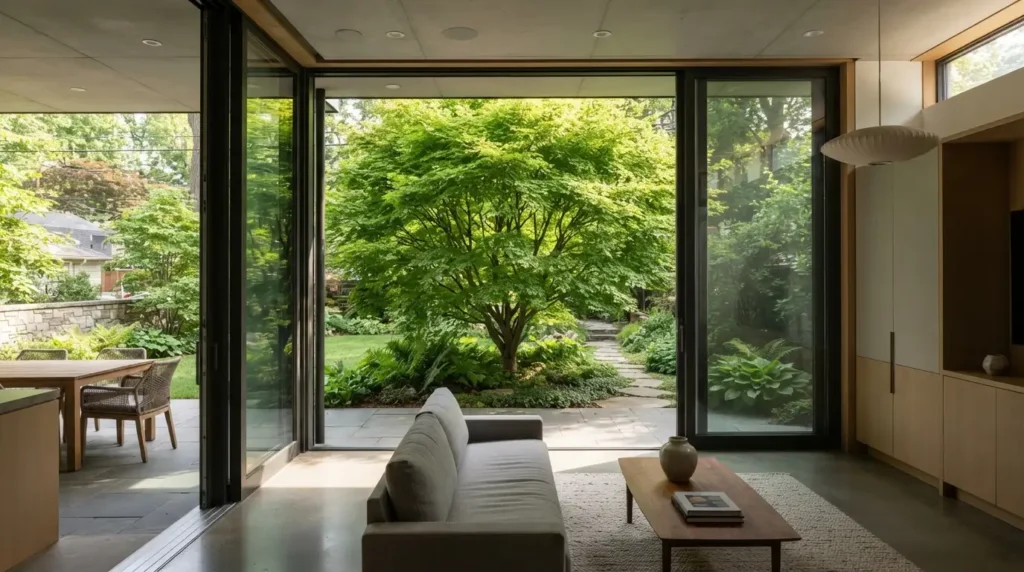
Position the opening deliberately toward your garden’s best feature, a mature tree, a defined seating area, a water feature, rather than centring it purely on the wall’s midpoint. This is a small planning decision that makes a real difference to how the opened doors actually feel to walk through, since you’re framing something specific rather than just a generic stretch of lawn or patio.
3. A Corner Configuration to Open Two Walls of a Room
Some bi-fold systems are engineered specifically to turn a corner, folding two adjoining walls away simultaneously to remove the sense of any boundary at that corner of the room entirely. This is one of the more structurally involved ideas here, since the corner needs engineering to work without a supporting post interrupting the view, so it’s worth planning with a structural engineer from the earliest design stage rather than as a late addition. The visual effect is genuinely dramatic once complete, removing the sense that the room has a defined edge on that side at all, which a single straight wall of doors, however wide, can’t quite achieve on its own.
4. Match Interior and Exterior Flooring for Visual Continuity
Choosing a floor material and level that runs consistently from inside to outside does more for the “seamless” effect than the doors themselves, a beautiful, fully opened bi-fold wall still reads as two separate spaces if the flooring changes abruptly at the threshold. This is worth planning alongside the door specification rather than as a separate decision made later in the project.
5. A Bedroom Bi-Fold for Balcony or Juliet Access
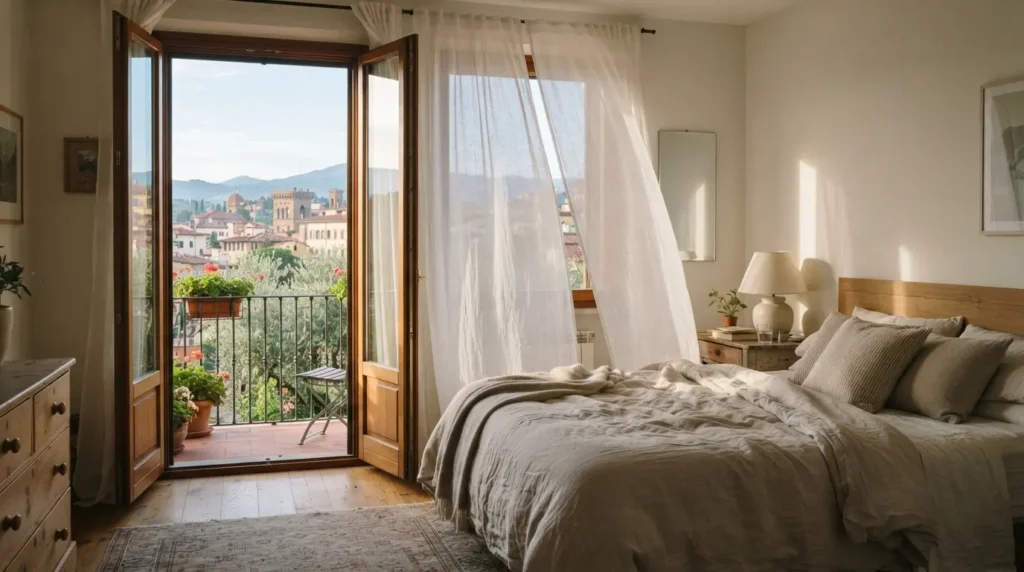
Bi-folds aren’t only for ground-floor living spaces. Fitted to a bedroom with a balcony, they create a genuinely luxurious, hotel-like feel and flood the room with natural light in a way a standard window never could. This application needs careful thought about privacy and security specifically, given the room’s private use, so check locking and any overlooking issues from neighbouring properties before committing to full-height glazing here. A layered curtain or an integrated blind, covered separately below, is worth planning in from the start rather than retrofitted, since a bedroom genuinely needs the option of full privacy and darkness that a purely glazed wall doesn’t offer on its own.
6. Pair Bi-Folds With a Pergola or Canopy for Shelter
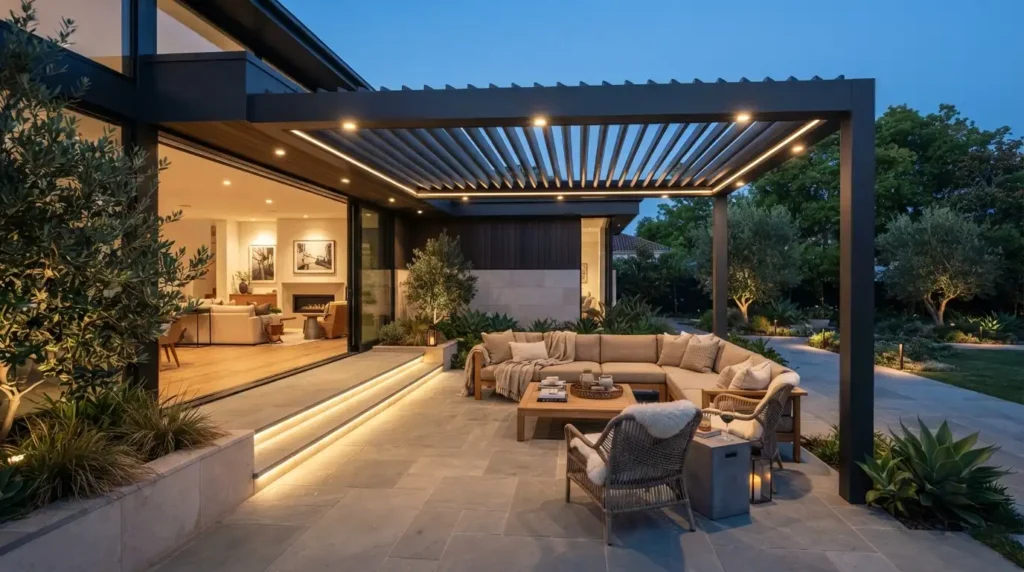
An overhead structure just beyond the opened doors extends how much of the year the space actually gets used, turning a fair-weather-only opening into somewhere usable through spring and autumn evenings too. Plan the pergola or canopy alongside the door specification rather than afterward, since post positions and roof drainage both affect where the doors can fully stack back without obstruction. A louvred or adjustable canopy gives more year-round flexibility than a fixed solid roof, letting you control shade and rain cover through the seasons rather than committing to one fixed level of shelter.
7. Position Seating to Actually Face the Opened Doors
This sounds obvious, but it’s a genuinely common oversight: a striking bi-fold wall loses much of its impact if the room’s main seating faces away from it. Arrange the sofa or dining table to face, or at least genuinely relate to, the opening, so the connection to the garden is part of daily life in the room, not just something admired occasionally from an angle.
8. Choose Integrated Blinds for Privacy Without Curtains
Blinds built directly into the glazing unit, rather than mounted separately in front of it, give genuine privacy and light control without a fabric curtain competing with the doors’ clean folded lines. A blackout version is worth considering specifically for a bedroom or home office application, where light control matters more than in a typical living or kitchen space.
9. A Matte Black or Slimline Handle for a Considered Finish Detail
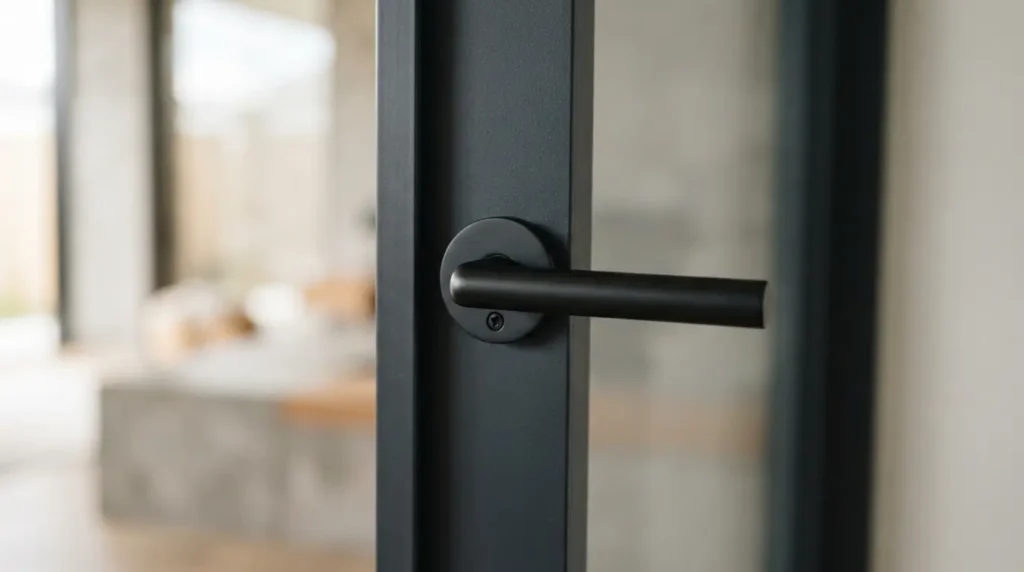
Handle choice is a small detail that makes a real difference to how finished the whole installation looks. Matte black remains a popular, contemporary choice that pairs well with a dark or neutral frame, while slimline designs suit a genuinely minimalist aesthetic, blending into the frame rather than standing out as a separate fixture.
10. Anchor an Outdoor Kitchen or Bar Just Beyond the Opening
Positioning an outdoor kitchen, bar, or dining area directly in line with the opened doors creates one continuous entertaining zone rather than two disconnected spaces, indoors for prep and outdoors for eating. This is worth planning as one combined layout from the start, checking sightlines and walking distance between the two rather than treating the outdoor area as a separate project once the doors are already installed.
11. Use the Traffic Door for Everyday Access Without Opening the Whole Wall
Most bi-fold systems include the option of a traffic door, a single panel that opens independently like a standard door, so you’re not unfolding the entire wall every time you step outside for something quick. This is genuinely useful for everyday use through a typical week, reserving the fully opened wall for when you actually want the full effect, entertaining, warm evenings, rather than as the only way in or out.
12. A Garden Room or Studio With Its Own Bi-Fold Wall
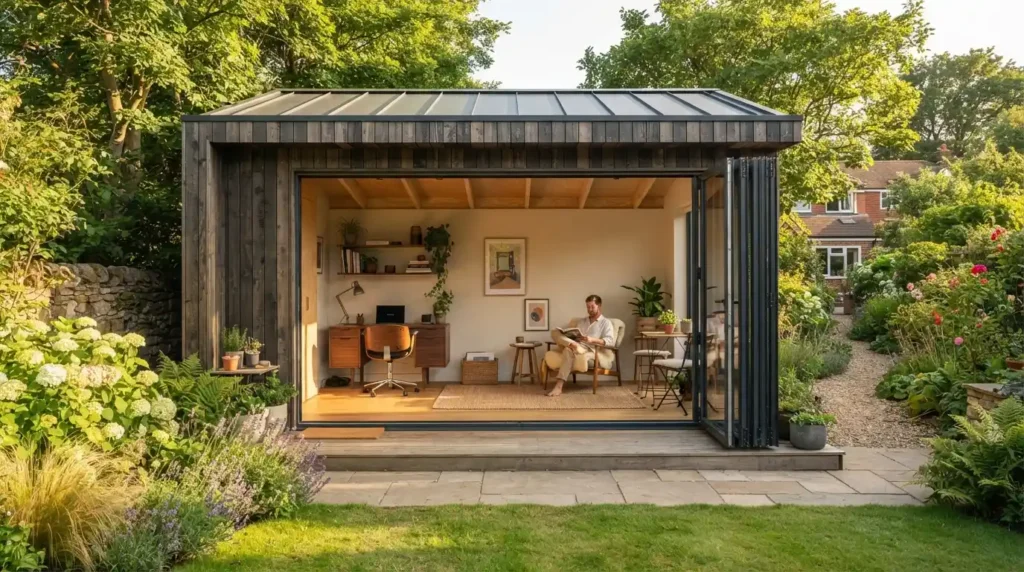
A standalone garden room or studio with a bi-fold wall of its own creates a genuine secondary living space that opens fully to its own patch of garden, useful as a home office, gym, or additional entertaining space separate from the main house. This suits a garden with enough space to support a separate structure, and it’s worth checking planning requirements for your specific situation before committing to the design. A garden room genuinely earns its bi-fold wall more than most standard extensions do, since the whole point of the building is usually the connection to the garden it sits in, rather than glazing added to an otherwise enclosed room.
13. Choose a Colour That Ties the Interior and Exterior Palette Together
Selecting a frame colour that relates to both your interior scheme and your garden’s materials, dark frames against light render, or a colour that echoes a nearby fence or cladding, ties the whole transition together rather than treating the door as a purely functional element dropped into the wall. This is worth deciding alongside your wider renovation or garden plans rather than in isolation.
14. Keep the Tracks Maintained So the Doors Open Effortlessly Every Time
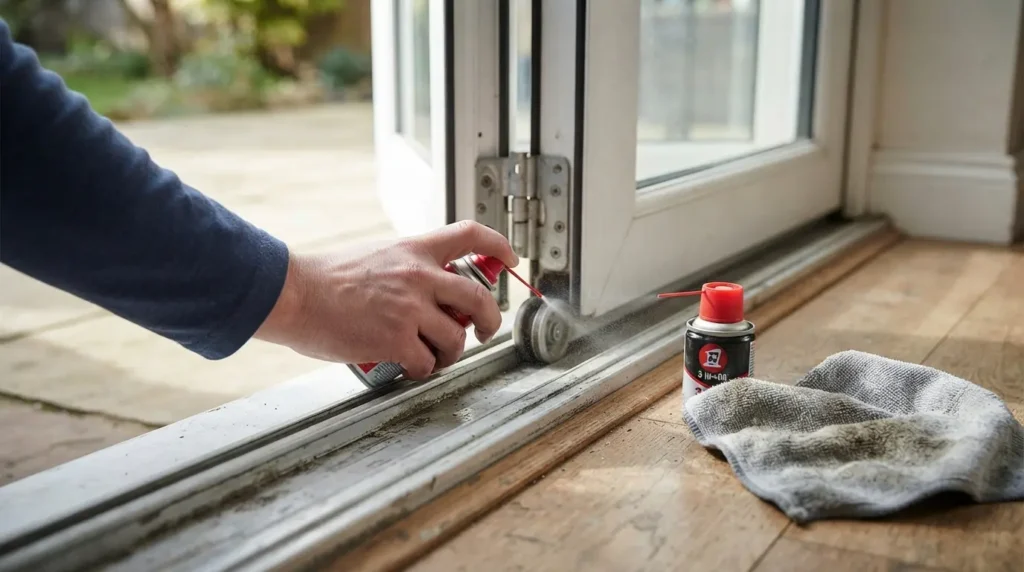
This is the detail every purely aesthetic bi-fold guide skips, and it’s what actually determines whether the doors still glide smoothly in five years or start sticking and catching. Clean the glass and wipe down the frames regularly, and apply a silicone-based lubricant to the tracks every few months to keep the sliding and folding action smooth and quiet. Check hinges and locking hardware periodically too, tightening any screws that have worked loose, since a bi-fold system with several moving panels genuinely benefits from this small, regular attention more than a simpler door ever would. This maintenance genuinely takes only a few minutes every couple of months, but skipping it for years is exactly how a door that once glided effortlessly starts sticking, catching, or needing real force to fold and unfold.
15. Weigh the Real Cost Against How Often You’ll Open It Fully
Costs for bi-fold doors vary considerably by size, frame material, and configuration, but as a general guide, expect anywhere from the lower end of a few thousand pounds up to considerably more for a larger, bespoke aluminium installation, treat any figure as a rough starting point rather than a fixed quote for your specific project. It’s worth being honest with yourself here too: many households end up opening a bi-fold wall to its full width only occasionally, for entertaining or particularly good weather, while a traffic door or a partial opening handles daily use. If that’s genuinely how you’d use the space, it’s worth weighing whether the full-width configuration is earning its extra cost over a narrower installation, rather than assuming maximum width is automatically the right choice.
FAQs
How much do bi-fold doors typically cost?
Costs vary significantly by size, frame material, and configuration, but a common working range for a standard installed opening runs from around £1,400 up to £4,000 or more, with bespoke or larger configurations costing beyond that. Get quotes for your specific opening rather than relying on a single figure.
Do bi-fold doors need much maintenance?
Relatively little, but not none. Regular glass cleaning, wiping down the frames, and lubricating the tracks with a silicone-based product every few months keeps the folding action smooth, and it’s worth periodically checking hinges and locks for anything that’s worked loose.
Can bi-fold doors be used for a bedroom balcony?
Yes, and it’s a genuinely popular application for creating a bright, hotel-like feel in a bedroom with outdoor access. Pay particular attention to privacy and security given the room’s private use, checking locking and any overlooking concerns before committing.
What blinds work with bi-fold doors?
Integrated blinds built into the glazing itself offer a clean, low-maintenance option without a separate fabric curtain, while roller and venetian blinds mounted separately give more flexibility on colour and pattern. A blackout integrated option suits a bedroom or home office particularly well.
Is it worth getting a traffic door on a bi-fold system?
Generally yes, if the doors are your main or only access to the garden. It lets you step outside quickly for everyday use without unfolding the entire wall, reserving the full opening for when you actually want it.