
12 Wooden Bed Frame Ideas for a Natural and Warm Bedroom

Wooden bed frame ideas work because real timber brings a depth of colour, grain, and texture that no painted or upholstered frame can quite replicate, grounding a bedroom in a way that feels genuinely warm rather than styled. The 12 ideas below cover the species, tones, and pairings worth considering, along with the honest checks on real wood versus veneer and long-term care that most inspiration guides skip.
1. Warm Walnut or Mahogany for a Rich, Enveloping Feel
Walnut and mahogany carry genuinely deep red and orange undertones, which is exactly why they pair so naturally with warmer neutrals, terracotta, ochre, oatmeal, earthen greige, rather than cooler tones that can end up fighting the wood’s natural warmth. A bed frame in either of these species becomes a genuine anchor for the whole room’s colour story, since matching your walls, textiles, and accessories to that same warm undertone creates a cohesive scheme rather than a collection of unrelated warm and cool pieces. Both species also darken and richen slightly with age and light exposure, so a walnut or mahogany frame chosen today will likely read even warmer in a few years than it does on delivery day.
2. Light Oak or Maple for an Airy, Honey-Toned Look
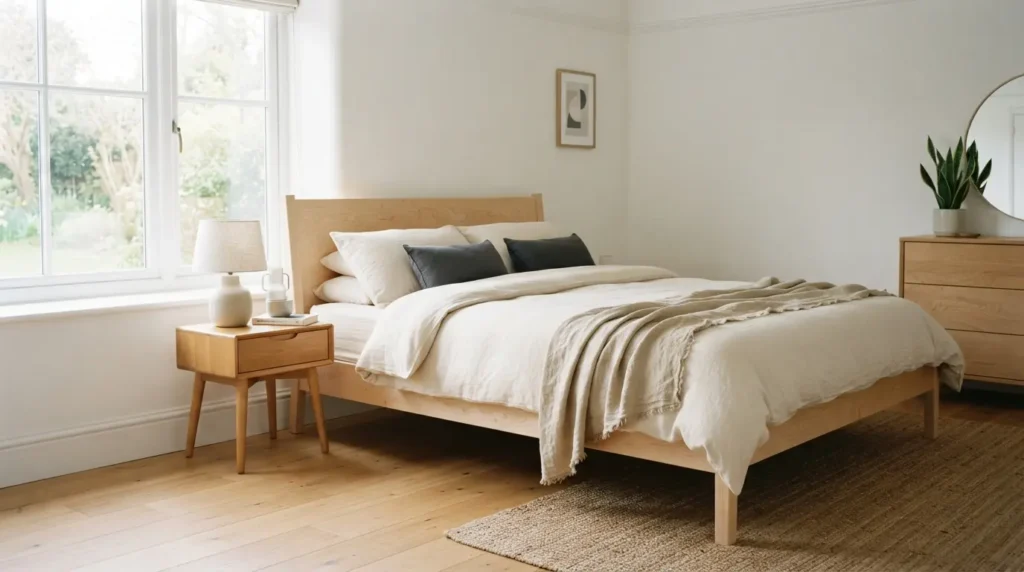
Light oak and maple lean toward a muted yellow or honey undertone instead, which suits a genuinely different supporting palette, raw linen, soft charcoal, clean cream, rather than the deep, earthy tones that work with walnut. This combination tends to read as lighter and airier overall, worth choosing specifically if your bedroom doesn’t get abundant natural light and you want the wood tone to help the room feel brighter rather than adding more visual weight. Maple in particular has a very fine, subtle grain compared with oak’s more pronounced pattern, so it suits a genuinely minimal scheme where you want the wood’s warmth without the grain itself becoming a strong visual feature.
3. Weathered Oak for a Lived-In, Relaxed Character
A weathered or limed oak finish, with its softened, slightly bleached grain, brings a genuinely relaxed, lived-in character that a fresh, uniformly stained wood doesn’t quite achieve. It’s become a popular choice specifically because it sits comfortably in both a coastal, pared-back scheme and a more traditional country bedroom, without looking overly polished in either.
4. Pair Dark and Light Wood of the Same Undertone for Depth

This is the detail that separates a genuinely considered mixed-wood bedroom from one that looks accidental. Rather than matching every piece of wood furniture exactly, pair a darker frame with lighter bedside tables, or the reverse, provided both share the same warm undertone family. A dark walnut bed with light weathered oak bedside tables reads as intentional contrast; a dark walnut bed with cool grey-toned oak bedside tables reads as two different colour decisions that happen to share a room. This principle works just as well the other way round, a pale oak bed frame with a darker walnut or mahogany bench at the foot of the bed creates the same considered contrast without needing to buy a second bed frame or reupholster anything to achieve it.
5. Mix Wood With Rattan or Woven Detail for Texture Contrast
Combining a solid wood frame with rattan or woven cane detailing, on a headboard or footboard specifically, adds genuine textural interest without introducing a second wood tone to balance. This suits a natural, relaxed bedroom particularly well, and it’s worth choosing a rattan detail with a similar warmth to your main wood tone, so the combination reads as considered rather than two unrelated materials placed side by side.
6. Choose a Wood Species for Genuine Durability, Not Just Colour
This is a detail worth understanding before you fall for a specific tone. Hardwoods, oak and ash among the most common for bed frames, are considerably denser and more resistant to dents and scratches over years of daily use than a softwood like pine, which marks more easily and shows the knocks of daily life sooner. Pine remains a genuinely good choice for a lower-traffic guest room or a tighter budget, but it’s worth knowing that trade-off going in rather than being surprised by early wear on a bed you expected to look pristine indefinitely. Ash in particular has become a popular hardwood choice recently for its pale, even tone and genuine strength, a good alternative if you want oak’s durability without oak’s more pronounced grain pattern.
7. Check Real Solid Wood vs Veneer Before You Buy
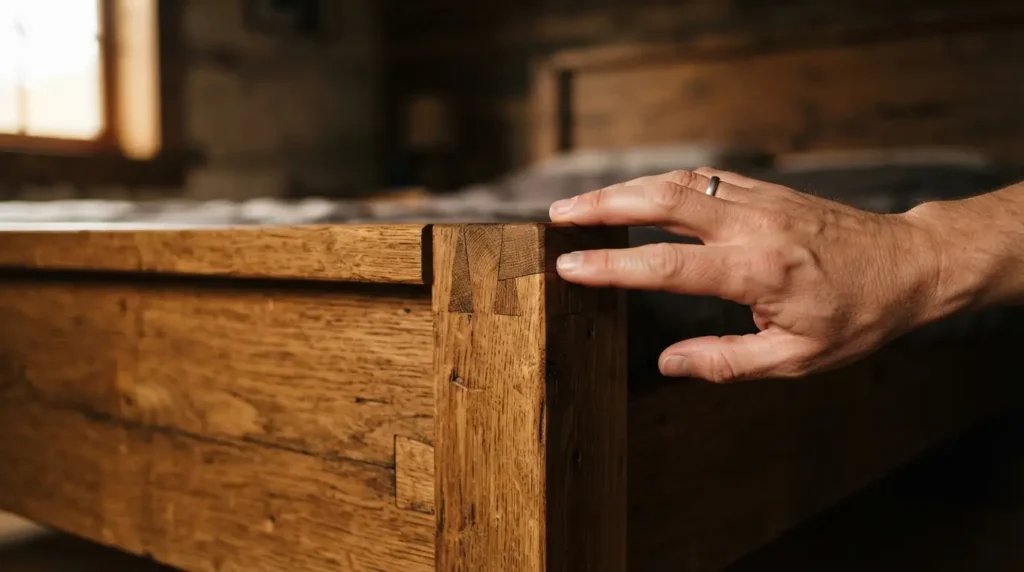
This is the honest check most buying guides skip entirely. Many bed frames marketed as “wood” are actually a veneer, a thin real wood layer bonded to MDF or particleboard, rather than solid timber throughout, and there’s nothing inherently wrong with a well-made veneer frame, but it’s worth knowing which you’re actually buying. Ask directly whether the frame is solid wood or veneered, and check specifically at the edges and any visible joints, since this is where the difference is usually easiest to spot in person, a veneer edge often has a slightly different grain pattern or a visible seam that solid timber doesn’t. A well-made veneer frame is often a genuinely sensible middle ground, more affordable than solid timber and less prone to natural movement with humidity changes, so this isn’t about avoiding veneer entirely, it’s about knowing what you’re paying for and setting your expectations, particularly around long-term durability, accordingly.
8. A Low Platform Wood Bed for a Minimal, Grounded Look
A low-profile wood platform frame, sitting close to the floor with minimal or no visible legs, suits a pared-back, contemporary bedroom and lets the wood’s grain and joinery do the visual work rather than an elaborate headboard. This style also tends to make a room with a lower ceiling feel more proportionate, since the bed itself takes up less vertical visual space than a tall, framed alternative.
9. A Sleigh or Curved Wood Frame for Classic Warmth

A sleigh bed’s curved head and footboard bring genuine traditional character and warmth, and the curved silhouette softens a room full of straight lines elsewhere. This style typically needs more floor space than a simple platform frame because of the footboard’s footprint, so it’s worth measuring your room properly against the specific frame’s dimensions rather than assuming it will fit the same space a plainer bed would. The curved joinery involved in a sleigh frame also tends to be more labour-intensive to produce than straight, simple lines, which is worth knowing if you’re comparing prices between this style and a plainer platform bed of a similar wood species.
10. Anchor the Room With Wood, Then Layer Natural Textiles
Once your wood tone is chosen, layering in a heavy wool throw, a sheepskin rug, or a simple stone or ceramic accessory genuinely softens the room and gives the timber something tactile to contrast against, rather than leaving the wood to carry the whole scheme alone. This is worth doing deliberately rather than as an afterthought, since a bedroom built entirely from hard, smooth surfaces, however beautiful the wood, can end up feeling a little cold without at least one genuinely soft, textured layer.
11. Use Warm Lighting to Bring Out the Wood’s Real Character
Warm, low-temperature lighting, closer to candlelight than daylight on the colour scale, brings out a wood’s natural grain and colour far more flatteringly than a cooler, brighter bulb does, which can wash out the subtle undertones that make a specific timber worth choosing in the first place. This matters most in the evening, when a bedroom typically gets its most use, so it’s worth checking your bedside and any ambient lighting under warm bulbs specifically, not just daylight, before assuming the wood tone you chose looks as rich as it did in a showroom.
12. Maintain the Finish So the Wood Ages Well, Not Just Looks New
Real wood genuinely improves with age in a way most other materials don’t, developing a natural patina that can actually hide minor marks rather than showing every one starkly. That said, ageing well isn’t automatic, it depends on a bit of ongoing care: keep the frame away from direct, prolonged sunlight, which can fade or unevenly discolour timber over time, and use a suitable wood-specific polish or wax occasionally rather than a generic household cleaner that can dull or damage the finish. A well-maintained solid wood bed frame is a genuine long-term piece, worth the small ongoing effort rather than treating it as a buy-once, ignore-forever purchase. It’s also worth checking any joints or fixings periodically, particularly on a frame that gets moved or has bed legs that take the full weight of the mattress and sleepers, since a joint that’s worked slightly loose is a simple tightening job if caught early and a more awkward repair if left for years.
Final Thoughts
The best wooden bed frame ideas balance genuine warmth and character with an honest understanding of the species, construction, and care behind the finish, not just the colour on the day it arrives. Choose a tone that suits your room’s undertone story, check whether you’re buying solid wood or veneer, and give the frame a little ongoing care, and it will genuinely improve with age rather than simply wearing out. Whichever species and style you land on, the same principle holds across all twelve ideas here: the wood tone sets the room’s mood, but it’s the construction underneath that decides whether the bed still looks and feels this good in ten years.
FAQs
What’s the difference between warm and cool wood undertones?
Warm undertones, found in walnut, mahogany, and similar species, lean red or orange, while cooler or more neutral undertones, found in light oak and maple, lean yellow or honey. Matching your other furniture and colours to your bed frame’s specific undertone, rather than assuming all wood tones automatically work together, keeps a bedroom feeling cohesive.
Can I mix different wood tones in a bedroom?
Yes, and it often looks more considered than matching every piece exactly, provided the different woods share the same warm or cool undertone family. Mixing a dark and light wood with genuinely different undertones tends to look unplanned rather than intentional.
Is oak or pine better for a bed frame?
Oak is a hardwood and considerably more resistant to dents and scratches over years of daily use than pine, a softwood that marks more easily. Pine remains a reasonable choice for a lower-traffic room or a tighter budget, provided you’re aware of that durability trade-off.
How do I know if a bed frame is real solid wood?
Ask the retailer directly whether the frame is solid timber or a veneer over MDF or particleboard, and check the edges and joints in person if you can, veneer often shows a slightly different grain pattern or a visible seam at these points that solid wood doesn’t have.
Do wooden bed frames need much maintenance?
Not extensively, but a little ongoing care genuinely helps, keeping the frame out of prolonged direct sunlight and using a wood-appropriate polish or wax occasionally rather than a generic cleaner both help the timber develop a genuine, attractive patina rather than fading or dulling unevenly over time.