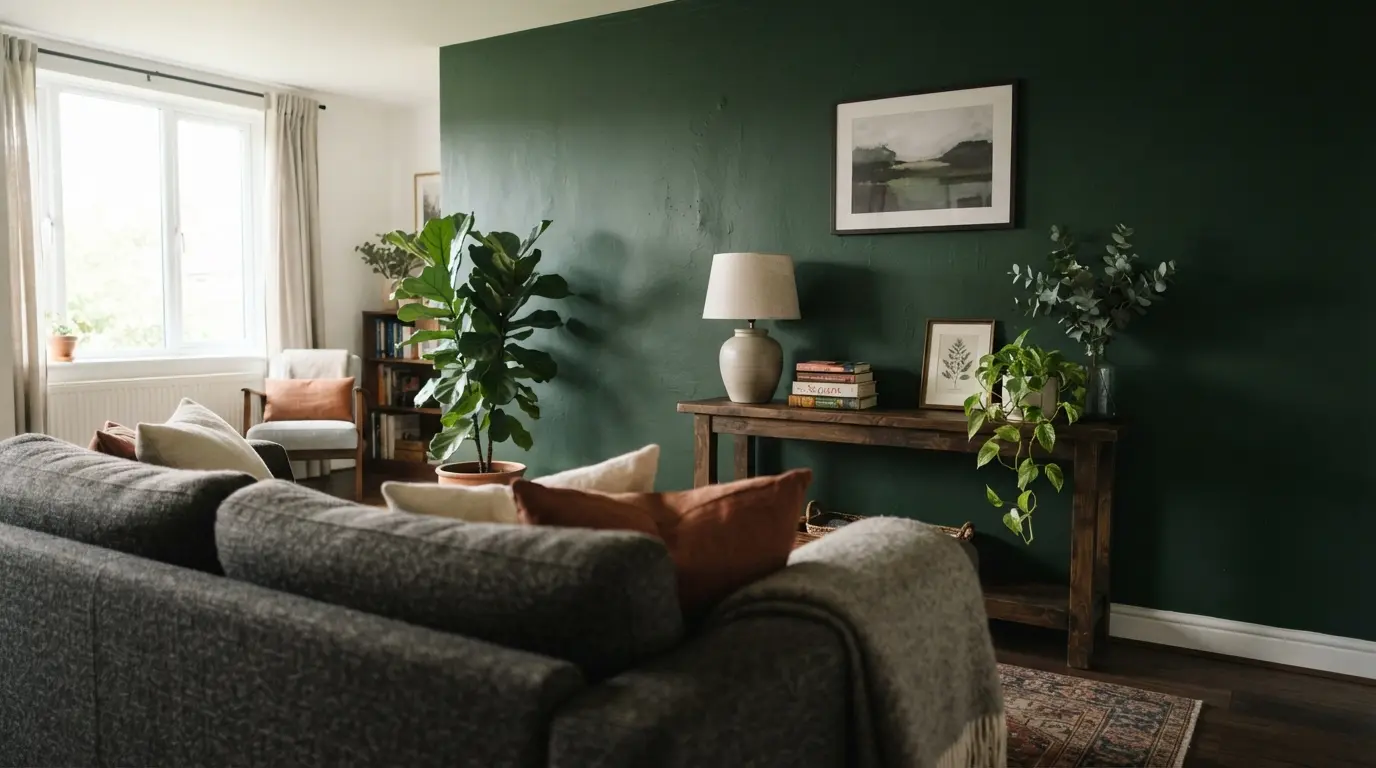
How to Create a Feature Wall in Your Living Room

Creating a feature wall in your living room starts with choosing the right wall, not the right colour. Most feature walls that get repainted within a year weren’t a colour mistake at all, they were the wrong wall from the start, broken up by a door or window, or simply not where the eye actually lands when you walk into the room.
Choose the Wall Your Eye Actually Goes To First
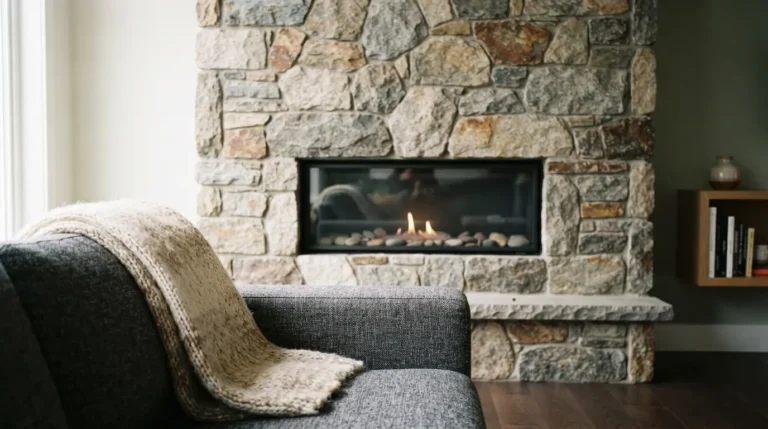
Stand in the doorway and look into the room properly before deciding anything. Notice where your eye genuinely lands first, that’s very often the wall worth highlighting, since a feature wall works by reinforcing where attention already goes rather than fighting against it. If the room has an existing focal point, a fireplace, an alcove, a mantelpiece, that wall is usually the strongest candidate, since you’re amplifying something the room already draws the eye to rather than creating a competing point of interest.
Avoid a Wall Broken Up by Doors or Windows
A wall interrupted by a doorway or window loses much of its visual impact, since the paint, paper, or panelling gets broken up into awkward sections rather than reading as one confident statement. The ideal feature wall is close to a genuine blank canvas, uninterrupted and, where possible, catching good natural light, since light plays across colour and texture in a way that makes the wall feel considered rather than flat. If your strongest wall does have a window, it’s not automatically disqualified, but expect a slightly different effect than a fully uninterrupted surface, and plan the rest of the room’s lighting to compensate if the window limits how the wall reads after dark.
Think About Function Before You Choose a Colour
Decide whether you want to actually see the wall from where you sit, or whether it’s meant to work as a backdrop behind you. In most living rooms, the wall the sofa runs along or faces directly works best as the feature, since it’s genuinely in view for the room’s main seating rather than hidden behind people’s heads. This is worth deciding before anything else, since a striking wall directly behind the sofa, where nobody sitting there ever actually sees it, does far less for the room than the same effort applied to the wall the sofa faces.
Choose Your Material: Paint, Wallpaper, or Panelling
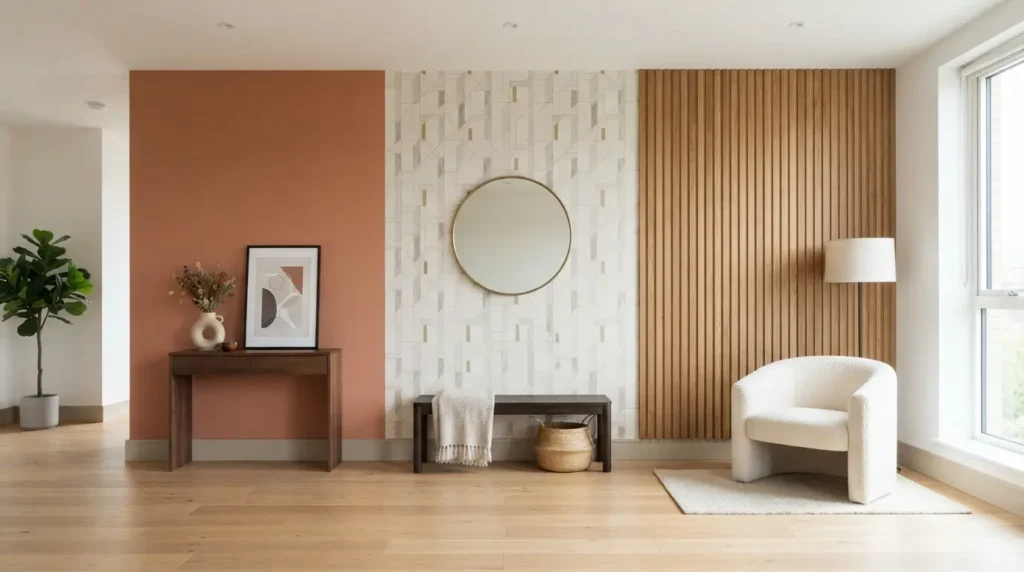
Paint is the lowest-cost, lowest-commitment option and the easiest to change again if you’re not certain about a bold colour choice, a weekend job for most rooms. Wallpaper, particularly a paste-the-wall product, brings pattern and texture paint can’t match and is more straightforward to hang accurately than older paste-the-paper types, though it costs more than paint and is a bigger job to remove or change later. Panelling, wood slats, tongue and groove, or a decorative panel system, adds genuine texture and architectural interest, and it’s the most permanent and highest-cost of the three, worth choosing when you’re confident the wall and the room’s layout won’t change for years. Match the commitment level to how confident you actually are in the choice, paint if you’re testing an idea, panelling if you’re certain.
Pick a Colour or Pattern That Relates to the Rest of the Room
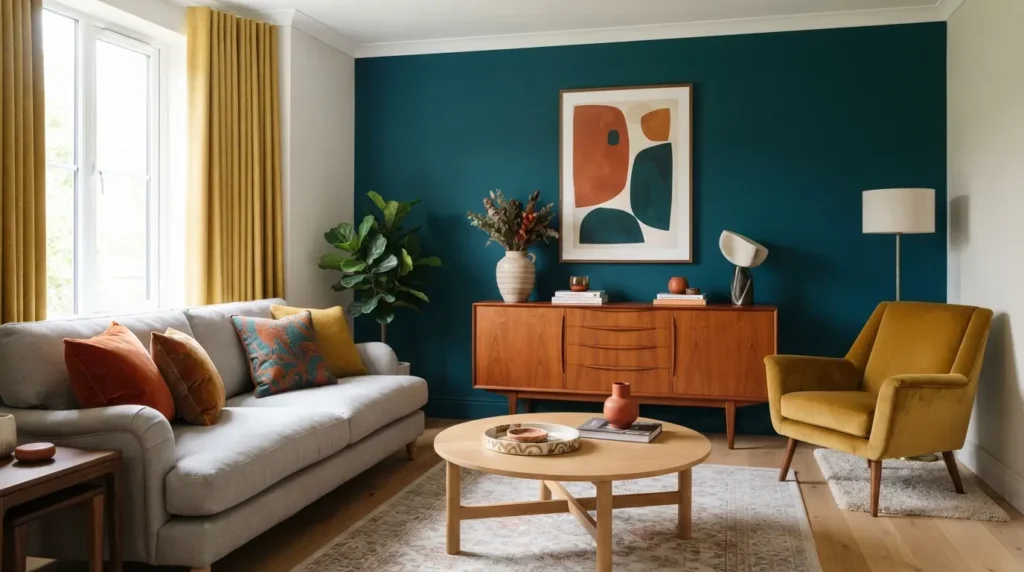
A feature wall works best when it connects to the room rather than standing completely apart from it. A useful working principle: let your feature wall and its immediate surroundings make up the bulk of the room’s colour story, add a supporting accent colour through skirting, curtains, or upholstery, and finish with small pops of a third coordinating tone through cushions, art, or accessories. This stops even a genuinely bold feature wall from looking like an unrelated addition, since the colour is echoed, at a smaller scale, elsewhere in the room.
Test Before You Commit
This is the step most people rush, and it’s the one that causes the most regret. Paint a genuine sample patch, or hang a sheet of wallpaper if you can get one, directly on the actual wall, and look at it across a full day, morning light, afternoon, and the evening lighting you’ll actually spend most time under. A colour or pattern that looks perfect on a screen or under shop lighting can read completely differently once it’s up against your own walls and furniture, and this simple check saves far more time than repainting an entire wall that turned out wrong.
Prep and Execute Properly
For paint, mask off skirting, sockets, and adjoining walls carefully before you start, and apply at least two coats for genuinely even coverage, particularly with a bold or dark colour. For wallpaper, work from a plumb line rather than trusting the wall itself to be perfectly straight, since very few walls actually are, and smooth out air bubbles as you go rather than after the paper’s already set. For panelling, plan your layout on paper first, checking how the final piece at the wall’s edge will look, a full board at one end and a thin sliver at the other reads as an afterthought rather than an intentional design.
Style the Room Around It Without Overwhelming It
Once the wall’s finished, resist piling too much in front of it. A single well-chosen piece, a console table, a piece of art, or simply the sofa itself, lets the wall do its job as the room’s focal point rather than getting visually competed with. The goal is to guide the eye toward the room’s best feature, not bury it under everything else you own.
Common Feature Wall Mistakes
The most frequent mistake is choosing the wall behind the main seating rather than the one it faces, so the effort goes largely unseen day to day. The second is picking a wall broken up by a door or window purely because it happens to be the biggest, when a smaller, uninterrupted wall would have made a stronger, cleaner statement. The third is skipping the sample test and committing straight from a screen or a tin lid, which is consistently the single most common reason people end up repainting a feature wall within months of finishing it.
Final Thoughts
Creating a feature wall in your living room really comes down to choosing the right wall before the right colour, one that’s uninterrupted, well lit, and genuinely in view from where people sit. Get that decision right, test your material properly before committing, and the wall will do the job it’s meant to: pulling the eye and pulling the room together, not just adding colour for its own sake.
FAQs
Which wall should be the feature wall in a living room?
The wall your eye is drawn to first when entering the room, ideally one your main seating actually faces rather than sits in front of, and free from doors or windows breaking up the surface.
Does a feature wall need to be behind the sofa?
No, and in most living rooms it works better as the wall the sofa faces rather than the one behind it, since that’s the wall people actually see while sitting in the room.
Can I use wallpaper and paint together for a feature wall?
Yes, this is a common and effective approach, pairing a patterned or textured wallpaper wall with a complementary paint colour on the surrounding walls ties the whole room together rather than isolating the feature.
How much does it cost to create a feature wall?
Costs vary by material and room size, paint is the most affordable option, wallpaper sits in the middle, and panelling costs the most due to materials and fitting time. Treat any figure as a rough guide for your specific project and location.
Do feature walls make a room look smaller?
Not inherently. A dark or bold feature wall on the far wall from the doorway can actually make a room feel more defined and intentional, while the same colour applied to every wall would genuinely close the space in. The effect depends on which wall you choose, not the colour alone.