12 Fire Pit Ideas to Extend Your Garden Season into Evening

Fire pit ideas work because a fire genuinely changes how a garden gets used, it pulls people outside after dark and extends the season into cooler evenings that would otherwise be spent indoors. The 12 ideas below cover the styles and setups worth considering, along with the real clearance, drainage, and fuel details most inspiration roundups leave out.
1. A Sunken Fire Pit for a Clean, Wind-Sheltered Look
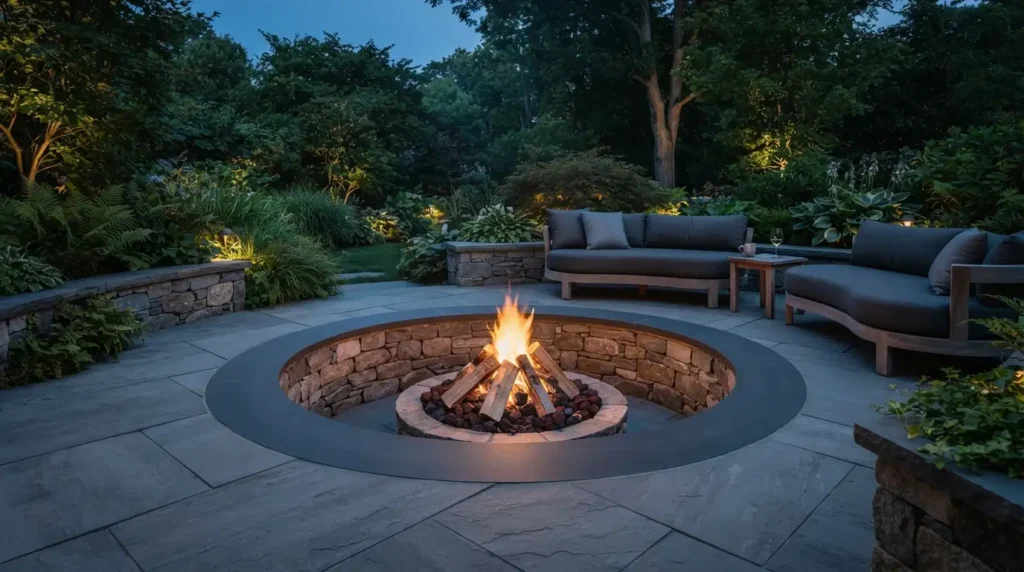
Set flush or near-flush into the ground or patio, a sunken fire pit makes the flame feel like it’s coming from the garden itself rather than sitting on top of it. It’s also more wind-sheltered than an above-ground bowl, which means the fire burns more steadily and smoke is less likely to blow across seating. The trade-off: a sunken pit needs real groundwork and drainage, and it suits a garden with an existing patio or level area to cut into, not a small garden or one with poor ground conditions, this is worth assessing honestly before committing to the design. Design variations range from a simple circular stone-lined pit with a basic coping edge to rendered concrete with a stone or brick surround for a more contemporary finish, and matching the edge material to your existing patio or path ties the whole feature back into the rest of the garden.
2. A Freestanding Fire Bowl for Flexibility
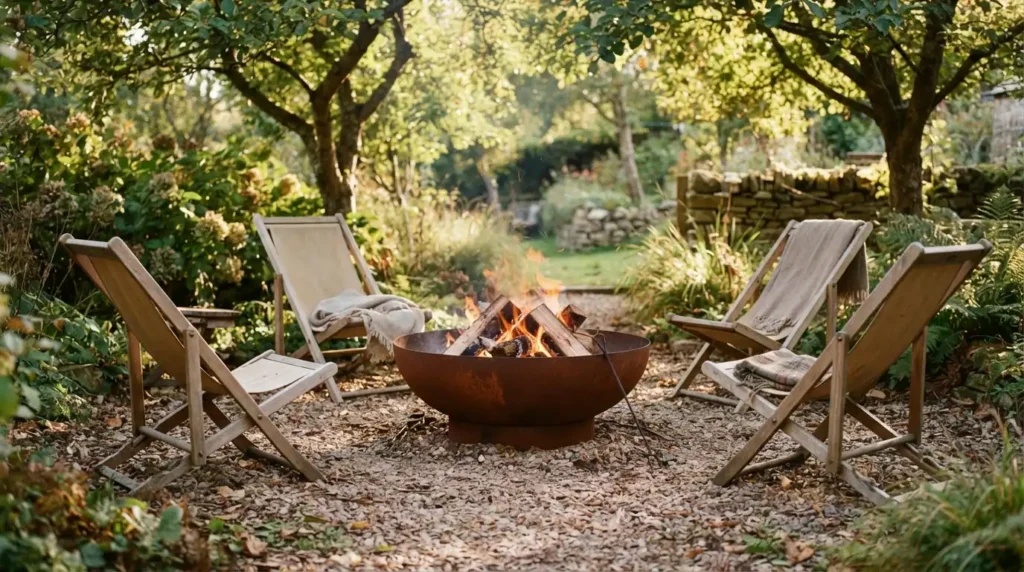
A fire bowl, corten steel pit, or fire pit table is a genuine product you buy and place, and it suits renters, smaller budgets, or anyone who wants flexibility over permanence. It doesn’t commit the garden to a fixed layout the way a built-in feature does, and it can be repositioned or moved entirely if your needs change, a real advantage over a sunken or masonry build if you’re not certain the current spot is the right one long-term. This is also the more forgiving option if you’re renting or expect to move within a few years, since a built-in feature stays with the property while a freestanding bowl goes with you.
3. Wraparound Timber Bench Seating
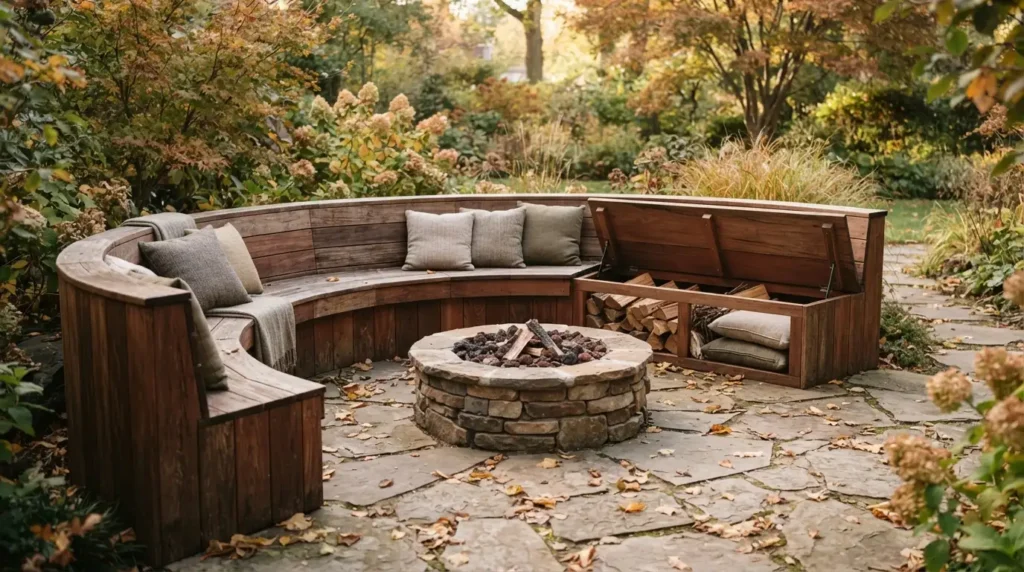
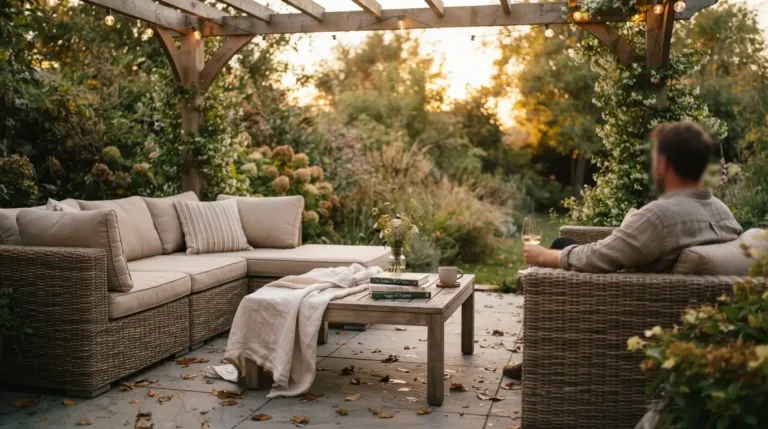
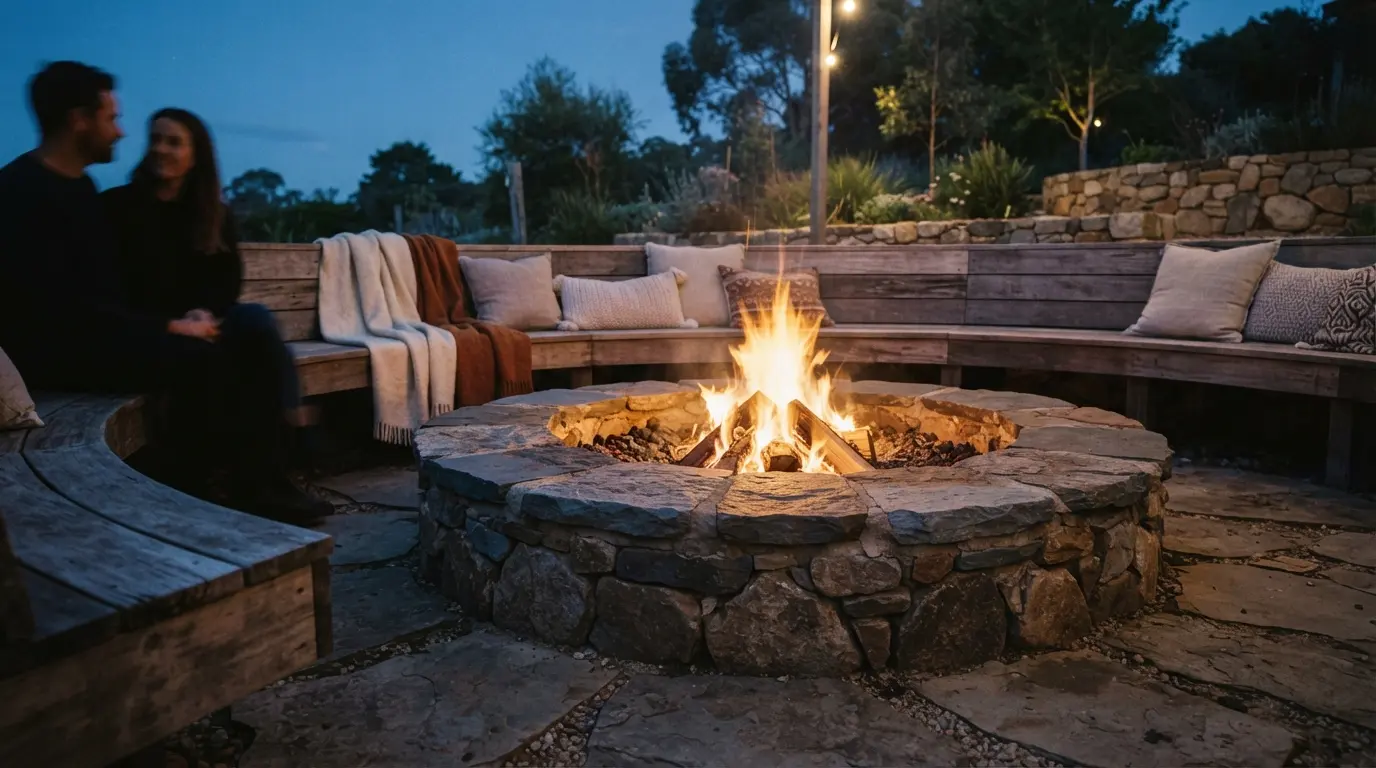
A timber bench built in a U or C shape around the fire pit is the most popular seating setup for a reason: it keeps everyone facing the fire without the hassle of pulling chairs into position each time, and it can be built with storage underneath for cushions or firewood. This suits a build you’re planning as a genuine entertaining feature rather than an occasional-use spot, since the bench becomes a fixed part of the garden’s layout. If moveable furniture suits your household better than a fixed bench, keep in mind the trade-off: anything left outside year-round needs to genuinely handle wet weather, and having somewhere to store cushions matters more than it first seems once autumn sets in.
4. A Curved Stone or Masonry Bench for a Permanent Setup
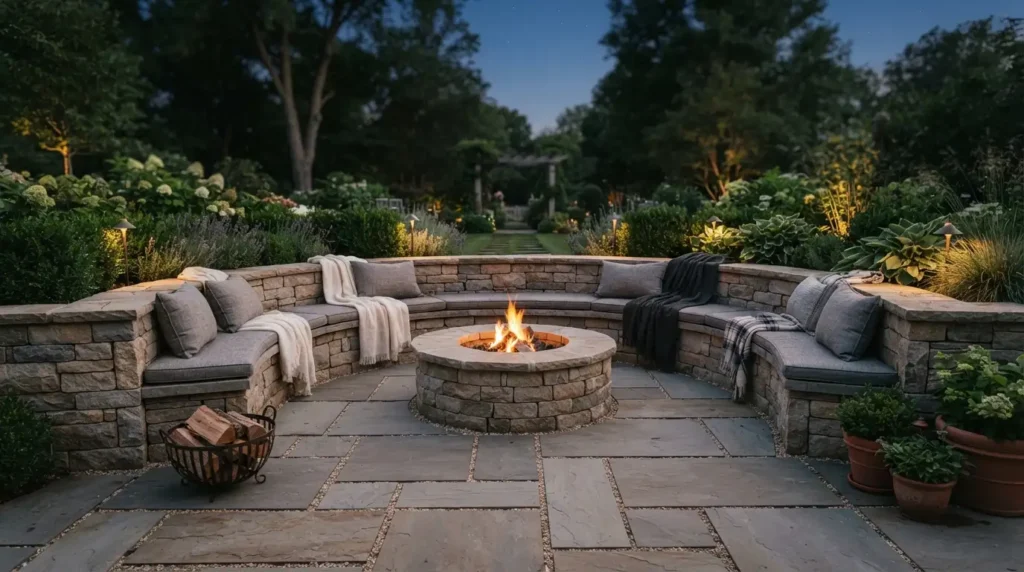
A curved stone or masonry bench suits a more formal garden style and pairs naturally with a stone-built fire pit, reading as one considered structure rather than two separate elements. It’s more permanent than timber and needs less ongoing maintenance, though it benefits from cushions or a wool throw to make it genuinely comfortable for longer evenings rather than just a stone ledge.
5. Natural Stone to Match Your Existing Materials
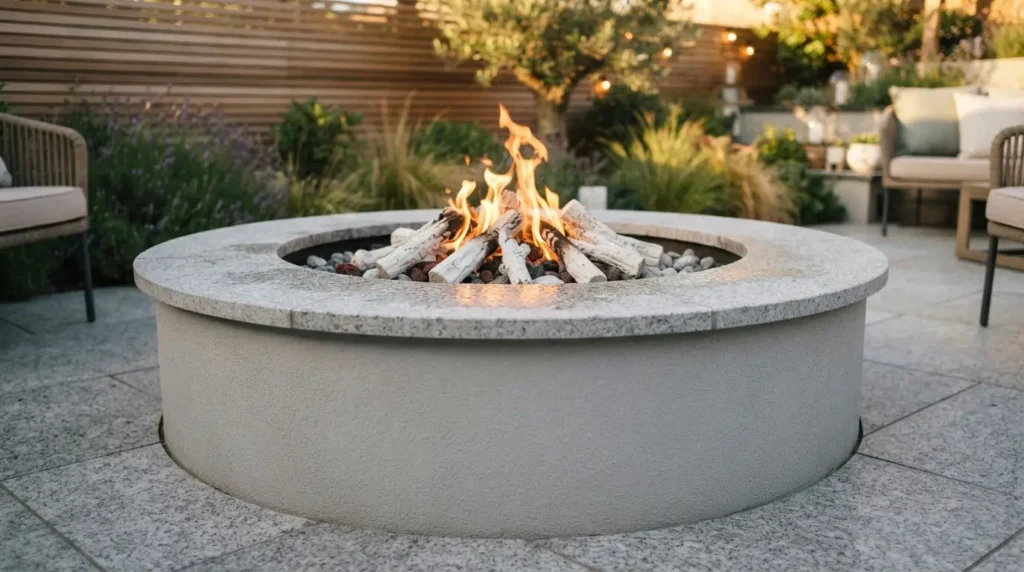
Stone remains the most common surround material for a built-in fire pit, and the guiding principle is to choose a stone that relates to what’s already in the garden. Sandstone or granite coping suits a traditional stone property and weathers well outdoors, a dry stone circle gives a more informal, rustic finish that suits a cottage or rural garden, and rendered blockwork with a stone coping offers a cleaner, more contemporary look. A fire pit built in a stone that matches the patio or the house reads as part of the design; one in a contrasting, unrelated material can look like it arrived separately.
6. Corten Steel for a Weathered, Low-Maintenance Finish
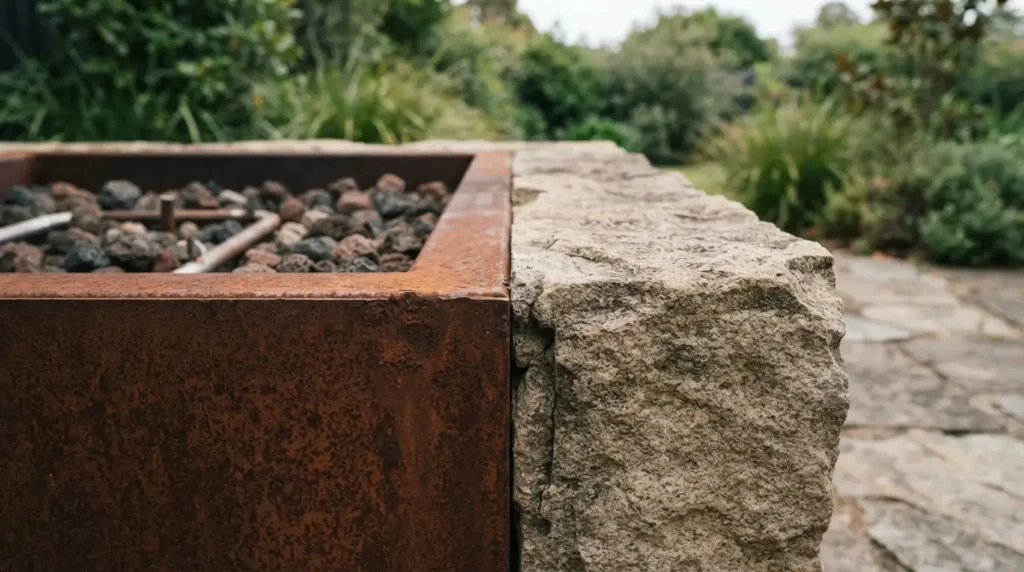
Corten steel weathers to a warm rust patina over time rather than needing paint or sealant, which makes it a genuinely low-maintenance choice for both freestanding bowls and built-in surrounds. It pairs particularly well alongside natural stone, sandstone or granite edging with a corten insert reads as considered rather than mismatched, and the material only improves in character as it ages rather than needing replacement once the initial finish wears.
7. A Gas Fire Pit for Instant, No-Fuss Evenings
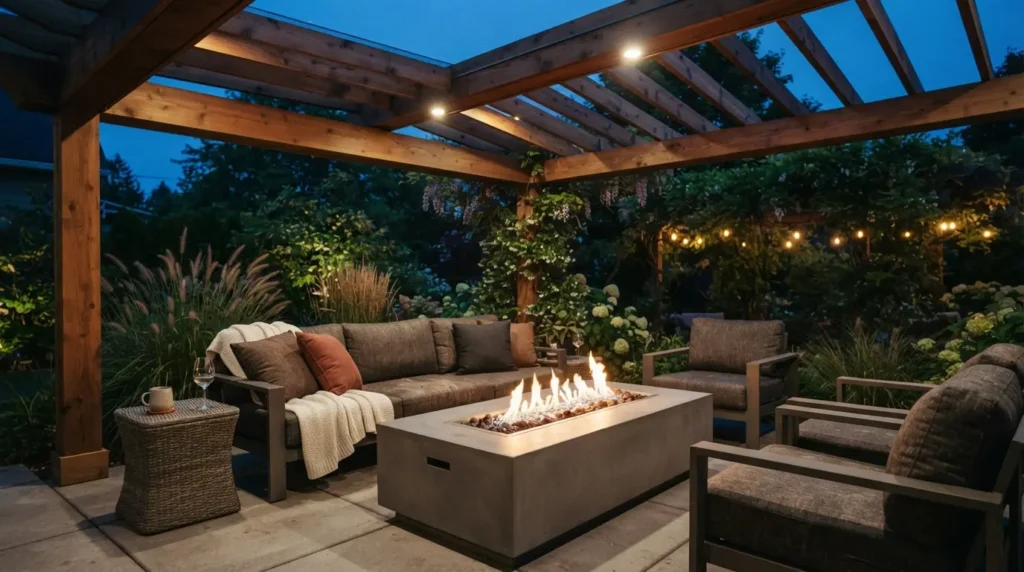
Gas fire pits have grown genuinely popular for regular use, since the appeal is straightforward: instant flame, no ash to clear, no smoke, and no need to source or store fuel. A fire pit table brings a gas burner into a table surface and suits a smaller patio or a couple who want atmosphere as much as warmth, while a built-in gas fire pit is a bigger commitment, plumbed into a permanent structure by a suitably qualified gas engineer, and can be incorporated into a wider outdoor kitchen or bar setup. If you want to use the fire pit on an ordinary evening without any real preparation, gas suits that pattern of use far better than wood. It’s worth designing a built-in gas fire pit’s position and any overhead cover together from the start too, since ventilation clearance under a pergola or covered structure needs planning in rather than retrofitting once the structure is already up.
8. A Wall-Mounted Gas Burner for a Tiny Garden or Courtyard
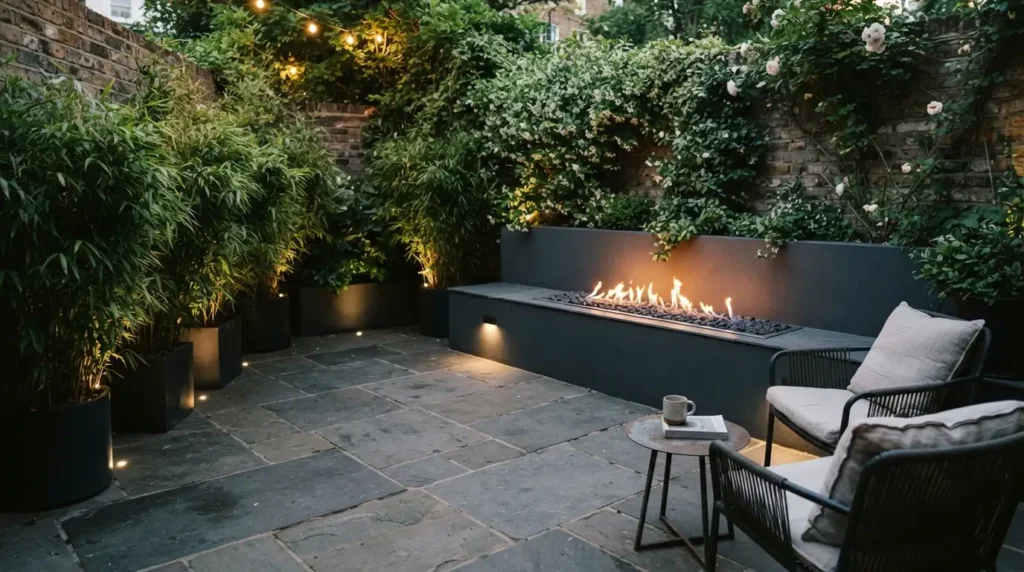
A gas burner built into a low feature wall takes up almost no floor space and creates a genuine focal point without the clearance a freestanding pit needs, making it a strong option for a courtyard garden or an enclosed rear space where floor area is the main constraint. This is one of the few fire features that works in a genuinely small garden without dominating it, since the fire itself sits within the wall rather than claiming a chunk of the patio.
9. A Compact Sunken Pit Planned Into a Small Patio
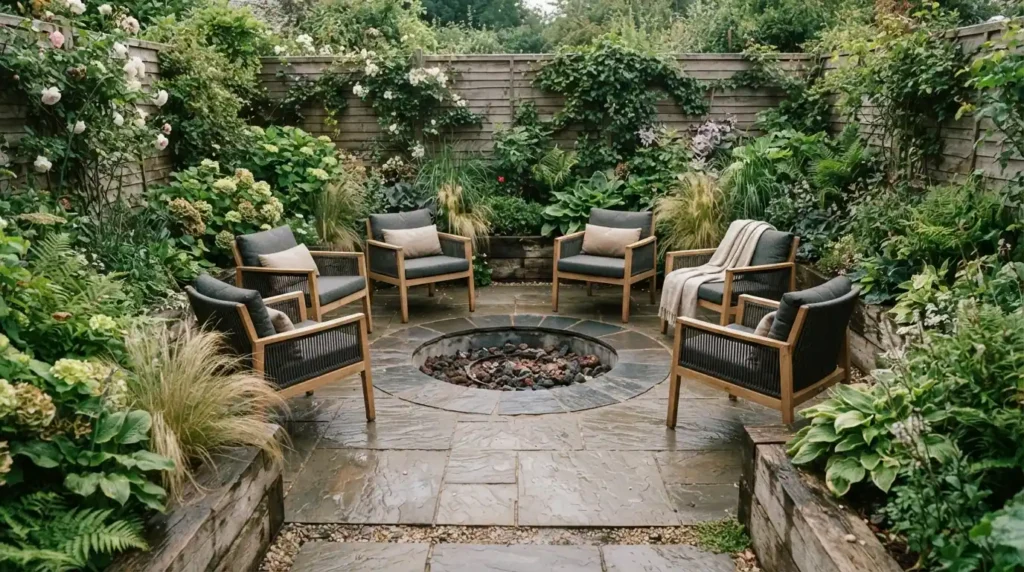
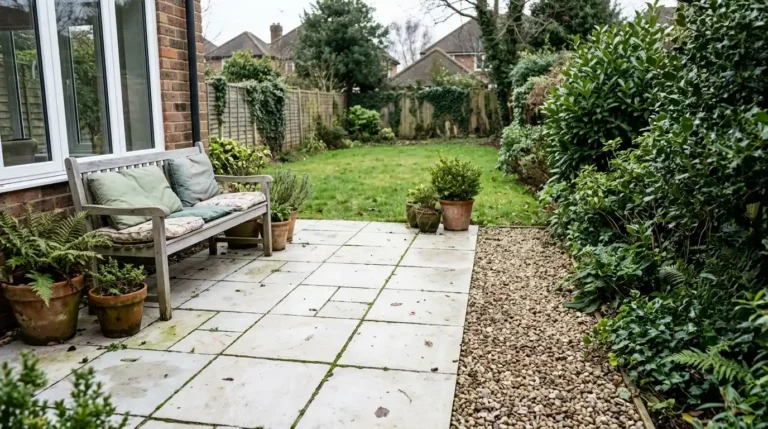
A sunken pit with a simple stone edge can still work in a modest patio, roughly 20 to 30 square metres, but only if it’s planned into the layout from the start rather than retrofitted afterward. A sunken pit added into a garden that wasn’t designed around it tends to feel cramped rather than intentional, so this is one idea where the sequencing, design first, then build, matters more than in a larger garden with room to adjust later. If you’re working with an existing patio that wasn’t originally designed with a fire pit in mind, a freestanding bowl or wall-mounted burner is usually the more realistic option than trying to retrofit a sunken pit into a space that’s already fixed.
10. Anchor a Wider Entertaining Zone Around the Fire Pit
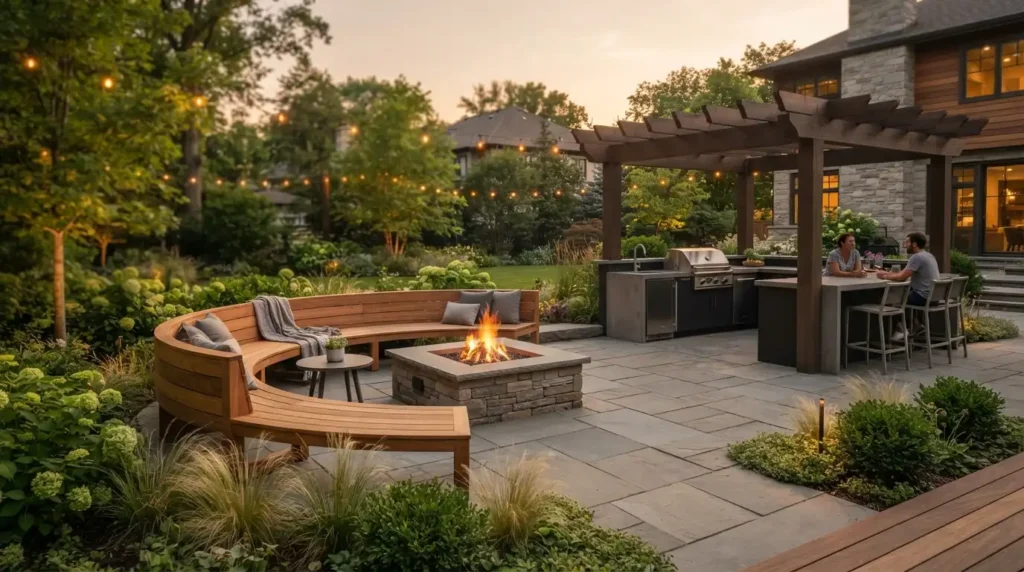
The strongest fire pit designs aren’t standalone features, they sit within a considered outdoor space, an outdoor kitchen or bar on one side, seating wrapping around, low-maintenance planting framing the edges. This gives the area a genuine logic that a fire pit dropped into the corner of a lawn doesn’t have, and positioning it somewhere visible from the house matters too, a fire that draws people outside is more useful than one that only reveals itself once you’re already out there. A pergola over the area adds shelter and definition, though a solid roof only suits a gas fire pit, an open wood-burning fire needs to stay uncovered for genuine ventilation and safety. Integrated planting around the edges, low-maintenance shrubs or ornamental grasses, softens the hard landscaping and makes a built feature look like it’s settled into the garden over time rather than dropped in as an afterthought.
11. Get the Clearance and Position Right Before You Build
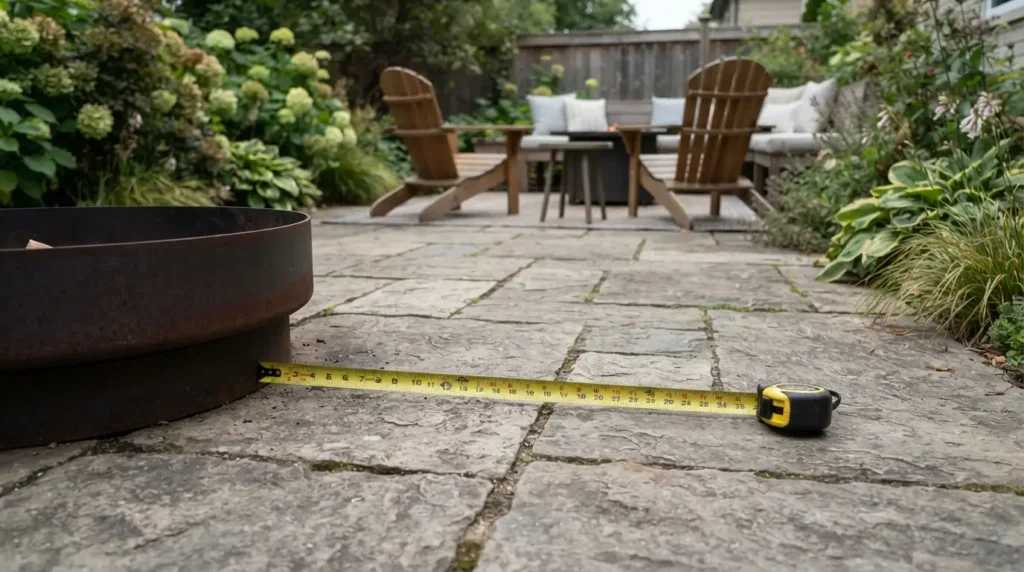
This is the detail every purely aesthetic fire pit guide skips, and it matters more than any material choice. Leave roughly 1 to 1.5 metres between the edge of a wood-burning pit and the seated position, close enough to feel the warmth, far enough that it isn’t uncomfortable. Keep a minimum of around 3 metres clearance from structures, fences, and overhanging trees, treat this as a general starting guide rather than a guaranteed safe distance, since your specific situation may call for more depending on what’s nearby. Position the pit relative to the prevailing wind direction so smoke blows away from seating and the house, and always build on a hard, non-combustible surface, timber decking specifically needs proper protection between the deck and the pit, or a different surface entirely, rather than placing a fire directly on top of it. These numbers are a sensible starting point for planning your layout, not a substitute for checking any specific local rules or manufacturer guidance for the exact fire pit or fuel type you choose.
12. Choose Smokeless Fuel If You Have Close Neighbours
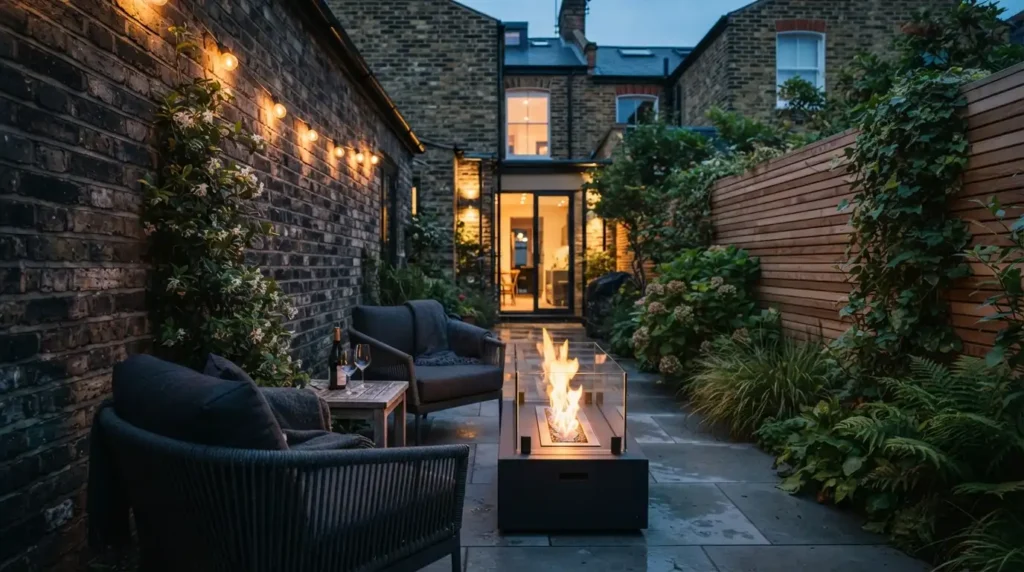
In a denser garden or a spot with neighbours close by, bio-ethanol or gas produce meaningfully less smoke than an open wood fire, which avoids the genuine, common problem of smoke drifting onto a neighbouring garden or washing line. This is worth deciding early rather than discovering it’s an issue after a few uses, since switching fuel type later, particularly for a built-in feature, is a far bigger job than choosing the right one from the start.
Final Thoughts
The best fire pit ideas balance genuine atmosphere with the practical groundwork most inspiration content skips: real clearance from structures and seating, a non-combustible surface, and a fuel choice that suits how you’ll actually use it and how close your neighbours are. Choose the style that fits your garden and how permanent you want it to be, then get those safety details right, and the fire pit will genuinely extend your garden season rather than sitting unused after one cautious first evening. Whichever setup you land on, the same rule holds: plan the position and clearance before you fall for a specific material or seating style, since that’s the decision that decides whether the feature genuinely gets used all autumn or ends up quietly retired after one awkward evening.
FAQs
How far should a fire pit be from the house?
Keep a minimum of around 3 metres from structures, fences, and overhanging trees as a general guide, more if your specific site calls for it. This isn’t a fixed legal distance, so check any local requirements alongside common-sense clearance.
Do I need planning permission for a fire pit?
In most cases a fire pit, whether freestanding or built-in, doesn’t need formal planning permission, but rules vary by country and region, and properties in conservation areas or with other restrictions are worth checking with the local authority first.
What’s the difference between a sunken and a freestanding fire pit?
A sunken fire pit is built into the ground or patio as a permanent feature, needing groundwork and drainage, while a freestanding fire bowl or pit is a product you place and can move, suiting flexibility, renters, and smaller budgets.
Can I put a fire pit on decking?
Not directly. Timber decking needs proper protection between the surface and the fire, or a different hard, non-combustible surface entirely. Placing a fire pit straight onto bare decking is a genuine fire risk.
Is gas or wood better for a fire pit?
Neither is universally better. Gas offers instant flame with no ash, smoke, or fuel storage, suiting regular, low-effort use, while wood gives a more traditional experience and genuine crackle and scent, at the cost of more setup, cleanup, and smoke to manage.