Bedroom Ideas: The Complete Guide to Designing Your Perfect Sleep Space

Your bedroom is the one room in your home that exists entirely for you. It is where the day begins and ends — a space that should feel calm, personal, and genuinely restful. Yet for many people in the UK, the bedroom is the last room to receive attention, furnished with whatever was left over after the rest of the house was done.
This guide changes that. Whether you are designing a master bedroom from scratch, refreshing a guest room, or trying to make the most of a small box room, everything you need is here — layout, colour, furniture, lighting, storage, and the styling details that bring it all together.
What Makes a Great Bedroom?
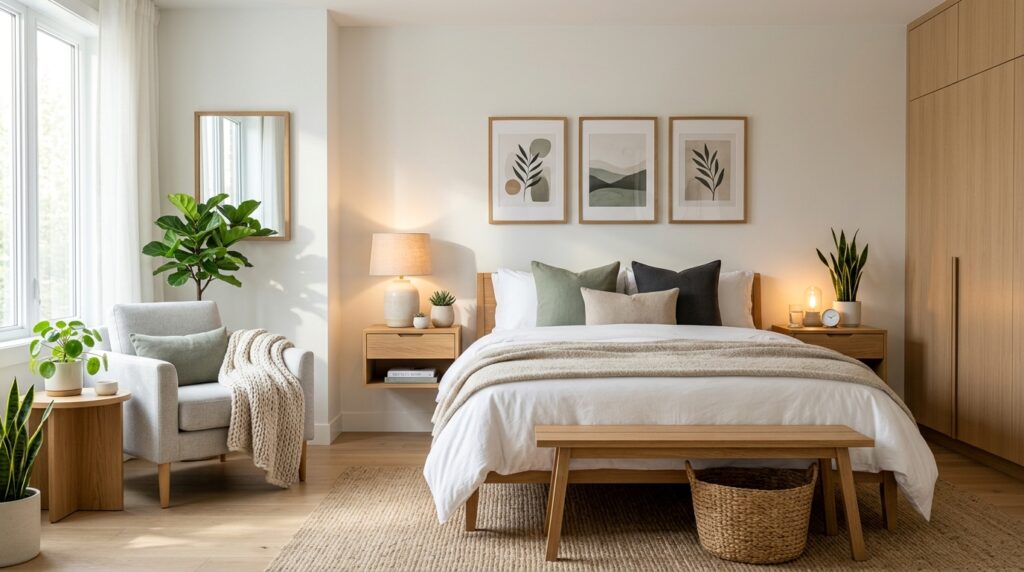
A great bedroom does two things well: it helps you sleep and it makes you feel good when you are in it. Those two goals are not always in conflict, but they do require a different way of thinking about the space.
Sleep quality is influenced by light control, temperature, and the sense of calm the room creates. This means blackout curtains or blinds, adequate ventilation, and a restrained approach to colour and clutter. Feeling good in the space is about personal expression — the headboard you chose, the artwork on the wall, the colour that makes you smile every morning.
The best bedrooms in the UK balance both: calm enough to sleep in, considered enough to love waking up in.
Bedroom Layout Ideas

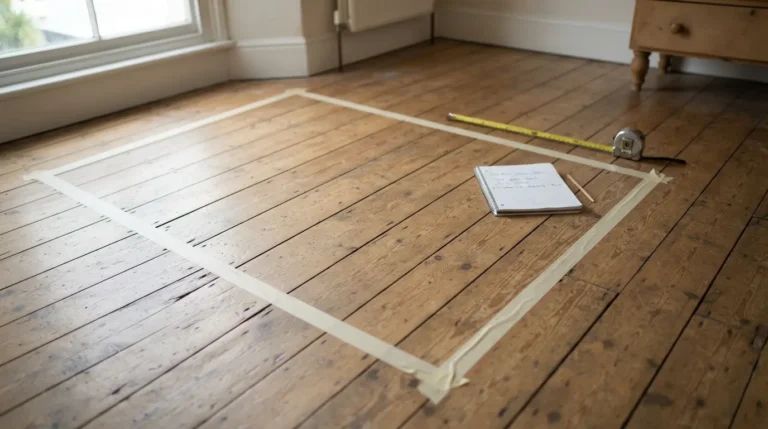
Before choosing a single piece of furniture, get the layout right. A poorly planned bedroom feels cramped and frustrating regardless of how beautiful the individual pieces are.
Centring the Bed on the Main Wall
In most bedrooms, the bed should sit on the largest uninterrupted wall — typically the one opposite the door. This creates a clear focal point and allows equal access from both sides, which matters enormously in a shared room. Leave at least 60cm on each side of the bed for comfortable movement, and more if possible.
The Bed Against the Wall
In a small single or box room, placing the bed against one wall frees up floor space on the other side. This works particularly well for children’s rooms or compact guest bedrooms. A wall-mounted reading light and a narrow floating shelf replace the need for a bedside table, keeping the footprint to a minimum.
Walk-In Wardrobe and Dressing Room Layout
In larger master bedrooms, partitioning part of the room to create a walk-in wardrobe or dressing area is increasingly popular in UK homes. A partial stud wall, a curtained alcove, or a run of open shelving and rail can transform the function of a bedroom without requiring structural work. Position the dressing area where natural light is good for the best results when getting dressed.
Open Plan Bedroom and Ensuite
Where a bedroom connects directly to an ensuite bathroom, the layout needs to consider sightlines carefully. The toilet should never be visible from the bed. A half-height wall, a glass screen, or a carefully placed freestanding wardrobe can provide the separation needed without losing the sense of flow.
Bedroom Colour Scheme Ideas
The bedroom is the one room in the house where you have genuine licence to be bold with colour — because only you will spend time in it. Trust your instincts here more than anywhere else.
Dark and Moody Bedroom Ideas
Dark bedrooms are one of the most searched interior trends in the UK right now. Deep navy, forest green, charcoal, and even near-black create a cocoon-like quality that makes sleep feel easier and the room feel more intentional. Dark paint on all four walls — particularly the ceiling — creates a wraparound effect that is deeply restful and far more sophisticated than a single accent wall.
Balance dark walls with warm lighting at low level, light bedding in white or natural linen, and tactile textures — boucle cushions, a chunky knitted throw, a sheepskin rug — to prevent the room from feeling cold.
Sage Green Bedroom Ideas
Sage green is the defining bedroom colour of this decade. It is calming without being clinical, warm without being heavy, and works with almost every furniture finish — oak, walnut, painted white, or rattan. Pair sage green walls with natural linen bedding, warm brass hardware, and indoor plants to create a biophilic, grounded atmosphere.
Navy Blue Bedroom Ideas
Navy is a sophisticated and versatile bedroom colour. It works as a dramatic all-over shade or as a calming single-wall choice. Navy paired with white bedding, brass accents, and natural wood creates a classic, timeless bedroom. Navy with botanical green tones and rattan furniture feels more relaxed and tropical.
Warm Neutral and Cream Bedroom Ideas
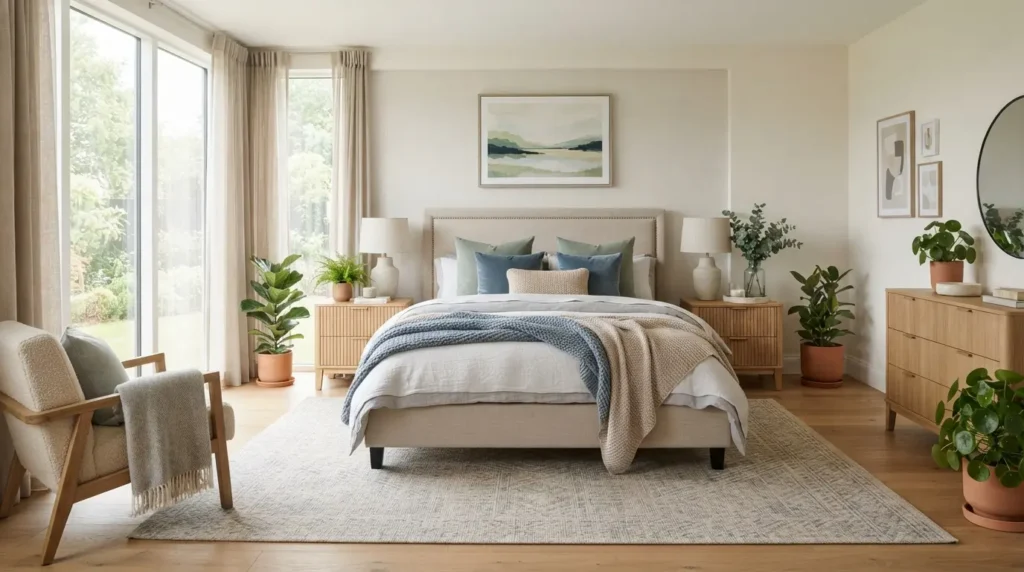
Warm neutrals — cream, warm white, greige, and soft stone — create bedrooms that feel endlessly calm and easy to live with. Layer linen, cotton, velvet, and woven textiles to add depth and interest to an otherwise neutral scheme.
Pink and Blush Bedroom Ideas
Soft blush, dusty pink, and rose tones create a warm, romantic bedroom atmosphere. Dusty pink paired with warm grey, terracotta accents, and aged brass creates a sophisticated, grown-up bedroom that feels genuinely luxurious.
Bedroom Furniture Ideas

Bed Frame Ideas
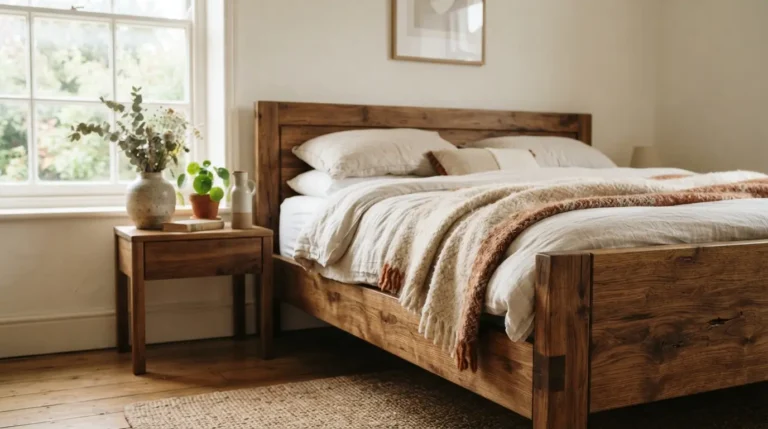
The bed frame is the most important purchase in a bedroom. Upholstered bed frames — in linen, velvet, or boucle — are the most popular choice in UK bedrooms right now, offering a soft, tailored look and a built-in headboard. Ottoman bed frames provide essential storage in a lifting base. Wooden bed frames in oak, walnut, or painted MDF work well in traditional or Scandi-inspired rooms. Four-poster and half-tester frames add drama and architectural interest in a larger master bedroom.
Headboard Ideas
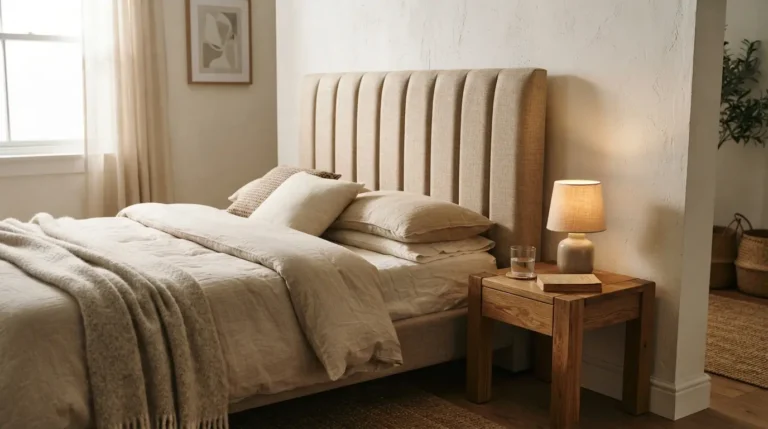
A headboard defines the focal point of the bedroom. Tall, upholstered headboards — particularly those that extend to the ceiling or are built into a wall of panelling — are among the most impactful bedroom design features in the UK at the moment. A panelled headboard wall, with the headboard set into a frame of MDF moulding and painted in a contrasting colour, creates a designer look at a relatively modest cost.
Wardrobe Ideas
Fitted wardrobes remain the most popular wardrobe choice in UK master bedrooms — they use the full height and width of a wall, reducing wasted space and creating a seamless, built-in look. Sliding door wardrobes are particularly effective in smaller bedrooms. Open wardrobe systems — rails, shelves, and drawers without doors — are increasingly popular in Scandi and Japandi-inspired bedrooms.
Chest of Drawers and Dressing Table Ideas
A chest of drawers provides essential storage for folded clothing and accessories. A dressing table with a mirror creates a dedicated space for getting ready and adds a sense of ritual to the morning routine. In a small bedroom, a wall-mounted mirror with a narrow shelf achieves the same purpose without taking up floor space.
Bedside Table Ideas
Bedside tables provide surface space for lamps, phones, books, and a glass of water. Matching bedside tables create symmetry; mismatched tables in coordinating materials add personality. In a very small bedroom, wall-mounted shelves or a hanging bedside caddy serve the same function without taking up any floor space at all.
Bedroom Lighting Ideas
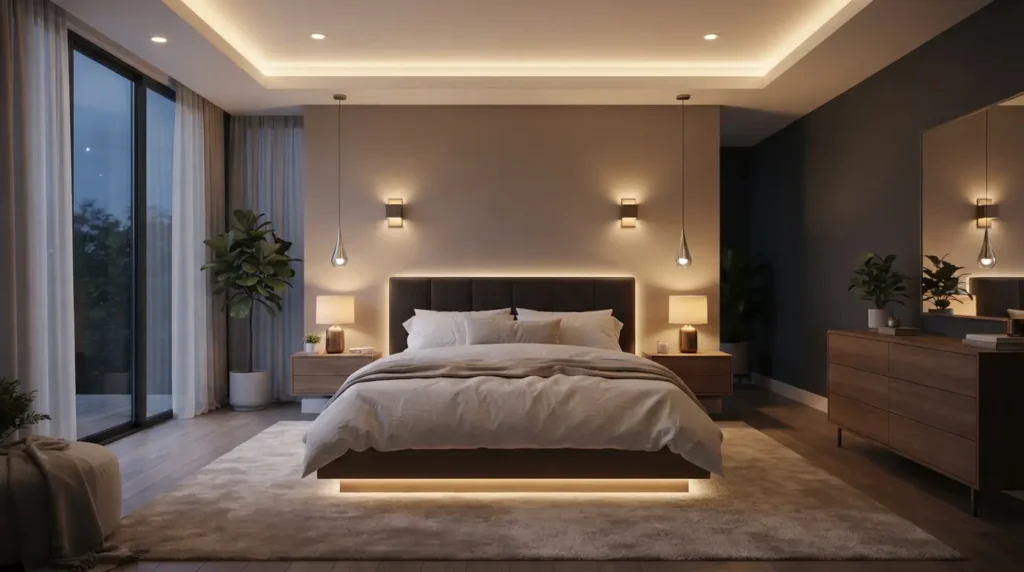
Bedroom lighting deserves far more thought than a single ceiling light and a bedside lamp.
The most effective bedroom lighting scheme has three elements. Ambient light provides general illumination for getting dressed or cleaning. Task lighting — a reading light at each side of the bed, either a wall-mounted adjustable arm lamp or a table lamp — serves a specific purpose. Accent or mood lighting — LED strip beneath a floating bed frame, a lamp on a chest of drawers, or a floor lamp in the corner — adds warmth and depth in the evening.
Avoid a single overhead light as the only source. It creates a flat, unflattering atmosphere. All bedroom lighting should be on dimmers where possible, allowing you to move seamlessly from bright morning light to a soft, warm evening glow.
Wall-mounted bedside lights free up the surface of the bedside table and eliminate flex management — particularly effective where space is tight.
Bedroom Storage and Wardrobe Ideas
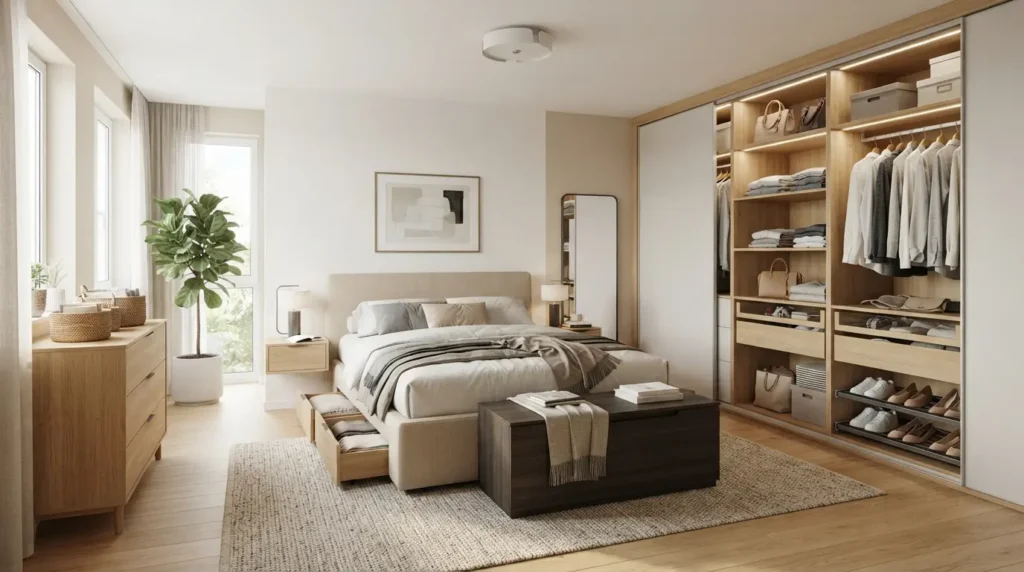
Storage is where many UK bedrooms fall short. Built-in alcove storage flanking a chimney breast uses every centimetre of available space and is a natural feature of many British Victorian and Edwardian bedrooms.
Under-bed storage — either through an ottoman base or purpose-made drawers — is one of the most effective ways to increase capacity without adding floor-standing furniture. It is ideal for seasonal bedding, spare pillows, and out-of-season clothing.
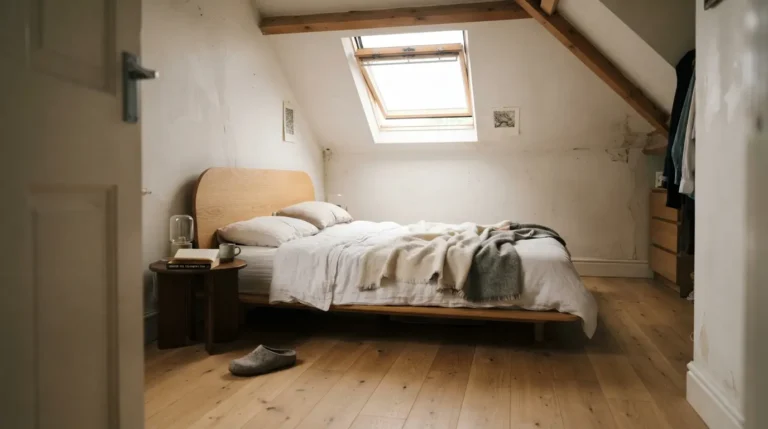
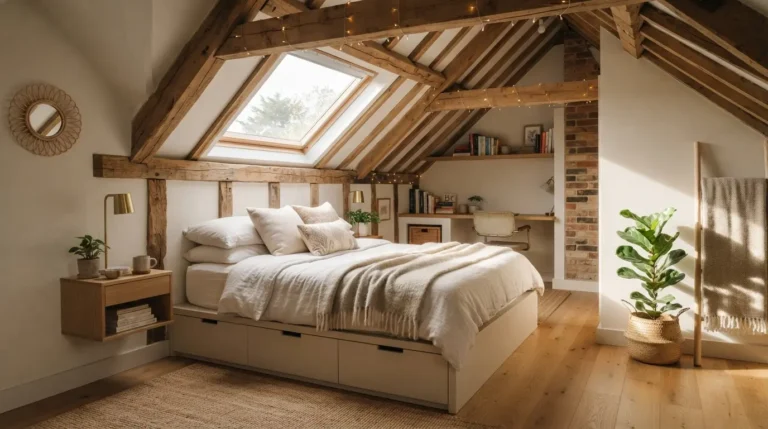
A blanket box or storage ottoman at the foot of the bed provides additional storage and a surface for laying out clothes. In a loft conversion or attic bedroom with sloped ceilings, bespoke fitted furniture that follows the roofline uses available space without compromising headroom.
Bedroom Flooring Ideas
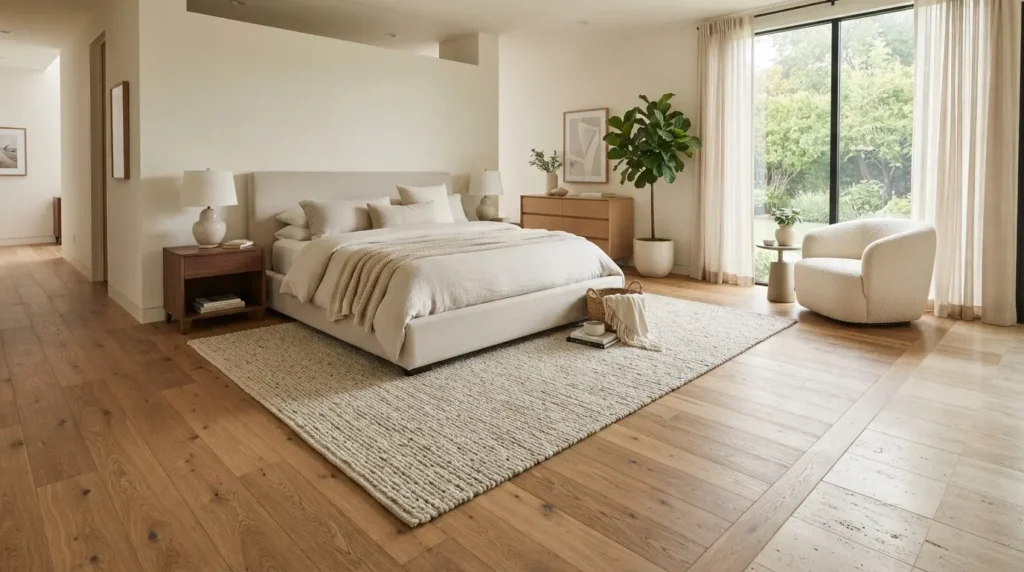
Carpet remains the most popular choice for UK bedrooms — warm, soft, quiet, and comfortable. A good-quality wool or wool-blend carpet in neutral tones is the most versatile choice and will outlast many cheaper hard flooring options.
Engineered wood and LVT are increasingly used in bedrooms, particularly in contemporary homes or where a consistent flooring is wanted throughout. Both feel cooler underfoot than carpet, though a large bedside rug mitigates this effectively.
A bedside rug — a long runner on each side of the bed or a single rug extending from under the bed frame — adds warmth underfoot, introduces texture and colour, and makes the room feel layered and finished.
Bedroom Curtains and Window Dressing
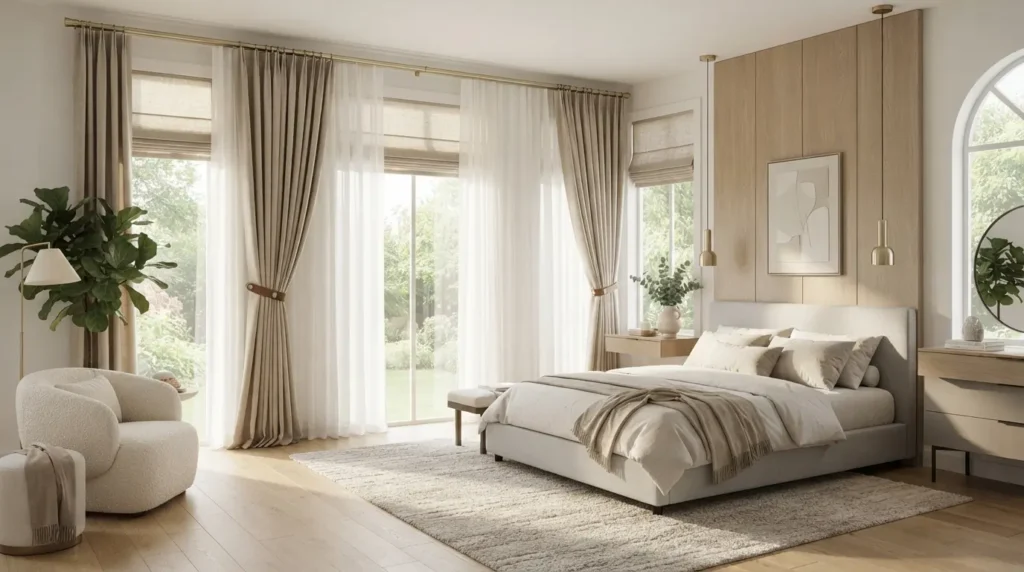
Light control is paramount in a bedroom. Blackout curtains or blackout-lined curtains are the most effective option and the most popular choice in UK bedrooms. They can be made in any fabric and any heading style — lined blackout linen curtains offer the best combination of aesthetic quality and practical function.
Floor-length curtains — hanging from a pole or track mounted close to the ceiling — make the room feel taller and more elegant than those that hang to the windowsill. Hang the pole as high and as wide as possible on each side to maximise the sense of space.
A combination of a blackout roller blind for light control and a decorative curtain for softness is the most effective and flexible window dressing for a bedroom.
Small Bedroom Ideas
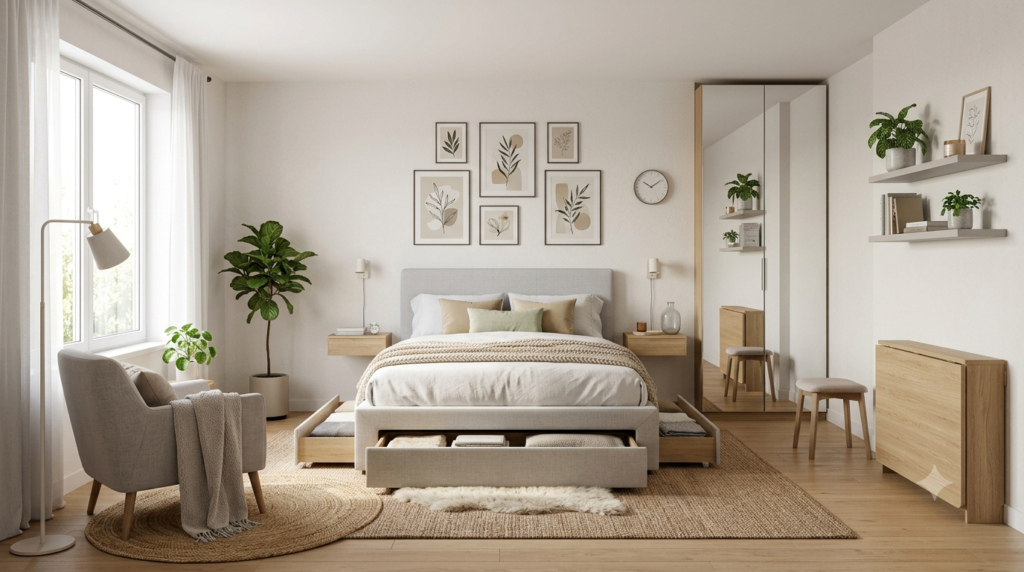
A small bedroom can be just as beautiful and functional as a large one — it simply requires more deliberate decisions.
Fitted furniture makes the single biggest difference in a small bedroom. A run of fitted wardrobes from wall to wall and floor to ceiling uses every available centimetre. Choose a bed with built-in storage — an ottoman base or a divan with drawers — to eliminate the need for a separate chest of drawers. A wall-mounted headboard with integrated shelving and lighting removes the need for bedside tables entirely.
Keep the colour palette light and consistent. A single pale colour on walls, ceiling, and woodwork makes the room feel larger and more intentional. Introduce texture and warmth through bedding, a rug, and textiles rather than through additional furniture.
Mirrors are a small bedroom’s best friend. A full-length mirror on a wardrobe door or fixed to a wall reflects light and creates the illusion of additional depth.
Bedroom Style Guide
Japandi and Scandi Bedroom
The Japandi bedroom — a fusion of Japanese wabi-sabi and Scandinavian hygge — is the most widely searched bedroom aesthetic in the UK. It is characterised by low-profile bed frames in natural oak or walnut, a restrained palette of warm neutrals and muted greens, minimal accessories, and an emphasis on natural materials and handmade objects.
Dark Academia Bedroom
Dark academia takes its cues from old libraries and Gothic architecture. Dark walls — deep green, charcoal, or inky navy — are layered with antique or vintage furniture, warm brass lighting, stacked books, framed art prints, and richly textured bedding. It is a maximalist aesthetic executed in a dark, intellectual palette.
Cottagecore and Romantic Bedroom
Cottagecore leans into softness and a romanticised vision of country life. Floral wallpaper, soft linen bedding, vintage furniture, dried flowers, and gentle colours — dusty pink, sage, butter yellow — create a bedroom that feels like a refuge from the modern world.
Maximalist Bedroom
A maximalist bedroom is deeply personal rather than chaotic. Gallery walls, layered textiles, collected objects, bold pattern, and rich colour are all present. The difference between maximalist and cluttered is intention: every object and every colour is there because it was chosen.
Minimalist and Contemporary Bedroom
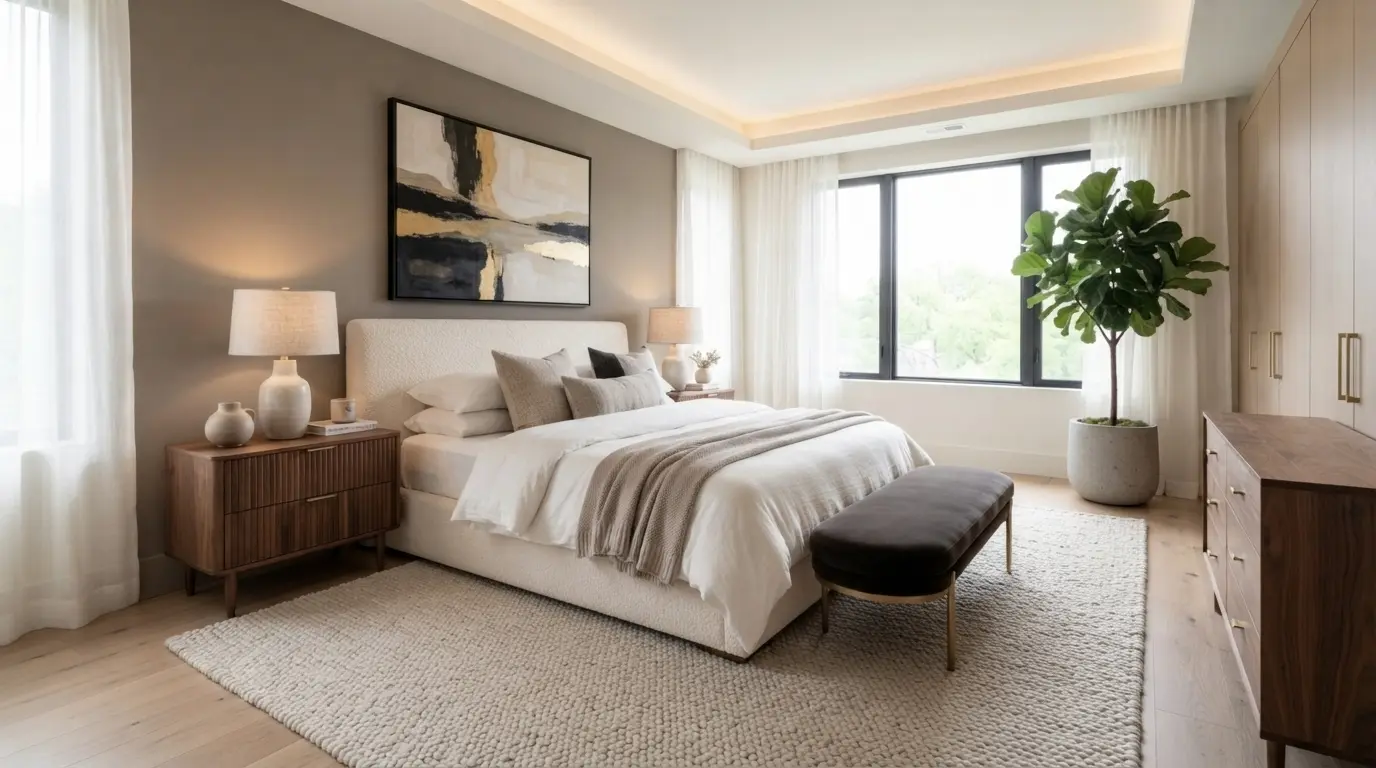
Clean lines, a limited palette, and high-quality materials define the minimalist bedroom. A platform bed, a single artwork, integrated storage, and carefully considered lighting create a space that feels calm, controlled, and quietly luxurious.
Bedroom Decor and Styling Tips
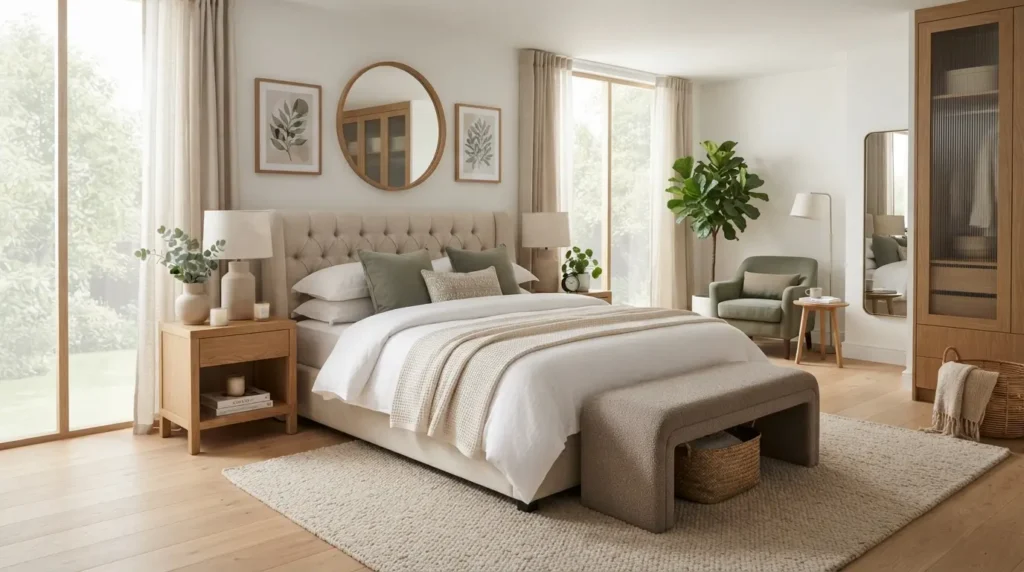
The final layer of a bedroom — accessories, textiles, and personal objects — is where a room goes from looking like a furniture showroom to feeling like a home.
Layer your bedding thoughtfully. A fitted sheet, a flat sheet, a duvet, two or three cushions in coordinating sizes, and a throw folded at the foot of the bed creates a dressed, hotel-quality look. Linen bedding in natural, undyed tones is the most versatile and the most beautiful choice.
Add a plant or two — a snake plant, peace lily, or trailing pothos all thrive in bedroom conditions and add life and colour to the space.
Keep surfaces curated. A bedside table with a lamp, a book, and one small object looks intentional. A table covered in charger cables and random objects looks neglected.
Scent matters in a bedroom. A diffuser, a candle, or a pillow mist adds an invisible layer of atmosphere that changes how the room feels to be in.
Final Thoughts
Your bedroom is the room you spend more time in than any other — and the room that most directly affects your wellbeing. Getting it right is not about following trends. It is about making deliberate choices that serve how you actually live, how you sleep, and what makes you feel genuinely calm and restored.
Start with the layout, choose a colour you love rather than one you think is safe, invest in the best bed and bedding your budget allows, and layer the personal details last.
Browse all the bedroom ideas below to explore every topic in detail — from bed frames and wardrobe ideas to colour scheme guides, lighting advice, and inspiration for every size and style.
FAQs
What is the most popular bedroom colour in the UK in 2026?
Sage green and warm neutral tones are the most searched bedroom colours in 2026. Dark, moody shades — deep navy, forest green, and charcoal — are also increasingly popular for master bedrooms where a cocoon-like atmosphere is the goal.
How do I make a small bedroom feel bigger?
Use fitted wardrobes to maximise storage without cluttering the floor. Choose a pale, consistent colour scheme on walls, ceiling, and woodwork. Use a bed with integrated storage. Add a large mirror to reflect light. Keep accessories minimal and choose one or two large pieces of artwork rather than multiple small ones.
Should bedroom curtains be floor length?
Yes — floor-length curtains almost always look more elegant and intentional. Hang the pole as close to the ceiling as possible and extend it well beyond the window frame on each side. If blackout is a priority, use blackout lining rather than a shorter drop.
What is the best bed size for a master bedroom?
A king-size bed (150cm x 200cm) is the most popular choice for a UK master bedroom, working well in rooms from around 3.5 metres wide. A super-king (180cm x 200cm) creates a genuinely luxurious sleeping experience in a larger room.
What type of wardrobe is best for a small bedroom?
Fitted sliding door wardrobes are the most space-efficient choice. They use the full height and width of a wall and do not require clearance for opening doors. Building them to the ceiling maximises storage capacity and eliminates visual clutter.
How do I choose the right bedside lighting?
Wall-mounted adjustable reading lights free up the surface of the bedside table and eliminate trailing cables. Whatever you choose, position the light so it illuminates the page of a book without shining into the eyes of a sleeping partner. All bedside lighting should be warm-toned and dimmable.
Is carpet or hard flooring better for a bedroom?
Carpet is the most popular choice for UK bedrooms — warm, soft, quiet, and comfortable. A good-quality wool carpet will outlast many cheaper hard flooring options. Hard flooring works well in contemporary bedrooms, but always pair it with a large bedside rug or a runner on each side of the bed.