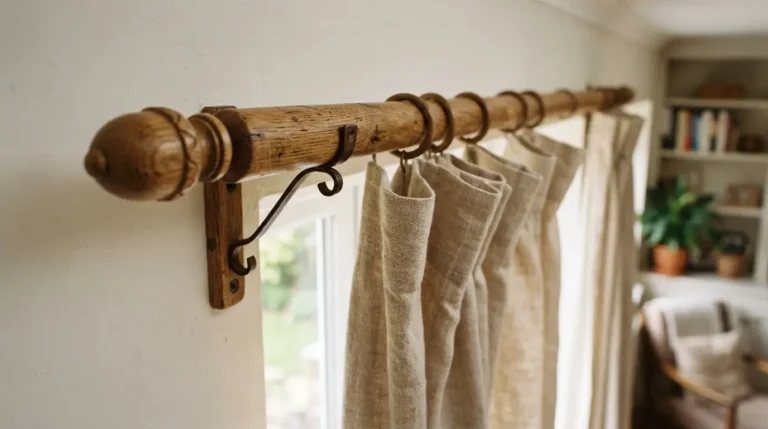

How to Choose the Right Curtains for a Bedroom

Choosing the right curtains for a bedroom comes down to three decisions in order: how much light you need to block, what fabric weight suits the room, and how full the curtains hang once they’re up. Get those three right and the colour and pattern choice becomes the easy part.
Most people start with fabric and colour first, then get to the till and realise they have no idea whether they need blackout lining, what heading style fits their pole, or why the ready-made pair from the shop looks skimpy once it’s hanging. Here’s how to work through it properly, in the order that actually matters.
How Dark Does a Bedroom Need to Be?
A primary bedroom generally needs blackout lining if streetlights, early sunrise, or shift work affect your sleep, while a guest room or a low-light bedroom can often get away with a lighter room-darkening fabric. Blackout linings block 90 to 100% of outside light, while room-darkening fabrics reduce it without creating a fully dark room.
Children’s bedrooms and nurseries usually benefit most from true blackout, since younger kids sleep better in darker conditions and it makes nap schedules easier to hold. A guest room is the one place a mid-weight, light-filtering fabric genuinely makes sense, since you’re accommodating whoever’s sleep schedule shows up next. Don’t default to blackout everywhere out of habit. It’s not necessary in every room, and a heavy blackout curtain in a small guest room can make the space feel closed in.
Match the Fabric Weight to the Season and the Room
Heavier fabrics like velvet and interlined cotton hold heat in and sound out, which suits a bedroom that runs cold in winter or sits near a busy road. Lighter weaves like linen and cotton breathe better in warmer climates but do less for insulation or noise unless paired with a proper lining.
A good rule of thumb: if the bedroom faces a road, a stairwell, or gets significant temperature swings, go heavier and add a thermal or interlined lining even if you don’t need full blackout for light. Velvet looks and performs well in a cold room but traps heat in a warm one, so it’s the wrong choice for a south-facing bedroom in a hot climate. Tightly woven cotton or poly-cotton blends hold up better in humid conditions, where untreated linen can develop mildew over time.
Pick a Heading Style That Suits Your Pole or Track
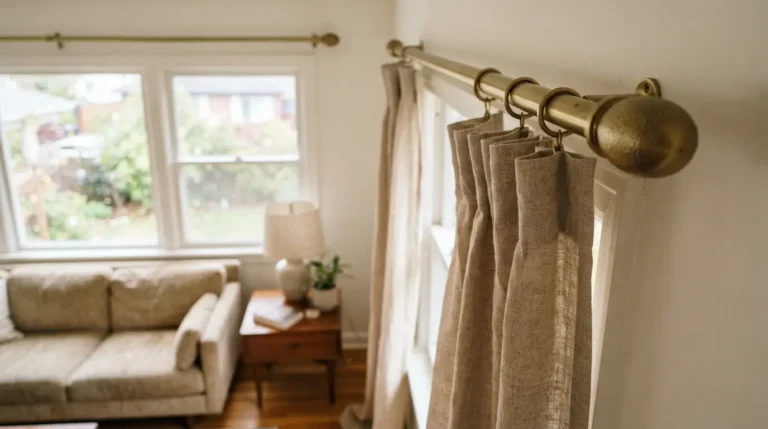
Pencil pleat is the most budget-friendly heading and works on either a pole or a track, which makes it the safest default if you’re not sure what you want yet. Eyelet curtains thread directly onto a pole for a neat, uniform stack, but they only work with a pole, not a track, so check what’s already fitted before you order.
Pinch pleat and wave headings cost more because they use extra fabric, roughly 2 to 2.5 times the rod width compared to pencil pleat’s 2 times, but they hang with a more tailored, structured look. Wave headings stack back neatly and let more light through when open, which suits a smaller bedroom where you want the window to feel less boxed in during the day.
Get the Length Right
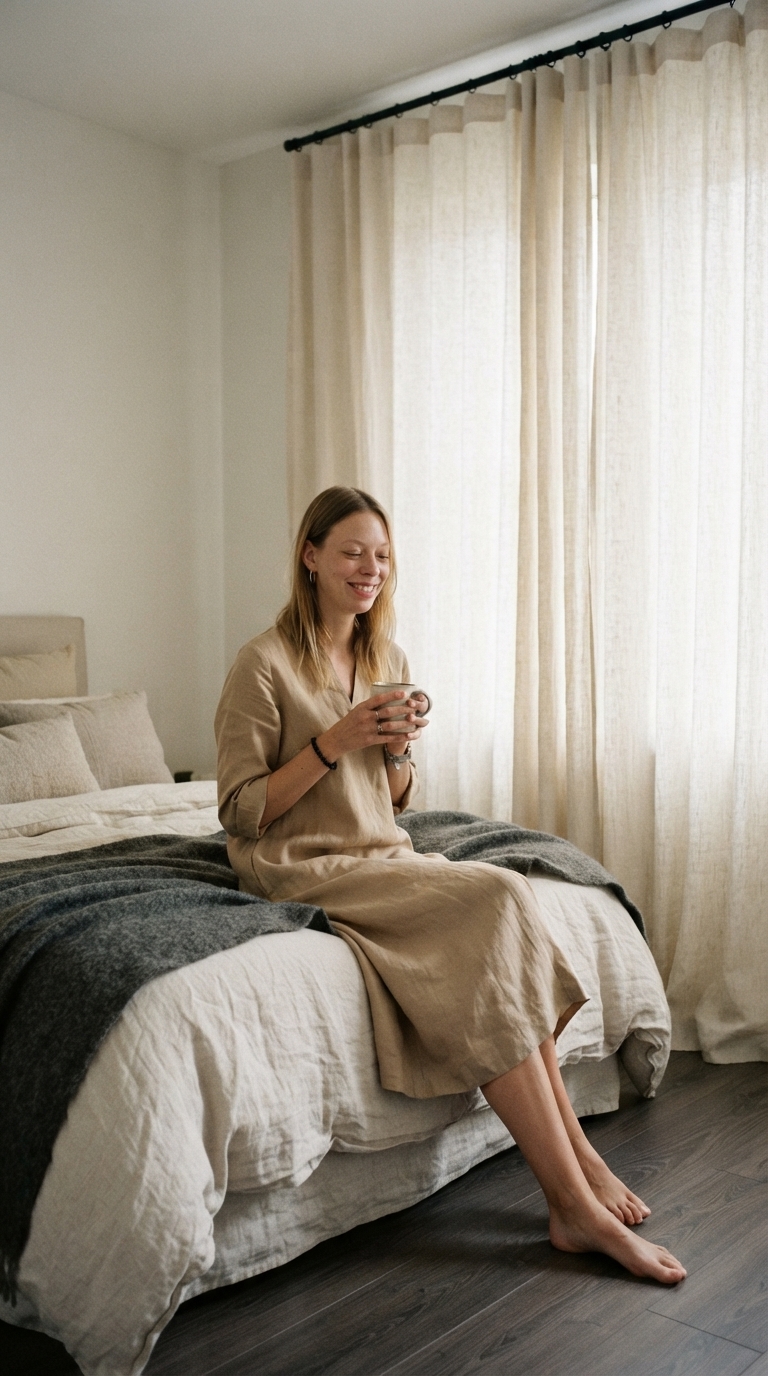
Curtains that stop a couple of inches above the floor read as a mistake rather than a style choice, so length matters more than most people expect going in. There are three standard options: sill length, which ends at the windowsill and suits a radiator underneath; below-sill, which drops about 10cm past the sill for a cleaner classic look; and full floor length, which is the strongest choice for a primary bedroom.
For floor length, measure to about 1cm above the floor for a crisp finish, or add a few extra centimetres if you want a soft puddle effect at the base. Whichever length you choose, measure after the pole or track is fitted, not before, since drop height depends on exactly where the rings or hooks sit.
Measure for Fullness So the Curtains Don’t Look Skimpy
The single biggest reason made-to-measure curtains look better than an ill-fitting ready-made pair isn’t the fabric, it’s the fullness ratio. Multiply your pole or track width by 2 for pencil pleat, eyelet, or wave headings, and by 2.5 for pinch pleat, to get the total fabric width you need before it’s gathered.
A 150cm-wide window needs roughly 300cm of total curtain fabric across both panels at standard 2x fullness. Going any lower than 1.5x tends to look flat once hung, especially in a heavier blackout fabric, so don’t be tempted to save fabric by cutting fullness on a bedroom window. Extend the pole 10 to 15cm beyond each side of the window frame too, so the panels clear the glass fully when open and let all the available light in during the day.
Made-to-Measure vs Ready-Made: What’s Actually Worth It
Ready-made curtains are the cheaper, faster option and work fine for a standard-sized window in a good, common size. Made-to-measure costs more, generally upward of double a comparable ready-made pair, but solves the fullness and length problems above automatically and is the better call for an unusual window size, a bay, or a fabric upgrade like proper interlining.
| Option | Typical UK Cost (pair, standard window) | Best For |
| Ready-made | £30–£150 | Standard window sizes, budget refresh, renters |
| Made-to-measure, basic lined | £150–£400 | Non-standard windows, better fullness and drop accuracy |
| Made-to-measure, interlined or premium fabric | £400–£800+ | Period bedrooms, thermal and noise performance, long-term investment |
Fabric itself typically runs from around £13 a metre for a simple cotton up to well over £100 a metre for premium velvets and jacquards, and that range is the main thing that swings a made-to-measure quote either way. If your bedroom window is a standard size and you’re on a tighter budget, a well-chosen ready-made pair with the fullness checked properly can still look genuinely good.
Layer Sheers and Blackout for More Control
A sheer or voile layer closest to the glass with a blackout or thermal curtain in front gives you daytime privacy and softness without sacrificing full darkness at night. This setup suits a bedroom better than a single treatment because it lets you adjust light levels through the day rather than choosing one fixed level.
Run the sheer on an inner track or pole and the blackout layer on an outer one, and keep both able to draw fully clear of the glass. This is a slightly bigger job than a single curtain layer, usually a bit more in hardware and labour, but it’s the setup most likely to solve a genuinely bright or overlooked bedroom window without compromise.
Common Bedroom Curtain Mistakes to Avoid
The most common mistake is hanging a pole at exactly the width of the window frame, which leaves no room for the curtains to stack back and blocks light even when they’re fully open. Mount the pole 10 to 15cm wider than the frame on each side as standard practice, more if the wall space allows it.
The second mistake is choosing fullness based on price rather than the finished look, since a curtain under 2x fullness in a heavier fabric often hangs flat and stiff rather than falling into soft folds. Third, people frequently forget that blackout lining blocks light at the glass, not at the gaps around the frame, so a curtain alone won’t fully darken a room with a poorly sealed or draughty window. If total darkness matters, check the frame seal before assuming the curtain is the problem. If your bedroom has a sloped or angled window, an attic conversion is a common example, standard poles and lengths often need adjusting, and it’s worth reading our guide on designing an attic bedroom alongside this one.
Conclusion
The right curtains for a bedroom come from working through light control, fabric weight, heading style, and fullness in that order, not from picking a colour first and hoping the rest falls into place. A well-fitted, properly full pair of curtains in the right fabric will outperform an expensive fabric hung too flat or too short every time. Start with how dark you actually need the room, and the rest of the decision gets a lot easier from there.
FAQs
What is the best fabric for bedroom curtains that block light?
A blackout-lined fabric, in either a heavier weave like velvet or a lighter cotton with a proper blackout lining sewn in, blocks the most light. The lining matters more than the outer fabric for how dark the room gets.
Should bedroom curtains touch the floor?
For a primary bedroom, floor length usually looks the most finished, ending about 1cm above the floor or with a slight puddle if you want a softer look. Sill or below-sill length works better over a radiator or in a child’s room where trailing fabric isn’t practical.
How much fuller should curtains be than the window?
Aim for 2 times the pole or track width for pencil pleat, eyelet, or wave headings, and 2.5 times for pinch pleat. Anything under 1.5 times tends to look thin and flat once hung.
What’s the difference between eyelet and pencil pleat curtains?
Eyelet curtains thread directly onto a pole through metal rings for a neat, even stack, but they can’t be hung on a track. Pencil pleat curtains gather with a tape heading and work on either a pole or a track, making them more flexible.
How much do made-to-measure curtains cost in the UK?
A basic lined pair for a standard bedroom window typically starts around £150 to £400, with interlined or premium fabric options running £400 to £800 or more. Ready-made pairs for standard sizes run roughly £30 to £150. Costs vary by country and by fabric choice.
Can I use ready-made curtains for an unusual window size?
You can, but expect to compromise on fullness, length, or both, since ready-made sizing is built around common window widths and drops. For a genuinely non-standard window, made-to-measure is usually worth the extra cost for the fit alone.