8 Bohemian Bedroom Ideas for a Free-Spirited and Layered Space

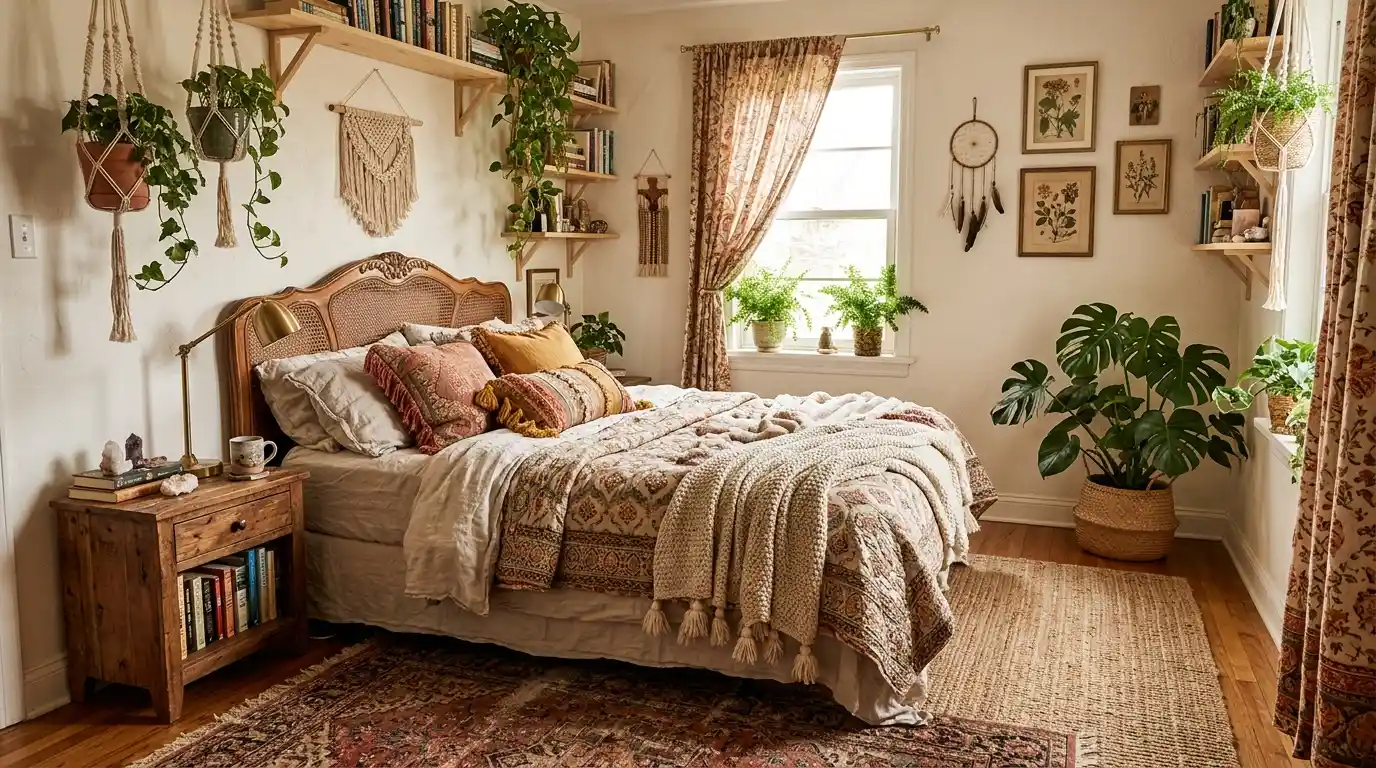
Bohemian bedroom ideas work by layering textiles, mixing patterns and adding plants and natural materials so the room feels collected rather than matched. In UK homes the look can be kept practical by choosing durable fabrics and checking clearances so the layers do not make the space hard to clean or move around. Start with a neutral base and add colour and texture in textiles and accessories. For layout basics before you begin, see how to plan the perfect bedroom layout.
1. Layered Bedding and Throws
Boho bedroom ideas begin with the bed. Use a plain duvet cover and add a textured throw, a couple of cushions in different sizes and a lightweight quilt or blanket folded at the foot. In a standard UK double bed a throw of about 140cm by 200cm sits well without overwhelming the mattress. Check the fabric; linen or cotton blends wash more easily than heavy velvet in a busy household. A common mistake is adding so many layers that the bed becomes hard to make each day. Keep one or two pieces that can be removed easily for cleaning. Measure your bed before you buy new covers so the drop looks balanced. This layered approach gives the free-spirited feel without needing new furniture.
Mix solid colours with one or two patterned cushions. For more cosy ideas, see 7 cosy bedroom ideas for a warm UK retreat.
2. Rugs Over Rugs for Texture
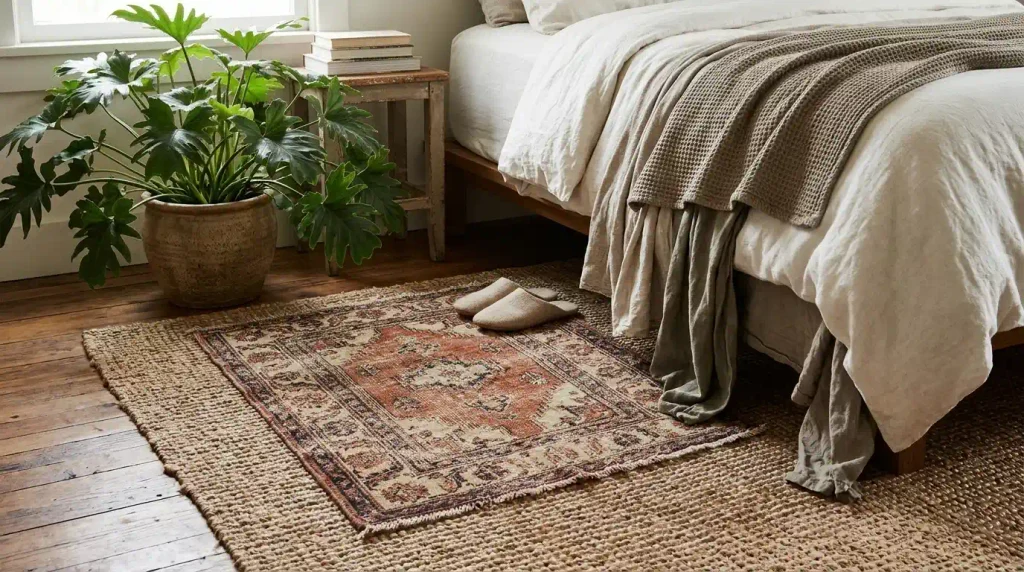
Layered rugs add instant texture to a bohemian bedroom. Place a larger neutral rug under the bed and a smaller patterned one on top beside the bed or at the foot. In most UK bedrooms a 160cm by 230cm base rug works under a double bed if you want the edges visible on three sides. Check the pile so the top rug does not slide; a non-slip underlay helps. A common mistake is choosing rugs that are too thick so doors catch or the bed feels higher than expected. Measure the floor space and leave at least 30cm clear around the edges for walking. Natural fibres such as jute or wool suit the look and wear well if you vacuum regularly.
Second-hand rugs from local sales keep the cost down and add the collected feel. This works especially well in rooms with hard floors.
3. Plants for Softness and Life
Plants are a simple way to add the free-spirited feel. Choose varieties that suit the light in your room; many UK bedrooms are north-facing and need lower-light plants. Place one or two larger plants on the floor and smaller ones on a shelf or windowsill. Check the pot size so it fits the surface and does not tip. A common mistake is overcrowding the windowsill so the curtains cannot close fully. Leave clear space around radiators so plants do not dry out too quickly. Watering needs stay manageable if you group plants that like similar conditions. This addition costs little and softens hard edges in the room.
Use existing pots or simple terracotta ones. For more on bedroom decoration, see how to decorate a bedroom from scratch.
4. Mixed Wall Art and Tapestries
A gallery of mixed prints, woven hangings or a single large tapestry adds the eclectic bedroom feel. Hang pieces at eye level, roughly 1.5m from the floor to the centre of the group. In a UK bedroom leave at least 10cm between frames so the wall does not look crowded. Check wall fixings; plasterboard needs suitable anchors for heavier pieces. A common mistake is hanging everything too high so it feels disconnected from the furniture below. Mix sizes and frames rather than matching them perfectly. Second-hand frames and prints keep the look collected and the spend low.
A fabric wall hanging can soften a plain wall without any drilling if you use a tension rod. Measure the wall width before you buy so the piece sits comfortably.
5. Natural Materials and Wood
Bohemian decor bedroom ideas use wood, rattan and woven pieces. An existing wooden bed or chest works well; if you have a painted piece, leave it or add a simple wooden stool. Check the finish so it is not too shiny against the matte textiles. In smaller rooms a low wooden bench at the foot of the bed adds storage and texture without taking much floor space. A common mistake is adding too many new wooden pieces so the room feels heavy. Measure clearances; leave at least 60cm beside the bed for walking. Natural materials age well and suit the layered look.
Look for second-hand wooden trays or small tables that can hold books or plants. This keeps the budget low while adding the right texture.
6. Soft Window Treatments
Lightweight curtains or a simple fabric panel soften the windows and add to the free-spirited feel. In UK homes choose a fabric that still allows some privacy if the window faces a street. Measure the window width and add at least 10cm on each side for the track or pole. A common mistake is hanging curtains too short so they stop above the sill and look unfinished. Floor-length panels work well if the radiator is not blocked. Existing curtains can be layered with a sheer panel if you want more softness without new full-length ones.
Check the drop carefully so the fabric does not drag on the floor. For more window ideas, see related guides on the site.
7. Mirrors to Add Light and Depth
A mirror adds light and makes a boho room feel larger. Place it opposite a window or above a chest so it reflects the textiles and plants. In a typical UK bedroom a mirror of 60cm to 80cm wide works well without dominating the wall. Check the fixing; heavier mirrors need secure anchors. A common mistake is placing the mirror where it reflects clutter or a dark corner. Lean a large mirror against the wall if you prefer not to drill. This simple addition brightens the layered look.
Use an existing mirror with a simple frame or leave it unframed. Measure the wall space so it sits at a comfortable viewing height.
8. Personal Collections and Trinkets
Small collections of books, ceramics or found objects complete the eclectic bedroom. Group them on a shelf or tray so they do not look scattered. In a smaller room limit the number so surfaces stay usable. Check stability; taller items should sit further back on shelves. A common mistake is displaying everything you own so the room feels busy rather than free-spirited. Choose a few pieces that mean something and rotate them if you like. This keeps the look personal without extra cost.
A simple tray on the bedside table holds the collection and makes cleaning easier. For layout tips that leave room for these details, see the bedroom layout articles on the site.
Conclusion
These eight bohemian bedroom ideas focus on layering textiles, rugs, plants and natural materials so the room feels collected and free-spirited. Measure clearances, choose durable fabrics and use what you already have wherever possible. The result stays practical for daily use in a UK home while giving the layered look people want. Review floor space, window sizes and existing furniture before you add new pieces so everything fits comfortably.
FAQs
What makes a bedroom bohemian?
Layered textiles, mixed patterns, plants and natural materials create the look. It feels collected rather than perfectly matched. Keep surfaces usable so the room stays practical.
How do I stop a boho bedroom looking cluttered?
Limit the number of small objects and group them on trays or shelves. Leave clear floor space and choose durable fabrics that are easy to clean. Too many layers on the bed can make daily making harder.
What rug size works under a double bed?
A 160cm by 230cm rug usually works under a standard double bed if you want the edges visible. Check the pile height so doors and the bed base clear it. Add a non-slip underlay if you layer a second rug.
Can I create a bohemian look on a budget?
Yes. Use existing bedding and furniture, add second-hand textiles and plants, and layer what you already own. New pieces can be limited to one or two items that fit the remaining space.
Do boho bedrooms work in small rooms?
Yes, if you keep the layers controlled. Use one rug, a few plants and limited wall art. Leave clear walking space beside the bed so the room does not feel cramped.
What plants suit a UK bedroom?
Lower-light plants work well in north-facing rooms. Check the light level and choose pots that fit the surface. Avoid blocking radiators or windowsills completely.