8 Hallway Paint Colour Ideas to Make a Great First Impression

The paint colour in a hallway sets the tone for the whole home. In most UK properties the entrance is narrow, receives little natural light, and sees constant traffic, so the colour must feel welcoming while hiding everyday marks. Choosing the right shade also helps the space feel wider and taller than it is. These eight hallway paint colour ideas cover practical options that work with standard British door sizes, skirting depths, and ceiling heights of around 2.4 metres. Each suggestion includes notes on finishes, undertones, and what to check before you order paint.
1. Soft Warm White with a Feature Wall
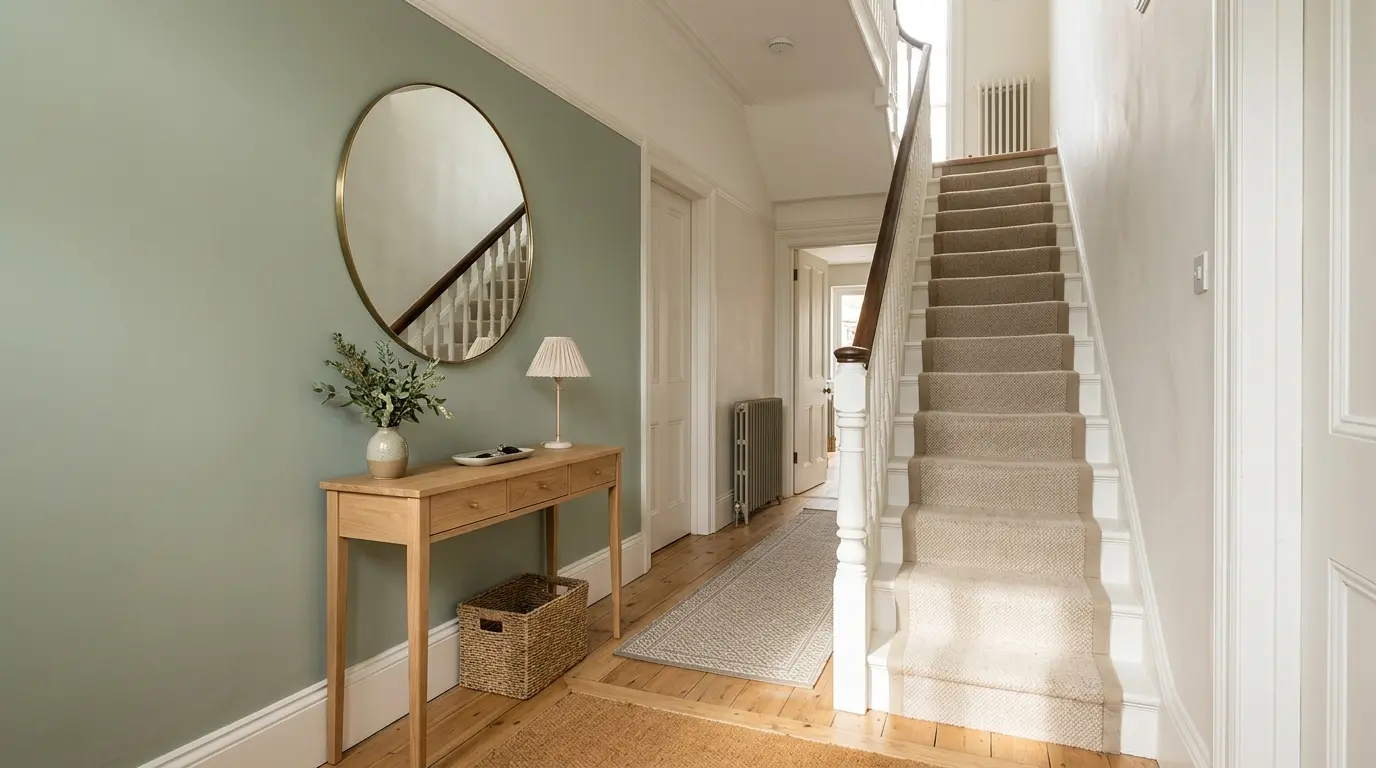
A warm white keeps the hallway bright and clean while a single feature wall in a deeper shade adds interest without overwhelming the space. Choose a white with a slight cream or beige undertone so it does not look cold under LED lights. Paint the feature wall in a colour that relates to the rooms beyond, such as a soft sage or warm greige. Use eggshell throughout for easy cleaning. In halls under 1.2 metres wide, keep the feature wall on the longest side so it does not narrow the view. Always test the white against your existing doors; pure brilliant white can make older timber look yellow. Guidance on feature walls is available at how to paint a feature wall in your home.
2. Gentle Greige for a Seamless Flow
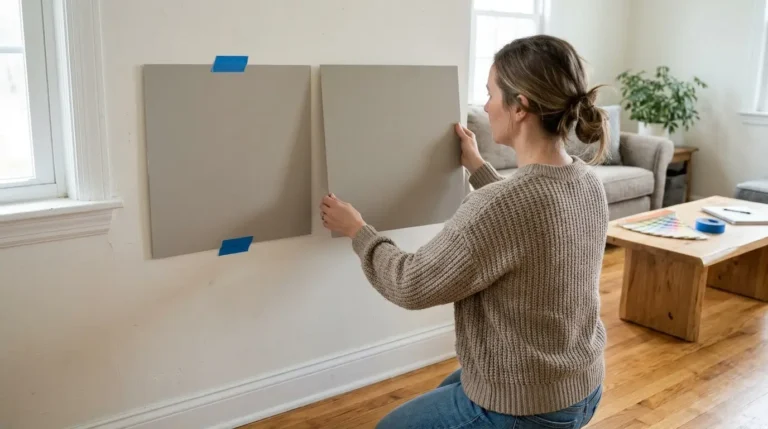
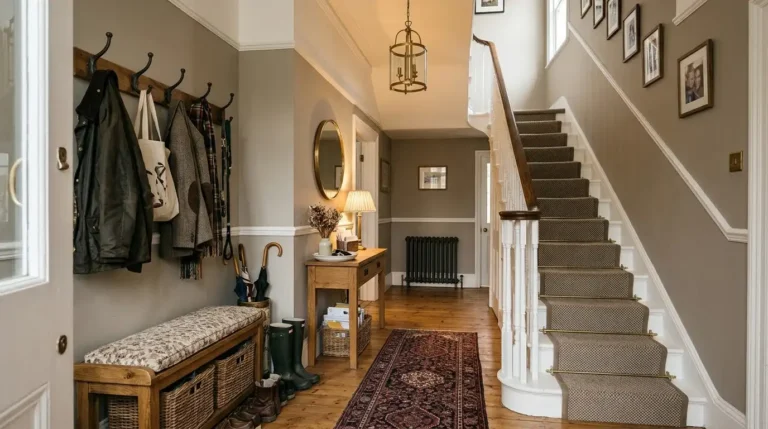
Greige combines the calm of grey with the warmth of beige and works as a neutral that connects to both living rooms and kitchens. Select a mid-tone with warm undertones so north-facing halls do not feel chilly. It hides scuffs better than pure white and still reflects light. Pair with white or soft grey woodwork. Measure the full length of the corridor; if it is over 5 metres, consider a slightly lighter ceiling to maintain height. Order sample pots and paint a large section next to your flooring and front door before committing. More greige ideas appear in 7 warm grey paint ideas for a cosy neutral UK interior.
3. Pale Sage Green for Calm
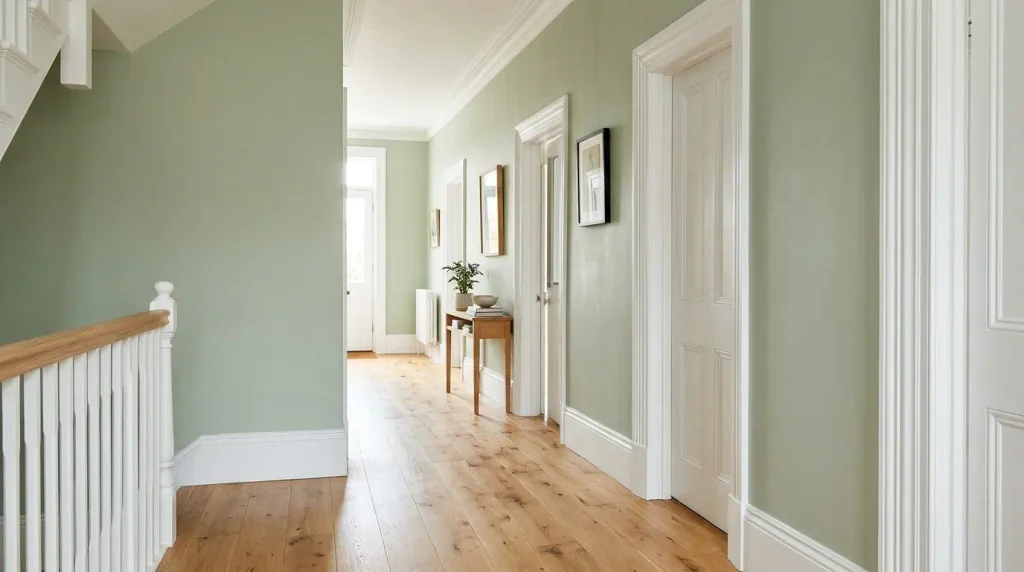
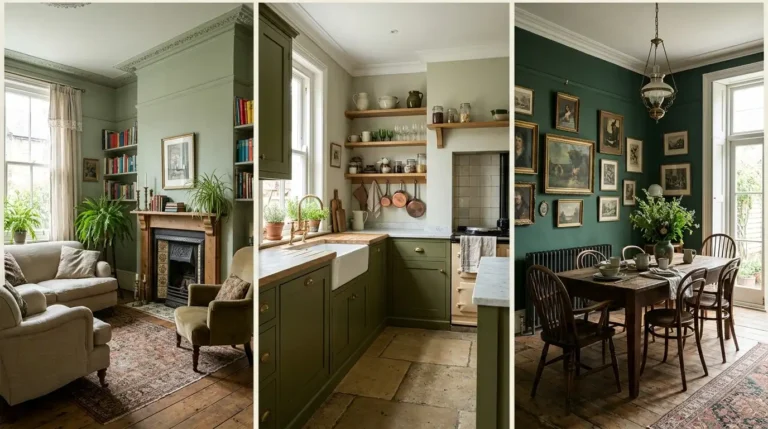
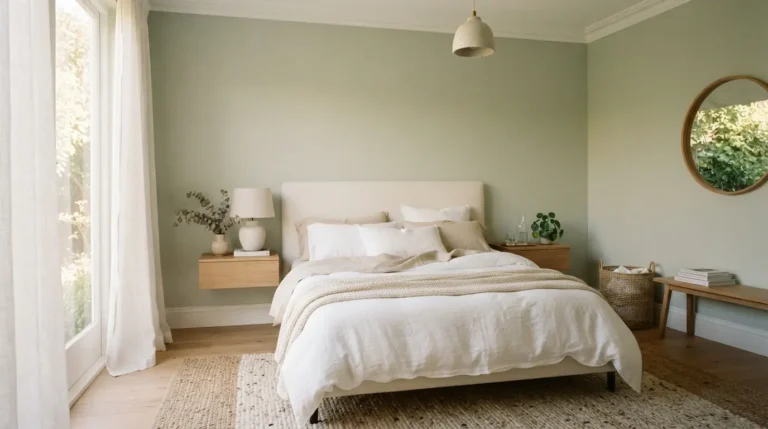
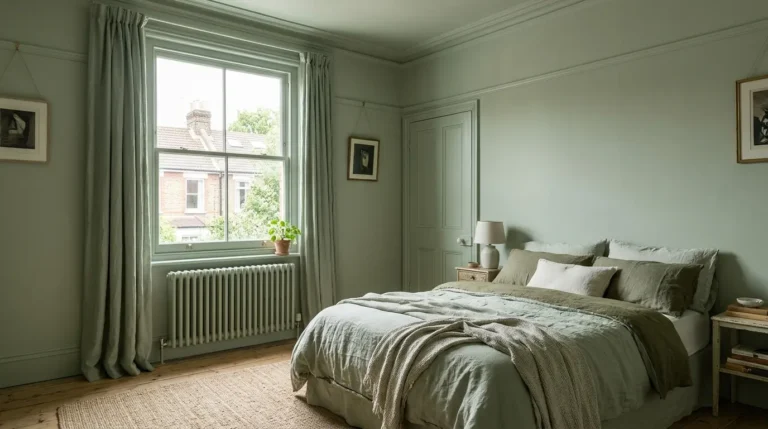
A soft sage green brings a quiet, natural feel that suits both period and contemporary homes. Choose a muted sage rather than a bright mint so the colour stays sophisticated. It works well with oak flooring and brass fittings. Use a durable eggshell finish on walls that receive bags and coats. In narrow spaces, keep the ceiling white to preserve the sense of height. Check the undertone against your existing timber; some sages can look blue under cool lighting. Sample carefully and view at morning and evening. Related green schemes are discussed in 8 sage green paint ideas for a calming and trendy interior.
4. Soft Blue-Grey for a Fresh Welcome
A light blue-grey feels clean and airy without the starkness of pure white. Look for a colour with a slight green or warm undertone so it does not read cold. It pairs nicely with white woodwork and a natural coir runner. In high-traffic hallways specify a scrubbable finish. If your hall has a glazed front door, the colour will shift through the day, so test a large sample. Avoid very cool blues in north-facing entrances. This approach links to broader blue advice in how to use blue paint in your home without it feeling cold.
5. Warm Stone for Timeless Appeal
A warm stone or putty colour creates a classic, understated entrance that never dates. It hides marks well and works with both dark and light flooring. Keep the sheen low so the surface looks soft. In staircases, continue the same colour up the walls for a continuous feel, but use a harder-wearing satin on the stringers. Measure clearances around the handrail so the colour does not make the stairs feel tighter. Always buy enough paint for the full job; warm neutrals show joins if coverage is patchy.
6. Soft Terracotta for Warmth
A muted terracotta or clay tone adds warmth and character, especially in older properties with wooden floors. Choose a subdued version rather than a bright orange so the hallway stays elegant. Pair with cream woodwork and simple brass hardware. Use eggshell for practicality. In small halls under 1 metre wide, limit the terracotta to one wall and keep the others in a lighter neutral. Test against your front door colour so the combination feels intentional. This pairs well with kitchen ideas if the hall leads straight into the cooking space.
7. Light Greige with Darker Lower Walls
Painting the lower third of the walls in a deeper greige and the upper section in a lighter tone creates a practical, traditional look that hides scuffs. Run the division at about 1 metre height or align it with a picture rail if you have one. Use the same colour family so the break feels deliberate. Both sections should be in eggshell or satin. This works particularly well in family homes where the lower walls take the most wear. Confirm the line is level all the way along before painting.
8. Soft Cream with Navy Doors
A warm cream on the walls with navy or deep green doors creates a smart, high-contrast entrance that feels welcoming. The light walls keep the space bright while the dark doors add definition. Ensure the cream has enough warmth so it does not look yellow next to the navy. Use satin on the doors for durability. In typical UK hallways this combination works with both modern and period properties. Check the exact navy against the cream samples under your own lighting before ordering full tins. Further navy schemes can be found in 10 navy blue paint ideas for a bold and sophisticated interior.
Conclusion
The right hallway paint colour balances light reflection, practicality, and the style of the rooms beyond. Measure your space, test samples under real lighting and next to existing finishes, and choose a durable sheen. Any of these eight ideas can create a great first impression when those practical checks are complete.
FAQs
What paint finish is best for a hallway?
Eggshell or satin. Both resist marks and wipe clean easily while looking soft. Matt shows every scuff in a high-traffic area.
Should hallway paint match the rest of the house?
It does not need to match exactly, but the undertones should relate so the transition feels calm. A warm greige hallway works with both warm and cool rooms.
How do I stop a hallway looking like a tunnel?
Use a slightly lighter ceiling, add a mirror, or break a long run with a feature wall or picture rail. Good lighting at different heights also helps.
Can I use the same colour on the stairs?
Yes. Continuing the wall colour up the staircase creates flow. Use a harder-wearing finish on the stringers and keep treads in a clear or contrasting hardwearing surface.
What is the most practical light colour for a hallway?
Warm greige or soft stone. Both hide dirt better than pure white while still reflecting light.
Do I need primer in a hallway?
On sound existing paint, one coat of primer or a mist coat is usually enough. Fresh plaster always needs a mist coat. Darker colours benefit from a tinted primer.