7 Window Dressing Ideas for Every Room in Your Home

Window dressing ideas that work across a UK home must balance style with practical constraints such as measuring accuracy, clearance for handles, and materials suited to each room’s light and moisture levels. These seven approaches cover living rooms, bedrooms, kitchens and more while avoiding common fitting errors.
Always measure three times and record the smallest width and height. Confirm reveal depth before choosing inside fit. Check that the chosen treatment clears radiators, switches and door swings. How to choose the right blind for your window
1. Layered Curtains with Sheers for Living Rooms
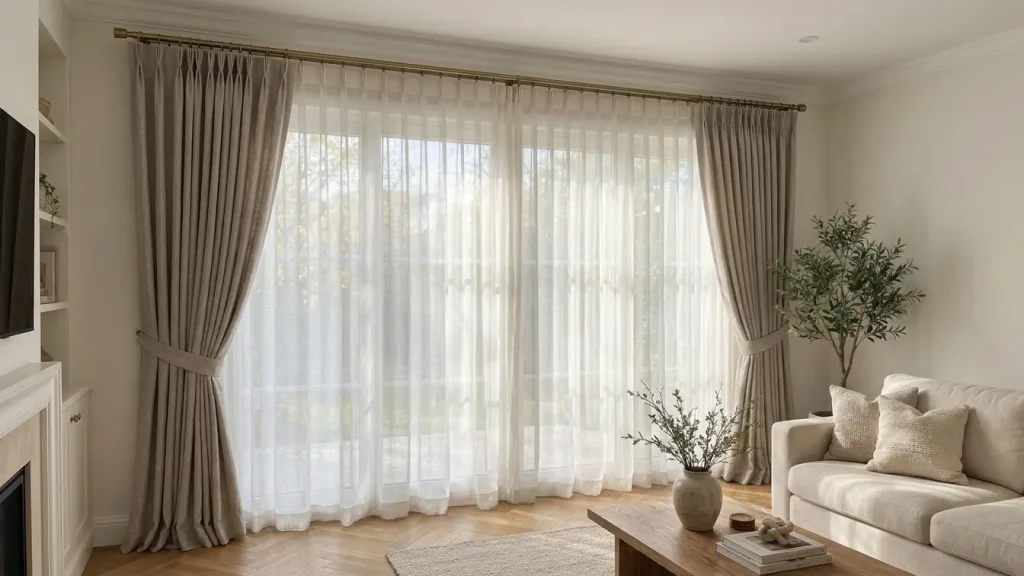
Pair full-length lined curtains with a sheer panel on a double track. The sheers diffuse daylight while the main curtains provide evening privacy and insulation. Fit the track 10-15 cm above the frame and extend it so the curtains stack clear of the window. In UK living rooms this combination works with both sash and casement windows. Avoid fabrics that fade quickly on south-facing elevations; request samples first.
Measure the drop to the floor or just above the skirting for a clean line. Lined curtains reduce draughts around older frames. Common mistake: ordering a drop that finishes mid-wall, which looks unfinished. How to choose the right curtains for any room
2. Blackout Roman Blinds in Bedrooms
Roman blinds with blackout lining fold neatly and block light effectively for sleep. Choose a fabric that suits the room style and confirm the headrail fits the recess depth (usually 50 mm minimum). Outside fit reduces edge light. In urban bedrooms facing street lights this is more practical than unlined curtains. Measure carefully around any window handles so the blind lowers fully.
Cordless or child-safe designs are preferable. The stacked height when raised should not obscure too much of the window during the day. Check the fabric sample under bedroom lighting before ordering.
3. Wipeable Roller Blinds for Kitchens
Roller blinds in moisture-resistant or PVC-coated fabric suit kitchens because they wipe clean and do not absorb grease. Fit inside the recess if depth allows, or outside to cover the frame. Measure the width at three points to account for any out-of-square frames common in UK homes. Avoid fabric that traps odours. Aluminium bottom bars add weight for a neat drop.
Confirm the blind clears cooker hoods or wall units. In high-steam areas, choose a fabric rated for humidity. This option keeps the window area practical without heavy drapery. 8 Venetian blind ideas for a sleek and practical window
4. Plantation Shutters in Bathrooms
Vinyl or composite plantation shutters resist steam and condensation better than wood in bathrooms. Fit them inside the reveal for a clean look, ensuring 3-5 mm operating clearance. Louvre widths of 63 mm or 89 mm allow light control. Measure the internal dimensions carefully as tiled walls can reduce the opening. Shutters provide privacy while still permitting ventilation when open.
They do not fade or stretch. Cost is higher, so verify the window is square. In wet rooms, confirm the material is fully waterproof. What are plantation shutters and are they worth the cost
5. High and Wide Curtains for Small Rooms
Mounting the pole or track higher and wider than the window makes a small room feel larger and lets in more light when open. Use floor-length curtains that just clear the floor. This works well in box rooms or compact living areas. Choose a lighter fabric so the volume does not overwhelm the space. Measure the extended width so the curtains stack completely off the glass.
In UK terraced homes with narrow windows this trick improves the sense of space. Avoid heavy interlined fabrics that reduce the effect. Check clearance above for ceiling roses or coving.
6. Cafe-Style Shutters for Privacy with Light
Cafe shutters cover only the lower half of the window, giving privacy while keeping the top open for light and views. They suit street-facing living rooms or kitchens. Measure the lower section carefully and ensure the top remains clear of any opening sashes. Materials should match the room’s moisture level. This option is less expensive than full-height shutters yet still structured.
Confirm the mid-rail height suits the window proportions. In period properties they can echo traditional designs. Check that furniture does not block the lower panels when closed.
7. Coordinated Treatments in Open-Plan Spaces
Use the same fabric family or shutter style across zones but adjust linings and opacity. A living area might have full curtains while the kitchen zone uses a matching roller blind. Measure each window independently because sizes often differ. This creates visual continuity without compromising function. In UK open-plan extensions this approach keeps the space feeling unified.
Plan stacking space so treatments do not clash at junctions. Request coordinated samples. Always re-check clearances after any layout changes. 7 Roman blind ideas for every room and every style
When implementing any of these ideas, re-check all measurements after the walls have been painted or tiled, as finishes can alter dimensions slightly. In rented properties, prioritise non-permanent fittings. For listed buildings, confirm that the chosen treatment does not require alterations to original frames. Order made-to-measure where standard sizes leave gaps that reduce privacy or insulation. Test child-safety features on any product with moving parts. These extra checks help the window dressing perform well over time in typical British homes.
Conclusion
These seven window dressing ideas provide practical options for every room while respecting UK measuring standards, material suitability and clearance requirements. Choose according to the room’s use, measure accurately, and confirm samples before ordering to achieve a finished result that works day to day.
FAQs
How high should I hang curtains to make a room look bigger?
Mount the pole 10-15 cm above the window frame and extend it beyond the sides so the curtains stack clear of the glass when open.
Are Roman blinds suitable for bathrooms?
Only if the fabric is moisture-resistant. Standard textiles can mould; vinyl or coated options, or shutters, are safer.
What is the minimum recess depth for a roller blind?
Most headrails need at least 50 mm. Measure the actual depth after any tiling or plastering.
Can cafe shutters be used on sash windows?
Yes, they sit in the lower sash area and leave the upper sash free. Measure the lower reveal carefully.
How do I coordinate window treatments in an open-plan kitchen-diner?
Use related fabrics or finishes but choose wipeable options for the kitchen zone and softer ones for the dining area.
Do I need to measure each window in a bay separately?
Yes. Bays are rarely uniform. Individual measurements prevent gaps or overlaps at the angles.
What fabric works best for high and wide curtains in a small room?
Lighter-weight linens or cottons keep the look airy. Avoid heavy interlining that adds bulk.