
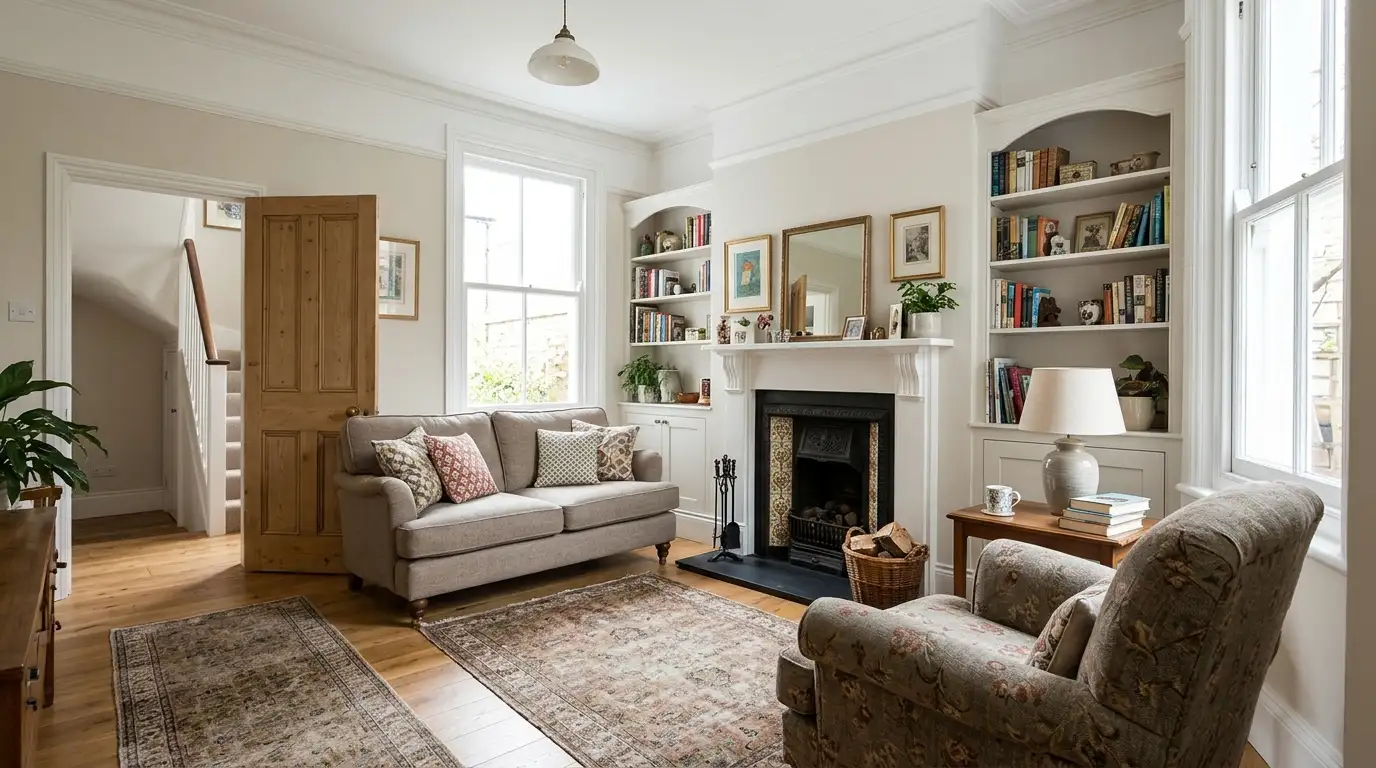
How to Place an Armchair in a Living Room for Best Effect

Placing an armchair well improves both comfort and the flow of a living room. In British homes the challenge is often limited space, awkward alcoves, or a fireplace that competes for attention. The right position lets people sit, talk, and watch television without blocking paths to doors or radiators. This guide covers practical steps, clearances, and common UK layout situations so the chair feels intentional rather than squeezed in. Taking time to test positions before you settle on one avoids the need to rearrange furniture later when the room feels cramped.
Measure the Room and Traffic Paths First
Start by marking the main routes through the room with tape or paper. Leave at least 700 mm of clear path past the chair to the nearest door. In open-plan spaces the path may run behind the seating. Note the position of radiators; chairs should not sit directly against them if the heat will damage the upholstery or make the seat uncomfortably warm. Measure the available floor area and compare it with the chair’s footprint plus 100 mm clearance on each side. In terraced houses the hallway often feeds directly into the living room, so the path from the door is especially important. Related layout advice is in how to arrange furniture in a living room. Sketch the room roughly and mark fixed points such as windows, the fireplace, and any structural columns before you decide on the chair position.
Position Relative to the Sofa and Focal Point
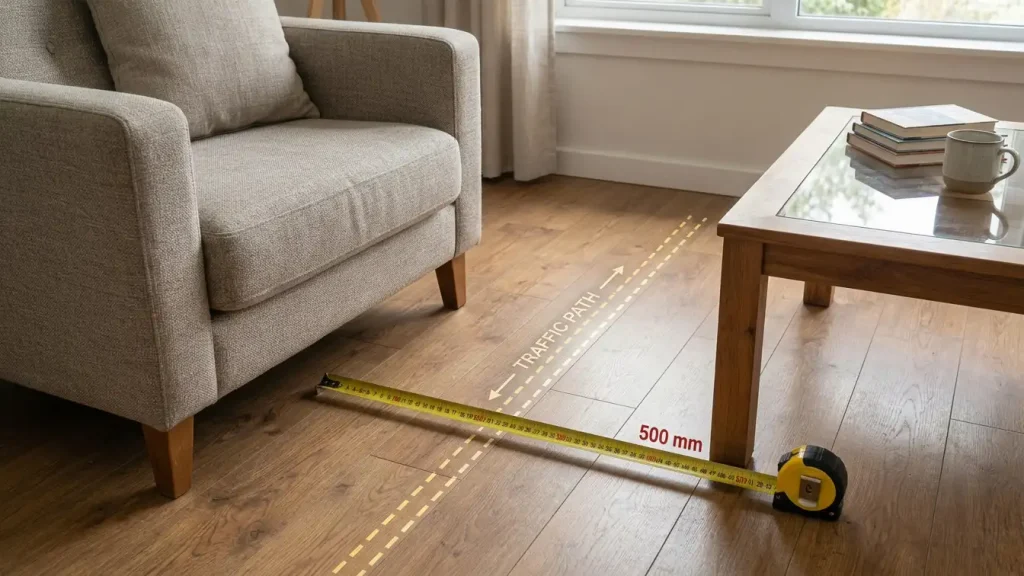
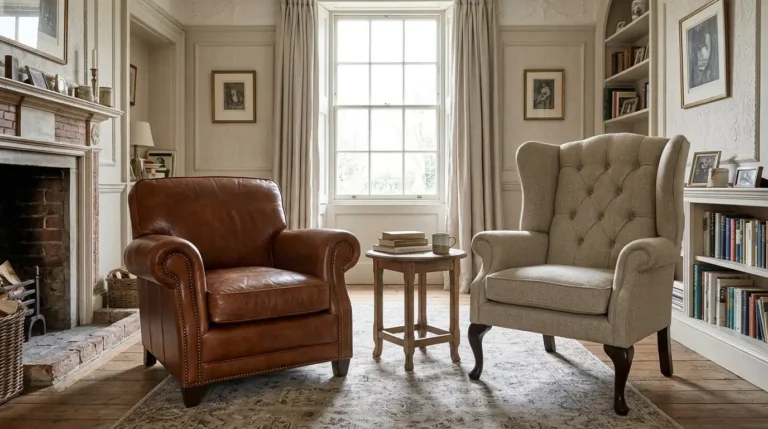
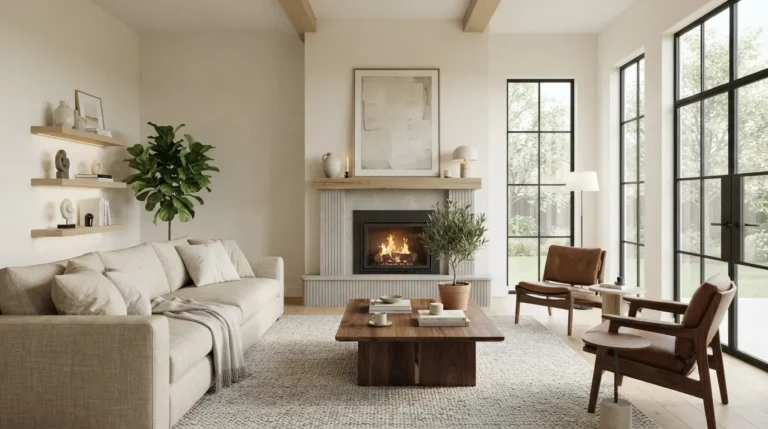
The classic placement is at an angle to the sofa so conversation is easy and the view of the television or fireplace remains clear. Aim for 450 to 600 mm between the front of the armchair and the coffee table. If the sofa is against a long wall, place the armchair at the end or opposite at a slight angle. In rooms with a chimney breast, the armchair often works well in the alcove or facing the fire. Check that the chair does not block the view from the main seating. In many UK homes the fireplace remains the natural focal point even if a television is present; balancing both keeps the room useful for different activities. Further seating ideas appear in 15 armchair ideas to complete your living room. Test the angle by sitting in the chair and checking whether you can see both the person on the sofa and the main feature without turning uncomfortably.
Handle Small Rooms and Awkward Corners
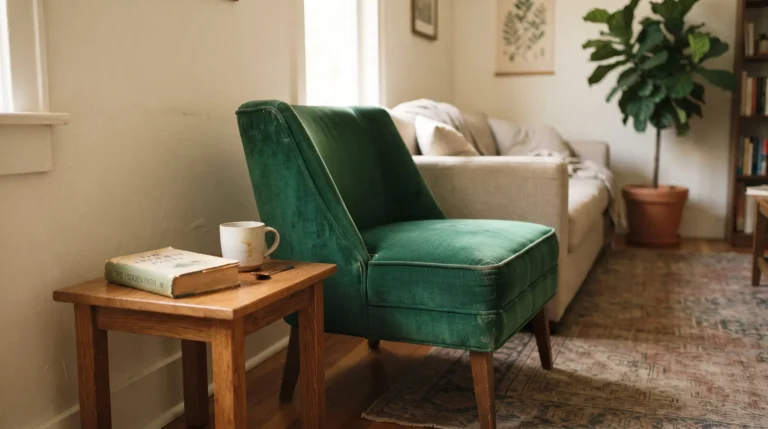
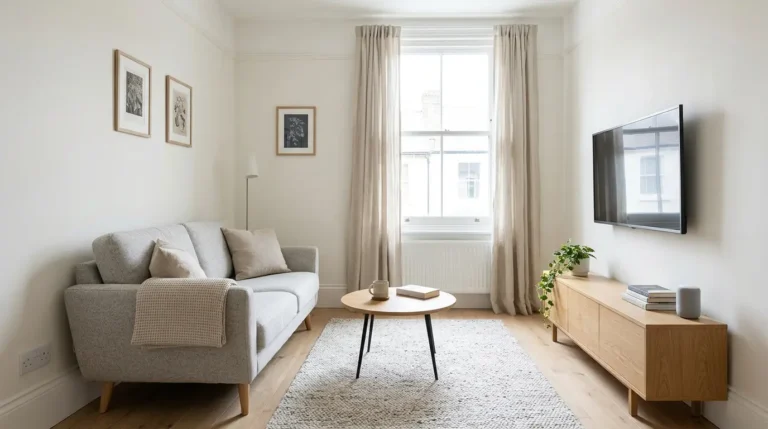
In small British living rooms a corner placement or a position beside a window often works best. Choose a compact barrel or mid-century style so the chair does not dominate. Leave 50 to 100 mm between the chair and the wall so it can be moved for cleaning. Avoid placing the chair so that the only way past is a narrow gap of less than 600 mm. If the room has a bay window, the chair can sit just inside the bay if the depth allows. In flats where the living room also serves as a dining space, keep the chair out of the main dining traffic route. Space-saving approaches are covered in 7 space saving ideas for a small living room. A swivel base can help in tight corners because you can turn the chair toward the conversation without moving the whole piece.
Consider Light, Views, and Daily Use
Place a reading armchair near a window but not so close that glare makes the seat unusable on bright days. In north-facing rooms a position that catches what light there is feels more welcoming. If the chair will be used for television, ensure the screen is roughly at eye level when seated and that the angle is not too extreme. Test the position by sitting in it before you finalise the spot. Add a side table within easy reach; typical height is 500 to 550 mm. Consider afternoon sun in south-facing rooms, which can fade fabrics if the chair sits in direct light for long periods. Lighting tips that complement placement are in how to layer lighting in a living room. A floor lamp beside the chair works well if the socket is nearby and the cable does not cross a walking path.
Check Clearances and Practical Details
Confirm the chair can be tilted or moved if needed for vacuuming or window cleaning. In rooms with underfloor heating avoid covering the entire heating zone if the chair has a solid base. For recliners leave the full extension space behind. Measure the distance to the nearest power socket if you plan a lamp. In period homes watch for uneven floors; a chair that rocks will need adjustable feet or a small rug underneath. Door swings must clear the chair by at least 100 mm when open. Check that the chair does not block access to a window for cleaning or to a radiator valve for adjustment. In homes with children or pets a position away from the main play path reduces the chance of the chair being climbed on or marked.
Conclusion
Placing an armchair successfully starts with clear paths and ends with a position that supports how you actually use the room. Measure traffic routes, respect radiator and door clearances, and angle the chair toward the main seating or focal point. In small or awkward UK layouts a compact style and careful corner placement keep the space usable. Test the spot before you commit, and the chair will feel like a natural part of the living room rather than an afterthought. Small adjustments in angle or distance often make the biggest difference to comfort.
FAQs
How far should an armchair be from the sofa?
Leave 450 to 600 mm between the front of the armchair and the coffee table or sofa edge. This distance allows comfortable conversation without people feeling too close or having to raise their voices.
Can I place an armchair in front of a radiator?
It is better to leave a gap of at least 100 mm so heat can circulate and the upholstery does not dry out or fade. Direct contact can also make the seat uncomfortably warm.
What is the minimum path width past an armchair?
Aim for at least 700 mm of clear walking space past the chair. Narrower gaps feel cramped and make it harder to carry items through the room.
Should the armchair face the television directly?
A slight angle is usually more comfortable for longer viewing and still allows conversation. Direct facing works if the chair is the secondary seat and the sofa is the main viewing position.
How do I place an armchair in a small living room?
Use a corner or window position and choose a compact style. Keep clear paths of at least 600 to 700 mm and avoid blocking the main route to the door.
Do I need a rug under an armchair?
A small rug or chair pad protects hard floors and can define the seating area. Ensure it is large enough that the front legs rest on it so the chair does not rock when you sit.
Can an armchair sit in a bay window?
Yes if the bay is deep enough and the chair does not block the window or create a trip hazard on the step. Measure the depth carefully and allow space to open the windows.
One Comment