How to Choose the Right Grey Paint for Your Space

Choosing the right grey paint for your space starts with the light the room receives and the undertones already present in your flooring, furniture and fixed finishes. A grey that looks perfect on a small chip can shift dramatically once it covers a wall in a typical UK home. The practical route is to shortlist three warm greiges, paint large samples, and live with them for a week before ordering full tins. This approach avoids the common outcome of a room that feels colder or pinker than expected once the paint is dry.
Start With the Light in the Room
Note which way the main windows face. North-facing rooms get cooler, more consistent light and usually need a warmer greige to stop the walls looking flat. South-facing rooms can handle a slightly cooler grey because the natural light already carries warmth. East and west rooms change through the day, so test samples at different times. Artificial lighting is equally important. Warm bulbs will make any grey look softer; cooler LEDs will emphasise blue or green undertones. Match your test to the bulbs you actually use in the evenings.
Understand Undertones Before You Buy
Every grey has an undertone, even if the name suggests otherwise. Pink or red undertones warm the colour and can look slightly mauve next to cool stone. Green or blue undertones stay quieter but can feel cold in north light. Hold the sample next to a pure white and next to your floor. How to choose the right Farrow and Ball colour for your home covers a similar testing process for other colours. The undertone that disappears on a small pot often becomes obvious on a large wall.
Test Large Samples Properly
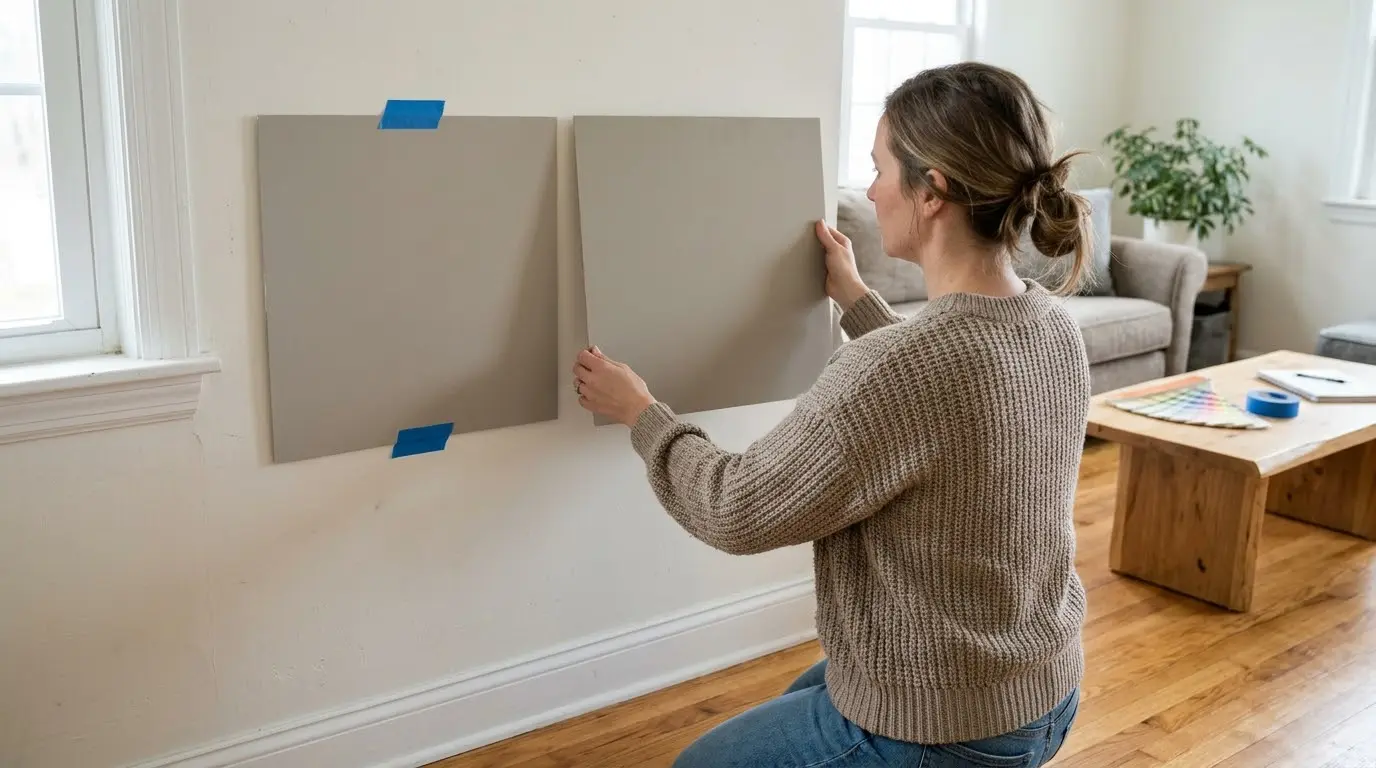
Order sample pots and paint boards at least A2 size or sections of the actual wall. Leave the samples in place for five to seven days. View them in morning light, midday light and under your evening lamps. Move them around the room if possible so you see how the colour changes near the window and in the darker corners. Compare the samples against your sofa, curtains and flooring. A greige that looks neutral next to cream linen can look pink next to grey carpet. This step takes time but prevents expensive mistakes.
Consider the Room’s Use and Traffic
A living room can take a softer matt finish. A hallway or kitchen needs something more wipeable. Most designers still use a quality matt emulsion for walls because it hides imperfections and looks less shiny under artificial light. For woodwork, eggshell is the usual choice. In high-traffic areas, check the scrub rating on the tin. Some modern matt paints now offer good durability without the sheen of eggshell. Darker greys show marks more clearly than lighter ones, so factor in how often the walls will be touched or bumped.
Calculate How Much Paint You Need
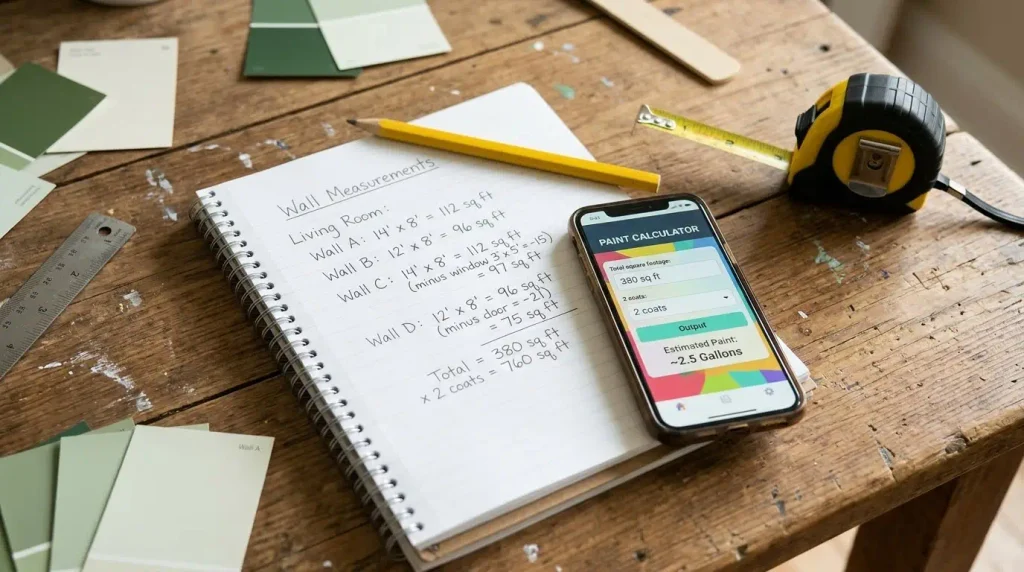
Measure the wall area carefully, subtracting windows and doors. Most emulsions cover 10 to 12 square metres per litre per coat. A standard room needs two coats. Add 10 percent extra so you have the same batch for future touch-ups. Buy all the paint at once rather than topping up later, because even the same colour from a different batch can vary slightly. Check the drying time; most need two to four hours between coats in normal conditions. Store the leftover tins correctly with the lids sealed so the paint remains usable.
Common Mistakes When Choosing Grey
Choosing from a small chip under shop lighting is the most frequent error. The colour almost always looks different at home. Another mistake is ignoring the floor. A warm greige next to yellow oak can look beige; next to cool grey tiles it can look pink. Skipping the large sample and ordering full tins based on a pot is costly. Matching the grey too closely to the ceiling white removes definition and makes the room feel unfinished. Finally, some people choose a very cool grey because it looked sophisticated online, then discover it feels cold and flat in their actual light.
How to Live With the Colour Once Painted
Once the walls are painted, give the colour a few days to settle under normal use. Greys can appear slightly different once the room is furnished and the lighting is used every evening. If the result is close but not perfect, lighter or darker trim, or a change of bulb temperature, can shift the balance without repainting. Keep a note of the exact colour name, brand and batch number so future touch-ups match. A well-tested grey becomes the quiet base that makes furniture, artwork and stronger accent colours look intentional rather than accidental.
How to Adjust if the Colour Feels Wrong After Painting
If the finished walls look slightly cooler or warmer than expected, small changes can help before you repaint. Switching to warmer bulbs softens a greige that feels a little flat. Adding more natural wood or brass warms the scheme further. A lighter ceiling paint increases the sense of space if the walls feel heavy. If the undertone is noticeably pink or green, the only reliable fix is to repaint with a different greige. Keep the sample boards so you can compare the finished result against what you tested. Most people who test properly rarely need to repaint, but having the option of a small adjustment in lighting or accessories is useful.
Working With Existing Fixed Elements
Take the colour of your kitchen worktop, bathroom tiles or fireplace into account before choosing the grey. A greige with a pink undertone can look mauve next to cool grey stone. A green undertone can look muddy next to warm oak. Bring a sample of the fixed material to the paint shop if possible, or photograph it under the same light as your sample boards. Designers often adjust the greige by half a step lighter or darker so it sits cleanly beside these permanent elements rather than fighting them. This step is especially important in open-plan spaces where the same grey has to work next to both living room flooring and kitchen surfaces.
The right grey paint for your space is the one that works with your light, your floors and the way you actually use the room. Shortlist warm greiges, test large samples for a week under real conditions, and order enough paint from the same batch. Check undertones carefully and choose a finish that suits the traffic. Done this way, grey becomes a reliable, calm foundation rather than a colour you regret once the walls are dry.
FAQs
How long should I test a grey paint sample?
Leave large samples on the wall for at least five to seven days so you see the colour in different weather and at different times of day.
Does a grey paint look different under artificial light?
Yes. Warm bulbs soften greiges further. Cooler LEDs can make blue or green undertones more obvious. Test with the bulbs you actually use.
Can I use the same grey in every room?
You can, but adjust the lightness for the amount of natural light each room receives. A lighter greige works better in north rooms; a mid-tone can work in south rooms.