7 TV Unit Ideas to Transform Your Living Room

A well-chosen TV unit can turn the living room into a more organised and inviting space. In British homes the television often sits on the main wall, so the unit needs to handle cables, remote controls, and daily use while still looking intentional. The right size, material, and storage style make the difference between a cluttered corner and a calm feature. Measure your wall, check door clearances, and think about how you actually watch television before you order. These seven practical ideas cover common UK living room sizes and help you avoid the usual mistakes.
1. Low Profile Media Unit for Open Sightlines
A low media unit keeps the room feeling open, especially in smaller UK terraces and flats. Aim for a height of 400 to 500 mm so it sits below the average seated eye line. Width should match or sit slightly wider than the television; leave at least 50 mm either side for air flow. Oak or painted MDF versions work well with British heating. Check that the unit has cable management holes at the back and that it can take the weight of a 55-inch screen. Pair it with a floating shelf above if you need extra display space. For more layout guidance see how to arrange furniture in a living room.
2. Wall-Mounted Floating TV Unit
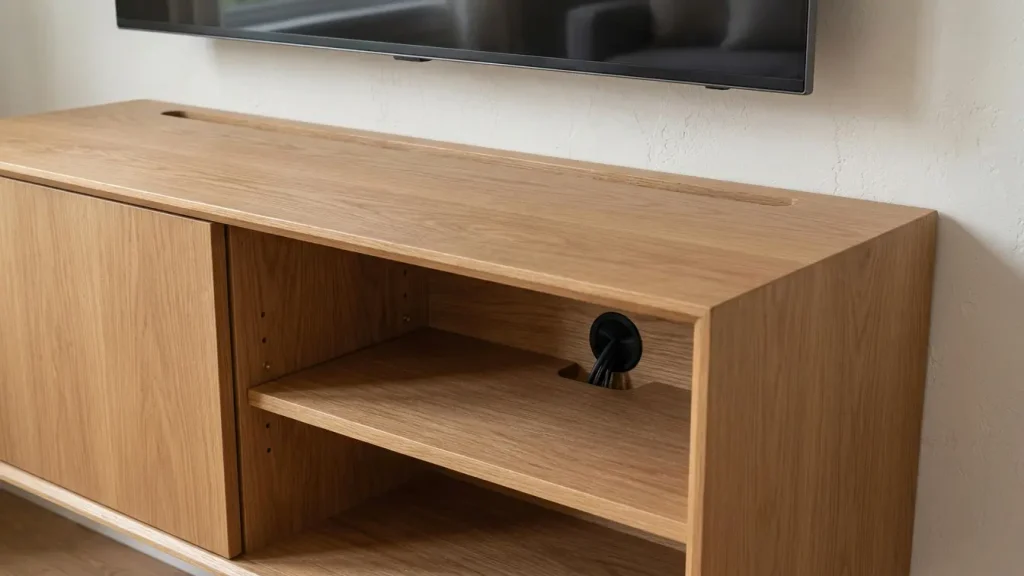
Floating units free up floor space and make cleaning easier under radiators or in tight alcoves. Mount them so the bottom edge is 300 to 400 mm above the floor; this keeps them clear of most skirting and allows a slim soundbar. Use proper wall anchors rated for the combined weight of the unit and television. In older British properties check for solid walls versus stud. Leave ventilation gaps behind the screen. Cable channels can run inside the unit or down to a low socket. This style suits modern and mid-century rooms. Read more about media wall options at how to create a media wall in your living room.
3. Oak TV Unit with Open Shelving
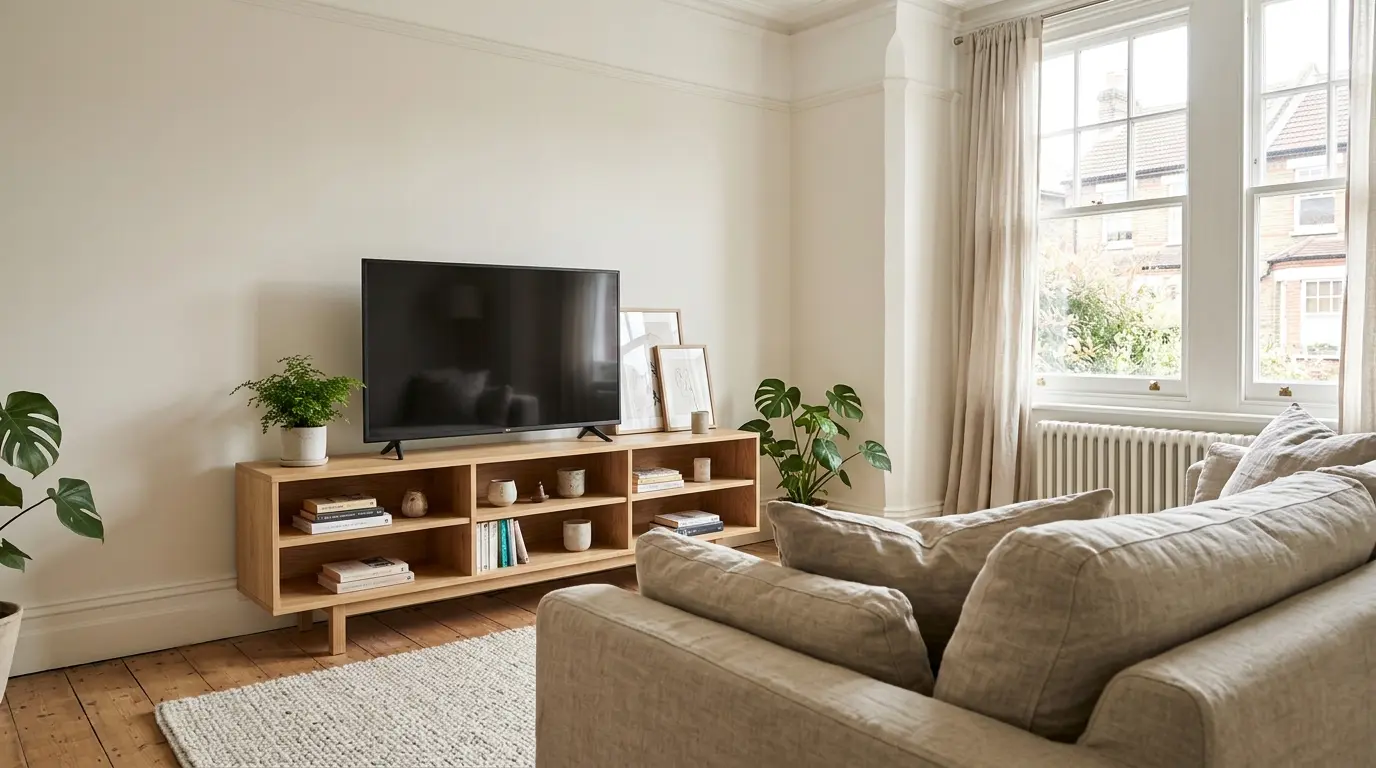
Solid oak or oak veneer adds warmth that works in both period and contemporary British living rooms. Open shelves let you store books, plants, and baskets while closed cupboards hide routers and consoles. Typical depths are 350 to 450 mm; deeper units can overwhelm a small room. Check that the grain runs consistently and that the finish is suitable for high-traffic areas. Pair with a matching coffee table for cohesion. Measure the distance to the nearest doorway so delivery and placement stay straightforward. Further oak ideas are available in 8 oak TV unit ideas for a warm and natural look.
4. Built-In Alcove TV Cabinet
Many UK Victorian and Edwardian houses have chimney breast alcoves that are ideal for built-in units. A custom or modular cabinet can fill the space from skirting to picture rail or stop at chair height. Include ventilation grilles and cable access. Standard alcove widths are often 800 to 1200 mm; measure twice because walls are rarely square. Painted MDF is cost-effective and can be colour-matched to the walls. This approach maximises storage without protruding into the room. See related feature ideas at 12 media wall ideas for a stunning living room feature.
5. High-Gloss or Matte Black Statement Unit
A black finish creates a strong focal point and hides minor dust better than white in busy family rooms. High-gloss reflects light in north-facing British living rooms; matte is more forgiving. Widths from 1400 to 1800 mm suit most sofas. Confirm the unit has adjustable shelves and that the doors or drawers close softly. Check clearance to the coffee table; 450 mm is a comfortable minimum for leg room. This style pairs well with grey sofas and metallic accents. Guidance on choosing the right unit is in how to choose the right TV unit for your living room.
6. Compact Corner TV Unit
Corner units solve awkward layouts in small British living rooms where the main wall is taken by a window or fireplace. Look for models with a diagonal front or dual open sides so the screen can be angled. Depths of 400 to 500 mm keep the unit from dominating. Ensure the corner has a nearby double socket and that cables can be routed neatly. Measure both walls carefully; many corners are not true 90 degrees. This works with L-shaped seating arrangements. Related small-space tips appear in 7 space saving ideas for a small living room.
7. Storage-Heavy Sideboard Style TV Unit
A sideboard-style unit with multiple drawers and cupboards hides everything from games consoles to board games. Heights around 700 to 800 mm give useful storage without blocking the view of the screen when seated. Choose soft-close mechanisms for quieter family use. In UK homes with solid floors, check the unit is level or can be adjusted. Leave space for a soundbar on top or inside a dedicated compartment. This style doubles as a display surface for lamps and plants. Broader furniture ideas are covered in 15 living room furniture ideas for every budget.
Conclusion
Choosing a TV unit that fits your wall, storage needs, and daily habits transforms the living room more effectively than swapping cushions alone. Measure carefully, confirm cable access and ventilation, and select materials that suit your light levels and cleaning routine. Whether you opt for a floating unit, an oak piece, or a built-in alcove cabinet, the right choice keeps the space calm and functional. Start with the dimensions of your room and the size of your television, then match the style to the rest of the furniture for a cohesive result.
FAQs
What size TV unit do I need for a 55-inch television?
Most 55-inch screens need a unit at least 1200 mm wide. Allow 50 to 100 mm extra on each side for stability and ventilation. Height should keep the centre of the screen roughly at eye level when seated, usually 400 to 500 mm for the top of a low unit.
Do floating TV units work in older British houses?
Yes, if the wall is solid brick or properly reinforced stud. Use heavy-duty fixings rated above the combined weight of the unit and television. Check for pipes or wiring before drilling. In plasterboard-only walls a freestanding unit is safer.
How much clearance should I leave in front of a TV unit?
Leave at least 450 mm between the front of the unit and the coffee table or seating. This gives comfortable leg room and space to open drawers or doors without obstruction.
What materials last best in a family living room?
Oak, walnut, and high-quality painted MDF with a durable lacquer hold up well. Avoid soft veneers that mark easily. Matte finishes hide fingerprints better than high-gloss in busy homes.
Can I put a soundbar on top of any TV unit?
Most units can take a soundbar if the top is flat and strong enough. Check the weight limit. Some units include a recessed area or ventilation so the soundbar does not block the screen. Measure the depth so the bar does not overhang awkwardly.
How do I hide cables neatly with a TV unit?
Choose a unit with rear cable access holes and internal channels. Use cable ties or clips inside the unit. Route power to a nearby double socket and consider a slim trunking kit along the skirting if the socket is not directly behind.