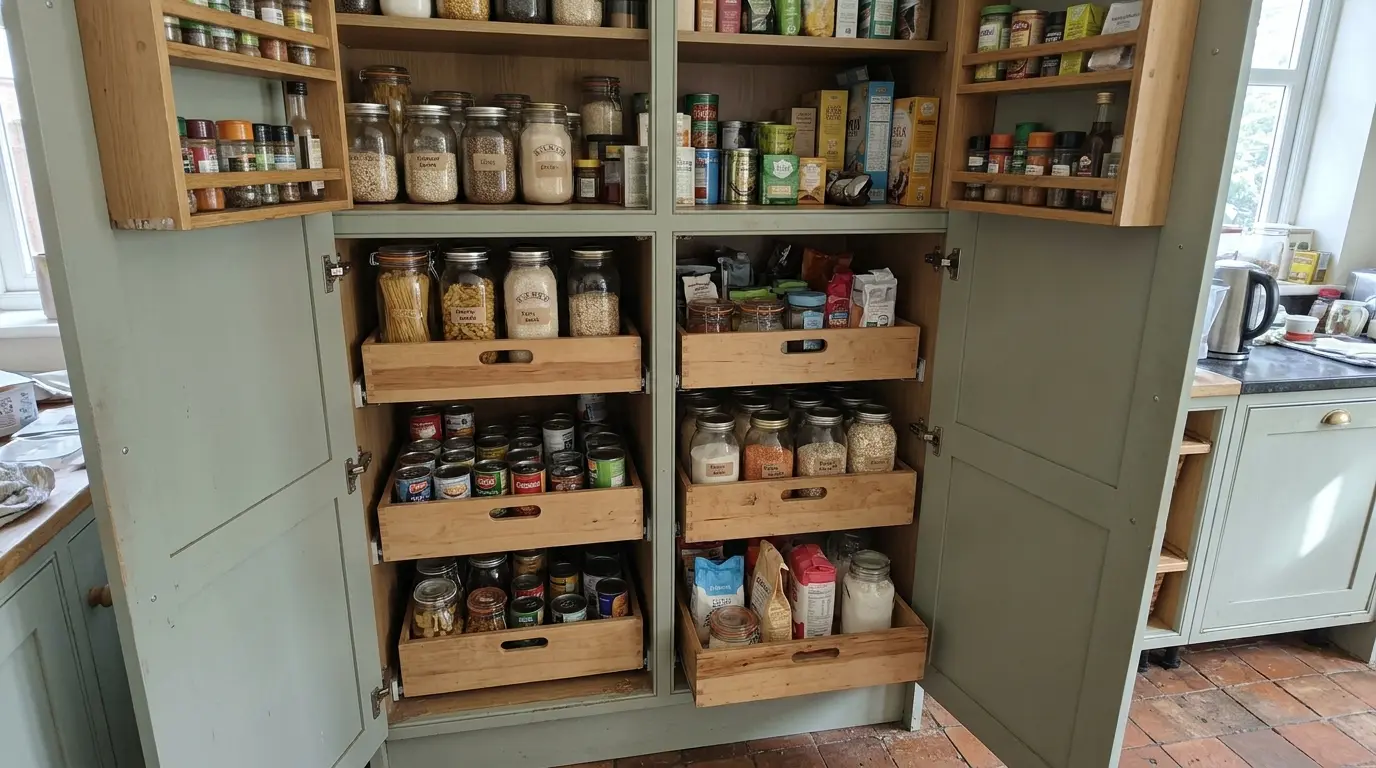
7 Pantry Ideas to Create Your Dream Kitchen Storage Space

A pantry does not need a separate room. A tall cupboard, an open shelf run, or a converted alcove can hold the dry goods and keep the worktops clear. The right idea depends on the space you have and how often you restock. kitchen storage ideas cover other storage options in the same kitchen.
The seven ideas below work in a typical UK kitchen. Each one notes the size, the fittings, and the mistake that usually ruins it. create a pantry without a dedicated room if you want the step-by-step version.
1. A tall pull-out pantry cupboard
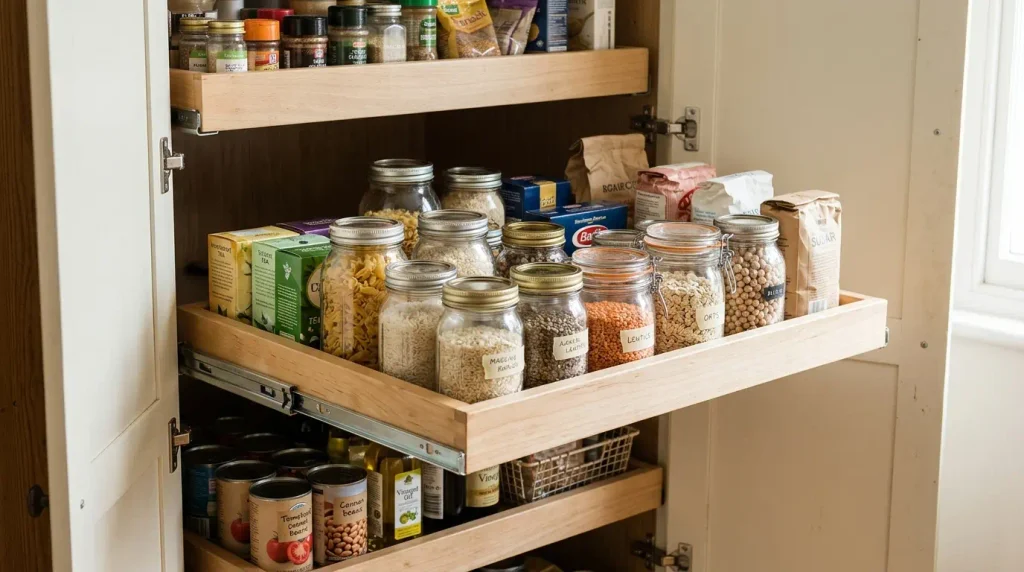
A full-height cupboard with pull-out shelves brings the back of the shelf to the front. It suits a narrow gap of 300 to 450 mm. Soft-close runners stop the rack slamming. Keep heavy tins at waist height. kitchen cabinet ideas show units that can take this role.
Check the weight rating of the runners. A full rack of tins is heavier than it looks. A cheap runner fails within a year.
2. Open shelves in an alcove
An alcove next to a chimney breast can take shelves from floor to ceiling. Use adjustable brackets so you can change the spacing. Leave it open only if you will keep it tidy. An open pantry shows every packet. kitchen open shelf styling if you want the open look to stay deliberate.
Paint the back wall a soft colour so the shelves do not disappear. A dark back wall makes the contents hard to see.
3. A walk-in cupboard in a larger kitchen
If you have a spare room or a wide alcove, a walk-in cupboard with shelves on three walls holds more than any tall unit. It needs a door and a light. Do not use it for fresh produce unless it has ventilation. plan the perfect kitchen layout if the space is part of a redesign.
Leave a clear path of at least 600 mm so you can turn around. A tight walk-in is hard to use.
4. A pantry drawer bank
Deep drawers in a base unit hold packets and boxes better than a cupboard door. You can see everything at once. Use them for everyday dry goods and keep the tall cupboard for jars. organise kitchen cabinets if the drawers are part of a wider system.
Soft-close and full-extension runners make the drawers usable. A drawer that only opens halfway wastes the back.
5. A corner pantry carousel
A corner unit with a carousel or a LeMans pull-out uses the dead corner. It is slower to use than a straight pull-out but it recovers space that would otherwise be lost. Check the door swing. L-shaped kitchen ideas if the corner is the main problem.
Do not store everyday items in the far corner. You will not use them. Keep daily goods on the front of the carousel.
6. A pantry wall of shallow shelves
A run of shallow shelves, 200 to 250 mm deep, on a clear wall holds tins and packets without sticking out into the room. It suits a galley kitchen. Fit a door or a roller shutter if you want it hidden. modern kitchen ideas sometimes use this for a clean line.
Keep the shelves adjustable. Fixed spacing locks you into one set of jars.
7. A butler’s pantry between kitchen and dining
A short run of units between the kitchen and the dining room can hold serving pieces, extra crockery, and a small sink. It keeps the main kitchen clear when you entertain. It needs about 1.2 m of wall. kitchen seating ideas if the dining side is part of the same room.
Add a worktop and a small sink if the space allows. It becomes a useful prep zone as well as storage.
Check the lighting in every option. A dark pantry is not used. An LED strip on a door switch or a small light inside the cupboard makes the shelves practical. Wire it before the units are fitted if you can.
Leave empty space. A pantry that is full to the edge is hard to use and hard to clean. Aim for about 70 percent full so you can see and reach everything. Restock before it is empty rather than packing it tight.
Match the fittings to the unit. Soft-close, full-extension runners and adjustable shelves cost less than a second cupboard and make the first one usable. A plain door with fixed shelves wastes the space behind it.
Think about who uses the kitchen. If more than one person cooks, label the shelves or the outside of the door. A simple system stops people opening every cupboard looking for the same packet.
Ventilation matters if you store onions, potatoes, or bread. A fully sealed cupboard gets damp. A small vent at the top or a door that is not airtight helps. Do not store fresh produce in a closed unit with no air movement.
Measure the finished gap. A unit ordered to the bare wall size will not fit once the floor is down and the side panels are on. Check the size after the floor is finished and order to that measurement.
Keep everyday items at waist height in every option. High shelves are for items you use once a month. Low shelves are for heavy tins. This single rule makes any pantry more usable.
Which pantry to pick
For most UK kitchens, a tall pull-out cupboard or a set of deep drawers is the practical start. Use an alcove if you have one. Keep everyday items at waist height and leave some empty space so the shelves stay usable. kitchen renovation ideas if the pantry is part of a larger update.
Measure the gap after the floor is finished and check the door swing. Order the fittings with the unit so the pull-outs fit on the day.
FAQs
What is the best pantry for a small kitchen?
A tall pull-out cupboard or a set of deep drawers. Both use the height or the depth without needing a separate room.
How deep should pantry shelves be?
200 to 350 mm is enough for most packets and jars. Deeper shelves need pull-outs or the back is wasted.
Should a pantry be open or closed?
Closed is easier to keep tidy in a busy kitchen. Open shelves work if you will keep them strict and the items look good.
Can I add a pantry later?
Yes. A freestanding tall cupboard or a set of shelves in an alcove can be added without a full kitchen refit.