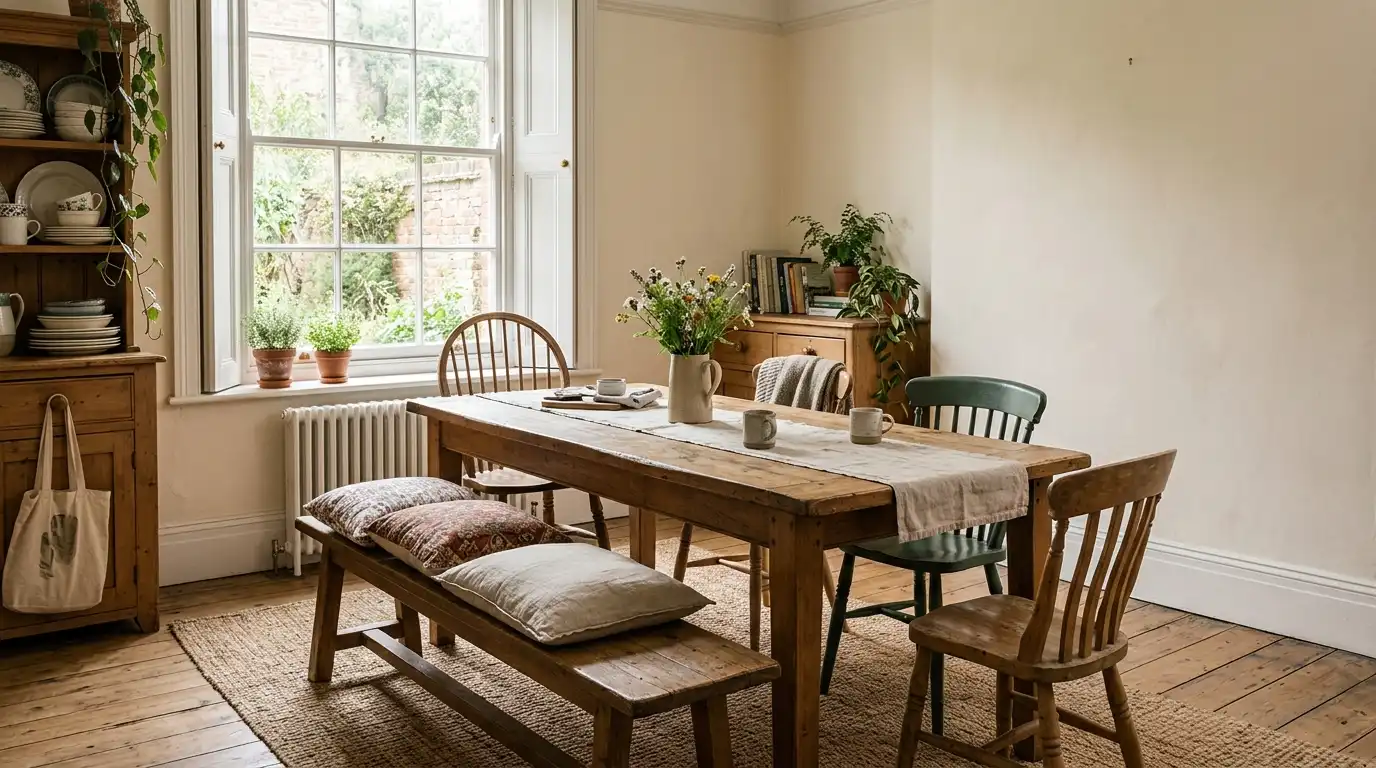
How to Achieve a Farmhouse Dining Room Look

A farmhouse dining room looks warm and lived-in rather than staged. The look relies on solid wood, natural textures and a palette of warm neutrals. In UK homes this often means working with existing floorboards, chimney breasts or lower ceilings, so the choices of table size, seating and finishes need to suit the actual room as well as the style. Many Victorian and Edwardian houses have rooms of 3m by 3.5m or smaller, so proportions matter.
Start with the table. A substantial wooden table becomes the centre of the room. Many people first look at broader dining room ideas then narrow the materials and colours.
Choose a solid wood table
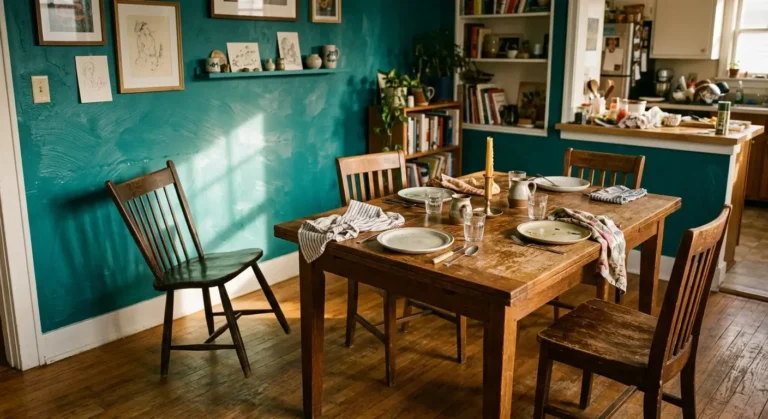
A farmhouse table is usually oak or a similar hardwood with visible grain and some character. Lengths of 160cm to 200cm suit most family dining rooms and seat six to eight people with 60cm to 70cm of edge per person. The top should be thick enough to feel solid, often 3cm or more. Reclaimed or distressed finishes add the aged look without waiting years for wear.
Check the leg design before you order. Trestle or chunky pedestal bases leave more room for chairs and feet than four corner legs on a long table. Measure the room with chairs out: you need 90cm clear around the table for comfortable movement.
Select seating that mixes comfort and style
Farmhouse dining often mixes chairs and a bench. A bench along one long side saves space and feels informal. Wooden chairs with woven or rush seats add texture. If you prefer upholstery, choose linen or cotton covers that can be washed. Seat height should leave 25cm to 30cm between the seat and the underside of the table.
Look at types of dining chairs to see which frames suit a wooden table without looking too modern or too delicate.
Use warm neutral colours on walls and woodwork
Walls in soft cream, warm white or pale greige keep the room light. Avoid pure brilliant white if the room is north-facing; it can look cold. Woodwork can be painted the same colour as the walls or a slightly deeper tone. If you have original beams, leave them natural or limewash them rather than painting them dark.
Test paint samples on the wall for a week. UK daylight changes through the year, so a colour that looks warm in summer can read grey in winter.
Add texture with flooring and textiles
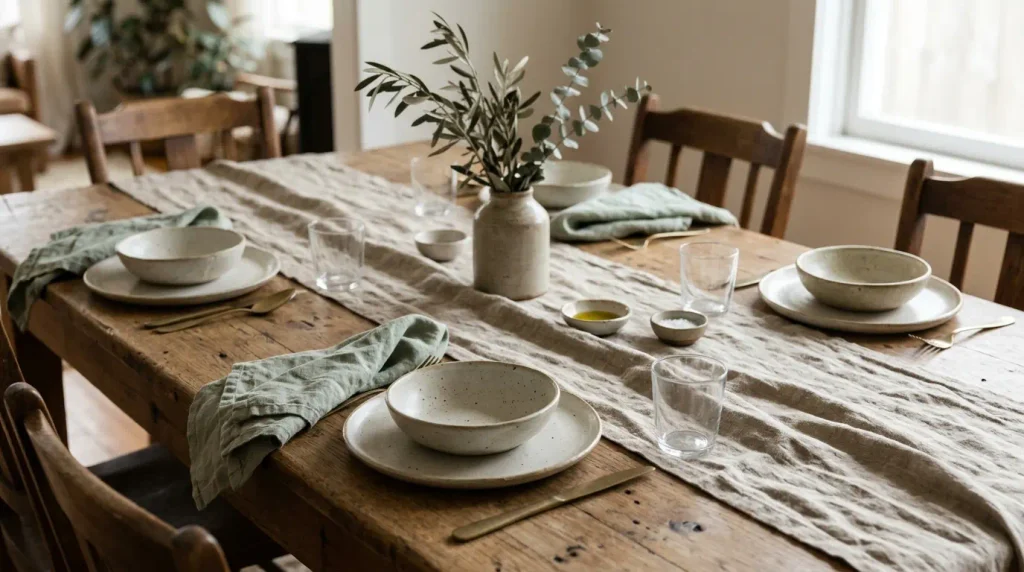
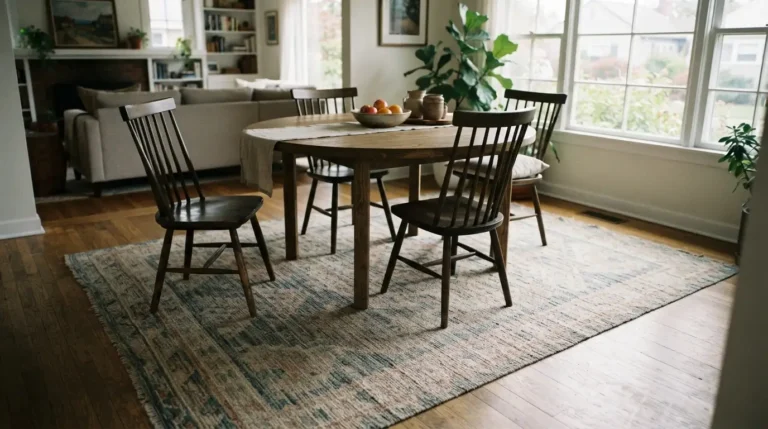
Wood floors or wood-effect flooring ground the look. A natural fibre rug under the table defines the dining area and softens the sound. Linen table runners, cotton napkins and a wool throw on a bench add layers without clutter. In an open-plan kitchen-diner the rug also zones the space.
Choose a rug that extends at least 60cm beyond the table edges so chairs stay on the rug when pulled out. Measure carefully; a rug that is too small looks lost.
Include practical storage
A wooden or painted sideboard stores everyday plates and linens so the table stays clear between meals. Height around 75cm to 85cm works with the table. Open shelves or a dresser display ceramics and add the collected feel. Keep surfaces usable rather than fully styled.
In smaller rooms limit the storage to one main piece so the space does not feel crowded. Measure door swings against the table clearance.
Lighting that feels warm
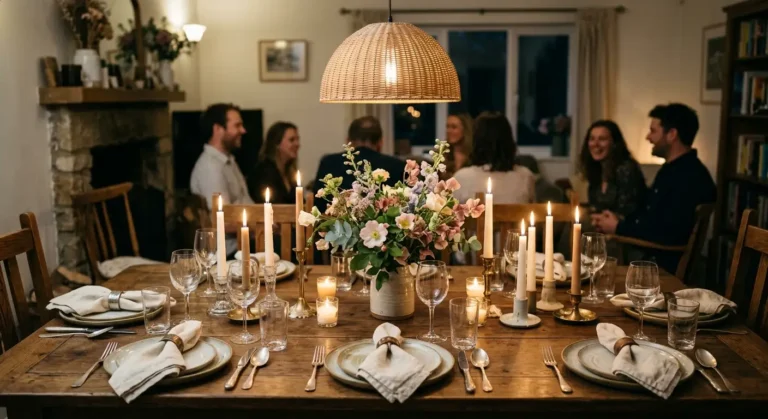
A pendant or chandelier over the table centres the room. Hang it 75cm to 90cm above the table top so it lights the surface without blocking views. Warm bulbs (2700K) keep the light soft. Wall lights or a table lamp on the sideboard add layers for evenings.
Check the ceiling height before you choose a large fixture. In rooms under 2.4m a slim pendant or a flush fitting works better than a big chandelier.
Plan the layout around the table
Place the table so the long side faces the main light source or the entrance. In rooms with a chimney breast, position the table so the sideboard or dresser can sit in the alcove. Leave 90cm to 110cm between the table edge and any wall or furniture used for seating. If one side is against a wall, reduce that side’s clearance to 60cm for walking only.
Sketch the room on paper with the table and chairs drawn at 1:50 scale. Mark door swings and the path from the kitchen. This prevents ordering a table that blocks the route when everyone is seated.
Materials that age well
Solid oak, ash or elm tables develop character with use. Avoid high-gloss finishes that show every mark. Oil or hardwax oil finishes are easier to refresh than lacquer. For seating, solid wood frames with replaceable seats last longer than fully upholstered chairs in a busy family room. Check the joinery: mortise and tenon or proper dowels hold better than simple screws.
In homes with underfloor heating, solid wood needs a suitable finish and acclimatisation period of at least 48 hours in the room before assembly.
Accessories that support daily use
Keep the table centre simple: a ceramic jug, a low vase of greenery or a wooden board. These can be moved quickly when serving. A tray on the sideboard holds drinks or condiments so they are ready without cluttering the table. Baskets under the sideboard or on open shelves store napkins and placemats.
Avoid permanent centrepieces that leave no room for serving dishes. In UK homes where the dining room is used for homework or working from home as well as meals, flexible surfaces matter.
What to check before ordering
Confirm the table length and width against your measured clearances. Ask for the exact seat height and the thickness of the top so you know the knee clearance. Check delivery: many solid wood tables arrive in sections or need a large vehicle. Allow time for the wood to settle in your room’s humidity before you oil or use it heavily. Compare the finish samples under your own lighting.
Common mistakes to avoid
Buying a table that is too large for the room is the most frequent problem. Always measure with chairs out. Over-matching every piece so the room looks like a catalogue is another; mix finishes slightly. Dark paint on all walls in a small north-facing room can make the space feel smaller. Skipping the rug leaves the table floating.
Conclusion
A farmhouse dining room works when the table is the right size, the materials are natural and the colours stay warm and calm. Measure the room properly, choose a solid wood table with suitable seating, and add texture through flooring, textiles and storage. The result feels practical for everyday meals and ready for larger gatherings.
FAQs
What size table works for a farmhouse dining room?
A table 160cm to 200cm long usually seats six to eight people comfortably in a typical UK dining room, provided you leave 90cm clear around it.
Do I need a bench?
A bench is optional but useful on one side. It saves space and adds the informal farmhouse feel without forcing every seat to match.
What colours suit a farmhouse dining room?
Warm whites, creams and soft greiges work best. Avoid cool greys or pure white in rooms with limited light.