12 Green Bedroom Ideas from Sage to Forest Green

Green bedroom ideas work across a genuinely wide spectrum, from a barely-there sage that reads almost as a neutral to a confidently deep forest green that wraps a room in real enclosure, and the right shade depends entirely on how you want the space to feel. The 12 ideas below cover that full range, along with the pairing and technique details that decide whether a green bedroom reads as considered or simply matches a passing trend.
1. Soft Sage for an Easy, Universal Calm
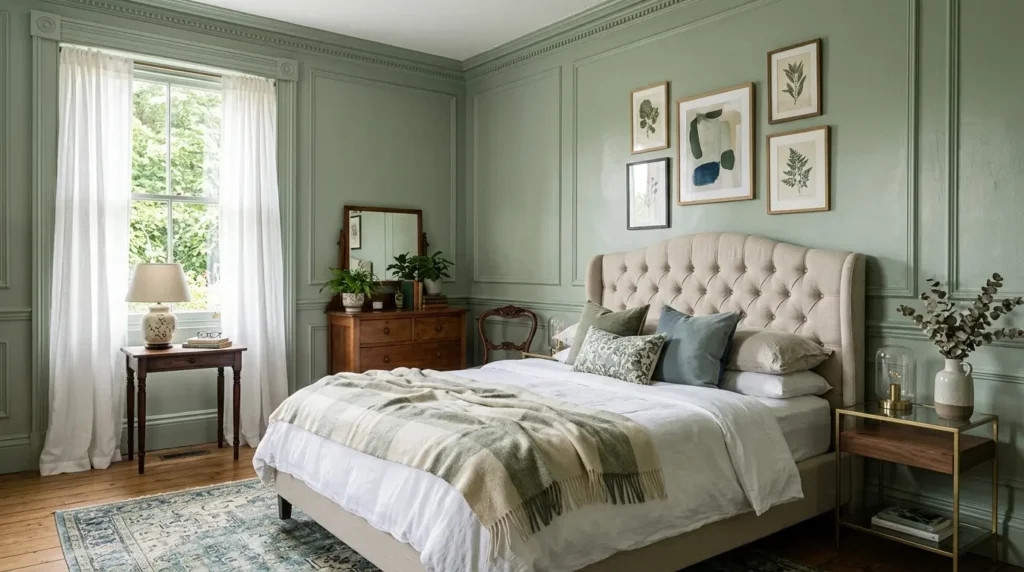
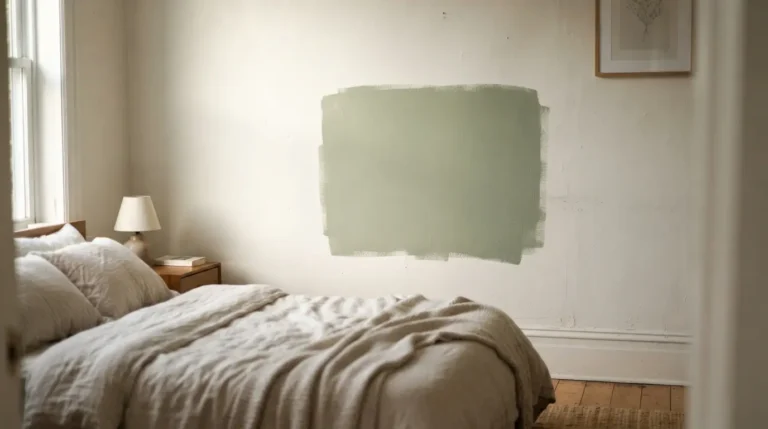
A soft, muted sage remains the safest, most versatile starting point in the whole green family, carrying enough grey undertone to feel genuinely calming rather than overtly colourful. It suits almost any bedroom style, traditional or contemporary, and its popularity has grown alongside a wider shift toward wellness-focused, biophilic design, spaces that genuinely feel connected to nature rather than purely decorative.
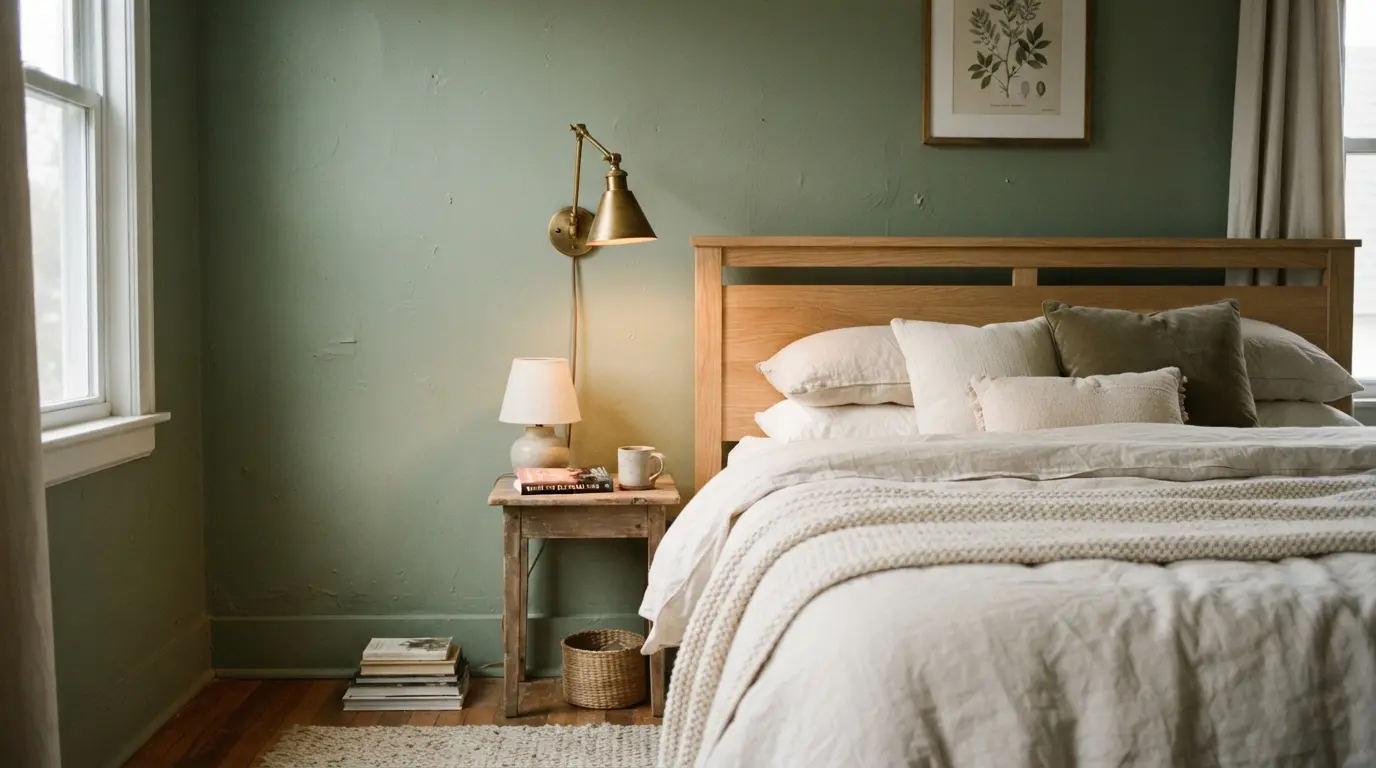
2. Sage Paired with Warm Metallics for Modern Eclectic Appeal
Introducing brass, gold, or silver accents, in lighting, artwork, or small sculptural pieces, against a sage green wall creates a genuinely eclectic, elevated contrast. The softness of the green keeps the room feeling relaxed, while the metallic elements add a dash of modern edge that stops the scheme reading as purely rustic or cottage-like.
3. Colour-Drench a Grey-Sage for a Cocooning Neutral Effect
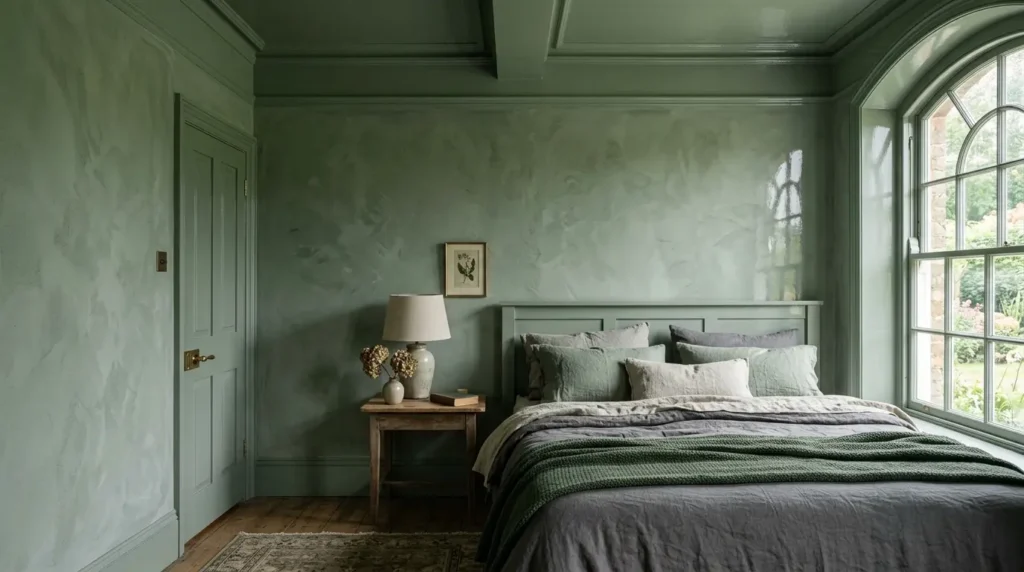
Taking a grey-leaning sage across walls, ceiling, and even the doors creates a genuinely enveloping, retreat-like atmosphere, and the grey undertone lets the colour function almost like a neutral, a considered backdrop rather than a bold style statement. The honest risk with any fully colour-drenched room is that it can feel slightly one-dimensional if the surface stays completely flat, so it’s worth introducing genuine texture, a limewash finish or a tactile plaster technique, to give the colour real depth rather than a single uniform sheen throughout.
4. Deep Forest Green for Genuine Enclosure in a Small Room
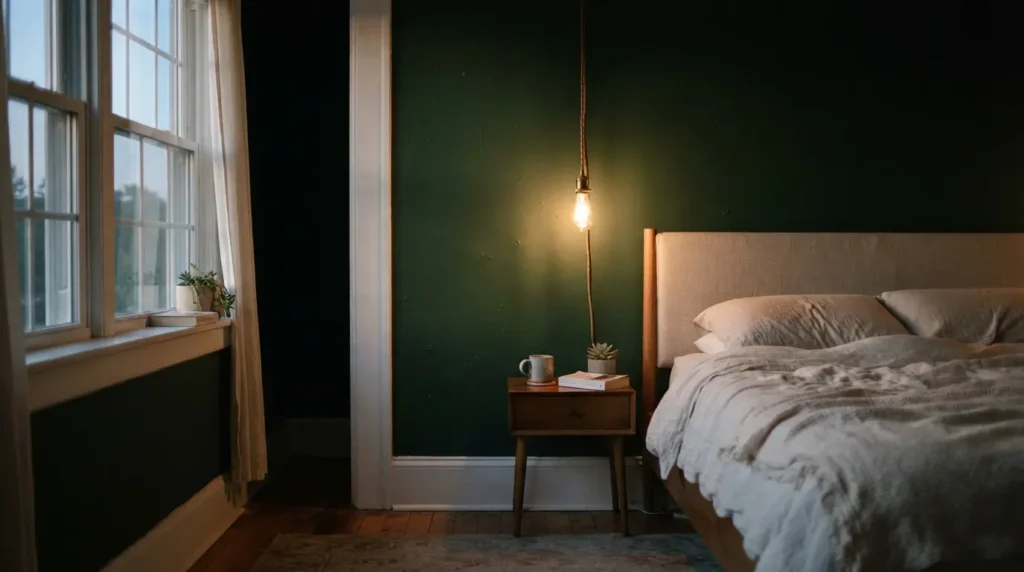
At the darker end of the spectrum, a confident forest green with grey, black, or silver undertones brings a genuinely cosy, enclosed feel that suits a small bedroom or an awkwardly shaped room particularly well. This depth of colour contrasts beautifully against crisp white trim, and pairing it with a small, well-placed pendant or bedside light enhances the wall’s richness rather than flattening it under a single central fitting.
5. Olive Green Paired with Rust or Terracotta for Warm Contrast
Olive, sitting between green and brown, pairs particularly well with a smokier rust or deep salmon tone, both warm, muted shades that balance the coolness of the green without fighting it. Used in the right proportions, whether through bedding, a rug, or a considered colour-block wall treatment, this pairing keeps the room feeling genuinely warm and grounded rather than tipping into anything cold or clinical.
6. Emerald or Jewel-Toned Green for a Bold Statement Headboard Wall
A genuinely saturated emerald or jewel-toned green delivers real drama when used behind the bed specifically, rather than across every wall in the room. This suits a bedroom where you want one confident focal point, letting the surrounding walls stay in a calmer, complementary neutral so the emerald wall reads as a deliberate statement rather than simply an intense colour applied throughout.
7. Sage Green Contrasted with Black Furniture for Elevated Modern Edge
This is a genuinely surprising pairing that works precisely because of the contrast, sage’s delicate, near-pastel softness against the intensity and weight of black furniture creates a considered tension that elevates the whole scheme beyond its rustic, cosy origins into something more modern and invigorating. Curved, contemporary furniture shapes in black play particularly well against the softer, more organic quality of the green.
8. Mint or Pale Green for a Fresh, Airy Small Bedroom
At the lightest end of the spectrum, a pale, minty green brings genuine freshness and a sense of spaciousness to a smaller bedroom, since paler colours visually recede rather than closing the room in. This shade suits a bedroom that gets plenty of natural light particularly well, letting the airy quality of the colour do real work alongside the daylight rather than fighting against a naturally darker room.
9. Layer Multiple Green Tones Together as a Tonal Scheme
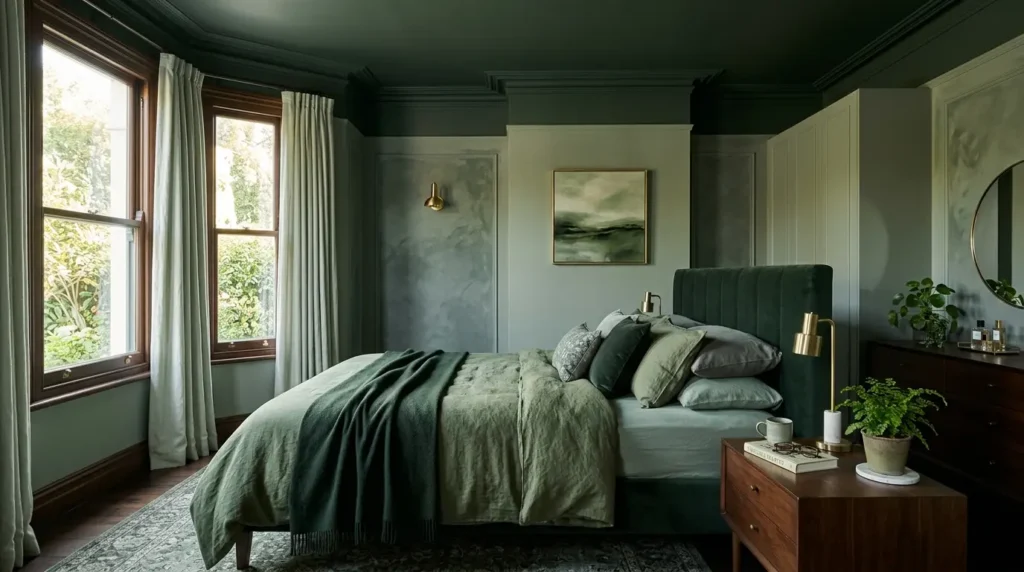
Rather than choosing a single shade, using sage as a genuine neutral base and layering in other greens on top, a richer green through decorative paint effects on the walls, a deeper forest tone on the ceiling, creates a considered, tonal scheme that feels calm and cohesive precisely because every colour in the room belongs to the same family. This approach rewards a confident hand, since the greens need to relate to each other in undertone, cooler grey-greens together, warmer olive-greens together, rather than being mixed across genuinely different temperature ranges.
10. Paint All the Trim and Millwork the Same Green to Streamline Period Detail
In a period property with genuine architectural detail, ornate trim, panelling, ceiling roses, painting all of it, walls, woodwork, doors, built-in storage, in the same green rather than picking it out in a contrasting colour turns busy decorative detail into texture rather than visual clutter. This is a particularly effective technique for a room that could otherwise feel fussy or overwhelming, letting the architecture’s shape and shadow do the work rather than competing colours.
11. Choose Bedding Deliberately: Lighter for Calm, Darker Earthy for Sumptuous
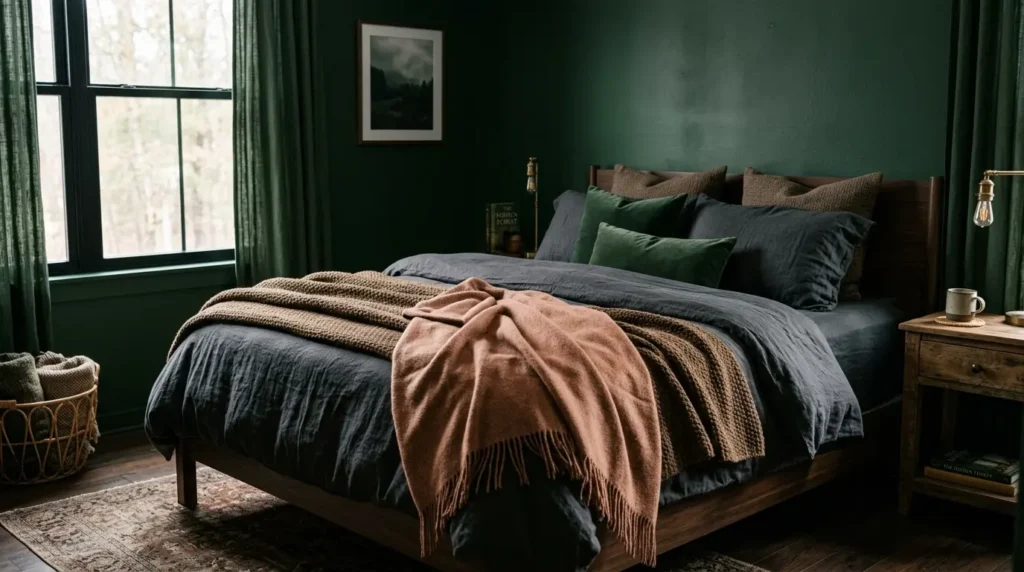
Green walls genuinely benefit from a deliberate bedding decision rather than an accidental one. For a calmer, more restful effect, choose lighter bedding, crisp white remains a reliable, failsafe choice against nearly any green. For a richer, more sumptuous feel instead, much darker, earthier tones against the same green wall create real depth and a more enveloping atmosphere. Either direction, warm browns, muted terracotta, or soft pink accents through throws and cushions add a genuine complementary layer without competing with the wall colour itself.
12. Add Texture So a Colour-Drenched Green Room Doesn’t Feel Flat
This is worth treating as a genuine final check on any of the darker or fully drenched ideas above. A single flat colour across every surface in a room can start to feel one-dimensional without something to break up the uniformity, and texture is the most effective way to solve this without introducing a second colour. A tactile plaster finish, a woven textile headboard, or simply a mix of materials, wood, brass, linen, against the painted surfaces all add genuine dimension, turning a potentially flat, single-colour room into one that reads as considered and layered instead.
Final Thoughts
The best green bedroom ideas span a genuinely wide range, from an airy, pale mint to a confidently deep forest tone, and the right choice comes down to matching the shade and depth to how you want the room to feel, calm and restful or rich and enveloping. Choose your pairing colours and bedding deliberately, add genuine texture to any fully colour-drenched scheme, and the finished bedroom will feel considered and cohesive, not just green for the sake of following a trend.
FAQs
Is sage green a good bedroom colour?
Yes, genuinely, it’s one of the most consistently recommended bedroom colours precisely because it carries a soothing, nature-inspired quality while still looking stylish and current. Its versatility with other colours also makes it easy to build a genuinely varied scheme around.
What colour bedding goes with green walls?
It depends on the effect you want, lighter bedding, white in particular, creates a calmer, more restful look against green walls, while much darker, earthier tones create a richer, more sumptuous atmosphere. Warm browns, muted terracotta, and soft pink work well as complementary accent colours either way.
Does dark green make a small bedroom feel smaller?
Not necessarily, a confidently deep green with grey or black undertones can actually give a small or awkwardly shaped room a genuinely cosy, enclosed feel rather than making it feel cramped, particularly when paired with crisp white trim for contrast.
What colours pair well with green in a bedroom?
Warm metallics like brass and gold add modern eclectic appeal, soft pink brings a cheerful, spring-like quality, rust and terracotta create warm balance against cooler greens, and black furniture delivers a genuinely elevated, contemporary contrast against a softer green.
Should I paint the trim the same green as the walls?
It’s worth considering specifically in a room with a lot of architectural detail, painting trim, doors, and built-in storage the same green as the walls turns decorative detail into texture rather than visual clutter, which suits a period property particularly well.