15 Curtain Ideas to Transform Every Window in Your Home

Curtain ideas work best when matched to the specific window they’re dressing, not applied as one generic solution across every room. The 15 ideas below cover genuinely different window types, from a large picture window to a small kitchen sash, along with the hardware and hanging details most curtain guides gloss over in favour of another styled photo.
1. Floor-to-Ceiling Curtains for a Large Picture Window

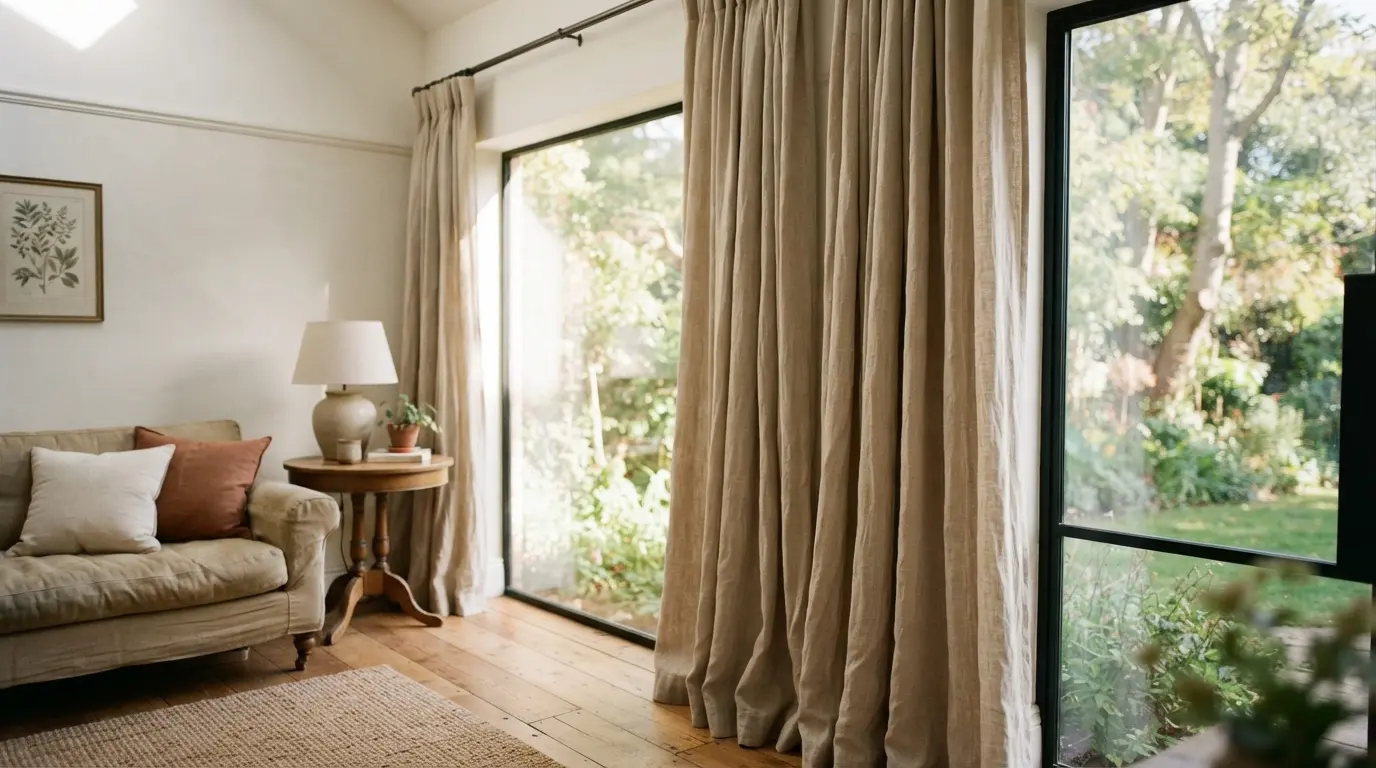
A large window deserves genuinely full curtains rather than skimpy panels that look unfinished once closed. Aim for a total curtain width of around 2 to 2.5 times the window’s actual width, this is what gives you those full, luxurious folds rather than a flat, stretched-thin panel. Skimping on fabric here is one of the most common reasons an otherwise good curtain choice looks cheap on a large window specifically.
2. Layered Sheer and Blackout for a Large Sun-Facing Window

Pairing a lightweight sheer with a heavier, opaque drape on a double track gives you genuine flexibility on a large window that gets strong daylight. Close the sheer during the day to soften harsh sun while keeping the room bright, then close the heavier drape at night for full privacy and a properly enclosed feel. This layered approach also adds real visual depth, the mix of textures reads as considerably more finished than a single flat panel ever could.
3. Goblet Pleat for a Grand, Formal Window
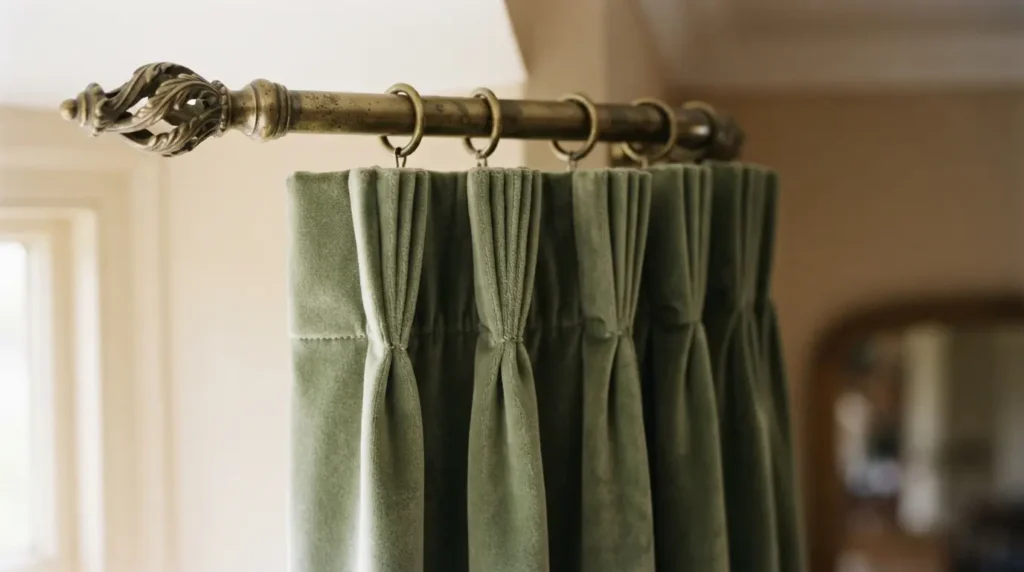
Goblet pleats, named for their resemblance to a wine glass, create a genuinely formal, structured look that suits a large window in a room with real height and presence. The trade-off worth knowing: this pleat style is delicate enough that it’s best left stationary rather than opened and closed regularly, so it suits a decorative, framing role rather than a curtain you’ll be drawing every day.
4. Window Sill-Length Curtains for a Kitchen or Bathroom
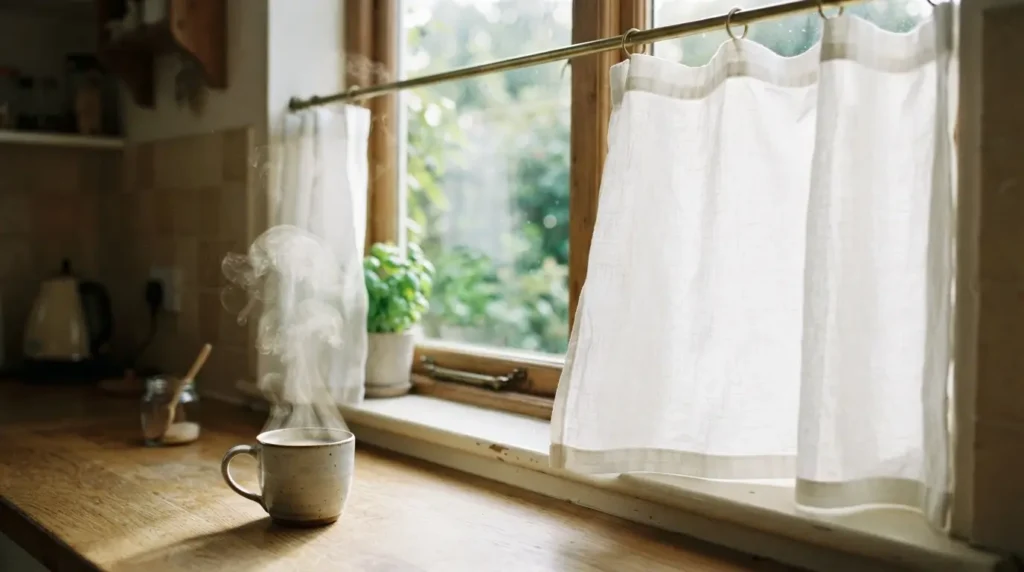
Short curtains that hover just above the sill are the practical choice for a smaller window in a room where longer drapes would get in the way, a kitchen sink window or a bathroom window opened for ventilation. This length keeps the fabric well clear of taps, worktops, or anything else positioned directly beneath the window.
5. Cafe Curtains for Half-Privacy in a Kitchen Window
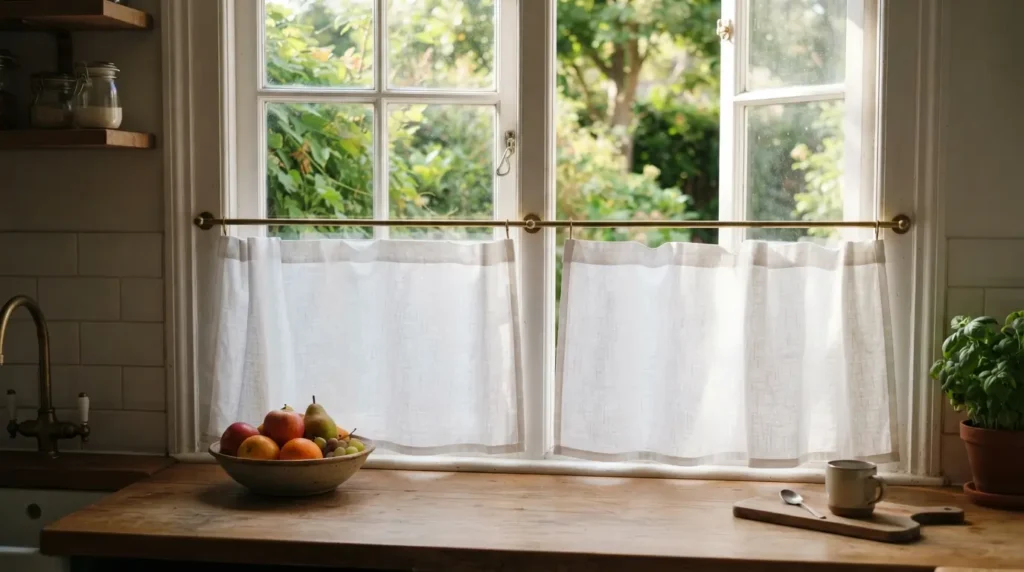
Cafe curtains cover just the lower portion of a window, often paired with a matching valance above, letting light in through the top while giving genuine privacy at eye level. This suits a kitchen window facing a street or a neighbouring garden particularly well, where full coverage isn’t needed but some screening from passers-by genuinely is.
6. Apron-Length Curtains Over a Radiator or Window Unit
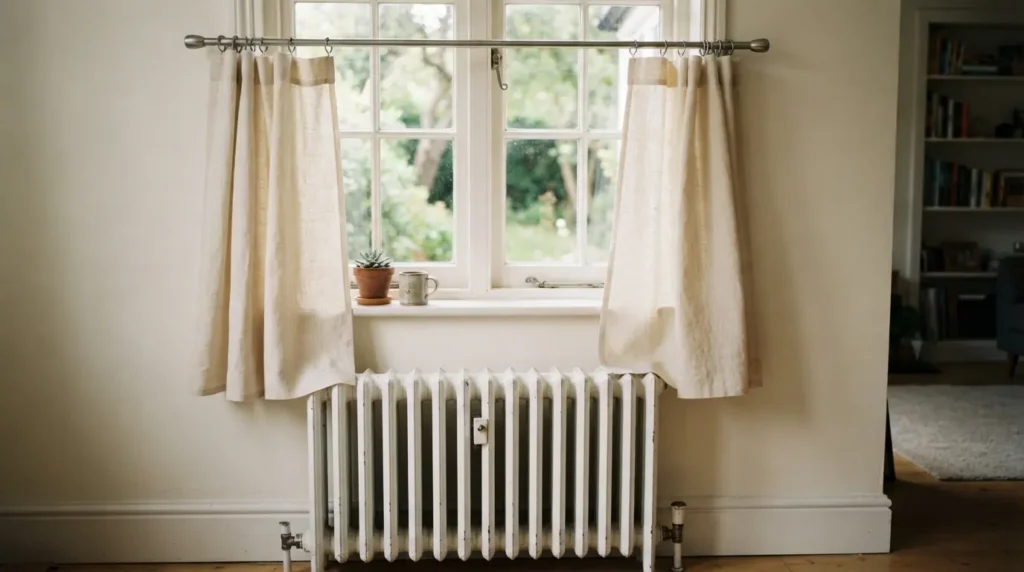
Half-length apron curtains solve a genuinely practical problem: a radiator, air conditioning unit, or low piece of furniture positioned under a window that a full-length curtain would otherwise cover or catch on. This length also suits a household with young children or pets, since there’s simply less fabric pooling on the floor to be pulled at or tripped over.
7. Grommet or Eyelet Curtains for a Frequently Opened Window
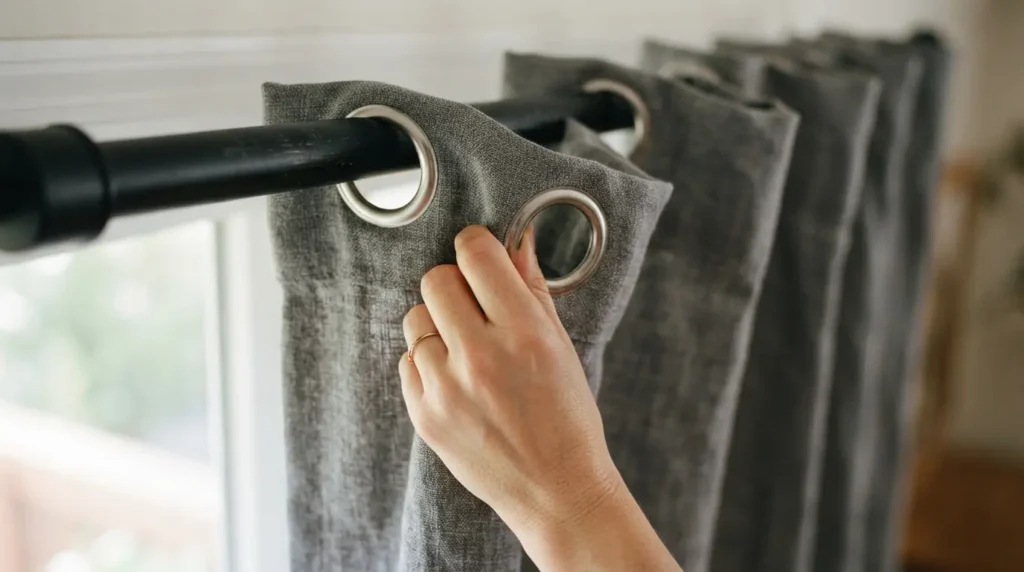
Metal rings set directly into the fabric let a curtain glide smoothly along its pole, which makes grommet curtains the practical choice for any window you’re opening and closing multiple times a day. This suits a living room window used to control daylight throughout the day, or any spot where a fiddlier pleated heading would become a genuine daily annoyance.
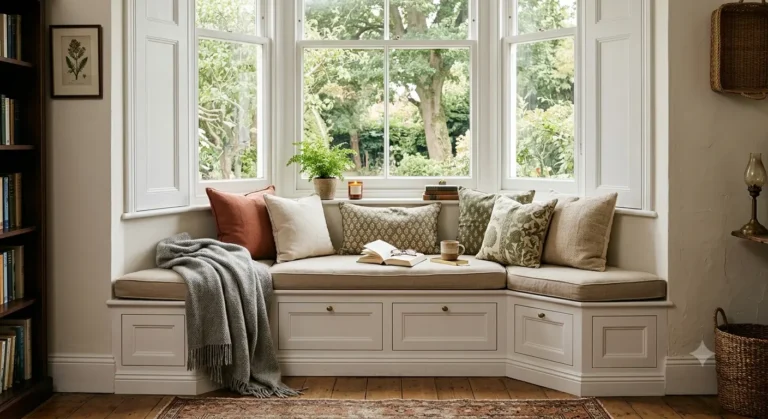
8. A Curved Track for a Bay or Angled Window
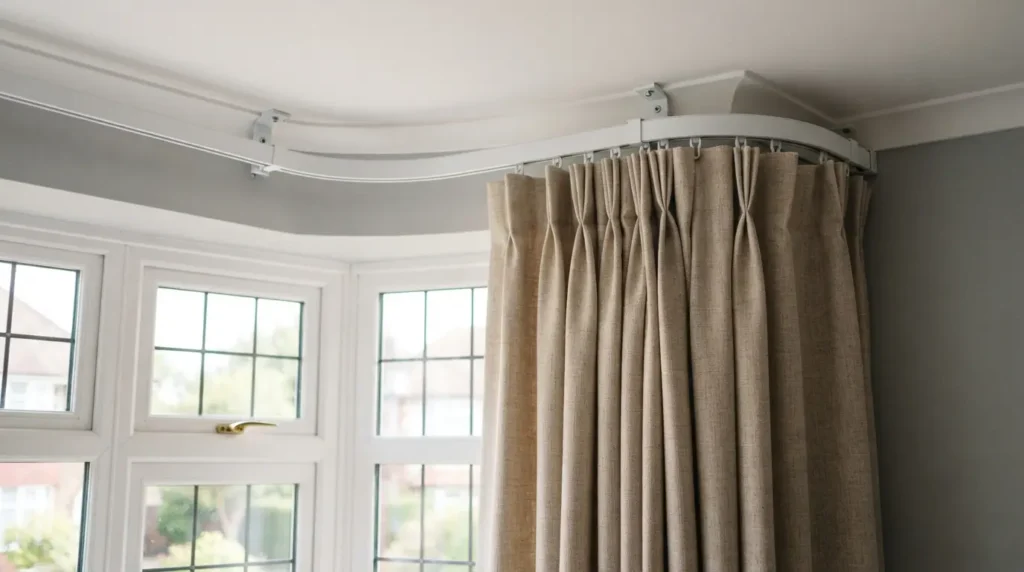
A bay window needs a track that can actually follow its shape, a straight pole simply can’t curve around the angles, leaving an undraped gap at each corner when closed. A properly fitted curved track solves this cleanly, letting the curtain follow the bay’s full shape and close without leaving light gaps at the joins.
9. Tie-Top or Tab-Top Curtains for a Farmhouse-Style Small Window
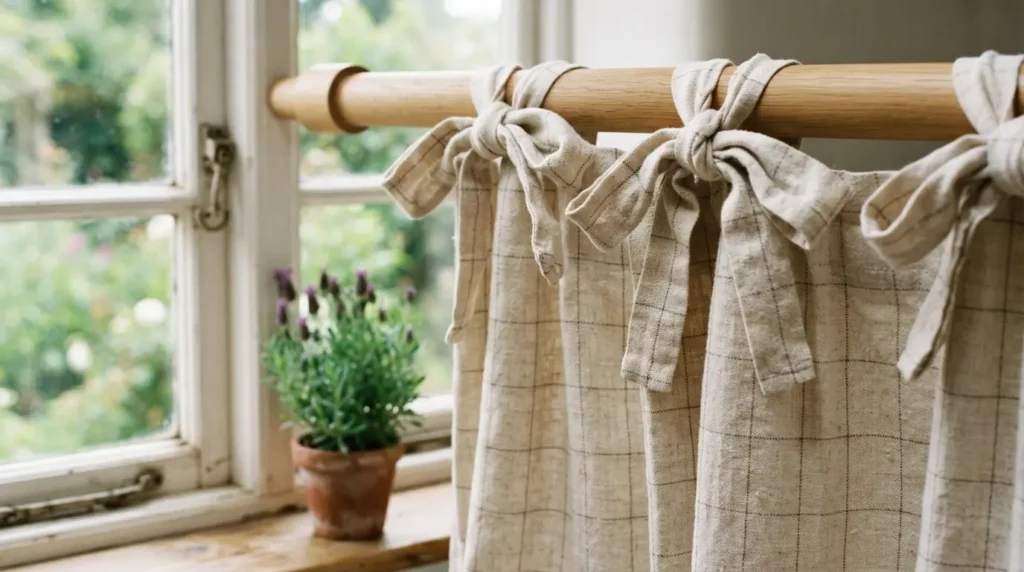
Tie-top and tab-top headings hang the fabric below the rod rather than concealing it, which suits a farmhouse or cottage-style small window where the visible pole and hardware are part of the look rather than something to hide. Since the hardware stays on show with this style, it’s worth choosing a rod and finials that are genuinely attractive in their own right, not just functional.
10. Motorized Curtains for a Hard-to-Reach or Very Large Window
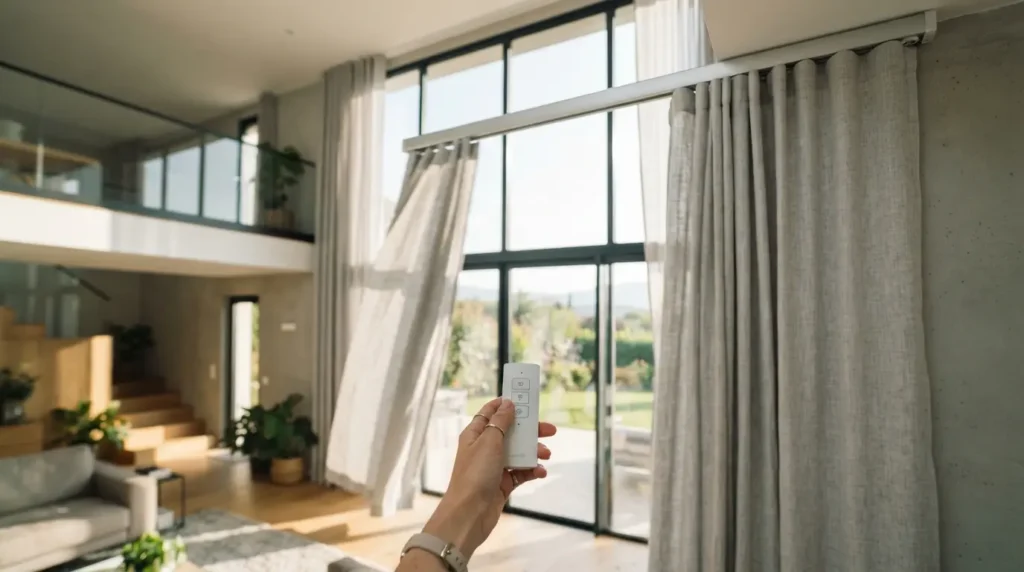
A remote-controlled or app-operated curtain track genuinely earns its cost on a window that’s awkward to reach, very tall, positioned above a stairwell, or simply very wide and heavy to draw by hand every day. Beyond convenience, some systems can be scheduled to close during the hottest part of the day or open in the morning, giving a small but genuine assist to a room’s heating and cooling.
11. Heavy-Duty Rod and Support Brackets for Wide, Heavy Curtains

This is the detail that decides whether a substantial curtain actually stays up over time. A wide expanse of heavy fabric, velvet especially, puts real strain on a standard rod, so choose one with a genuinely thicker diameter, roughly 2.5 to 4cm, in steel, iron, or solid wood rather than a slim decorative pole. For a particularly wide window, add a support bracket roughly every 75-90cm along the rod’s length rather than relying on end brackets alone, this single addition is what prevents a heavy curtain sagging or bowing the pole within its first year.
12. French Door Curtains That Don’t Block the Opening
Curtains hung over French doors need to clear the door swing completely when open, which usually means mounting the rod wide enough that the fully drawn-back curtains sit clear of the door frame rather than bunching against it. A curtain that catches on the door every time it’s opened is a genuine daily frustration, so measure the door’s actual swing and stacking space before choosing your rod width, not just the door’s frame dimensions.
13. Puddle-Length Curtains for a Romantic, Formal Window

Adding roughly 15cm or more of extra fabric length beyond the floor creates a deliberate pool of curtain at the base, a genuinely romantic, formal look suited to a dining room or a period property’s grander windows. This is worth avoiding in a household with pets or young children, or anywhere near a well-used doorway, since the extra fabric on the floor is more likely to be pulled at, tripped over, or simply picked up dust and dirt faster than a shorter hem.
14. Thermal-Lined Curtains for a Drafty or Single-Glazed Window
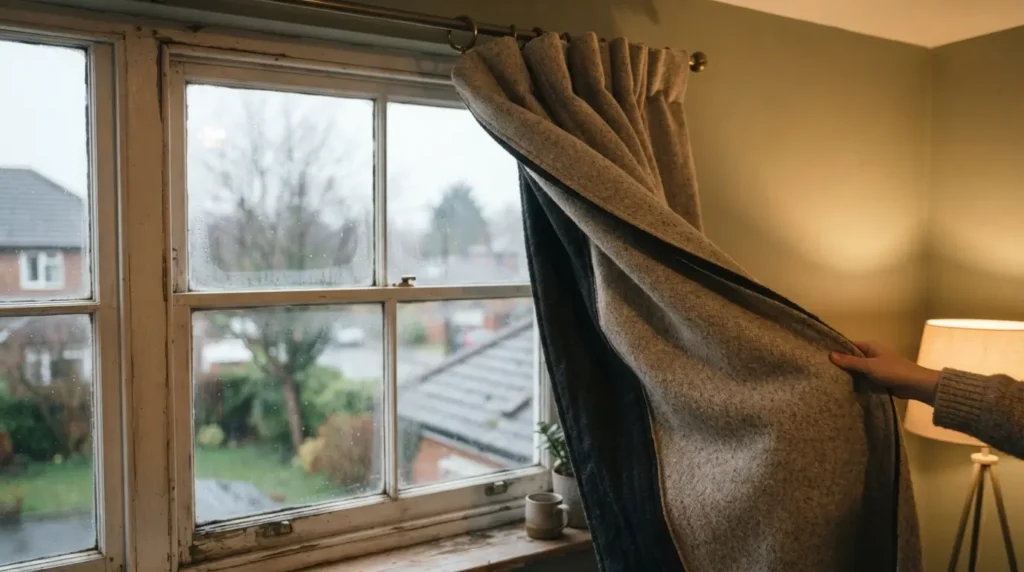
A thermal or insulated lining genuinely helps retain heat through an older or less efficient window, curtains with proper insulation can meaningfully reduce heat loss through a window in a colder climate, making this one of the more cost-effective upgrades on this list relative to its impact on comfort and heating bills. This matters most on a large or single-glazed window, where heat loss is at its worst, and it’s worth prioritising over a purely decorative lining if your main goal is genuine warmth rather than looks alone.
15. Get the Hang Height and Width Right for Any Window Before You Buy
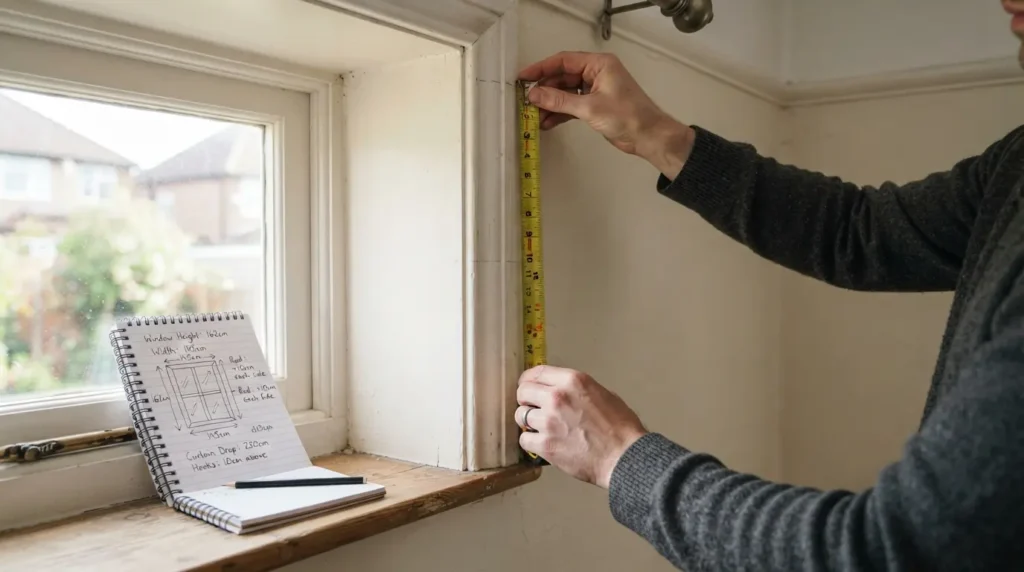
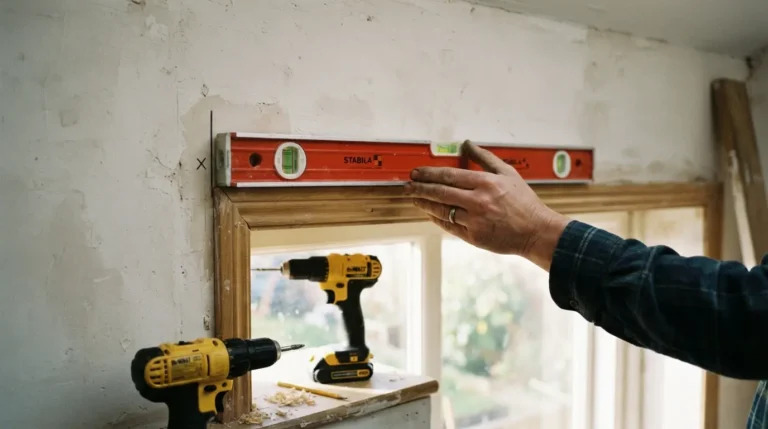
This is the detail that ties every idea on this list together, and it’s worth getting right regardless of which style or window type you’re dressing. Mount the rod roughly 10-15cm above the window frame and extend it 15-30cm beyond each side, this “high and wide” placement lets curtains stack back fully off the glass when open, maximising light and making the window itself feel more generous. Measure the width in three places, top, middle, and bottom, since window frames are rarely perfectly square, especially in older properties, and use the widest of the three measurements as your starting point before adding the extra width for stack-back. Getting this step right before you order anything prevents the single most common curtain disappointment: panels that technically fit the window but look pinched, undersized, or oddly proportioned once they’re actually hung.
Final Thoughts
The best curtain ideas match the specific window they’re dressing, a large picture window, a small kitchen sash, a bay, a French door, each genuinely benefits from a different heading style, length, and hardware choice rather than one generic solution applied everywhere. Get the fullness, hang height, and hardware right for your specific window, and the curtains will transform the space properly, not just look good in a single photo before the first heavy fold sags out of place.
FAQs
Should curtains touch the floor?
Generally yes, for a polished look. A “kiss” length just grazes the floor, a “break” adds a few centimetres for a slight bend, and a “puddle” adds considerably more for a deliberate pool of fabric, all are valid choices depending on how formal you want the window to read.
How do I make a window look bigger with curtains?
Mount the rod higher than the window frame and extend it well beyond the sides, so curtains stack back off the glass when open rather than covering part of it. This “high and wide” placement is one of the most reliable tricks for making any window feel more generous.
What curtain style is best for a window I open and close often?
Grommet or eyelet curtains glide most easily along a pole, making them the practical choice for a window you’re adjusting throughout the day. Pleated styles, especially goblet pleats, are better suited to a more decorative, largely stationary role.
Do heavy curtains need special hardware?
Yes, a wide or heavy curtain needs a genuinely thicker rod and, on a wide window, additional support brackets along its length, not just at the ends. Skipping this is a common reason a beautiful heavy curtain eventually sags or bows its pole.
Does curtain lining actually help with heating costs?
Yes, a proper thermal lining genuinely reduces heat loss through a window, particularly an older or single-glazed one, and it’s one of the more cost-effective upgrades for comfort and energy use relative to its price.