10 Log Burner Ideas for a Cosy and Warm Living Room

The best log burner ideas turn a wood burning stove into more than just a heat source, using hearth design, wall material, and stove placement to make it the genuine centrepiece of a living room. A stove dropped into a plain corner with no thought to the surrounding wall or hearth almost always looks like an add-on rather than a considered feature.
Most homeowners get stuck between wanting that classic cosy log fire look and worrying about the cost, the regulations, or whether their chimney can even take a stove in the first place. This list covers ten log burner ideas that work in real living rooms, with honest cost ranges, install timelines, and the practical details competitor lists tend to skip.
1. Traditional Inglenook Setup with Exposed Brick
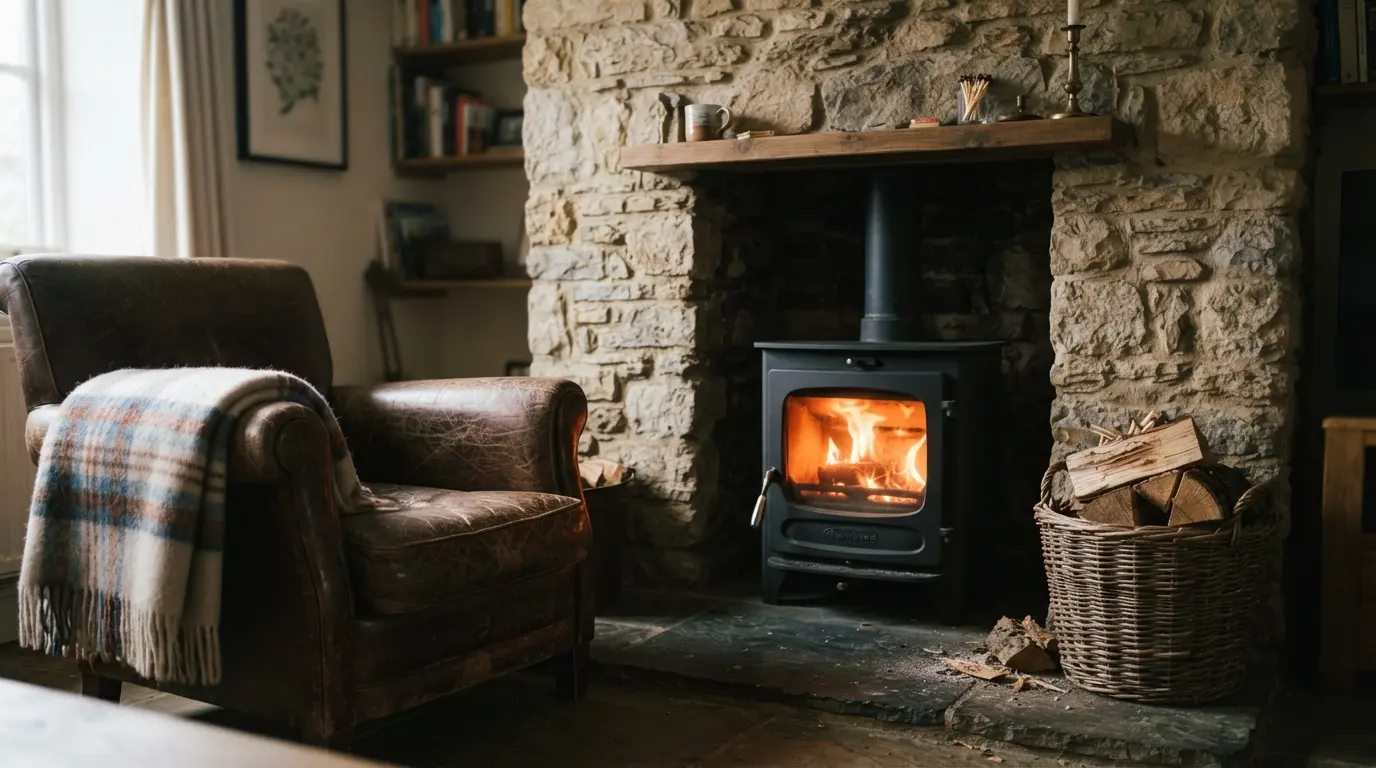
Setting a wood burning stove into an existing inglenook recess with the original brickwork left exposed is one of the most requested log burner living room ideas for period homes, since it keeps the room’s original character intact rather than boxing the stove into a modern surround.
If the brick has already been painted or plastered over, stripping it back and repointing typically costs £400 to £900 depending on the size of the recess and the condition of the mortar underneath. A good rule of thumb is having a HETAS-registered installer check the flue and chimney lining before committing to the stove itself, since older inglenook chimneys often need a new liner fitted regardless of how good the brickwork looks. Most homeowners find the exposed brick genuinely improves heat retention around the stove too, since brick holds and radiates warmth back into the room long after the fire has died down.
2. Freestanding Stove on a Raised Stone Hearth
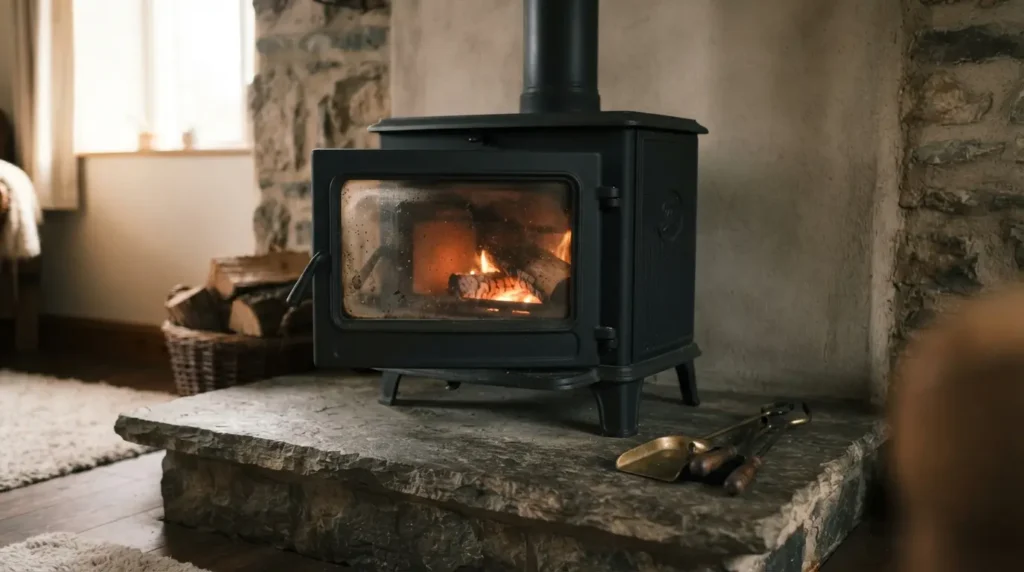
Raising a freestanding wood burning stove onto a stone or slate plinth rather than sitting it directly on a flat hearth brings the fire closer to eye level and gives the whole setup more visual weight in the room.
A raised hearth typically adds £300 to £700 to a stove installation depending on the stone chosen and how much height is added, on top of the stove and flue liner cost. Building regulations in the UK and most countries require a non-combustible hearth extending at least 300mm in front of the stove door and 150mm to each side, so the raised plinth needs to meet those same clearance rules rather than just looking good. This is also one of the more practical upgrades on this list, since a raised hearth makes clearing ash and relighting the stove noticeably easier on the back compared to a stove sitting flush on the floor.
3. Corner-Set Log Burner to Save Floor Space
Angling a wood burning stove into a corner rather than centring it on a flat wall is one of the most effective log burner ideas for smaller living rooms, since it frees up the main wall for a sofa or media unit while still giving the fire a strong presence in the room.
Corner installations need a specific corner hearth and heat shield configuration, and not every stove model is rated for corner fitting, so checking the manufacturer’s corner clearance specification before falling in love with a particular stove is essential. Installation costs sit roughly in line with a standard stove fit, generally £2,000 to £5,000 fully installed depending on flue length and lining work, though corner setups sometimes need slightly more flue pipe to reach the existing chimney position, which can add to the final bill.
4. Full-Height Slate or Stone Chimney Breast
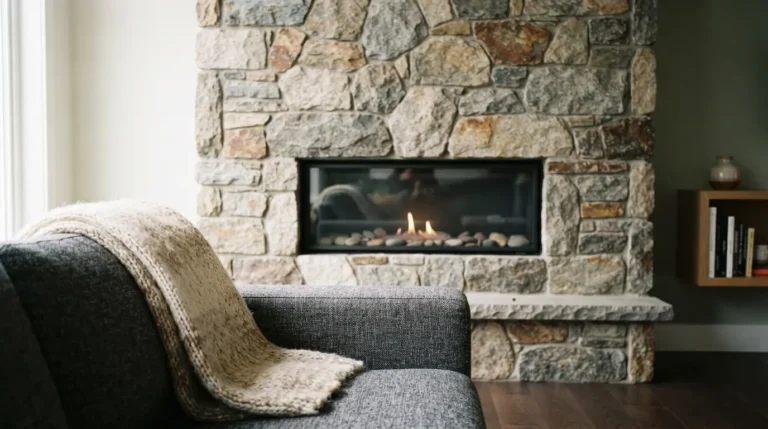
Cladding the full chimney breast in slate or natural stone from hearth to ceiling turns a standard log burner into a genuine log burner feature wall, adding scale and texture that a simple painted surround can’t match.
Full-height stone or slate cladding typically costs £60 to £150 per square metre supplied and fitted, with the wall needing a structural check beforehand to confirm it can carry the additional weight. This look tends to photograph beautifully but reads considerably colder and more dominant in a smaller room, so it suits living rooms with real ceiling height and floor space rather than a compact snug, where a full stone wall can end up overwhelming the room instead of anchoring it.
5. Minimalist Black Stove Against a Dark Painted Wall
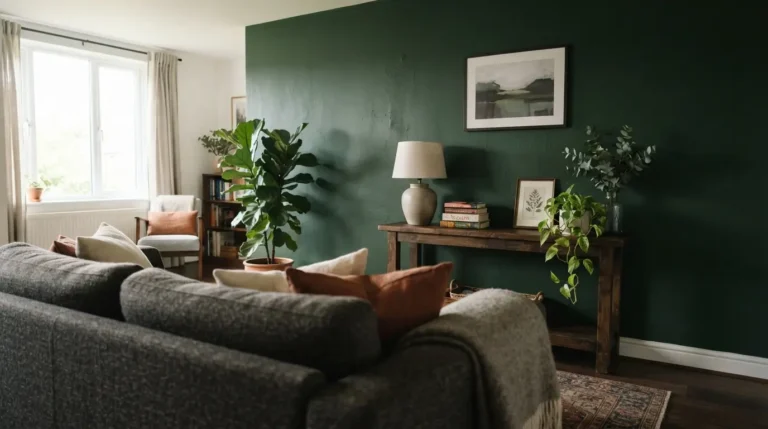
Painting the chimney breast in a deep charcoal, black, or dark green shade behind a matte black stove creates a striking, low-contrast look that lets the flame itself become the main visual focus rather than competing with a busy surround.
This is one of the most affordable updates on this list, generally £30 to £80 in heat-resistant masonry paint and supplies for a standard chimney breast, since ordinary wall emulsion can discolour or peel from heat exposure near the stove. A common mistake homeowners make here is using standard paint right up to the stove’s clearance line rather than checking the manufacturer’s minimum distance from combustible or heat-sensitive finishes, which varies by stove model and needs confirming before painting.
6. Exposed Twin-Wall Flue Pipe as a Design Feature
Leaving the twin-wall flue pipe exposed and running visibly up through the room to the ceiling, rather than boxing it in, has become a popular contemporary log burner idea, particularly in rooms without an existing chimney breast to route the flue through.
Twin-wall flue systems cost roughly £50 to £120 per metre of pipe and fitting, on top of the stove itself, and this route is often the only realistic option in a room with no existing chimney, since it can run straight up through the ceiling and roof rather than needing an existing flue to tie into. The trade-off is that an exposed flue pipe needs to stay genuinely well insulated and correctly rated for the full run, since a poorly specified system can lose heat efficiency and, more importantly, fail building control sign-off.
7. Built-In Log Store Alcove Beside the Stove
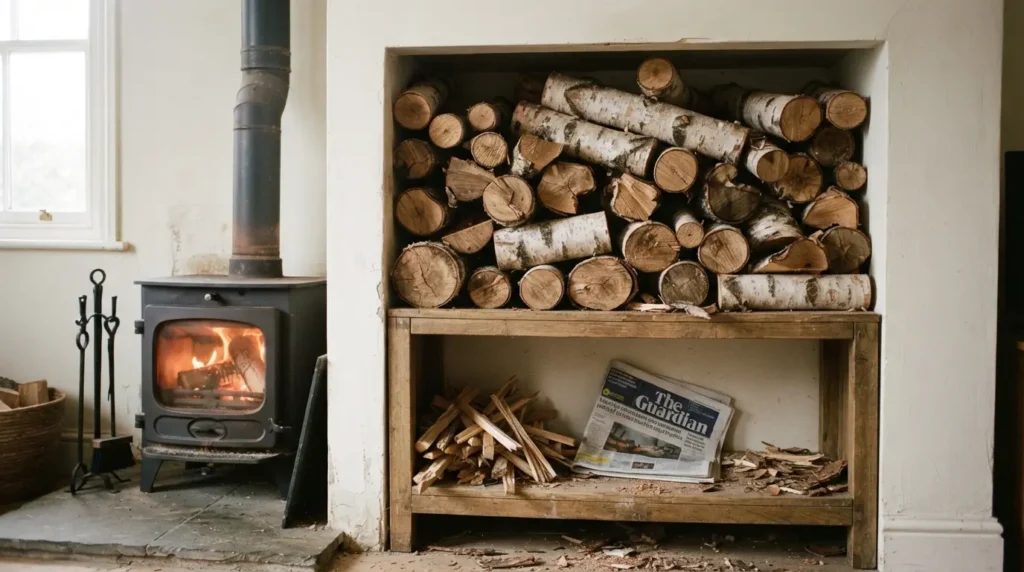
Building a dedicated log store into the alcove beside a wood burning stove keeps firewood close at hand and dry, while turning a practical necessity into part of the room’s overall design rather than an afterthought stacked in a basket nearby.
A simple open shelving log store built into an existing alcove typically costs £150 to £400 in joinery, depending on whether it’s a basic open frame or a fully lined, more finished unit. Most homeowners find that keeping at least a day’s worth of logs stored close to the stove, rather than making repeat trips outside, is what actually makes using a wood burner day to day feel practical rather than a chore, which matters more to long-term satisfaction than almost any other styling choice.
8. Reclaimed Brick Slip Wall Around the Stove
Cladding the wall around a stove in reclaimed brick slips gives a rustic, lived-in texture that suits farmhouse and industrial-leaning living rooms without the structural weight and cost of full reclaimed brick.
Brick slip cladding generally costs £40 to £90 per square metre supplied and fitted, considerably less than full brick since slips are thin veneer pieces adhered directly to a prepared wall rather than a full masonry rebuild. This is a genuinely good middle ground between a plain painted chimney breast and full stone cladding, offering real texture at a lower cost and lighter structural load, though the mortar joints between slips do collect dust over time and need an occasional wipe down to keep the texture looking crisp rather than grubby.
9. Scandinavian-Style Stove with Light Timber Cladding
Pairing a matte black or white-bodied stove with light timber cladding, such as pale oak or ash slats, around the surrounding wall creates a warmer, softer take on the log burner feature wall than the darker stone and slate options common elsewhere on this list.
Light timber slat cladding typically costs £40 to £90 per square metre in materials, similar to other panelling projects, though it needs proper fire-rated backing board and correct clearance from the stove’s heat zone, since timber is combustible and sits under stricter distance rules than stone or tile. This look tends to suit smaller, brighter living rooms particularly well, since pale timber reflects more light than dark stone and avoids making a compact room feel heavier than it needs to.
10. Feature Wall with Floating Shelves Either Side
Adding floating shelves into the alcoves either side of a chimney breast extends a log burner’s presence across the whole wall, combining display and storage space with the stove itself as the central anchor point.
A pair of fitted floating shelves in solid wood or painted MDF typically costs £150 to £400 per side depending on width and finish, with a joiner able to template, fit, and finish both sides in a single day. This idea pairs naturally with several others on this list, since the chimney breast itself can carry stone cladding, a bold paint colour, or timber slats while the alcoves stay simpler with shelving alone.
Log Burner Idea Cost Comparison
[Cost Table: Log Burner Ideas by Approximate Cost]
| Log Burner Idea | Approximate Cost | Typical Timeline |
| Dark painted chimney breast | £30–£80 | 1 day |
| Built-in log store alcove | £150–£400 | 1 day |
| Reclaimed brick slip cladding | £40–£90 per m² | 1–2 days |
| Timber slat cladding | £40–£90 per m² | 1–2 days |
| Floating alcove shelving (pair) | £150–£400 per side | 1 day |
| Exposed brick restoration | £400–£900 | 1–2 days |
| Raised stone hearth | £300–£700 (plus stove/flue) | 1–2 days |
| Exposed twin-wall flue run | £50–£120 per metre | 1–2 days |
| Full-height stone or slate cladding | £60–£150 per m² | 2–3 days |
| Corner or standard stove install | £2,000–£5,000 fully fitted | 1–2 days |
These figures are approximate and vary significantly by country, local labour rates, chimney condition, and stove model, so treat them as a starting point for budgeting conversations rather than a fixed quote.
Common Log Burner Mistakes to Avoid
The biggest mistake homeowners make is choosing a wall finish or design before confirming the stove’s clearance requirements, only to find the planned material sits too close to the heat source once the installer arrives. Every stove has a manufacturer-specified minimum distance from combustible materials, and that number varies by model, so it’s worth confirming before committing to timber cladding, paint, or any finish near the firebox.
A second common mistake is skipping a proper flue and chimney survey on older or unused chimneys, assuming an existing flue is automatically fit to take a new stove. Most installers will insist on this check anyway, but budgeting for a potential liner replacement upfront avoids an unpleasant surprise mid-project. It’s also worth checking current Ecodesign Ready stove requirements in your region before buying, since many areas now require newer stoves to meet stricter emissions standards than older models on the secondhand market.
Conclusion
The best log burner ideas for a living room combine a stove that actually suits your room’s size with a wall treatment that gives it real presence, whether that’s exposed brick, full-height stone, or something as simple as a dark painted chimney breast. Confirm clearance distances and chimney condition before choosing a finish, and budget for both the stove installation and the surrounding design work as separate costs, since they’re rarely priced together. Get the hearth, the flue, and the wall finish right from the start, and a log burner earns its place as the room’s genuine centrepiece rather than just another appliance against the wall.
FAQs
Do I need planning permission for a log burner?
Most log burner installations don’t need planning permission, but they do need to meet building regulations, typically verified through a HETAS-registered installer or local building control sign-off.
How much does it cost to fit a log burner?
A fully installed wood burning stove, including the unit, hearth, and flue lining, typically costs £2,000 to £5,000, varying by stove size, flue length, and existing chimney condition.
Can I put a log burner in a room without a chimney?
Yes, using a twin-wall flue system that runs from the stove straight up through the ceiling and roof, though this generally costs more than connecting to an existing chimney.
What is the best hearth material for a log burner?
Stone, slate, and tile are the most common non-combustible hearth materials, chosen for durability and heat resistance rather than just appearance.
Do log burners need a HETAS-registered installer?
In the UK, using a HETAS-registered installer or having the work signed off by local building control is the standard way to meet legal requirements for a solid fuel stove installation.
How do I make a log burner the focal point of a room?
Combine a raised hearth, a contrasting wall finish like stone, brick, or a bold paint colour, and flanking shelving to extend the stove’s visual presence across the whole wall.