9 Farmhouse Dining Room Ideas for a Warm and Rustic Space

Farmhouse dining room ideas focus on solid wood, natural textures and warm colours that make the space feel welcoming for everyday meals and larger gatherings. In UK homes the look needs to work with typical room sizes, existing features such as sash windows or chimney breasts, and practical clearances of 90cm around the table. The nine ideas below cover the main elements that create a warm rustic dining room without sacrificing comfort.
Many of these choices pair well with broader dining room ideas so the room connects to the rest of the house.
1. Substantial oak dining table
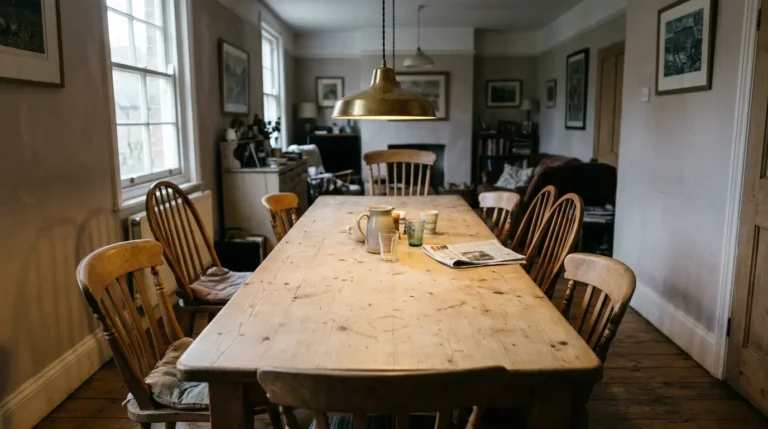
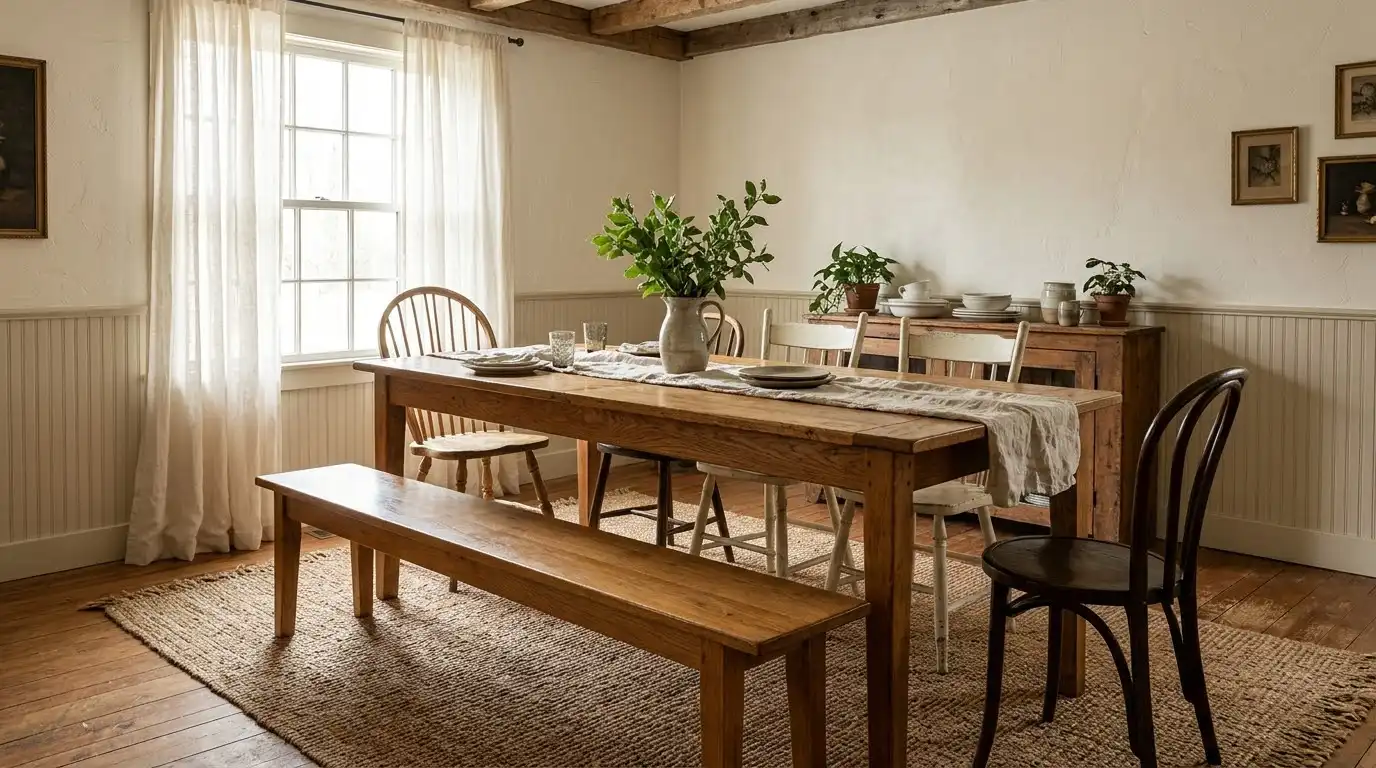
A solid oak table 160cm to 200cm long forms the centre of a farmhouse dining room. The length seats six to eight people with 60cm to 70cm of edge each. A thick top and simple trestle or turned legs give the rustic character. Leave 90cm clear around the table so chairs pull out easily. In practice a 180cm table is the size that fits most family homes once clearances and doorways are considered.
Measure the delivery path. Large solid tables often need to come in through a window or in sections if stairs are narrow.
2. Bench seating on one side
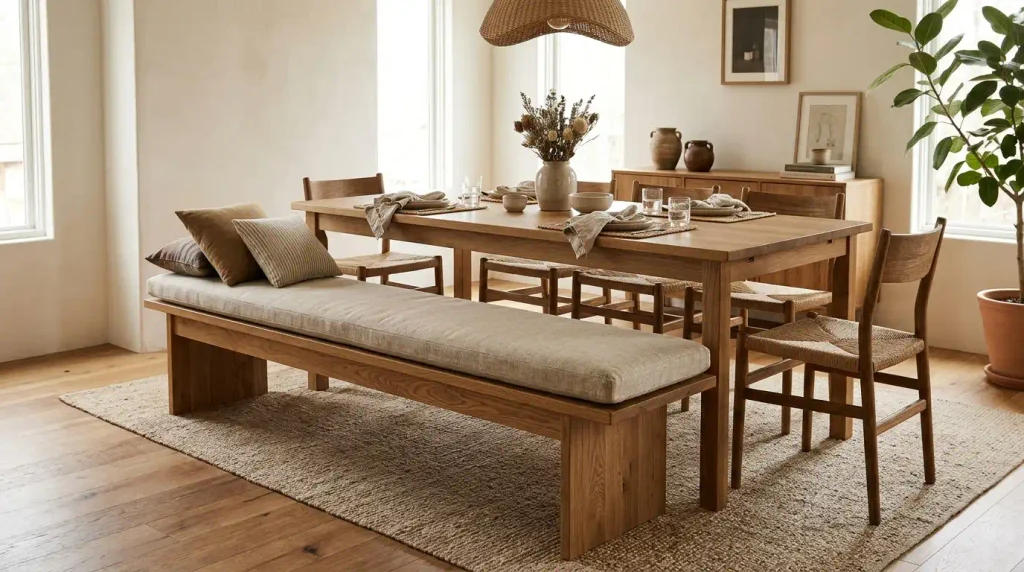
A wooden bench along one long side saves space and adds the informal farmhouse feel. It works well against a wall or in a bay. Cushion the seat with a washable cover. The bench should match the table height so the seat is 45cm to 48cm from the floor, leaving proper knee room.
A bench takes less visual weight than individual chairs and can be tucked fully under the table when not in use.
3. Mixed wooden chairs
Mixing chair styles in the same wood tone keeps the look collected rather than matched. Spindle-back or cross-back chairs suit the rustic style. Check seat heights are consistent so the table feels even. Allow 60cm of table edge per chair.
Review types of dining chairs for frames that work with a wooden table.
4. Warm neutral wall colours
Soft cream, warm white or pale greige walls keep the room light and let the wood stand out. In north-facing rooms avoid cool greys. Paint woodwork the same colour or a slightly deeper tone. Test large samples for a week because UK light changes through the seasons. A colour that looks warm in summer daylight can read cooler in winter, so live with the sample before you commit to the whole room.
If you have beams, leave them natural or limewash them rather than painting them dark, which can make a low ceiling feel lower.
5. Natural fibre rug under the table
A sisal, jute or wool rug defines the dining area and softens the sound. It should extend at least 60cm beyond the table edges so chairs stay on the rug when pulled out. In open-plan rooms the rug also zones the space from the kitchen.
Choose a rug that can be cleaned easily. Spills are common in a dining room.
6. Wooden sideboard or dresser
A wooden sideboard 120cm to 160cm wide stores plates and linens and gives a surface for serving. Height around 75cm to 85cm aligns with the table. Depth under 45cm keeps the 90cm clearance to the table. A dresser with open shelves above adds display space for ceramics.
Measure door swings so they clear the chairs when the table is in use.
7. Simple pendant lighting
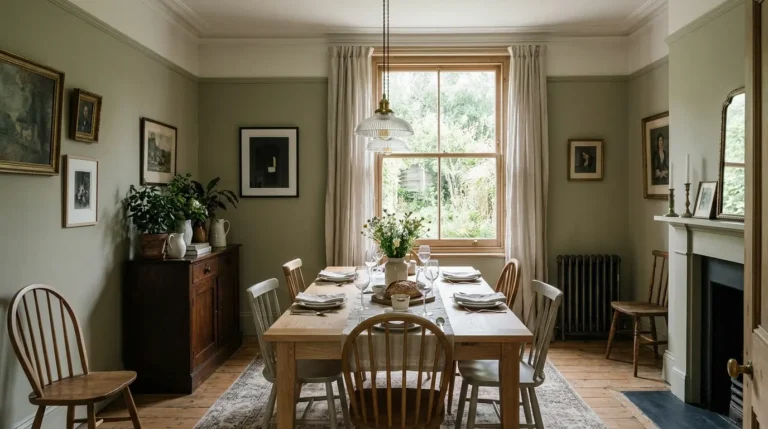
A pendant or small chandelier hangs 75cm to 90cm above the table. Warm bulbs (2700K) keep the light soft. In rooms with lower ceilings a slim fitting works better than a large one. Additional table or wall lamps add light for evenings.
Check the ceiling height and the position of any beams before you order a fixed light.
8. Layered textiles
Linen runners, cotton napkins and a wool throw on the bench add texture without clutter. These pieces can be washed and changed with the seasons. Keep the table centre simple so there is room for serving dishes.
Avoid permanent decorations that leave no space for food.
9. Wood flooring
Original floorboards, engineered oak or a wood-effect floor ground the rustic look. A natural finish shows the grain. In homes with underfloor heating choose a suitable wood product and allow it to acclimatise. The floor should be level before the table and rug go down.
If the floor is uneven, a large rug can hide minor variations, but the table must still sit stable.
Layout considerations for UK rooms
Most UK dining rooms or dining areas in open-plan spaces are between 3m and 4m in one direction. A 180cm table needs roughly 3.6m of room length once you add 90cm clearance at each end. If the room is narrower, place the table against one wall and use a bench on that side so the opposite side has full clearance for chairs and walking. Mark the floor with tape using the exact dimensions of the table and chairs you are considering.
In rooms with a chimney breast, the alcoves often suit a sideboard or dresser. Measure the alcove at skirting level because older walls are rarely square.
Maintenance for natural materials
Solid wood tables need occasional oiling to keep the finish protected. Wipe spills promptly. Natural fibre rugs can be vacuumed and spot cleaned. Linen and cotton textiles wash easily. Plan for this maintenance so the room stays practical rather than precious. In homes with children or pets, choose finishes that can be refreshed rather than those that show every mark permanently.
What to check before ordering
Measure the room with chairs out and mark the table footprint. Confirm clearances of 90cm on seating sides. Check wood finishes and ask about maintenance. Confirm delivery and assembly options for large tables. Test paint colours in the actual room.
Conclusion
These farmhouse dining room ideas create a warm rustic space when the table is the right size, the materials are natural and the clearances allow comfortable movement. Start with the table and seating, then add colour, texture and storage that suit the room. The result works for daily meals and larger gatherings in typical UK homes.
FAQs
What size table suits a farmhouse dining room?
A solid wood table 160cm to 200cm long usually seats six to eight people with 90cm clear around it.
Do I need a bench?
A bench is useful on one side for space and the informal look, but it is not essential.
What colours work best?
Warm creams, soft whites and pale greiges keep the room light and let the wood stand out.