7 Industrial Dining Room Ideas for a Bold Urban Look

When combining industrial elements with a kitchen-diner, keep the metal finishes consistent between the two zones so the spaces feel connected. A black metal table frame can echo the handles or the extractor if those are also dark metal. This avoids the dining area looking like a separate theme.
Start by checking the light. Dark materials absorb light, so north-facing rooms need careful colour and lighting choices. Many people review dining room ideas before deciding on an industrial scheme.
1. Metal-framed table with wood top
A table with a solid wood top and black or steel frame is the core of an industrial dining room. Lengths of 160cm to 200cm seat six to eight with 60cm to 70cm per person. The metal legs or trestle base leave knee space clear. Depth of 90cm to 100cm gives enough room for place settings and serving dishes in the centre. In many UK homes a 180cm table is the practical maximum once you account for doorways and the need to move around the room.
Check the stability of the frame. Wide tables need cross-bracing or a substantial base so they do not rock. Measure 90cm clearance around the table with chairs out.
2. Exposed brick or concrete wall
One feature wall of exposed brick or a smooth concrete finish anchors the industrial look. In older UK houses this may already exist behind plaster. If you are adding a finish, keep it to one wall so the room does not feel cold. Pair it with warmer wood on the table and floor.
Seal brick properly to control dust. In rooms with limited light, keep the other walls light so the brick does not darken the whole space.
3. Metal and leather dining chairs
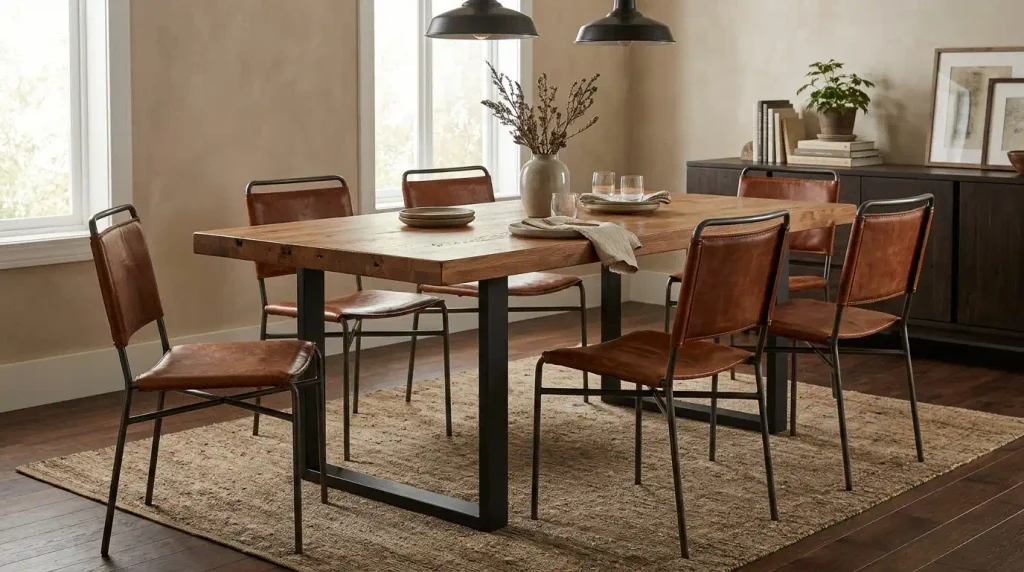
Chairs with slim metal frames and leather or faux-leather seats suit the style and are easy to wipe. Seat height should leave 25cm to 30cm under the table. Allow 60cm of table edge per chair. Metal frames take less visual space than solid wood chairs, which helps in smaller rooms. Measure the actual chair width including any arms; many metal chairs are 45cm to 50cm wide at the seat.
See types of dining chairs for frames that work with metal tables.
4. Open metal shelving or rack
An open shelving unit in steel or black metal holds glassware, books and ceramics. Depth of 30cm to 40cm keeps it from projecting too far. Place it on a wall away from the main seating so it does not interfere with chair movement. The open design shows the structure, which fits the industrial aesthetic.
Secure tall units to the wall. In homes with children or pets, heavier items belong on lower shelves.
5. Pendant lights with metal shades
Industrial pendants with metal shades hang 75cm to 90cm above the table. Multiple smaller lights look better than one large fitting over a long table. Warm bulbs prevent the room from feeling cold. Cable colour and ceiling rose should match the metal used elsewhere.
In converted spaces with high ceilings the scale of furniture can feel small. Choose a table with a thicker top or a larger base so it holds its own. Pendant lights can drop further, but keep them at least 75cm above the table surface so they do not interfere with conversation or serving.
6. Concrete or stone-effect flooring
Polished concrete, large-format tiles or a stone-effect floor adds the hard surface typical of industrial spaces. Underfloor heating works well with these materials. A large rug under the table softens the look and reduces noise. Choose a rug that extends beyond the chairs when pulled out.
In older houses check the floor level and any steps before laying rigid flooring. Expansion gaps matter with underfloor heating.
7. Mixed metal finishes on storage
A sideboard or cabinet with black metal frame and wood or concrete top completes the scheme. Height around 80cm lines up with the table. Depth under 45cm keeps clearance to the table at 90cm or more. Handles in brass or steel add a small contrast without breaking the look.
Measure the delivery route for metal-framed pieces; some arrive fully assembled and need wide doorways.
Lighting levels and colour balance
Dark metal and brick absorb light. Plan for more lighting than a pale room would need. Use a mix of pendant lights over the table and wall lights or floor lamps so you can adjust for different times of day. Warm white bulbs (2700K to 3000K) stop the space feeling clinical. If the room is north-facing, keep at least two walls light so the industrial elements read as accents rather than the whole scheme.
Test samples of metal finishes and brick sealer in the room. Some black finishes look brown or blue under certain bulbs.
Durability for daily meals
Metal frames near food need a finish that resists fingerprints and spills. Powder-coated steel is easier to wipe than bare metal. Wood tops should have a hardwax oil or similar finish that can be refreshed. Leather seats mark more easily than vinyl or treated fabric; choose accordingly if the room is used by children. Check that chairs can be pulled out fully without hitting the metal base of the table.
What to check before ordering
UK building regulations and practical use both favour at least 90cm clearance on seating sides. In practice this means a 180cm table in a 3.6m wide room leaves comfortable space if chairs are not oversized. Always mark the floor with tape using the exact table and chair dimensions before you commit to an order. This simple step avoids the most common return reason for dining furniture.
Conclusion
An industrial dining room works when the materials are honest and the proportions suit the room. A metal-framed table, suitable chairs, one strong wall finish and practical lighting give the bold urban look without making the space hard to use. Measure clearances and light levels carefully so the result stays comfortable for everyday meals.
FAQs
Does an industrial dining room feel cold?
It can if every surface is dark metal and concrete. Balance with wood on the table, warm lighting and a rug to keep the room usable and comfortable.
What table size works for industrial style?
Tables 160cm to 200cm long with metal frames suit most rooms and seat six to eight people with proper clearances.
Can I use industrial style in a small dining room?
Yes. Use slim metal chairs, one feature wall and a table that fits with 90cm clear around it. Avoid large solid storage that crowds the space.