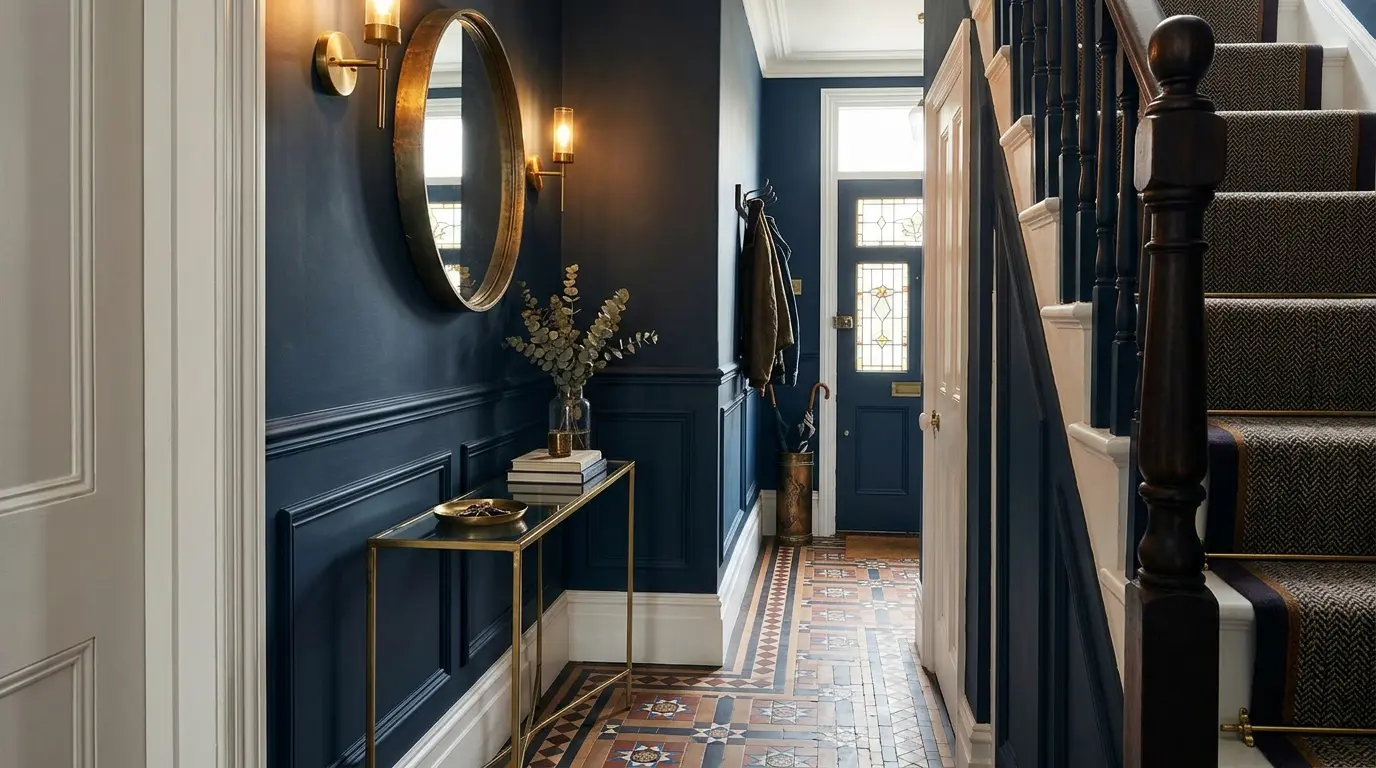
7 Dark Hallway Paint Ideas for a Dramatic and Welcoming Entrance

A dark hallway paint scheme can transform a narrow or overlooked entrance into a bold statement that feels warm and intentional rather than cramped. In many UK homes, hallways lack natural light and receive heavy foot traffic, so the colour choice must balance drama with practicality. Deep shades hide marks better than pale ones while creating a sense of depth that makes the space feel more substantial. Pairing dark walls with the right lighting, trim, and flooring prevents the area from feeling closed in. These seven ideas focus on shades and finishes that work in real British corridors, taking into account typical ceiling heights around 2.4 metres, standard door widths, and the need for durable, washable surfaces.
1. Deep Navy with Crisp White Skirting and Doors
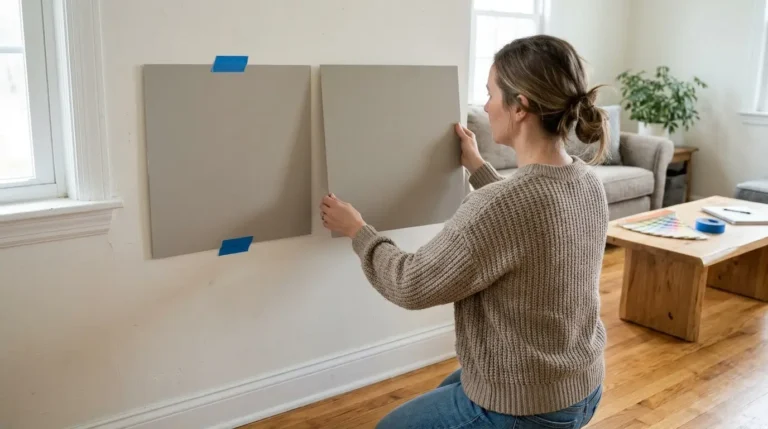
Navy blue creates an elegant, tailored look that suits both Victorian terraces and modern new-builds. Choose a true navy with cool undertones rather than a blue-black, and apply it in a durable eggshell or satin finish that can be wiped clean. Leave the skirting, architrave, and internal doors in a bright white or soft off-white so the contrast reads as crisp and intentional. In a typical 1.2-metre-wide hallway, this contrast stops the walls from swallowing the space. Test the colour on a large sheet of paper and view it at different times of day, because north-facing halls can make navy appear almost black. Check that your chosen paint has good coverage; most deep blues need two or three coats. For more guidance on selecting dark shades that still feel inviting, see how to use dark paint without a gloomy room.
2. Charcoal Grey with Warm Metallic Accents
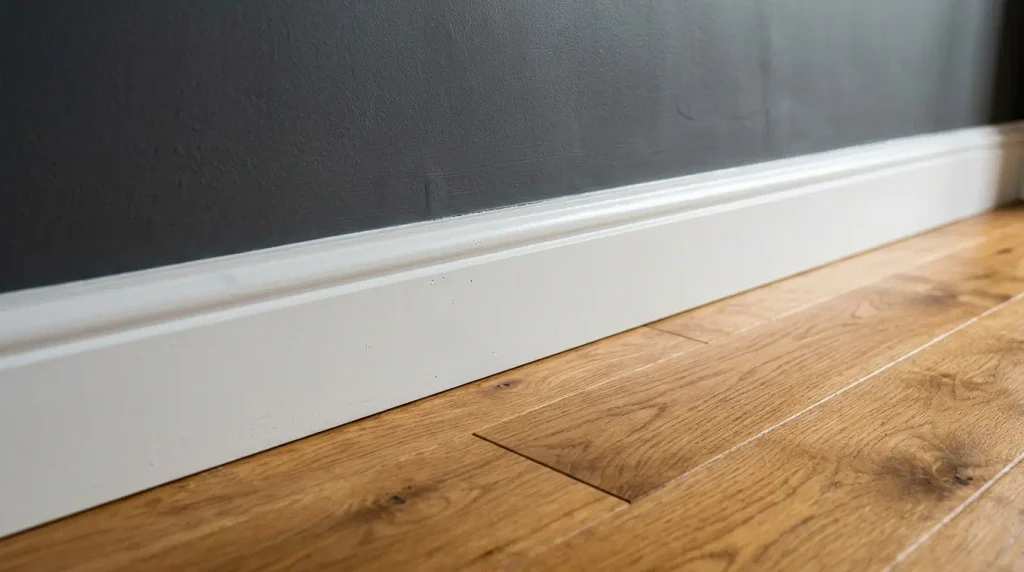
A soft charcoal grey with warm undertones feels modern and grounded without the starkness of pure black. Look for greys that lean slightly brown or taupe under artificial light so the hallway remains welcoming. Pair the walls with brass or aged-bronze door handles, a slim console table, and a warm-toned runner. In high-traffic areas, specify a scrubbable matt or eggshell that resists scuffs from bags and coats. Measure the run of the hallway carefully; if it is longer than 4 metres, break the expanse with a picture rail or a change in ceiling colour to avoid a tunnel effect. Always order sample pots and paint a full panel next to your existing flooring so you can judge the undertone accurately. Related advice on grey selection appears in how to choose the right grey paint for your UK home.
3. Forest Green with Natural Timber Flooring
Deep forest or bottle green brings richness and a sense of calm to an entrance. It works especially well above original wooden floorboards or a warm oak laminate. Use a low-sheen finish so the colour does not bounce light harshly. Keep ceiling and upper woodwork light, or paint the ceiling the same green for a colour-drenched effect if the hall has adequate height. In UK homes with standard 2.4-metre ceilings, full-height green can feel enveloping rather than oppressive when balanced by good lighting. Confirm the paint is suitable for walls that may receive occasional moisture from wet coats. Check coverage rates on the tin; greens often require extra coats. Explore more dark green approaches in 7 dark green paint ideas for a rich and dramatic look.
4. Soft Black with Layered Lighting
A true soft black or near-black creates maximum drama and hides every scuff. The key is layered lighting: a ceiling pendant, wall sconces at about 1.5 metres height, and a table lamp on a console. Without this, the space can feel flat. Specify a washable eggshell and ensure the primer is high-quality so the finish stays even. In narrow halls under 1.1 metres wide, leave doors and frames in a contrasting light colour to preserve the sense of width. Always calculate the exact area including doors and windows so you buy enough paint; dark colours show joins more clearly if you run short. Further black schemes are covered in 10 black paint ideas for a bold and sophisticated home.
5. Warm Chocolate Brown with Cream Trim
A rich chocolate or espresso brown feels traditional and cosy, especially in period properties. Choose a brown with red or gold undertones rather than a cool grey-brown so the hallway stays warm under LED lighting. Cream or ivory woodwork provides the necessary lift. This combination hides dirt well on the lower walls where bags brush past. In staircases, paint the stringers and risers the same brown for continuity, but keep treads in a hard-wearing clear finish. Measure clearances carefully around newel posts and handrails so the colour does not make the stairs feel narrower. Sample the colour beside your front door and existing flooring before committing.
6. Moody Plum with Brass Hardware
A deep plum or aubergine offers something more unexpected while remaining sophisticated. It pairs beautifully with brass or gold-toned fittings and a patterned runner. Use an eggshell finish for durability. In halls with limited natural light, add a large mirror opposite the door to bounce light and prevent the shade from reading too dark. Check that the paint is low-VOC if the space is frequently occupied by children or pets. Order samples and view them under both daylight and evening bulbs, as purple undertones can shift dramatically. This approach links well with broader dramatic schemes discussed in 15 dark paint ideas to create a dramatic and cosy interior.
7. Colour-Drenched Deep Teal Throughout
Painting walls, ceiling, and woodwork in the same deep teal creates a cocooning, high-end effect that makes a small hallway feel designed rather than leftover. Choose a teal with green rather than blue undertones for warmth. The continuous colour reduces visual breaks and can make the space feel larger when lighting is sufficient. Ensure you use the correct sheen progression: matt or eggshell on walls, satin on woodwork for wipeability. In UK terraces, this works well if you have at least one window or a glazed front door. Calculate paint quantities carefully for the ceiling as well. Step-by-step colour-drenching advice is available in how to try colour drenching in a room step by step.
Conclusion
Dark hallway paint succeeds when the shade is chosen for its undertones, the finish is practical for high traffic, and lighting is layered to keep the space welcoming. Measure the actual width and height of your entrance, test samples against your flooring and door, and always buy enough paint for full coats. With these checks in place, any of the seven ideas above can turn a plain corridor into a dramatic and welcoming first impression.
FAQs
What is the best finish for dark hallway paint?
Eggshell or satin is ideal. Both are more durable and easier to wipe than matt while still looking sophisticated. Avoid high-gloss on large wall areas as it shows every imperfection.
Will dark paint make my hallway feel smaller?
It can if lighting is poor and everything is the same dark colour. Contrast on doors and skirting, plus layered lighting and a mirror, keeps the space feeling generous.
How much paint do I need for a typical UK hallway?
Measure wall area (length × height × 2) and subtract doors and windows. Most tins cover 10–12 square metres per litre. Deep colours often need an extra coat, so order 20 per cent more than the calculation suggests.
Should I paint the ceiling the same dark colour?
Only if the ceiling is at least 2.4 metres high and you have good lighting. Otherwise keep it white or a lighter tint of the wall colour to maintain height.
What primer works best under dark hallway colours?
A good-quality acrylic primer or the paint brand’s own primer-sealer. On previously painted walls that are sound, one coat is usually enough. Fresh plaster needs a mist coat first.
Can I use the same dark paint on woodwork?
Yes, but switch to a satin or gloss sheen for doors, skirting, and handrails so they can be wiped clean easily. Walls can stay in eggshell.