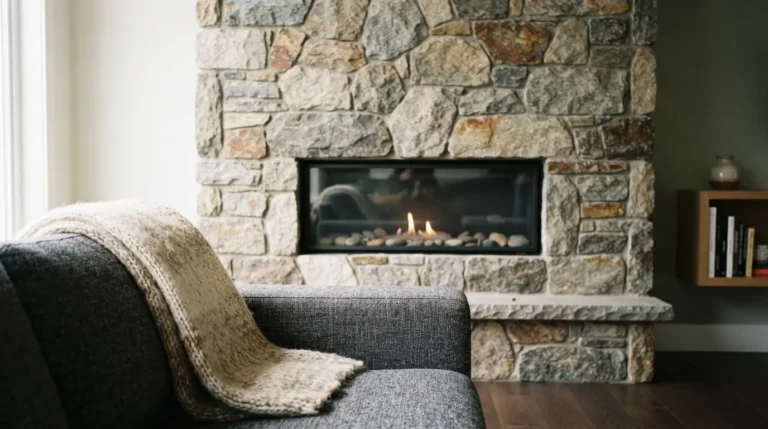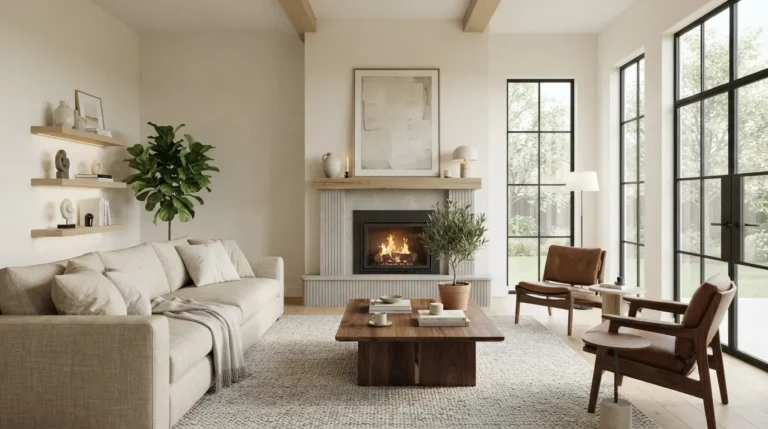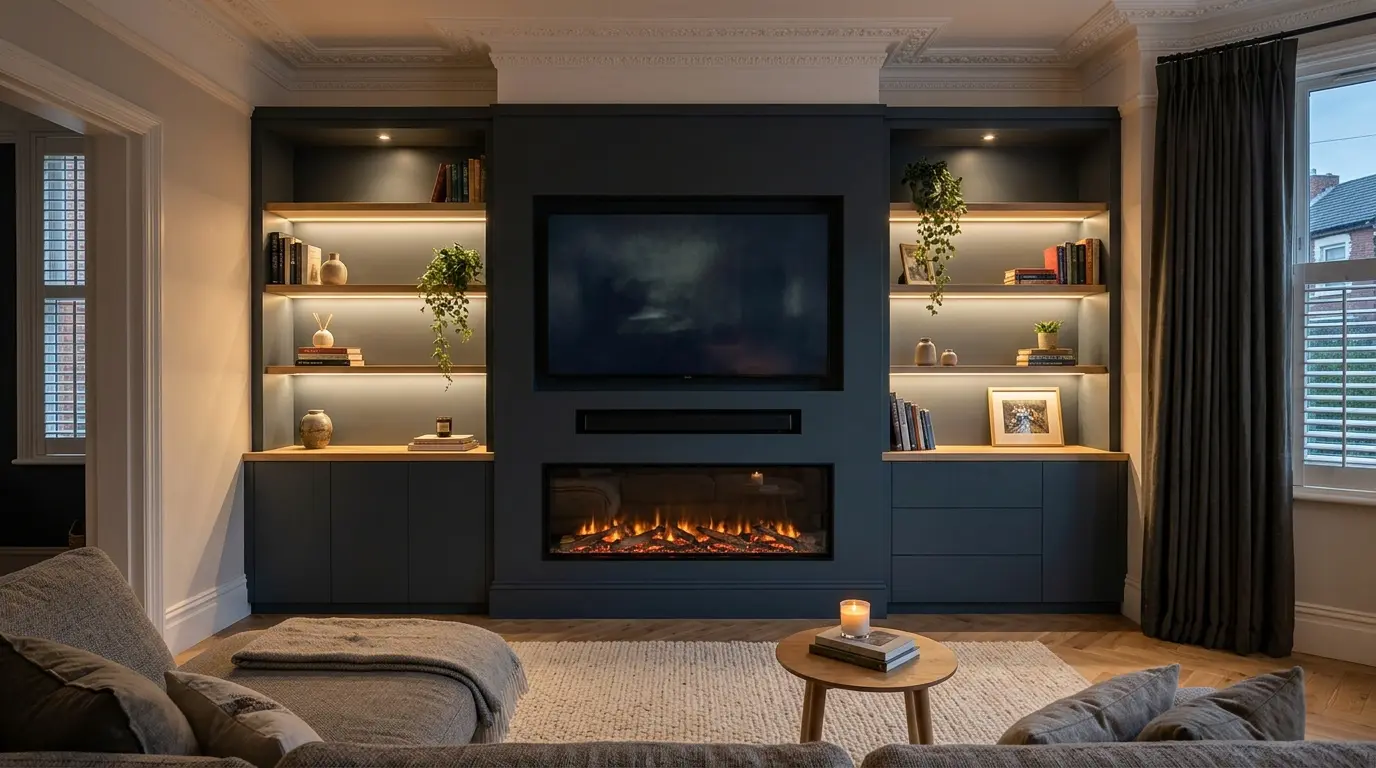
12 Media Wall Ideas for a Stunning Living Room Feature

Media wall ideas turn the television area into a clean, built-in feature that hides cables and adds storage in UK living rooms. A well-planned media wall living room keeps the screen as the focus while the surrounding panels and shelves stay practical. From simple painted MDF builds to acoustic panel media wall designs, the key is matching the size to the wall and leaving proper clearances and ventilation. This guide covers twelve media wall ideas that work in real British homes.
1. Built-In Media Wall with Full Storage
A built in media wall with cupboards on both sides of the television hides everything from consoles to cables. Use 18 mm MDF for the carcasses and leave 50–80 mm ventilation behind closed sections. The wall usually needs 2.4–3.0 metres of clear length. Paint the finished surface to match the room so it looks intentional rather than added on.
2. Acoustic Panel Media Wall
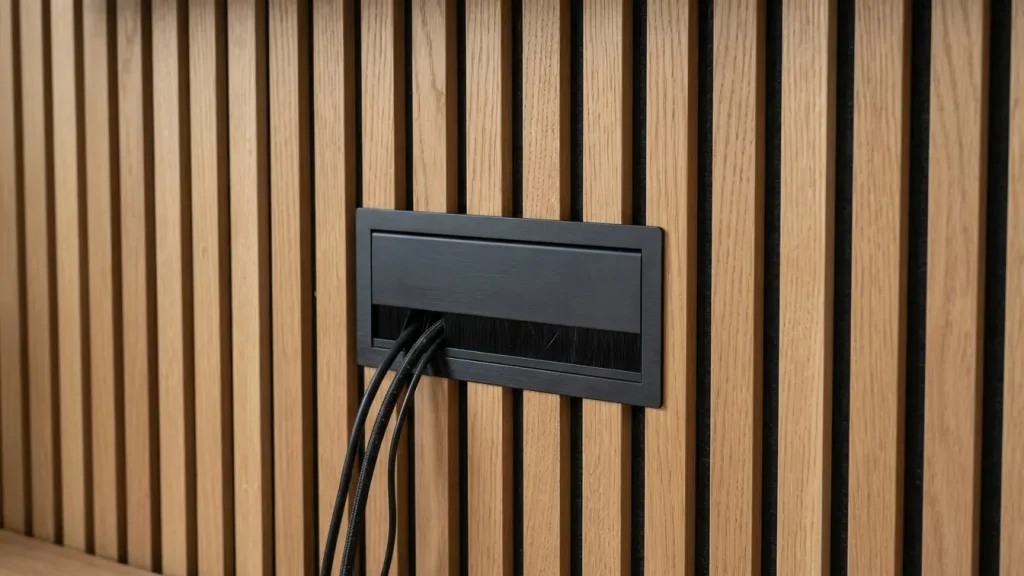
An acoustic panel media wall improves sound while adding texture. Slatted panels or fabric-wrapped boards cover the structure and hide cables. Leave clear access panels so you can reach connections later. This style works well in open-plan living rooms where sound travels. Fix the panels securely and check they do not block ventilation slots.
3. Backlit Media Wall
A backlit media wall uses LED strips behind the television or under shelves to create a soft glow. Choose low-voltage lighting and route the driver out of sight. Avoid placing lights where they reflect directly onto the screen. The effect works best when the rest of the room lighting is layered rather than relying on a single overhead fitting.
4. Media Wall with Slats
A media wall with slats adds vertical interest and can hide the edges of the structure. Timber or MDF slats run floor to ceiling or stop at picture-rail height. Space the slats evenly and leave gaps for cable access. This design suits both modern and transitional rooms when the slat colour matches other timber in the space.
5. Floating Media Wall
A floating media wall sits off the floor and makes cleaning easier underneath. It needs a solid wall and correctly rated fixings. Leave 100 mm clear above if the television mounts on the wall above the unit. The floating look works well in smaller living rooms where floor space is limited. Confirm the wall construction before ordering.
6. Media Wall with Open Niches
Open niches in a media wall give space for books, plants or decorative objects without hiding everything behind doors. Place the niches at eye level so items are easy to reach. Keep the styling simple so the television remains the main focus. This approach suits living rooms where you want the wall to feel lighter.
7. Dark Media Wall for Drama
A dark media wall in charcoal or deep green creates a strong feature against lighter walls. It makes the television screen stand out and works well in evening-focused rooms. Use a matte finish to reduce glare. Add layered lighting so the wall does not feel heavy during the day. Leave clearances at the sides so the dark surface does not overwhelm the room.
8. Media Wall with Fireplace
Combining a media wall with a fireplace creates a single focal point. The television can sit above or to the side of the fire depending on the wall width. Check clearances around the fire for safety and ventilation. This layout works in both traditional and modern living rooms when the finishes are coordinated. Plan cable routes carefully so they do not interfere with the fire installation.
9. Slim Media Wall for Narrow Rooms
A slim media wall keeps depth to a minimum so it does not eat into floor space in narrow living rooms. Use shallower shelves and wall-mounted devices where possible. The television can sit on a low plinth or mount directly. Leave at least 900 mm clear in front for movement. This design suits terraced houses and flats with limited width.
10. Media Wall with Integrated Lighting
Integrated lighting in a media wall can include shelf lights, uplights or a soft wash behind the panels. Plan the wiring before the final panels go on so cables stay hidden. Use dimmable LEDs so you can adjust the level for daytime and evening. The lighting should complement rather than compete with the television picture.
11. Timber Media Wall for Warmth
A timber media wall uses oak, walnut or painted wood to add natural warmth. The grain becomes part of the design. Solid or veneered panels work, but check edge finishing so cut ends do not show. This style pairs well with oak flooring and natural rugs. Maintain consistent indoor humidity so the timber stays stable.
12. Media Wall with Concealed Storage
Concealed storage in a media wall keeps the surface clean while still holding everyday items. Push-to-open doors or handle-less fronts maintain clean lines. Include at least one ventilated section for electronics. This approach works when you want the wall to look like a single panel rather than a collection of cupboards. Plan the door sizes so they open fully without hitting furniture.
Conclusion
Media wall ideas succeed when they match the wall size, leave proper ventilation and clearances, and hide cables without making future access difficult. From acoustic panel media wall designs to simple built-in storage, the best choice depends on the room layout and how you use the space every day. Measure carefully, plan the structure and finish the edges so the feature looks intentional.
FAQs
How much wall space do I need for a media wall?
Most media walls need 2.4–3.0 metres of clear wall length to look balanced with a standard living room television. Leave at least 300 mm clear on each side.
Do media walls need ventilation?
Yes. Leave 50–80 mm clear space behind closed sections that contain electronics so heat can escape. Open backs or dedicated vents also help.
Can I add a media wall to a stud wall?
Yes, if you fix into the studs or use suitable anchors rated for the weight. Check the wall construction and follow the fixing instructions for your chosen system.
What is the best material for a media wall?
18 mm MDF is practical for most builds because it cuts cleanly and paints well. Timber panels add warmth but need careful edge finishing.
How do I hide cables in a media wall?
Route cables through planned channels or gaps behind the panels before the final finish goes on. Include access panels so you can change connections later without dismantling the wall.
Will a dark media wall make the room feel smaller?
A dark media wall can make the feature stronger, but keep the surrounding walls lighter and add layered lighting so the room does not feel heavy. Leave clearances at the sides.