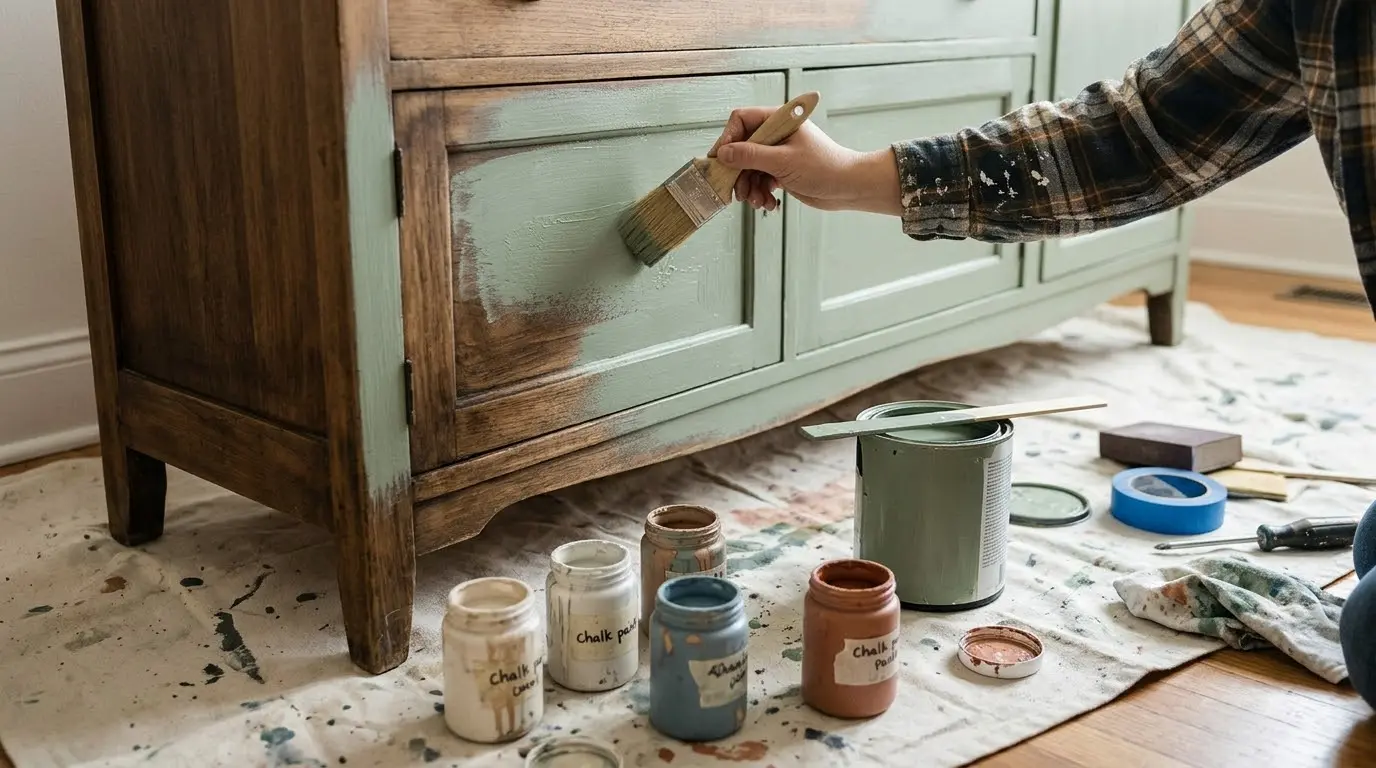
How to Use Chalk Paint to Transform Furniture at Home

Chalk paint offers a straightforward way to refresh wooden furniture without heavy sanding or specialist equipment. In UK homes it is popular for updating sideboards, tables, chests and chairs so they suit a new room scheme. The paint has a thick, matte consistency that covers well and can be distressed for a softer look. Success depends on proper preparation, the right technique, and a protective top coat. This guide covers the practical steps, common mistakes, and what to check before you start. Most pieces in British homes are solid wood or veneered, and the method works on both when preparation is careful.
Gather the Right Materials
You need chalk paint, a good-quality synthetic brush or foam roller, sandpaper (120 and 220 grit), a wax or clear top coat suitable for chalk paint, and clean cloths. Optional items include a wax brush and painter’s tape. Choose a reputable chalk paint brand; coverage and adhesion vary. For furniture that will be used daily, plan a durable wax or water-based top coat. Measure the piece so you know how much paint to buy; most small tables need about 500 ml for two coats. Check the tin for the recommended top coat, as some brands pair better with their own wax.
Work in a space with good ventilation and a temperature above 10 °C. Cold rooms slow drying and can affect the finish. Lay down dust sheets and have a bucket of clean water ready for brushes.
Prepare the Furniture Thoroughly
Clean the piece with sugar soap or a mild detergent to remove grease and dust. Lightly sand glossy or previously varnished surfaces so the paint has something to grip; full stripping is rarely necessary. Wipe away all dust. Fill any deep holes with wood filler and sand smooth once dry. Remove hardware or mask it carefully. Work in a well-ventilated space, preferably above 10 °C. Skipping this step is the most common reason for poor adhesion. On veneered pieces, sand very lightly so you do not break through the veneer.
If the furniture has old wax or oil, clean it more thoroughly or the new paint may not stick. A quick wipe with white spirit after the soap can help on previously waxed pieces, but test first in a hidden spot.
Apply the First Coat
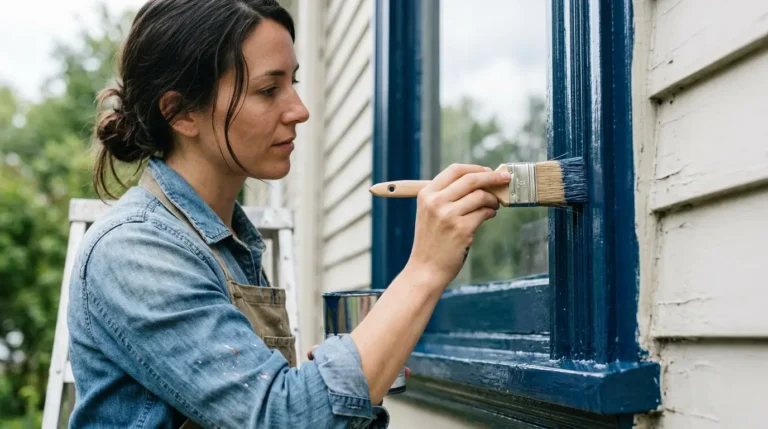
Stir the paint well. Apply a thin, even coat with a brush, working in the direction of the grain where possible. Avoid overloading the brush. Allow the first coat to dry fully, usually 1–2 hours depending on temperature and humidity. In a typical UK room this may take longer in winter. Do not rush; thick coats take longer to cure and can leave brush marks. Start with the underside or back so you can practise the technique.
Keep a wet edge as you work so the finish stays even. If the paint starts to dry in the tin, add a tiny amount of water and stir, but do not thin it too much or coverage will suffer.
Add Further Coats and Distress if Desired
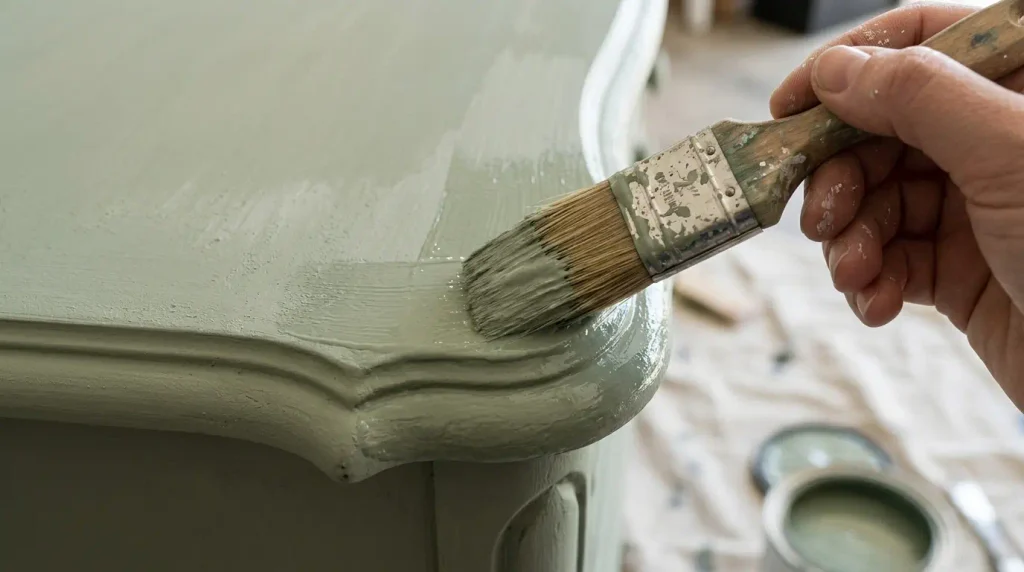
Apply a second thin coat once the first is dry. Most pieces need two coats for even coverage. If you want a distressed finish, lightly sand edges and high-wear areas with 220-grit paper after the second coat has dried. Wipe away the dust. This reveals the wood or undercoat in a controlled way. Keep the distressing subtle so the piece still looks intentional rather than worn out. On larger pieces such as sideboards, distress only the edges and corners for a more natural look.
If the colour is not covering well, a third thin coat is better than one thick one. Allow full drying between each. In humid UK weather this can take longer, so be patient.
Seal with Wax or a Clear Top Coat
Chalk paint needs protection. Apply a clear wax with a brush or cloth, working in thin layers and buffing after each. Alternatively use a water-based top coat designed for chalk paint; this is often more durable for tabletops. Follow the product instructions for drying times. Allow the piece to cure fully, usually 2–3 days, before heavy use. Without a top coat the paint marks easily. For dining tables or pieces that will be wiped often, the clear coat is usually the better choice.
Buff the wax with a clean cloth until the surface feels smooth. Multiple thin layers of wax build better protection than one thick layer. Keep the piece away from direct heat sources while it cures.
Common Mistakes to Avoid
Do not apply thick coats; they drip and take longer to dry. Do not skip cleaning and light sanding on glossy surfaces. Avoid painting in very cold or damp conditions. Do not place heavy objects on the surface until the top coat has fully cured. Always test the colour on a hidden area first, because chalk paint can dry slightly lighter. For related furniture styling ideas, see 8 sideboard ideas to elevate your living room. Another frequent error is not stirring the paint enough, which leads to uneven colour.
If you are painting a piece that will sit in a hallway or kitchen, choose a harder-wearing top coat from the start. Everyday use in those rooms is harder on the finish than in a bedroom.
Conclusion
Using chalk paint successfully comes down to clean preparation, thin coats, and a proper protective finish. Measure the piece, test the colour, and allow full drying and curing times. With those steps followed, you can transform furniture at home so it looks considered and lasts in daily use. Take the time to choose the right top coat for how the piece will be used.
FAQs
Do I need to sand before using chalk paint?
Light sanding is recommended on glossy or varnished surfaces so the paint grips. Bare or already matt wood usually needs only cleaning.
How many coats of chalk paint do I need?
Two thin coats are usually enough for even coverage. Darker colours or dramatic colour changes may need a third.
Is wax or a clear coat better?
Wax gives a traditional soft finish. A water-based clear top coat is more durable for tabletops and high-use pieces.
Can I use chalk paint on laminate furniture?
It can adhere if the surface is cleaned and lightly keyed, but results vary. Test a small area first and expect less durability than on solid wood.
How long before I can use the furniture?
Allow the top coat to cure for at least 48–72 hours before placing items on the surface or using drawers heavily.
Will chalk paint chip easily?
Without a top coat, yes. With proper wax or clear coat it is reasonably durable for normal home use.