
10 Extendable Dining Table Ideas for a Flexible Home

Extendable dining tables solve the everyday space problem in most UK homes. They stay compact for daily meals of four or six and open out when family or friends arrive. The best ones use a smooth mechanism, keep a level top when extended, and still leave enough clearance for chairs. These ten ideas focus on practical layouts and materials that work in real rooms rather than just looking good closed.
1. Butterfly Leaf Oak Table for Everyday Family Use
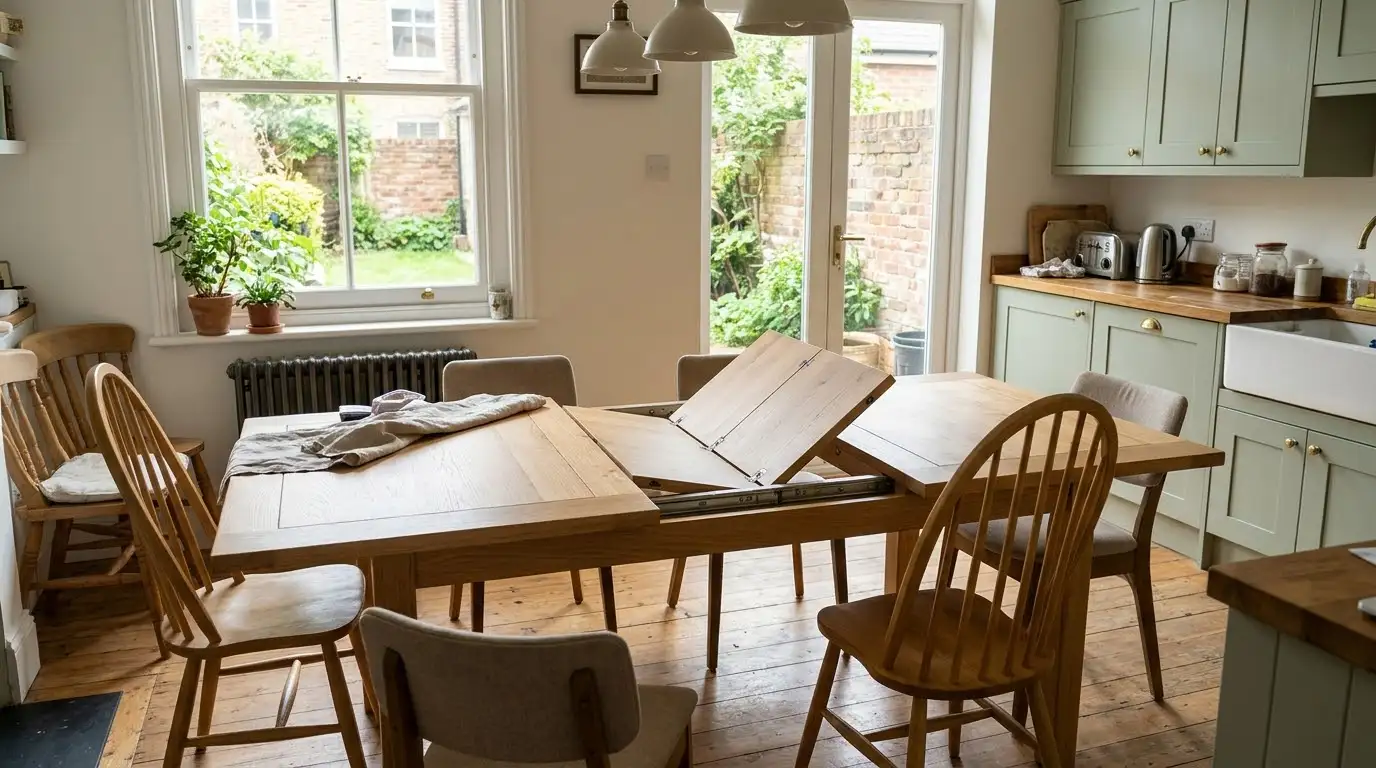
A butterfly leaf folds out from the centre of a solid oak table without needing separate storage. Closed at around 160cm it seats four to six. Open it adds one leaf and reaches roughly 200cm for eight. Check the leaf sits flush and the mechanism does not leave a ridge. Oil the oak once or twice a year so spills do not mark the grain. This style suits a kitchen diner where the table is used every day. Pair it with the right dining table size for your room so the extended length still fits.
2. Drop-In Leaf Rectangular Table With Separate Storage
These tables use one or two leaves that slot into the centre after the ends are pulled apart. The leaves can be stored under a bed or in a sideboard. A typical closed size of 140cm to 160cm expands to 180cm or 220cm. Confirm the leaves match the top finish exactly and that the locking pins hold securely. The join should be barely visible when the table is set. This works well if you have storage space nearby.
3. Round to Oval Extendable Table for Conversation
A round table of 110cm to 120cm diameter seats four comfortably and expands into an oval of 160cm to 180cm for six or more. Pedestal bases help because there are no legs to fight when the shape changes. Measure the extended oval against walls and doorways. Round to oval tables encourage eye contact and suit open-plan spaces where the table is the social centre. Look at round dining table ideas for diameter guidance.
4. Compact 120cm to 180cm Kitchen Diner Extender
Smaller kitchens need a table that starts around 120cm long and grows to 180cm. These often use a single butterfly or drop-in leaf. Place it against a wall or peninsula when closed and pull it out only when extended. Confirm 90cm clearance remains on the seating sides even when open. The shorter everyday footprint keeps the kitchen workable for cooking and walking.
5. Solid Oak With Painted Base for Mixed Style Rooms
A solid oak top on a painted white or grey base mixes warmth with a cleaner look. The extension mechanism is usually the same as solid wood tables. Check that the paint finish on the base is hard-wearing and that the oak top is sealed against water. This combination works in both modern and more traditional British homes. The painted base hides minor scuffs better than bare wood legs.
6. Extendable Table With Built-In Storage for Leaves
Some designs store the leaves inside the table itself or under a hinged top section. You never hunt for a leaf in the loft. Confirm the storage does not reduce knee clearance when the table is closed. These are practical for flats or houses without spare cupboard space. Test the release and lock system in the showroom if possible.
7. Glass Top Extendable for Small Bright Rooms
Tempered glass tops keep a small room feeling open and light. Extension leaves are usually matching glass or a solid centre section. The top resists heat and stains but shows fingerprints and can feel cold. Confirm the edge is rounded and the glass is thick enough for stability when extended. Use a soft cloth only and avoid abrasive cleaners. This suits modern apartments where light is limited.
8. Farmhouse Style Extendable With Turned Legs
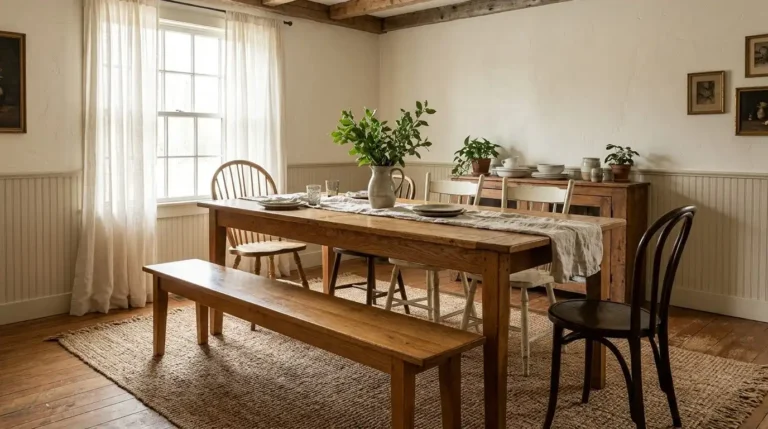
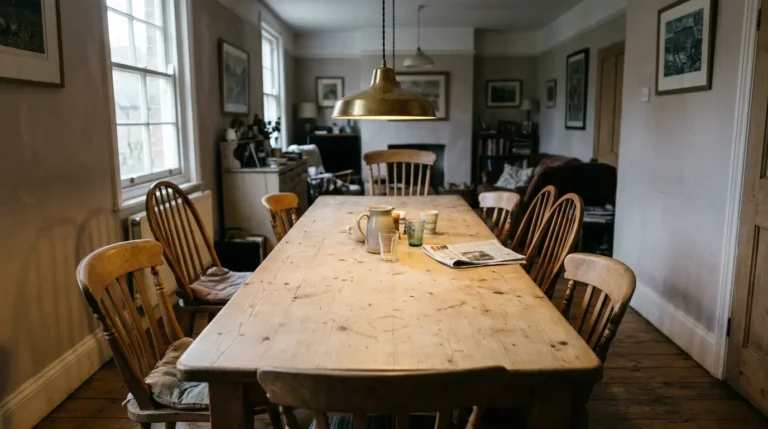
A wider, heavier oak or painted table with turned legs and a butterfly leaf brings a traditional feel. Closed sizes often start at 160cm and open to 220cm. The thicker top and apron need careful knee clearance checks. These tables suit period homes or rooms styled for warmth. Oil the wood regularly and protect the top during extension so the leaf edges do not chip. See farmhouse dining room ideas for matching finishes.
9. Slimline Extendable for Narrow Dining Spaces
Tables only 80cm to 90cm wide when closed expand in length rather than width. They suit narrow rooms or spaces between a kitchen and living area. Confirm the chairs still fit when the table is open and that the ends do not hit doorways. A pedestal or trestle base helps people sit at the ends without leg conflict. Measure the full open length against the longest wall.
10. Mixed Material Extendable With Metal Frame
A wood or laminate top on a slim metal frame keeps the visual weight low. Extension mechanisms are often similar to all-wood tables. The metal can be powder-coated black or brass for contrast. Check that the frame does not flex when the table is fully extended with weight on it. This style works in open-plan industrial or modern rooms. Wipe the frame and top separately to avoid water marks on the metal.
What to Check Before You Order an Extendable Table
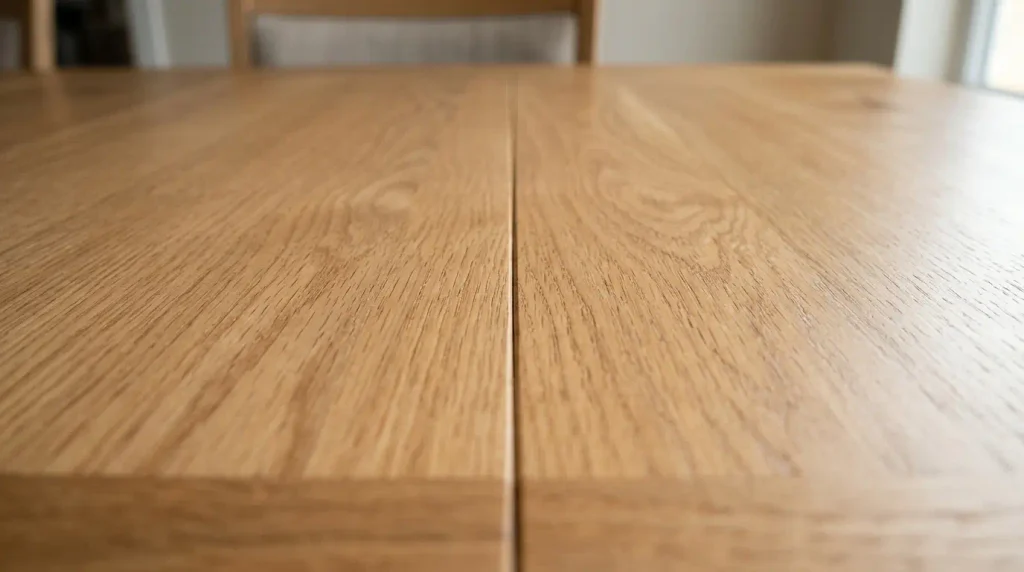
Test the mechanism if you can. It should open and close smoothly without force. The top must stay level when extended. Measure both closed and open sizes against your clearances, including chair pull-out. Confirm delivery access for the closed table and storage for any separate leaves. Ask about the finish warranty and care instructions for the specific wood or surface. Review how to design the perfect dining room from scratch if the whole room is being planned around the table.
Conclusion
An extendable dining table gives flexibility without permanent bulk. Choose the mechanism and material that match how often you open it and how much care you will give the surface. Measure both sizes, check the join and the clearances, and confirm the table will actually fit through your doors. The right extender becomes the table you use every day and the one that handles Christmas without stress.
FAQs
How much longer does an extendable table get?
Most add 40cm to 60cm per leaf. A 160cm table with one leaf often reaches 200cm to 220cm.
Do I need extra clearance when the table is open?
Yes. The 90cm chair clearance rule applies to the extended length. Temporary tighter clearance is only acceptable if no one needs to walk behind the chairs.
Where do the leaves go when not in use?
Butterfly leaves stay inside the table. Drop-in leaves need separate storage in a cupboard, under a bed or inside some table designs.
Is solid oak worth it on an extendable table?
Yes if you want a surface that can be refinished later. The mechanism still needs to be well made so the leaf edges do not chip.


One Comment