How to Choose a Chest of Drawers for Your Bedroom

Choosing a chest of drawers for your bedroom starts with the space you actually have and the clothes you need to store, not the style that looks good in a showroom. A chest that fits the wall but blocks the path to the door, or one with drawers that will not open fully next to the bed, will frustrate you every morning. Measure the wall, the depth into the room, and the clearance needed in front before you look at finishes or drawer counts. Getting the proportions right also helps the rest of your bedroom furniture sit in balance rather than competing for floor space.
Measure the Space Before You Shop
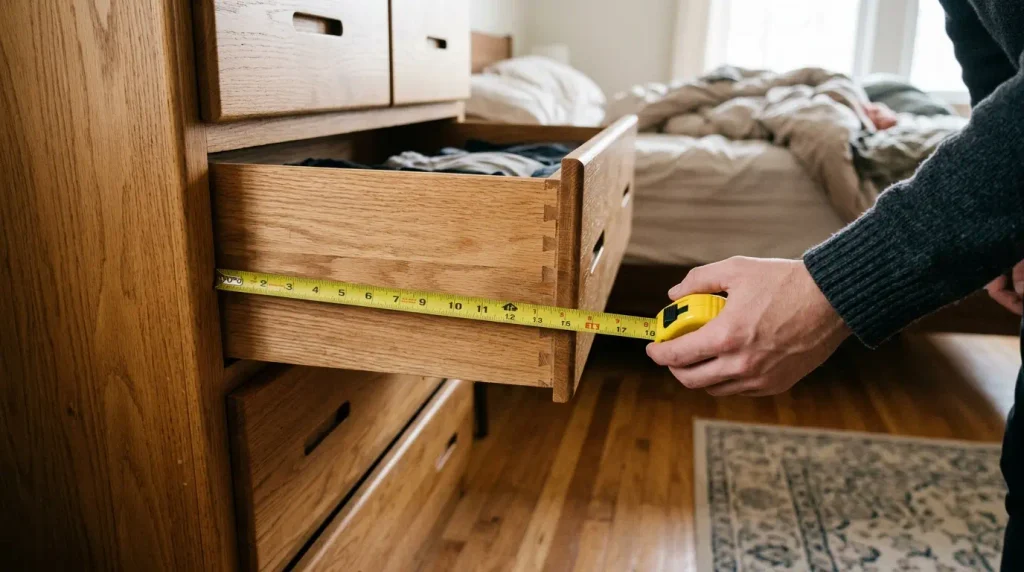
Start by measuring the available wall width, then subtract at least 5 cm on each side for skirting boards, sockets, or simply to avoid a tight squeeze. Depth matters more than most people expect. Standard chests sit 45 to 50 cm deep; in a narrow UK bedroom a 35 to 40 cm depth keeps the walking space usable. Height should suit the wall: a tallboy works in an alcove or beside a wardrobe, while a low wide chest fits under a window or opposite the bed. Check the route into the room as well. Many flat-pack pieces will not fit up a tight staircase or through a doorway once assembled, so note the assembled dimensions against your access path. Leave 45 to 60 cm clear in front so the drawers can pull out fully without hitting the bed or a door.
A useful UK rule of thumb is that a standard chest around 70 to 90 cm wide and 80 to 110 cm tall suits most double bedrooms of 10 to 14 square metres. Narrow tallboys of 40 to 60 cm wide suit box rooms or alcoves. Wide low chests of 100 cm or more need a generous wall and can double as a surface for a mirror or lamp. Always measure with the drawers open in mind, not just the closed footprint.
Decide How Much Storage You Actually Need
Count the drawers you use today rather than assuming more is better. Four well-sized drawers often hold more useful clothing than six shallow ones. Deep drawers (around 20 cm high internally) suit knitwear, towels, and bedding. Shallow ones (12 to 15 cm) work for underwear, T-shirts, and accessories. Mixed heights in one chest give the most flexibility for a typical wardrobe. Check the stated weight capacity per drawer. Some budget pieces list only 5 kg per drawer, which is fine for light clothing but inadequate for heavier items. Soft-close runners are worth the extra cost if the chest will be used daily; basic wooden runners can stick and wear quickly.
If your bedroom already has limited storage, pair the chest with other pieces that hide bulk, such as an ottoman bed. The chest then handles day-to-day folded clothes while the bed base takes seasonal items. Avoid overloading the top surface; a lamp and a small tray are fine, but a heavy television or stacked boxes can make the piece unstable on soft flooring.
Choose Materials That Suit Daily Use
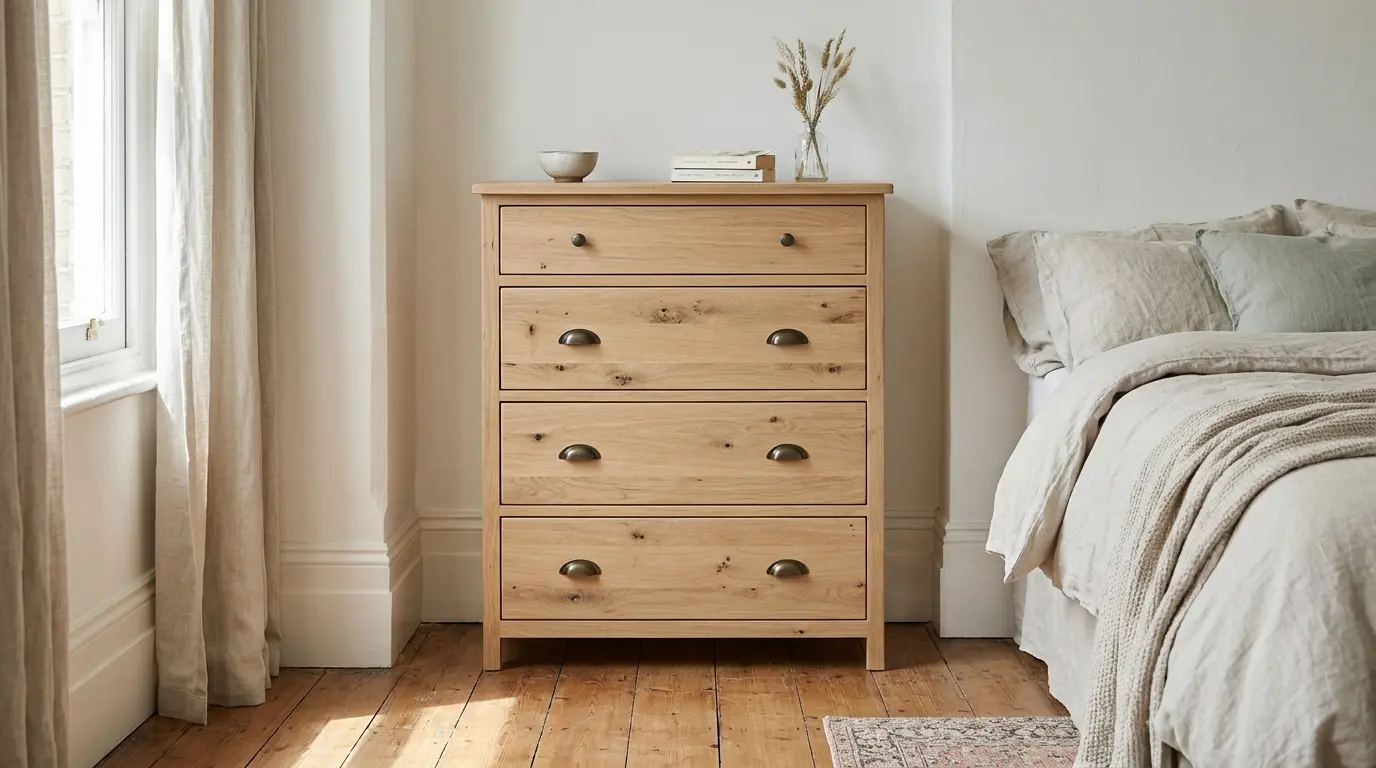
Solid pine is common in UK bedrooms because it is warm, relatively light, and easy to finish or paint. It will show the occasional dent, which many people accept as character. Oak is denser and more scratch-resistant but heavier and more expensive. Engineered boards such as MDF or particleboard with a veneer or foil finish give a consistent look at a lower price and are easy to wipe clean, though they dislike prolonged moisture. For a bedroom that sees daily use, look for drawers with reinforced bases and metal runners rather than thin card or unlined wood. A finish that can be wiped with a damp cloth is practical; high-gloss surfaces show fingerprints more readily than matt ones.
Colour and finish should relate to the rest of the room rather than standing alone. A painted chest in a soft neutral or the same tone as the bed frame creates a calmer scheme than a strong contrast. If you plan to paint or wax a bare wood piece yourself, check that the timber is suitable and that any existing finish will not prevent adhesion. Test a small area first.
Check Practical Details Before Ordering
Look at the assembly method. Fully assembled pieces cost more to deliver and may not fit through doors; flat-pack is common but requires time and the right tools. Confirm whether anti-tip brackets are included, especially for taller chests in homes with children. Rounded corners reduce the risk of knocks in tight spaces. Measure any radiators, sockets, or windows that sit in the intended spot. A chest placed in front of a radiator reduces heat output and can warp wood over time. Leave a small gap behind for airflow and cable access if you plan to put a lamp on top.
Delivery lead times vary widely. Check whether the supplier can deliver upstairs or only to the door. For older UK houses with narrow stairs, note the largest single component size. Once the chest arrives, assemble it in the room if possible so you do not have to manoeuvre a finished piece through tight turns.
Common Mistakes to Avoid
The most frequent error is measuring only the closed width and ignoring depth and drawer clearance. Another is choosing a tall chest for a low-ceilinged room or a very wide one for a small double. Matching the height roughly to the bed or wardrobe keeps the proportions comfortable rather than top-heavy. Finally, ignoring the internal drawer sizes leads to frustration when folded jumpers will not fit without crushing.
Conclusion
A well-chosen chest of drawers disappears into daily routine because it fits the wall, opens fully, and holds the clothes you actually use. Measure the space including drawer clearance, match the drawer heights to your storage needs, and select a material that will stand up to regular use in a typical UK bedroom. Once those practical points are settled, the colour and style can follow the rest of the room without compromise.
FAQs
What size chest of drawers suits a small bedroom?
A narrow tallboy around 40 to 60 cm wide and under 40 cm deep works best in a small bedroom. It uses height rather than floor width and leaves more walking space beside the bed. Confirm there is still 45 cm clear in front for the drawers to open.
How deep should a chest of drawers be?
Most standard chests are 45 to 50 cm deep. In a tight UK bedroom, 35 to 40 cm depth is more practical so the piece does not force you to turn sideways when walking past. Always check the open depth of the drawers as well.
Is solid wood better than MDF for a bedroom chest?
Solid pine or oak is more durable and can be refinished, but it is heavier and usually more expensive. MDF or particleboard with a good veneer is lighter, more affordable, and consistent in appearance. For everyday bedroom use either can work if the drawers are well constructed and the finish is easy to clean.