How to Choose the Right Coffee Table for Your Living Room

Choosing the right coffee table comes down to three things in order: proportion against your sofa, a shape and clearance that actually suits how the room gets used, and a material honest about its upkeep. Get those right and the table anchors the room; get them wrong and you end up with a piece that either dominates the space or gets stepped around for years.
Start With Proportion, Not Style
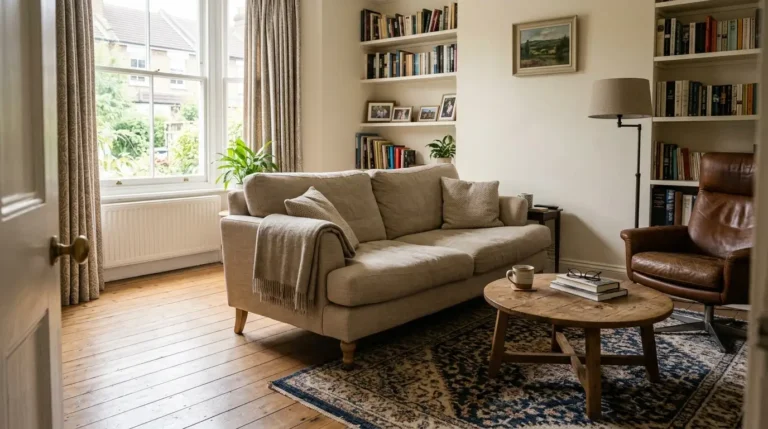
Before looking at a single design, measure your sofa. A coffee table works best at roughly two-thirds the length of the sofa it sits in front of, so a 2.1m sofa suits a table no longer than around 1.4m. Go much bigger and the table dominates the seating area; go much smaller and it looks like an afterthought lost in the middle of the room.
Height matters just as much as length, though this is one area where even experienced guides disagree slightly: some recommend keeping the table level with or a touch below your sofa’s seat height, others allow it to sit a little higher. In practice, a standard coffee table runs 40-45cm, close to most sofa seat heights, so the safest approach is to match it as closely as you can and let your own habits break the tie: if you lean forward often to reach it, err lower; if you rest a laptop or a plate on it, matching height or slightly higher works better.
Leave the Right Amount of Clearance
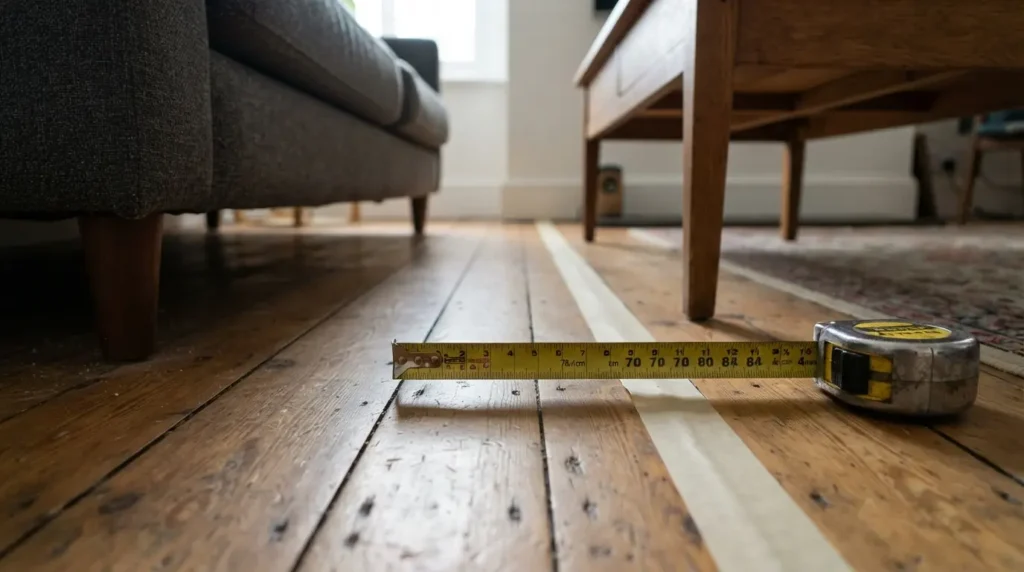
Clearance is the detail most people get wrong, not because they don’t measure, but because they only measure one gap. Leave roughly 30-45cm between the sofa and the table itself, and increase that toward the higher end if the room sees a lot of foot traffic. Where the table sits alongside another piece of furniture or a fireplace, allow closer to 80cm so people can actually walk through comfortably rather than sidling past. Mark these gaps out with tape on the floor before you buy; it takes five minutes and prevents the single most common coffee table mistake, a table that fits the room in theory but makes it feel cramped in practice.
Pick a Shape That Matches Your Layout
Rectangular is the most common shape for a reason: it echoes a standard sofa’s proportions and gives the most usable surface, which suits longer sofas and larger rooms best.
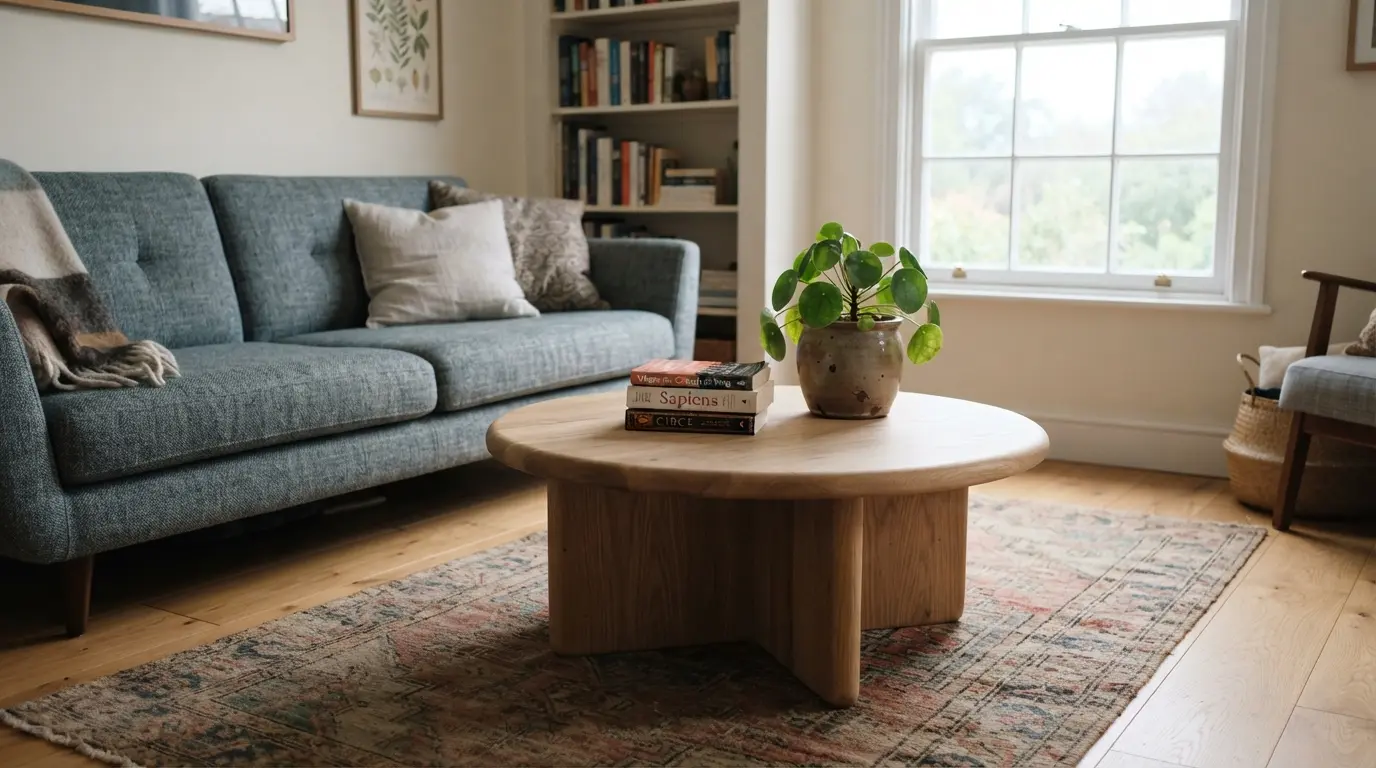
Round and oval tables soften a room full of straight lines, take up less visual space, and genuinely matter for households with young children, since there are no sharp corners to catch a fall against. They also ease circulation in a tighter layout, where a rectangular table’s corners would otherwise sit right in the walking path.
Square tables suit corner and modular sofas particularly well, working from every angle rather than favouring one long edge, and a pair or set of matching squares can make a real statement in a larger room.
Nesting tables are worth considering over a single piece if you regularly need extra surface, for a laptop, a game, or extra drinks when guests are over, since they let you expand and shrink the footprint as needed rather than living with one fixed size.
Choose a Material for How You Live, Not Just How It Photographs
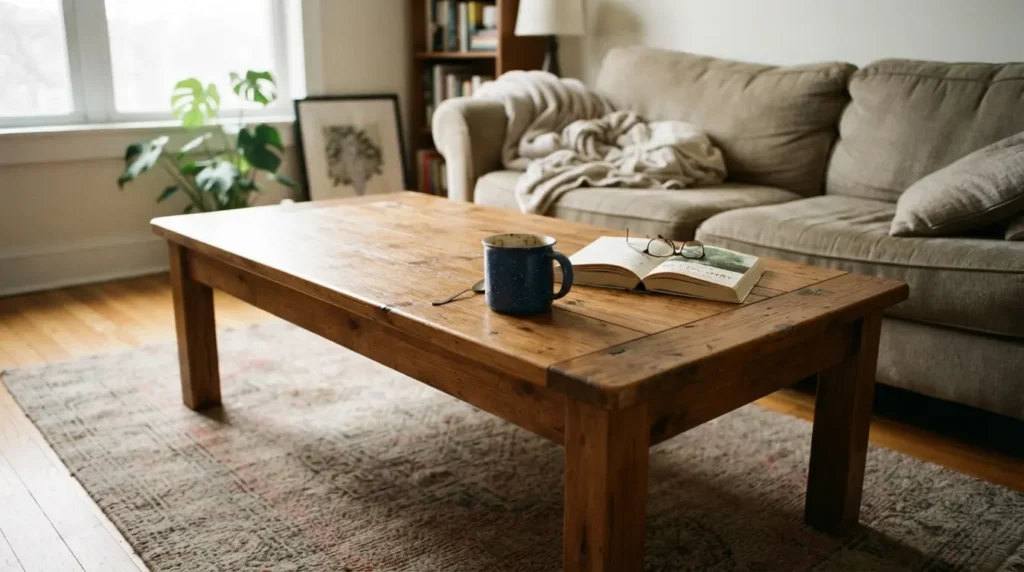
Wood remains the most versatile choice, ageing well and suiting almost any style, with solid oak in particular developing a deeper, richer colour over years of use rather than just wearing out. Glass opens up a small room and keeps sightlines clear, but it’s an honest trade-off: it shows fingerprints and dust more than any other material and isn’t the safest choice in a home with very young children, so it suits a lower-traffic, adult-focused living room better than a busy family one.
Marble and other natural stone bring a genuinely luxurious look and real durability against heat and everyday wear, but the material is porous, so it will absorb spills and stain if left uncoasted; a marble table is a commitment to using coasters and wiping up quickly, not a set-and-forget surface.
Metal, particularly brass or bronze, patinas attractively with age much like leather does, but only if you buy a solid, well-made piece; thinner, cheaper metal frames dent and look tired far sooner. Budget-wise, a simple wood or laminate table typically sits at the lower end, glass and metal frames in the middle, and marble or solid hardwood with real joinery at the top, though exact pricing varies significantly by country and retailer.
Decide If You Need Storage Built In
A coffee table with storage, drawers, a lower shelf, or a lift-up top, is worth the extra cost in any room where clutter is a real issue, since it gives remote controls, magazines, and games a home without another piece of furniture. Trunks and ottomans work as a hybrid option, offering storage and a spot to rest feet at once, while upholstered coffee tables split the difference between a table and an ottoman with a softer top and a wooden base underneath. If storage isn’t a real need in your household, a simpler open design, or even nesting tables, usually looks better and costs less than paying for a storage feature you won’t use.
Coffee Table Mistakes to Avoid
The most frequent mistake is buying a table that looks right in a showroom but is out of proportion once it’s home, usually too large, since people underestimate how much visual weight a coffee table adds to a room. The second is skipping the clearance check and ending up with a table that technically fits but blocks the natural path to a window or the TV. The third is choosing a material for how it photographs rather than how the household actually lives, a glass or pale marble table in a home with toddlers or a boisterous dog rarely stays looking new for long, however striking it looks in a catalogue shot.
Final Thoughts
Choosing the right coffee table really is a proportion problem first and a style choice second: get the size, height, and clearance right against your existing sofa, then let shape and material follow from how the room is actually used day to day. A table chosen this way earns its place at the centre of the room, rather than being the piece you quietly wish you’d measured more carefully before buying.
FAQs
What is the standard coffee table height?
Most coffee tables run 40-45cm high. The right height for your room depends more on your sofa’s seat height than any fixed standard, so measure your own sofa before assuming a standard size will fit.
Should a coffee table be the same height as the sofa?
Roughly, yes. Keeping it level with, or very close to, your sofa’s seat height is the most comfortable and visually balanced choice; sources vary on whether slightly below or slightly above is better, so let your own habits decide.
What is the best coffee table shape for a small living room?
Round or oval tables generally work best in tight spaces, since their lack of corners eases circulation and they read as taking up less visual space than a rectangular table of the same surface area.
What is the most durable coffee table material?
Solid wood and quality stone are the most durable long-term, provided stone is properly cared for, since it’s porous and prone to staining without coasters. Metal is durable too, but only in well-made, solid pieces rather than thin, budget frames.
Do glass coffee tables scratch or damage easily?
Glass resists scratching reasonably well but shows fingerprints and dust constantly, and it isn’t the most practical choice around very young children. It suits a calmer, adult-focused living room better than a high-traffic family one.
How much space should be left around a coffee table?
Leave 30-45cm between the table and your sofa, more toward 45cm in a high-traffic room, and closer to 80cm where the table sits near another piece of furniture people need to walk past.