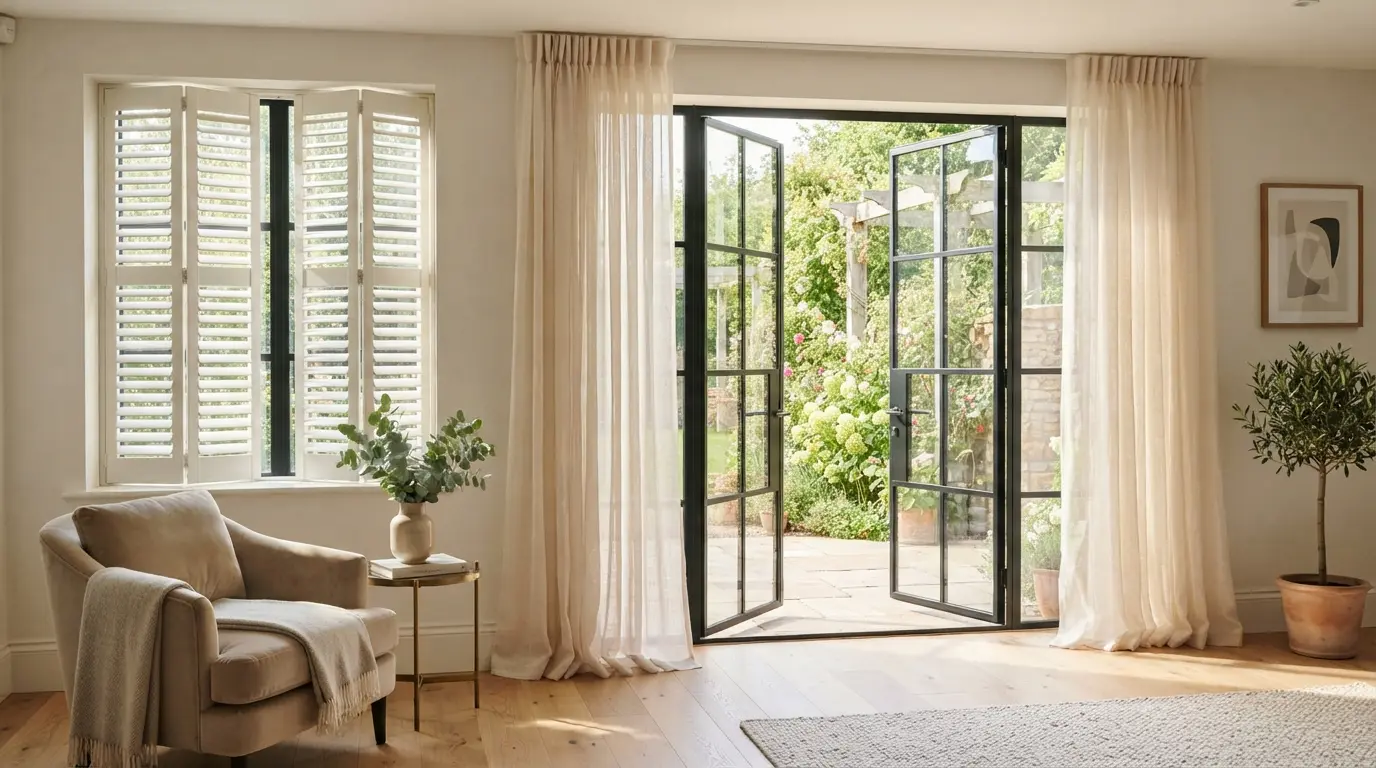
Windows & Doors Ideas: The Complete Guide to Curtains, Blinds, Shutters, and Doors for Your Home

Windows and doors are the most permanent and most structurally significant surfaces in a home and simultaneously the most frequently overlooked in terms of design. We repaint walls and change furniture, but the windows and doors that frame every room, let in every ray of natural light, provide every view, and create every threshold between spaces are often left exactly as they were when the house was built or last renovated.
This guide covers the full spectrum of windows and doors decisions for a UK home from choosing the right curtains, blinds, or shutters for your windows to selecting a front door that transforms the exterior of your property, choosing internal doors that give every room a considered finish, and understanding the options for bifold and French doors that open your home to the outside.
What Makes a Great Window and Door Choice?
The windows and doors of a home serve two purposes simultaneously: the functional and the aesthetic. Functionally, they control light, provide privacy, regulate temperature, ensure security, and define the flow between spaces. Aesthetically, they contribute more to the character of a room and of a house’s exterior than most homeowners realise.
A window dressed with beautiful curtains or well-proportioned shutters can transform a plain room into a characterful one. A front door painted in a confident, considered colour can change the kerb appeal and perceived quality of an entire property. An internal door in a considered style, properly installed and properly painted, contributes a quality of finish that distinguishes a well-designed home from one that simply happened.
The best windows and doors choices in UK homes are considered rather than incidental chosen actively rather than accepted as whatever the builder installed.
Curtain Ideas

Curtains are the most widely used and most versatile window treatment in UK homes. They are available in more fabrics, colours, patterns, heading styles, and lengths than any other window covering, and they contribute to a room’s atmosphere through texture, weight, drape, and colour more completely than blinds or shutters can.
How to Choose the Right Curtains
The most important practical consideration in choosing curtains is the heading style, which determines how they hang and how they are opened and closed. Eyelet curtains with large metal rings through which the curtain pole passes directly are the most contemporary and most widely sold style in the UK. They hang in even, consistent folds and are easy to operate. Pencil pleat curtains are gathered tightly at the top into a series of small, regular pleats, producing the fullest and most luxurious drape the most traditional and most formal heading style.
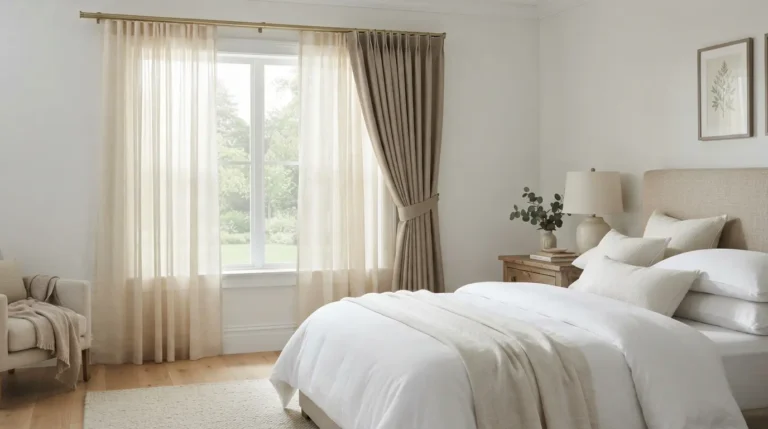
The most important aesthetic consideration is fabric. Linen and linen-mix curtains are the most widely used curtain fabric in contemporary UK homes for their texture, natural quality, and the soft, relaxed drape they create. Velvet curtains add richness, warmth, and a sense of luxury, particularly effective in living rooms and dining rooms where an evening atmosphere is the priority. Voile and sheer curtains filter light without blocking it entirely, providing privacy during the day while maintaining a sense of openness.
How to Hang Curtains for Maximum Impact
The position of the curtain pole or track has a greater impact on the apparent size and proportion of a window and the room around it than the fabric of the curtain itself. Curtains hung from a pole positioned close to the ceiling, extending well beyond the window frame on each side, make the window appear taller and wider, the room appear taller and larger, and the curtains appear more generous and more luxurious.
The standard advice is to hang the curtain pole at least 15 to 20 centimetres above the top of the window frame and closer to the ceiling is almost always better. Extend the pole at least 15 to 20 centimetres beyond the window frame on each side, so that when the curtains are open they stack clear of the glass and maximise the amount of natural light entering the room.
Blackout Curtains
Blackout curtains either blackout fabric or standard fabric with a blackout lining are the most effective window treatment for controlling light in a bedroom. They prevent early morning light from penetrating in summer and create the complete darkness most conducive to good sleep year-round. Blackout-lined linen curtains are the most popular choice in UK bedrooms the linen fabric provides an elegant aesthetic with the practical performance of blackout lining.
Living Room Curtains
Living room curtains serve both a practical and a decorative purpose, and the choice of fabric, colour, and heading style has a significant impact on the overall character of the room. Floor-length curtains in a fabric that pools slightly on the floor one to three centimetres of fabric touching the floor create the most elegant and luxurious effect. Curtains that stop short of the floor at any point below the bottom of the window frame almost always look less intentional than either floor-length or sill-length alternatives.
Blind Ideas
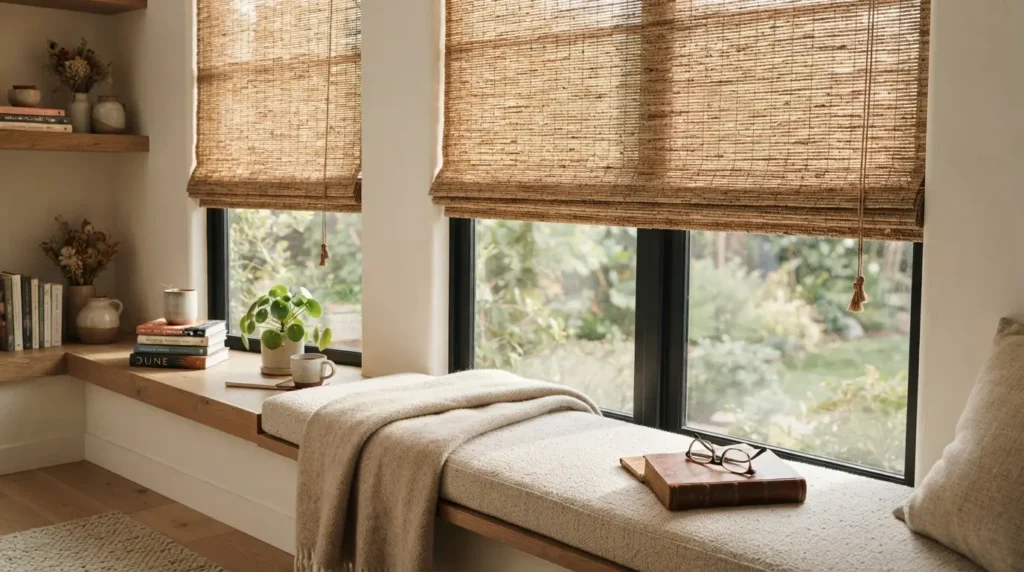
Blinds are a cleaner, more minimal alternative to curtains and the preferred window treatment for rooms where a streamlined, uncluttered aesthetic is the goal or where furniture sits close enough to the window to make curtains impractical.
Roman Blind Ideas
A roman blind: a fabric blind that folds into neat horizontal pleats when raised is the most elegant and most decorative of all blind types. Roman blinds are made in the same fabrics as curtains linen, cotton, velvet, wool and the choice of fabric, colour, and pattern has a significant impact on the character of the finished blind. A plain linen roman blind creates a relaxed, natural effect; a patterned roman blind introduces pattern into a room in a relatively contained way.
Roller Blind Ideas
A roller blind: a length of fabric wound onto a spring-loaded roller is the most utilitarian and most affordable blind type and the one most frequently used in kitchens and bathrooms, where practicality matters more than decorative quality. Modern roller blinds are available in an enormous range of fabrics, colours, and finishes, including blackout fabrics that provide complete light exclusion and day-and-night fabrics that offer a range of light-filtering options from a single blind.
Day and Night Blinds
Day and night blinds: also known as vision blinds or zebra blinds consist of alternating bands of opaque and sheer fabric that can be aligned to filter light or misaligned to block it. They are one of the most practical and most visually clean blind options for living rooms, kitchens, and home offices where light control needs to be adjustable throughout the day without compromising on aesthetics.
Venetian Blinds
A venetian blind: horizontal slats in aluminium, timber, or faux wood is the most versatile light-controlling blind available. Timber and faux wood venetian blinds in a warm, natural finish suit traditional and Scandi interiors. Slim aluminium venetian blinds in white or silver suit contemporary and industrial rooms and are the most popular choice for home offices and studies.
Shutter Ideas

Plantation shutters interior window shutters with adjustable louvres that control light and privacy are one of the most aspirational and most quickly growing window treatment categories in the UK. Once associated primarily with Mediterranean holiday homes and American colonial architecture, they have found a large and growing audience in British homes for their combination of practical performance, timeless aesthetic, and perceived quality.
Full Height Plantation Shutters
Full height plantation shutters covering the entire window from frame to sill in a single panel or pair of panels provide the most complete light and privacy control and the most seamless architectural appearance. They suit most window sizes and shapes and are the most widely chosen shutter style in UK homes. Painted in white or a soft off-white, they work in almost every interior style.
Café Style Shutters
Café style shutters covering only the lower half of a window, leaving the upper half unobstructed are the most practical option for windows that look out onto a street or overlooked area, where privacy at eye level is essential but natural light from above is desirable. They are particularly popular in Victorian and Edwardian properties with large sash windows.
Shutter Colours and Finishes
White and off-white shutters are the most popular and most universally appropriate finish. They work in both traditional and contemporary interiors, reflect light into the room, and maintain a clean, neutral appearance. Painted shutters in dark colours navy, forest green, charcoal are a bolder choice that suits contemporary and maximalist interiors where a more dramatic window treatment is desired.
Bay Window Ideas
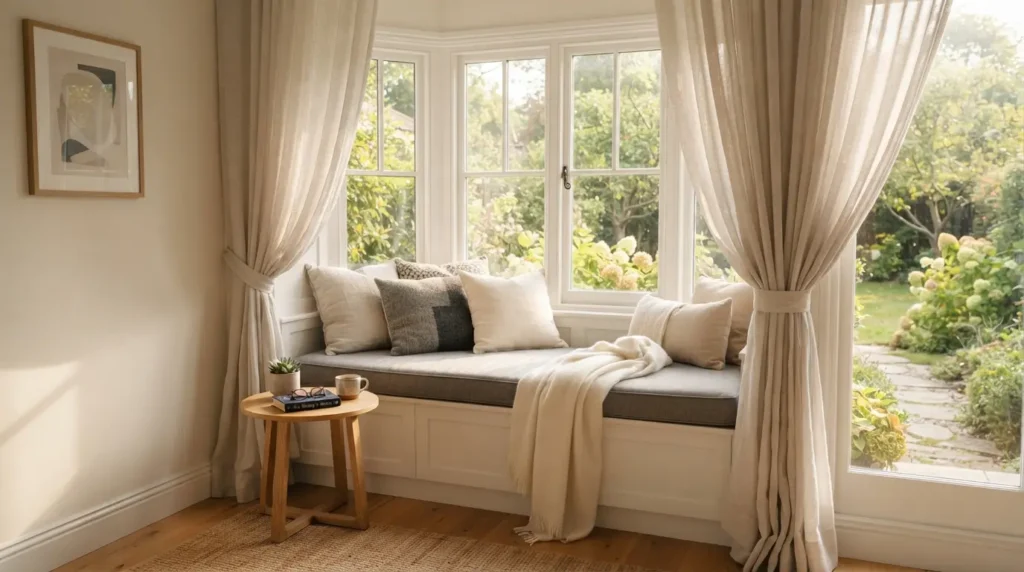
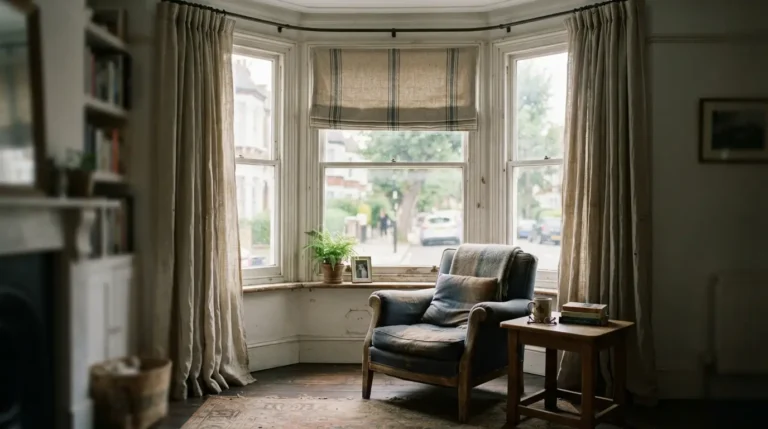
The bay window is one of the most distinctive and most loved architectural features of the British Victorian and Edwardian home a projecting window structure that increases floor space, floods the interior with light from three directions, and creates an intimate alcove within the main room.
Dressing a bay window presents specific challenges that a flat window does not. A curtain track that bends to follow the bay’s profile is generally more practical than a rigid pole, as it allows curtains to draw neatly across the entire bay without bunching at the angles.
A window seat in the bay window a padded bench built into the alcove beneath the window is one of the most sought-after domestic features in the UK and one that adds both practical value (seating, often with storage beneath) and qualitative value (the sense of a dedicated, light-filled retreat within the room).
Velux and Skylight Window Ideas
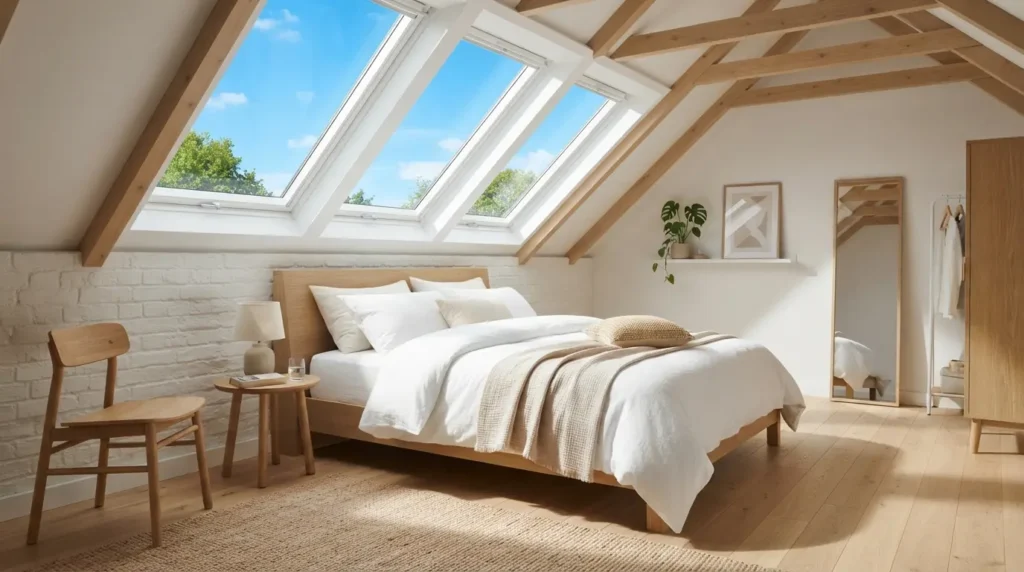
A Velux or skylight window set flush with the roof surface floods a room with natural light from above in a way that no vertical window can replicate. In loft conversions, attic bedrooms, and ground-floor extensions, skylight windows are the primary or only source of natural light in many UK rooms.
Velux windows require specific blinds that fit within the window frame and manage the particular challenges of a roof window: direct overhead sunlight, rain noise, and the difficulty of access for adjustment. Blackout blinds are the most important addition to a bedroom Velux without one, a bedroom under a south-facing roof window will be unbearably bright in summer.
Window Seat Ideas
A window seat a built-in or freestanding bench positioned in a window recess or alcove is one of the most universally appealing domestic features in the UK. It combines a practical seating surface with the most desirable position in any room (close to natural light and with an outward view) and often with storage beneath the seat.
A window seat is most naturally positioned in a bay window, where the existing alcove provides the structure for the bench. In a flat wall with a deep window sill, a floating shelf with a cushion can replicate the quality of a window seat in miniature. The upholstery a cushion in a durable fabric, with scatter cushions behind is an opportunity to introduce colour, pattern, or texture into the room.
Front Door Ideas
The front door is the most important exterior design decision available to most UK homeowners. It is the first thing visitors see, the focal point of the house’s street presence, and the threshold through which every experience of the house begins.
Front Door Colour Ideas
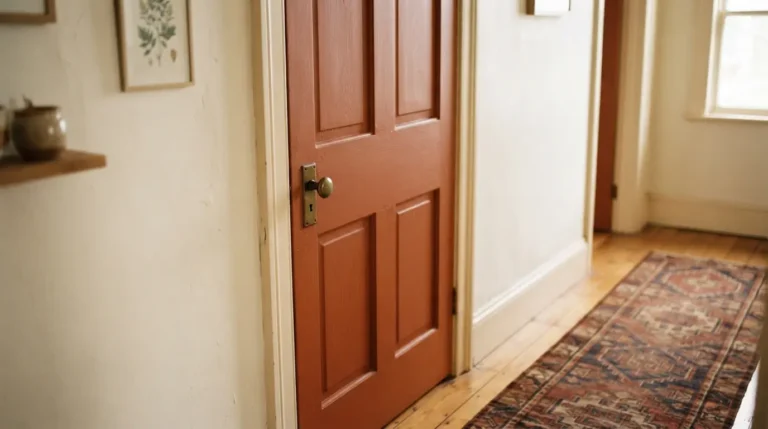
A confidently chosen front door colour has a disproportionately large impact on the kerb appeal and perceived quality of a property. The most popular front door colours in the UK currently are matt black, deep navy, forest green, rich red, and warm grey. Matt black is the most widely chosen for its combination of boldness, timelessness, and versatility it works with brick, render, painted stone, and almost every exterior material. A bold, unexpected colour a rich burnt orange, a deep teal, a cobalt blue can make a property memorable and distinctive without looking inappropriate.
Composite Front Door Ideas
A composite front door constructed from a combination of materials including GRP, timber, and insulating foam is the most widely sold front door type in the UK. It provides the appearance of a timber door with superior thermal performance, weatherproofing, and security, and requires minimal maintenance. Composite doors are available in a wide range of styles and virtually any colour.
Timber Front Door Ideas
A solid timber front door is the premium choice for period properties and for homeowners who value the natural material quality that no composite product fully replicates. Hardwood doors in oak, iroko, and accoya are the most durable timber options. A timber door requires painting or staining every few years but, properly maintained, it will outlast a composite alternative and improve in character with age.
Internal Door Ideas
Internal doors are among the most overlooked design elements in a UK home. A door is opened and closed dozens of times every day, contributes significantly to the architectural character of a hallway or room, and when chosen and installed with care adds a quality of finish that distinguishes a well-designed home from one that simply happened.
Shaker Internal Door Ideas
The shaker door a simple panel door with a flat centre panel framed by a rectangular rail and stile is the most popular internal door style in the UK. A shaker door painted in the same colour as the walls creates a seamless, architectural effect. Painted in a contrasting colour all doors in deep navy in a house of white walls it creates a decisive design statement.
Glazed Internal Door Ideas
A glazed internal door with glass panels in the upper section, the lower section, or the full length of the door allows light to pass between rooms and creates a more open, connected quality within a home. Glazed internal French doors are one of the most elegant and most widely used internal door options in UK period properties and contemporary extensions alike.
Barn Door and Sliding Internal Door Ideas
A sliding barn door a door that slides along a rail fixed to the wall above the doorway is a practical and stylish solution in spaces where the clearance required to swing a hinged door open is not available. It works particularly well in compact hallways, en-suites, and home offices, and the exposed rail and hardware have a distinctive, industrial quality that suits contemporary interiors.
Bi-Fold and French Door Ideas
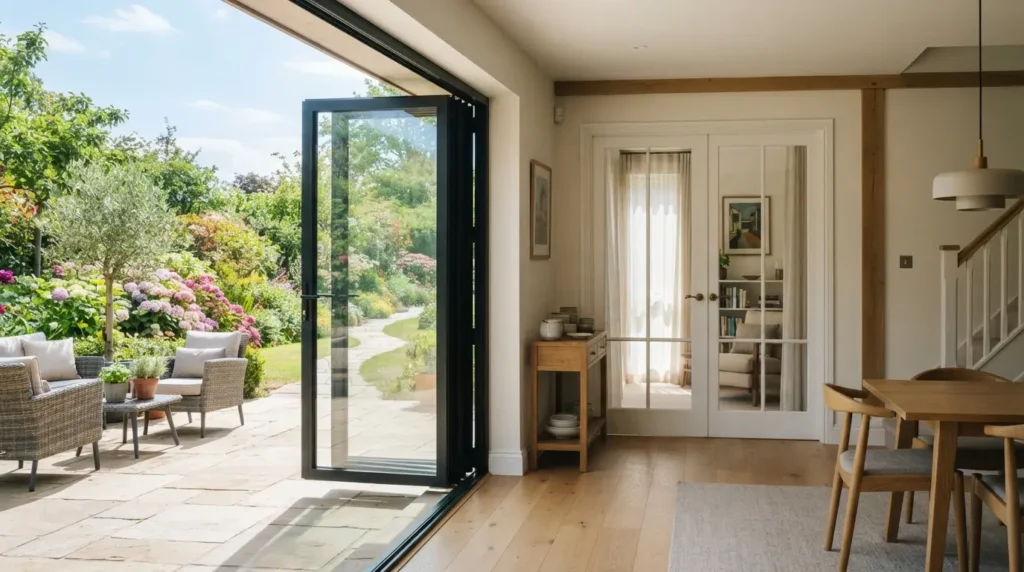
Bi-Fold Door Ideas
Bi-fold doors a series of door panels that fold accordion-style back against the wall, creating a wide, unobstructed opening have been the most widely aspired-to home improvement in the UK for the past decade. At their best, bi-fold doors dissolve the boundary between inside and outside, extend the usable living space into the garden in good weather, and flood the interior with natural light from a wide opening that no conventional door or window can match.
Aluminium bi-fold doors in a slim, thermally broken frame are the most popular choice in contemporary UK homes. The slimness of the frame maximises the glass area and the view, and aluminium’s strength allows large individual door panels without the bulk required by timber or uPVC.
French Door Ideas
French doors a pair of outward or inward-opening glazed doors provide a more traditional and more contained alternative to bi-fold doors that suits period properties and smaller openings. Internal French doors allow light to pass between spaces while maintaining acoustic and visual separation between rooms.
Door Colours, Hardware, and Finishing Details
The hardware on a door the handle, the hinge, the letterbox, the knocker, the house number is the detail that elevates a door from a functional element to a considered one.
Polished chrome and satin chrome hardware is the most widely used and most universally appropriate finish in the UK. Brushed brass and antique brass have grown significantly in popularity in recent years and suit both period and contemporary properties. Matt black hardware handles, knockers, letterboxes, and house numbers in a consistent matte black finish creates a bold, cohesive, and strikingly contemporary front door appearance.
Internal door handles should be consistent throughout the house to create the sense of a considered scheme rather than a collection of independent choices. Satin chrome lever handles on white-painted shaker doors is the most common combination in UK homes; brushed brass lever handles on dark-painted internal doors is one of the most widely aspirational combinations in contemporary UK interior design.
Double Glazing and Window Frame Ideas
The window frame the material from which the window is made has a significant impact on the thermal performance, the security, the maintenance requirements, and the aesthetic of a home’s exterior.
uPVC windows are the most widely installed window type in the UK for their combination of thermal performance, low maintenance, and relatively low cost. Modern uPVC windows are available in a wide range of colours including woodgrain effects that replicate the appearance of timber.
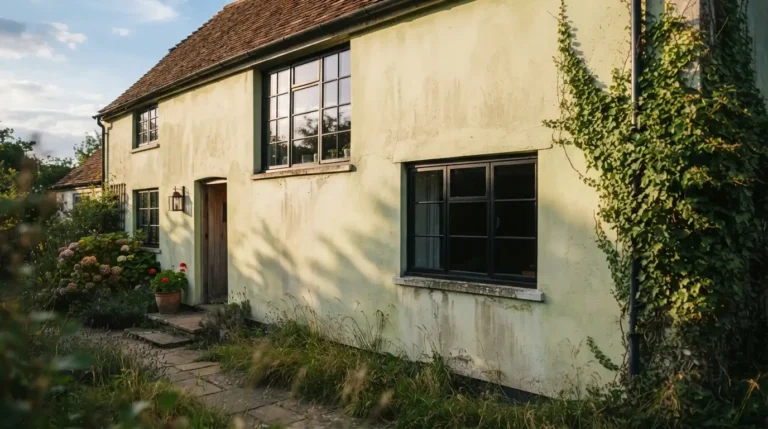
Aluminium windows suit contemporary architecture and new-build homes. The strength of aluminium allows slimmer profiles than uPVC, maximising the glass area and creating a more elegant, less bulky frame. Timber windows suit period properties and conservation areas.
Double glazing two panes of glass with a gas-filled cavity between them is the standard specification in the UK and provides a significant improvement in thermal performance over single glazing. Triple glazing provides marginally better thermal performance at significantly higher cost and is increasingly specified in new-build homes and high-specification renovations.
Final Thoughts
Windows and doors are the framework of a home the elements through which every room is connected to the light outside, to the spaces beyond, and to the street and garden that surround the building. Getting them right is not simply a matter of choosing a curtain fabric or a door colour: it is about understanding how light, proportion, privacy, and the quality of materials and finishes contribute to the character and liveability of every room in the house.
Start with the front door the one decision that affects your home’s relationship with the world outside most directly. Then consider the internal doors that create the architectural rhythm of your hallways and rooms. Then choose window treatments that work with your rooms the right heading style, the right fabric, the right length, and the right position on the wall.
FAQs
What window treatment is best for a living room?
Floor-length curtains in a quality fabric linen, velvet, or a textured weave are the most widely used and most impactful window treatment for a living room. They add warmth, texture, and a sense of completion to the room that blinds and shutters rarely achieve. Plantation shutters are an excellent alternative where a more architectural, built-in quality is desired. Roman blinds suit rooms where a simpler, more streamlined treatment is appropriate.
How high should I hang curtains?
Hang curtain poles or tracks as close to the ceiling as possible ideally within 15 centimetres of the ceiling cornice or coving. Extend the pole at least 15 to 20 centimetres beyond the window frame on each side. This makes the window appear taller and wider, the room appear larger, and the curtains appear more generous and more luxurious.
What is the most popular front door colour in the UK in 2026?
Matt black, deep navy, and forest green are the most popular front door colours in the UK in 2026. Matt black is the most versatile it works with almost every exterior material and architectural style. Deep navy and forest green suit period properties particularly well. A bold colour burnt orange, cobalt, or a deep teal can make a property memorable without looking out of place.
Are plantation shutters worth the cost?
Plantation shutters are a significant investment considerably more expensive than curtains or blinds for most window sizes but they deliver a quality and permanence that other window treatments do not. They last for decades, require minimal maintenance, add architectural character to a room, and are widely regarded by estate agents as adding perceived value to a property. For homeowners planning to stay long-term, plantation shutters are generally considered worth the cost.
What is the best internal door style for a UK home?
The shaker internal door is the most versatile and most widely appropriate internal door style in the UK, working in period properties, new-builds, and everything in between. A four-panel shaker door in white is the most neutral and most universally applicable choice. For a more contemporary interior, a flush door or a glazed internal door that allows light to pass between rooms are both excellent alternatives.
Should bi-fold doors or French doors open inward or outward?
Bi-fold doors almost always open outward the folding mechanism requires the door panels to swing towards the exterior as they fold back against the wall. French doors can open either inward or outward depending on preference and practical constraints. Outward-opening French doors maximise usable floor space inside; inward-opening French doors are more practical in exposed positions where outward-opening doors could be damaged by wind.
What is the difference between uPVC and aluminium windows?
uPVC windows are less expensive, widely available, and require minimal maintenance. Aluminium windows have slimmer profiles maximising the glass area and suit contemporary architecture where a more refined, architectural frame is desired. Timber windows suit period properties and are required in many conservation areas where uPVC is not permitted. Aluminium provides better thermal performance per millimetre of frame thickness than uPVC but at a higher cost.