How to Create a Pantry in a Kitchen Without a Dedicated Room

Most UK kitchens do not have a separate pantry. You can still add useful pantry storage by using a tall cupboard, a run of deep shelves, or a converted alcove. The goal is a place for dry goods that stays organised and is easy to reach. kitchen storage ideas cover the wider storage options.
Start with the space you already have. A tall unit next to the fridge or an alcove next to the chimney breast is often enough. organise a kitchen from scratch before you add new units so you know what needs a home.
Use a tall cupboard as a pantry
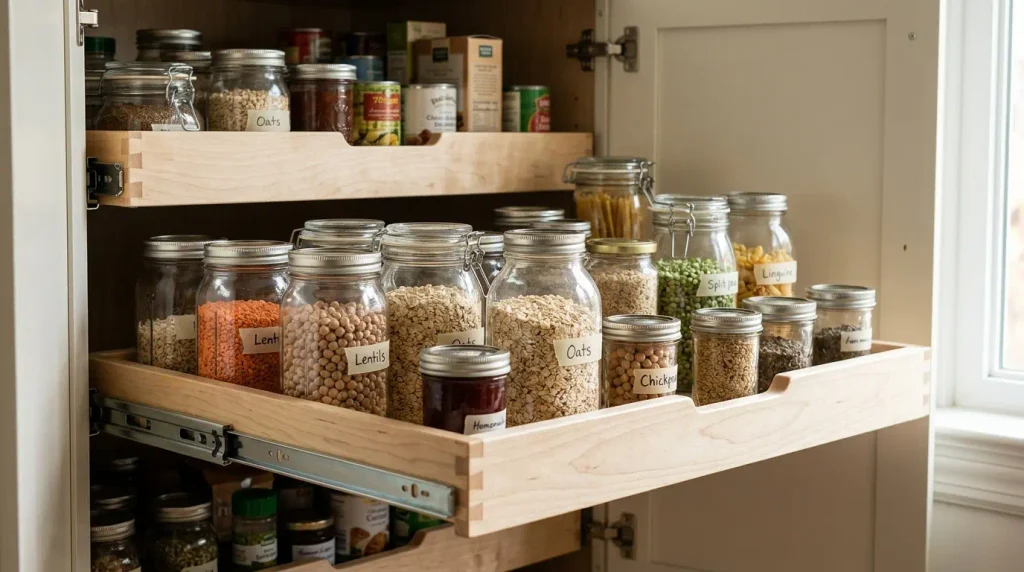
A full-height cupboard of 600 mm wide and 300 to 350 mm deep holds more than a standard base unit. Fit pull-out shelves or fixed shelves at 300 to 350 mm spacing so jars and packets stand upright. A single deep shelf wastes the height. kitchen cabinet ideas show units that can take this role.
Add a light inside the cupboard if it is deep. An LED strip on a door switch costs little and stops you reaching into a dark space. Keep the heaviest items at waist height.
Convert an alcove or a dead corner
An alcove next to a chimney breast or a return wall can take shelves from floor to ceiling. Measure the depth. Anything under 250 mm is better for tins and packets than for large boxes. Fit a door or leave it open. An open pantry needs a clear system or it looks messy. plan the perfect kitchen layout if the alcove is part of a wider change.
Use adjustable shelves so you can change the spacing later. Fixed shelves lock you into one set of jars.
Add pull-out pantry racks
A pull-out rack in a base or tall unit brings the back of the shelf to the front. It suits a narrow space where a full door swing is tight. Check the weight rating. A rack full of tins is heavy. kitchen organisation ideas if you want the full system.
Soft-close runners are worth having. A heavy rack that slams marks the front of the unit.
Use the space above the fridge
The gap above a freestanding fridge is often wasted. A shelf or a small cupboard there holds items you use less often, such as spare oil or seasonal tins. Do not store everyday items there if you need a step to reach them. kitchen appliance ideas if the fridge position is still open.
Check the heat. A fridge needs ventilation. Do not block the vents with a tight shelf.
Keep the pantry usable
Group by type. Baking items on one shelf, tins on another, packets on a third. Label the shelves if more than one person uses the kitchen. Clear jars help you see what is left, but they need a system or they become a jumble. kitchen decor ideas if you want the open shelves to look deliberate.
Leave a little empty space. A pantry that is full to the edge is hard to use and hard to clean. Aim for 70 percent full so you can see and reach everything.
Check the door swing. A tall pantry door needs clear floor in front. If the fridge door or the kitchen door hits it, change the hinge side or use a bi-fold. Mark the swing on the floor before you order.
Think about ventilation. A closed pantry that holds onions, potatoes, or bread needs a little air movement or it gets damp. A small vent at the top or a door that is not fully sealed helps. Do not store fresh produce in a sealed cupboard.
Plan the lighting. A dark pantry is not used well. An LED strip on a door switch or a small ceiling light inside the cupboard makes the shelves usable. Wire it before the units go in if you can.
Leave room for a bin or a recycling box if the pantry is near the prep area. A pull-out bin next to the pantry cupboard keeps the workflow short. Do not force the bin into the pantry itself if it makes the shelves hard to reach.
Use the same shelf system throughout. Mixing fixed shelves and pull-outs in one cupboard makes the spacing awkward. Decide on one system and keep it. Adjustable shelves are the safest if you are not sure yet.
Label the outside of the door if more than one person cooks. A simple list of what is inside stops people opening every cupboard. In a family kitchen this saves time every day.
Budget for the fittings as well as the unit. Good pull-out runners and a door-switch light cost less than a second unit and make the first one usable. A plain cupboard with poor fittings is wasted space.
Measure twice. A tall unit that is 20 mm too wide will not fit the gap once the plinth and the side panels are on. Check the finished gap after the floor is down and the walls are painted. Order the unit to the finished size, not the bare wall.
Which approach to pick
For most kitchens without a separate room, a tall cupboard with pull-out shelves is the practical start. Use an alcove if you have one. Keep everyday items at waist height and less-used items higher. Measure the depth and the door swing before you order the unit. design a kitchen from scratch if the pantry is part of a new plan.
Budget for the internals. A plain cupboard with good pull-outs is more useful than an expensive door with fixed shelves you cannot reach.
FAQs
Can I add a pantry to a small kitchen?
Yes. A tall 600 mm cupboard or a narrow pull-out rack gives useful storage without a separate room.
How deep should a pantry cupboard be?
300 to 350 mm is enough for most jars and packets. Deeper than 400 mm needs pull-outs or the back is wasted.
Should a pantry have a door?
A door keeps the kitchen looking tidy. An open pantry needs a strict system or it looks cluttered. In a small kitchen a door is usually better.
What should I store in a kitchen pantry?
Dry goods, tins, packets, and spare oil. Keep everyday items at waist height. Store heavy items lower and less-used items higher.