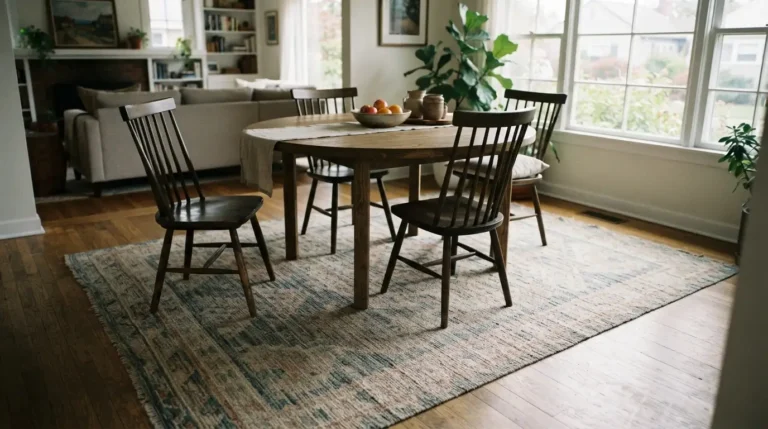
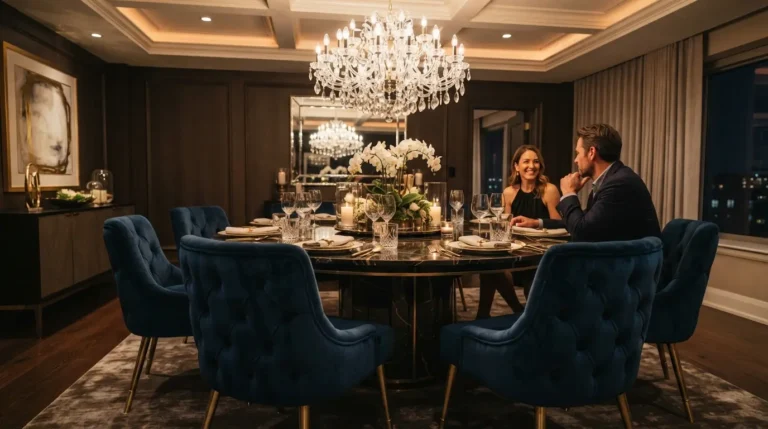
7 Dining Table Ideas for Every Home and Style

The right dining table fits the people who use it, the room it sits in, and the style of the rest of the home. Shape, material, size and base all change how the table works day to day. These seven ideas cover the most practical options for UK homes, from compact kitchen diners to larger formal rooms. Measure clearances and check height before you fall for a finish.
1. Classic Rectangular Oak Table for Family Meals
A solid oak rectangular table around 160cm to 180cm long and 90cm wide seats six and works in most British dining rooms. Straight or slightly tapered legs leave room at the ends. The warm grain suits both traditional and modern schemes. Oil the top regularly. This is the safest everyday choice for households that eat together most nights. Pair it with mixed chairs and a sideboard for storage. See how to choose the right dining room furniture for matching pieces.
2. Round Table for Intimate Conversation
A round table of 110cm to 130cm diameter creates a sociable setting where no one sits at the head. Pedestal bases maximise seating flexibility. Round tables suit square rooms and smaller spaces because they remove corners. Allow full 90cm clearance all round. The shape encourages longer conversations and works well for households of four to six. Extendable versions that become ovals add flexibility.
3. Extendable Table for Variable Guest Numbers
An extendable table stays compact for daily use and opens for visitors. Butterfly or drop-in leaves are the most common. A closed 140cm to 160cm table that reaches 200cm covers most needs. Check the mechanism, the level of the join and the clearances when open. This is the practical choice for homes that host Christmas or birthdays but do not want a large table every day. Measure both sizes carefully.
4. Glass Top Table for Modern or Small Rooms
Tempered glass tops keep a room feeling light and open. They resist heat and stains but show fingerprints. Choose a thick top and a stable base. Rectangular or round shapes both work. The table pairs well with metal or wood frames. Use soft cloths only. This style suits contemporary flats and open-plan spaces where visual weight matters. Confirm the edges are rounded for safety.
5. Farmhouse Style Table With Wider Top and Turned Legs
A wider, heavier oak or painted table with turned legs brings a traditional British feel. Lengths of 180cm to 220cm suit larger rooms. The thicker top and apron need careful knee clearance checks. These tables work with benches on one side and chairs on the other. Oil the wood and protect the finish during use. The style suits period homes or rooms styled for warmth. Look at farmhouse dining room ideas for complete schemes.
6. Slim Metal-Frame Table for Open-Plan Spaces
A wood or laminate top on a slim metal frame keeps the visual weight low in an open-plan kitchen diner. Black or brass frames add contrast. The table can be rectangular or round. Confirm the frame is stable when people lean on it. This style suits modern and industrial interiors. Wipe the metal and top separately. The lighter look helps a smaller space feel larger. Check industrial dining room ideas for matching finishes.
7. Compact Table for Small Homes or Breakfast Use
Tables around 120cm by 80cm or a 100cm round suit small dining areas, flats or breakfast spots. They still need 90cm clearance on seating sides. Drop-leaf or extendable versions add flexibility. Choose a durable finish because small tables often see constant use. These work well against a wall when not fully in use. Measure the space including door swings before ordering.
Materials, Care and Delivery Checks
Solid oak needs coasters for hot pans and immediate wipe-up of spills. Oil or lacquer finishes both work if you follow the care instructions. Glass and ceramic tops resist heat and stains more easily but show fingerprints. Laminate is practical for busy families yet can chip at edges. Whatever the material, confirm the table height is 74cm to 76cm and that your chairs give 25cm to 30cm knee clearance under the apron. Measure doorways, stairs and any tight turns from the delivery point to the room before you order a large piece.
On delivery, check the top for damage, confirm the table does not rock, and test the extension mechanism if fitted. Sit in each position with your own chairs if possible. A table that passes these practical checks will serve the household far better than one chosen only for appearance. The right dining table idea is the one that fits the clear floor space, the real seating numbers and the maintenance you will actually do.
Matching the Table to Your Style and Room
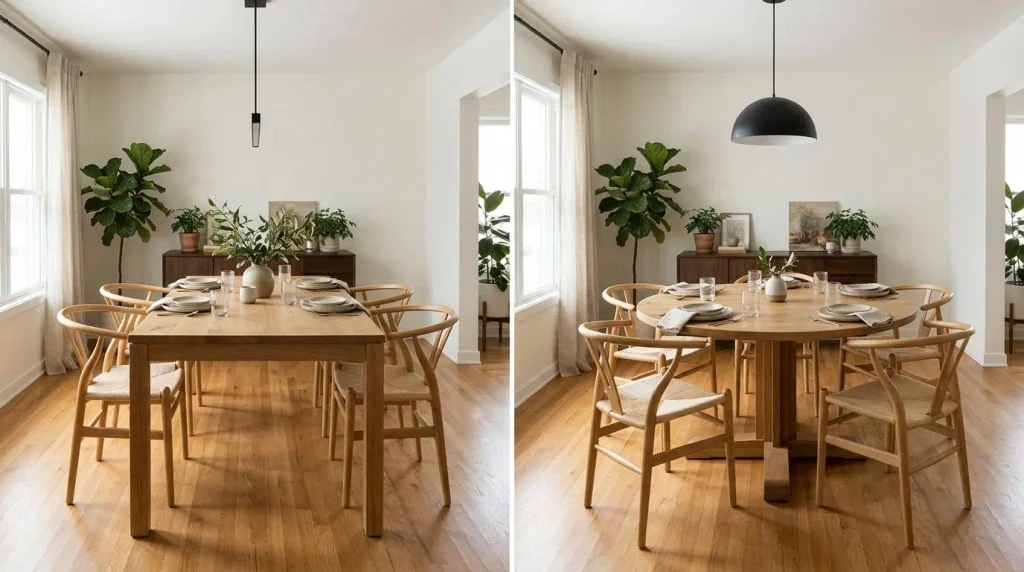
Warm oak and turned legs suit traditional or farmhouse rooms. Slim metal and glass suit modern open-plan spaces. Round shapes feel more intimate in any style. Always start with the clear floor area and the number of people you seat most days. Then choose the material that matches the care you will give it. A table that fights the room or the daily routine will never feel right, no matter how good it looks in a photograph.
Also consider the rug. The rug should extend at least 60cm beyond the table edge on all sides so chairs remain on it when pulled out. A rug that is too small creates a trip hazard every time someone sits down. Review the size carefully against the table dimensions before both arrive.
Conclusion
Every home needs a dining table that fits the real numbers, the real clearances and the real style of the space. Rectangular oak, round, extendable, glass, farmhouse, metal-frame and compact options cover most UK situations. Measure first, check height and knee clearance, and pick a finish you will maintain. The right table becomes the centre of daily life rather than a piece that only looks good empty.
FAQs
What is the most practical dining table for a UK family?
A solid oak rectangular table around 160cm to 180cm long that seats six, or an extendable version of a similar everyday size.
Does a round table seat fewer people?
Not always. A well-sized round table can seat as many as a rectangle of similar footprint and often feels more sociable.
How do I know if a table will fit my room?
Subtract 180cm from the room length and width for 90cm clearance on each side. The remaining space is the maximum table size.
Should I match the table to my chairs or buy a set?
Either works. Mixed chairs can look intentional. Just confirm seat height and arm clearance with the table apron before you buy.