8 Linen Curtain Ideas for a Relaxed and Natural Window Dressing

Linen curtains bring a soft, lived-in texture that suits both period sash windows and modern extensions without looking staged. The key is matching the weight, lining and drop to how the room is actually used, then measuring from the pole or track rather than the frame so the fabric sits correctly once hung. Check the recess depth and any handles before ordering, and allow for the fact that pure linen will relax and soften further after the first few weeks.
Most UK ready-made drops sit at 137 cm, 183 cm or 229 cm, so made-to-measure is often the practical route for anything taller or for floors that are not perfectly level. Fullness of around twice the pole width keeps the look relaxed rather than sparse, and a cotton or thermal lining adds body without killing the natural drape. For a clear walk-through of measuring, see our guide on how to measure windows for curtains correctly.
1. Floor-Length Natural Linen for a Soft Everyday Look

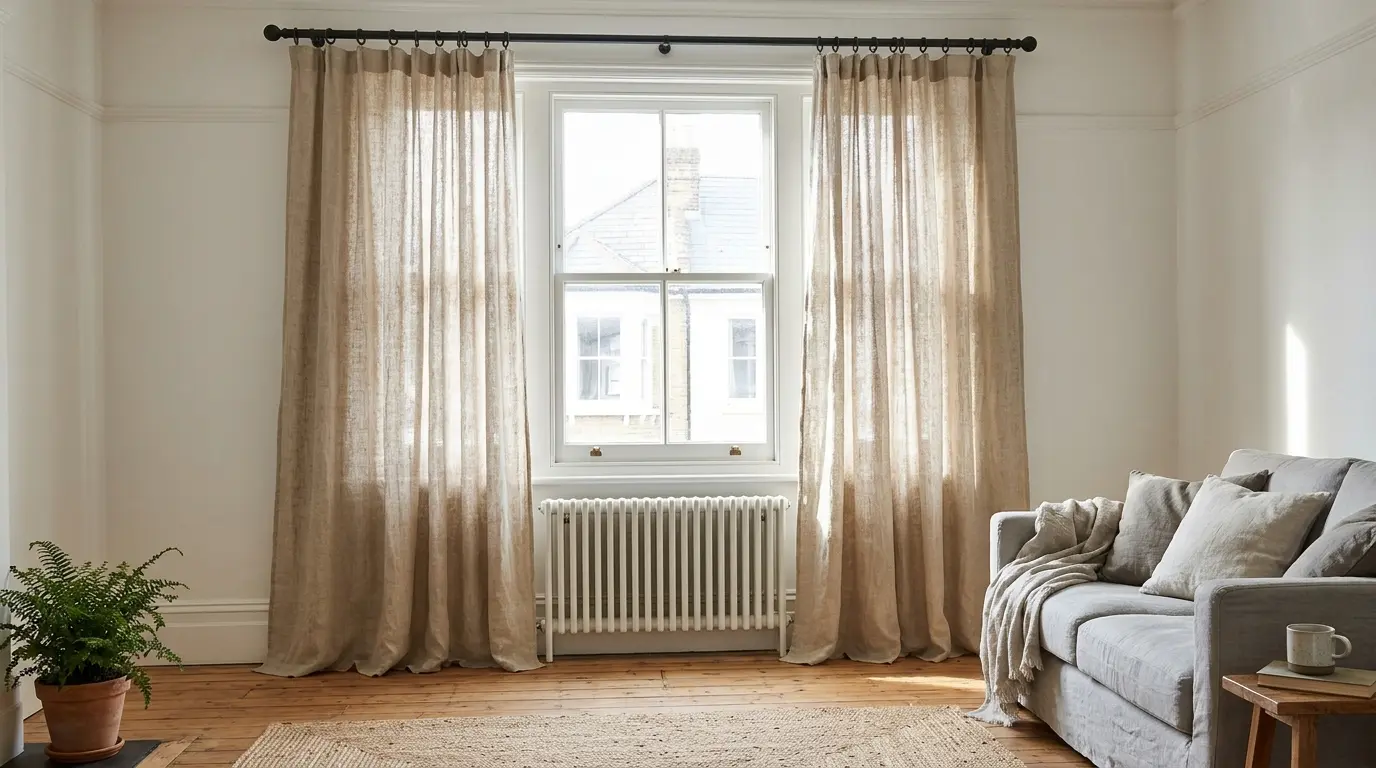
A medium-weight natural linen hung from a simple pole, finishing 1 to 2 cm clear of the floor, works in most living rooms and bedrooms. Measure from the eye of the ring or the top of the pole to the floor in three places and take the shortest drop so the hem does not drag on uneven boards. The fabric should be at least twice the track width for a gentle gather; anything less looks thin once the curtains are open.
Unlined or lightly lined versions keep the airy feel, but add a cotton lining if the window faces a busy street or if you want better night-time privacy. In older houses the pole often sits 10 to 15 cm above the frame to lift the proportion. Pair this with a matching roman or roller for daytime if the room gets strong sun. Our Windows & Doors ideas page covers how different treatments sit together.
2. Linen with a Blackout Lining for Bedrooms That Still Feel Soft
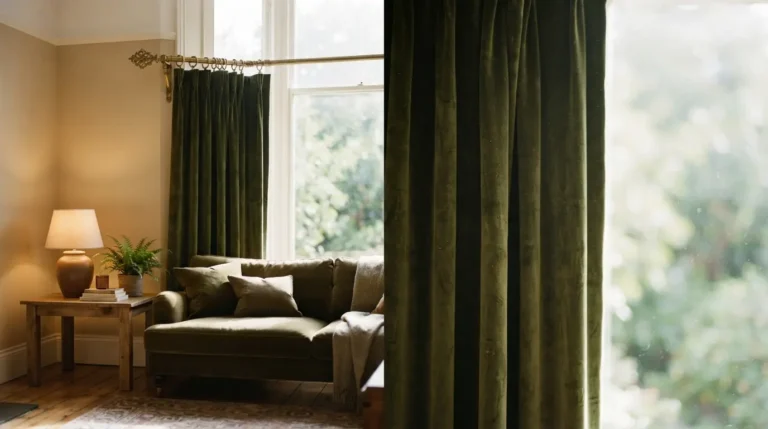
The face fabric stays the relaxed linen colour you want, while a separate blackout lining blocks the early light that comes through thin summer curtains. Order the lining slightly shorter than the face so it does not show at the hem. This combination suits north-facing bedrooms or rooms above street lights where pure linen alone is not enough.
Check the total weight on the pole brackets; heavy lined linen can pull a lightweight track out of shape over time. Pencil or pinch pleat headings keep the folds neat when the curtains are closed every night. For bedroom-specific advice on light control see how to choose the right curtains for a bedroom.
3. Tab-Top or Eyelet Linen for a Quick Cottage or Coastal Feel
Tab tops slide straight onto a pole and need less fullness, around 1.5 times, because the fabric is not gathered tightly. They suit kitchens, children’s rooms or informal sitting rooms where you open and close the curtains often. Eyelets give a cleaner modern line on the same pole and work well with medium-weight linen that holds a soft fold.
Avoid very heavy linen here; the tabs or eyelets can stretch. Measure the pole diameter so the tabs fit without rubbing. In a bay, separate panels for each section prevent the fabric bunching at the angles.
4. Layered Linen Sheers with a Heavier Outer Pair
A fine linen or linen-look sheer sits close to the glass for daytime privacy and glare control, while the outer pair in a heavier linen closes at night. The sheer can be on a slim track just inside the main pole, or both on the same pole with the sheer hanging inside.
This works particularly well on street-facing living room windows. Allow the sheer to finish at the same drop as the outer curtains or a fraction shorter. Our article on 12 bedroom curtain ideas shows similar layering in practice.
5. Made-to-Measure Linen for Tall Sash or Victorian Windows
Standard ready-made lengths rarely match the drop of a full-height sash. Made-to-measure lets you specify the exact finished drop from the chosen heading point, plus any extra for a double hem. Heavy-weight linen (around 280 gsm) holds a better fold on tall windows than the lighter 150 gsm versions.
Ask the maker for a sample of the actual fabric and lining so you can check colour against your wall in daylight and under artificial light. In period houses a pencil or pinch pleat on rings looks more at home than a modern eyelet.
6. Linen Curtains Hung High to Make a Low Ceiling Feel Taller
Fix the pole 15 to 20 cm above the window frame, or just below the ceiling if the wall allows. The extra height draws the eye up and the floor-length drop still finishes cleanly. This is useful in new-build rooms with standard 2.4 m ceilings where the windows sit lower.
Make sure the pole is fixed into solid masonry or with appropriate plasterboard fixings; the weight of lined linen is not trivial. Measure the new higher drop carefully and order accordingly.
7. Unlined Pure Linen for a Truly Relaxed Kitchen or Sun Room
Skip the lining so the fabric stays light and filters the sun rather than blocking it. Sill-length or just below the sill keeps the fabric clear of worktops and sinks. Choose a colour that hides everyday marks; natural or oatmeal shows less than bright white.
Washable linen blends are practical here because pure linen wrinkles more and takes longer to dry. Check that the pole can be taken down easily for cleaning.
8. Matching Linen on Bay Windows with Separate Panels
Treat each face of the bay as its own window so the curtains stack neatly at the sides when open. Use the same fabric and heading throughout so the bay reads as one feature. A continuous track that follows the bay is usually better than a straight pole.
Measure each section carefully and allow for the returns at the wall ends. For more on working with bays see bay window ideas and the seat options that often sit underneath.
Conclusion
The best linen curtains are the ones that fit the window, the light and the daily routine rather than the photograph. Get the drop, the fullness and the lining right first, then choose the colour and heading that suit the rest of the room. Once those practical points are settled, the natural texture does the rest of the work.
How much fullness do linen curtains need?
Aim for about twice the pole or track width for a relaxed look. Pencil pleat can go to 2.5 times if you want deeper folds; tab tops and eyelets work with less.
Should linen curtains be lined?
Line them in living rooms and bedrooms for privacy, insulation and better hang. Leave them unlined in kitchens or where you want maximum light.
What drop works best for linen?
Floor length finishing 1 to 2 cm above the floor is the most practical for everyday rooms. Measure in three places and use the shortest.